Tag: ático

  • Living in a Penthouse in Tenerife: Lifestyle and Costs

    Living in a Penthouse in Tenerife: Lifestyle and Costs

    Picture a Tuesday morning in Tenerife: coffee on a terrace level with the living room, the Atlantic somewhere beyond the neighbouring roofs, and nobody carrying a tray up a spiral staircase. That is the picture most people hold of an ático. The reality can match it, or it can mean a windswept slab of tile overlooking someone else’s air-conditioning unit. I’m David, a Mancunian who has advised British buyers from Marbella for over ten years, so my direct experience is the Costa del Sol rather than Tenerife, and I’ll say so where it matters.

    Living in a penthouse in Tenerife can mean bright interiors, private outdoor space and easy access to shared facilities. Daily comfort depends on terrace shelter, orientation, roof insulation, lift access and the surrounding neighbourhood. Expect community charges and maintenance responsibilities, and check what terrace rights and amenities actually come with the property.

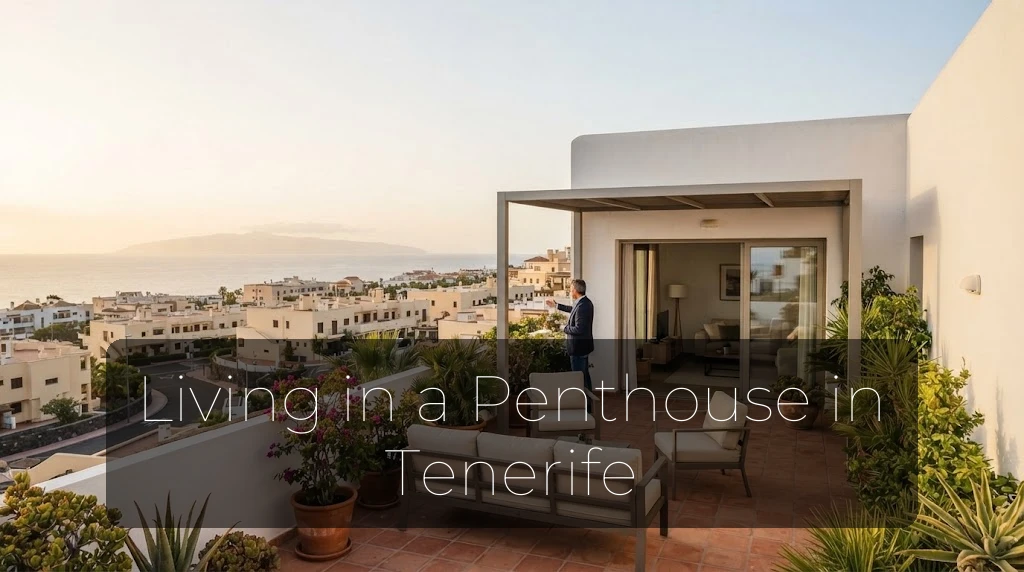
    A property adviser and visitors on a Tenerife penthouse terrace overlooking coastal buildings and the Atlantic

    What penthouse living in Tenerife actually offers

    In Spanish listings, an ático is a top-floor flat, usually with a terrace. The word can also mean attic, but a Spanish ático is rarely a converted loft. The label describes position in the building, not quality, size or luxury, so some are compact one-bedroom flats with a modest balcony and others are large homes with wraparound terraces.

    Two features often get blurred together. A living-room terrace opens straight from the main rooms and works as an outdoor extension of the home. A separate rooftop solarium, a sun terrace on the roof reached by stairs, is a different proposition: it can be lovely for sunbathing, but it is a trip rather than a step.

    The table below shows the general pattern; individual buildings vary.

    FeaturePossible benefitPossible trade-off
    LightOften brighter rooms, with fewer buildings blocking the sunStrong sun can overheat rooms without shade
    ViewsA wider outlook, perhaps sea or mountainsNo view is guaranteed, and new building can change it
    Outdoor spacePrivate terrace for meals and relaxingUpkeep, cleaning and wind to manage
    ExposureFresh air and breezeSun, wind and rain hit the roof and terrace directly
    AccessA lift to the front door in many blocksLift dependence; roof stairs may be separate

    Let me put it plainly: judge the usable space, not the listing label. A shaded, same-level terrace you can sit on every day beats a bigger one that is mostly an exposed roof.

    A terrace you will actually use

    Brochure photos show a table set for six at sunset. Ordinary life is breakfast, a sandwich lunch, laundry on a drying rack and a cold drink after work. Here’s where people usually come unstuck: they fall for terrace square metres and forget the shape.

    • Depth: a long, thin terrace can look generous on a plan yet struggle to fit a table, chairs and room to walk past.
    • Shade: without an overhang, pergola or space for a parasol, midday sun can make the terrace unusable for hours.
    • Orientation: the direction the terrace faces decides when the sun arrives and how much wind it catches, so visit at different times.
    • Seated views: the outlook from the parapet differs from the outlook from a chair, because solid walls and balustrades can hide the sea once you sit down.
    • Overlooking: neighbouring terraces, taller buildings and communal walkways can watch you eat; a high floor does not guarantee privacy.
    • Rooftop stairs: picture carrying food, drinks, cushions and laundry up them, and what that means for children and older relatives.
    • Barbecues, awnings and alterations: community rules, planning requirements and insurance may restrict them, so never assume permission without written confirmation.

    Here is a simple usability test. Sit in the chair you would really use, at the time of day you would really use it, and check four things: shade, shelter from wind, a view that survives sitting down, and a level step from the living room. A terrace that fails two of them is not helped by size.

    Shaded dining and seating areas on a penthouse terrace connected to the living room

    Tenerife weather and top-floor comfort

    Tenerife is a small island with big local differences in climate, so conditions at one address say little about another.

    Sun and heat

    For a reference point, AEMET, Spain’s state meteorological agency, publishes climate normals for its Tenerife South Airport station, which sits 64 metres above sea level. Over the 1981–2010 reference period, January had a mean temperature of 18.4°C and a mean daily maximum of 21.7°C, while August had a mean of 24.7°C and a mean daily maximum of 28.4°C (figures checked as of October 2026, taken from the climate values section of AEMET’s own website). These are historical averages for one low-lying station, not terrace forecasts, current readings or maximum possible temperatures.

    Month (1981–2010)Mean temperatureMean daily maximum
    January18.4°C21.7°C
    August24.7°C28.4°C

    A top-floor flat sits directly beneath the roof, so roof insulation, ventilation and shaded glazing shape how warm it feels indoors. I can’t diagnose a building I haven’t seen; ask what insulation exists and whether cross-ventilation is possible.

    Wind and rain

    Rain may be occasional, but when it arrives it tests terrace waterproofing and drainage. Look for clear drains, floors sloping away from the doors and sound junctions at the parapet. Wind varies enormously by exposure, and a breezy spot that suits a windsurfer may not suit a quiet lunch.

    Cleaning and exposure

    Calima is airborne dust or haze; in the Canary Islands, episodes commonly involve mineral dust transported from North Africa. It can leave a film of fine sand on terrace furniture, glass and floors. Near the coast, salt air can corrode metal railings, window frames and outdoor fittings, so ask about finishes and how often they need attention.

    My view, offered as opinion rather than fact: on a viewing I look at the terrace floor, the drains and the ceilings below the roof before I look at the view. The view will still be there afterwards.

    The point is to connect local conditions to comfort. Elevation, orientation and exposure can make one terrace a delight and another a wind tunnel a few kilometres away, so island-wide promises are worth very little.

    Which Tenerife neighbourhood fits your routine?

    The table gives general observations about four well-known areas, not verdicts on any particular building.

    AreaDaily-life appealExposure or setting to checkTransport and accessLikely lifestyle fit
    Costa AdejeResort-style coast with promenades, restaurants, beaches and servicesMany developments climb hillsides above the sea, so check gradients and the real distance to the coastCar, taxi or bus often needed; check walking routes and parkingSun-focused seasonal base for people who like resort services
    Los CristianosWorking harbour town with seafront, everyday shops and ferry links to La GomeraFlatter seafront streets versus inland streets that climb; harbour and seafront activityErrands on foot are easier in the flatter areas; bus and ferry connectionsRetirees and seasonal owners who want a lived-in town
    El MédanoRelaxed seaside town known for wind sports, with beaches and a small-town feelStrong wind exposure on terraces; position relative to the nearby airport may matter for noiseWalkable centre; longer trips need a car or busPeople who like a breezy, informal setting rather than a still, quiet terrace
    Puerto de la CruzEstablished northern town with old-town streets, a seafront promenade and greener surroundingsA cooler, often more humid north; hillside streets above the centre; check for dampWalkable old centre; hills affect routes; check bus connectionsTown life across the year over guaranteed sunshine

    The distinction that matters most is between hillside developments and coastal streets. A hillside block can offer wide views and a quiet setting yet involve steep walks home with shopping. A flat coastal street can be easy to walk but busy at night. Treat north-versus-south as a starting point only.

    Ten years on the Costa del Sol have taught me that two flats on the same street can feel completely different once you add a gradient, a bar or a different side of the building.

    So, ask exact-address questions: which way the terrace faces, how high above the sea it sits, how steep the walk to the nearest shops is, where noise comes from and which services are reachable without a car. Those answers matter more than the postcode.

    Amenities that matter beyond the brochure

    A brochure lists facilities; daily life depends on whether they work. For each item, ask what is included, what is operational, what is shared and what carries a separate charge.

    • Lift reach: does the lift stop at the front door of the flat, and does it reach the terrace or solarium, or only stop a floor below?
    • Rooftop stairs: any stairs between the flat and its best outdoor space affect children, older relatives and anyone carrying shopping.
    • Step-free routes: check the path from the street and from the garage to the lift, including ramps, steps and gradients.
    • Pool: ask whether it is heated, what the opening hours are, and when it closes for maintenance or in winter.
    • Parking rights: confirm the space is allocated to the flat, whether it is large enough for your car and whether a charge applies.
    • Storage: a trastero (a storage room, often in the basement) can matter greatly for bicycles, luggage and seasonal items.
    • Security: ask how entry systems, cameras or concierge services work and who pays for them.
    • Broadband: confirm which internet services reach the exact address, since marketing claims do not guarantee them.
    • Equipment noise: rooftop air-conditioning units, lift motors and pool pumps can be audible on a top floor.

    Verify facilities rather than infer them from marketing. If mobility is likely to matter in future, test the whole route from garage to front door yourself, with luggage if possible.
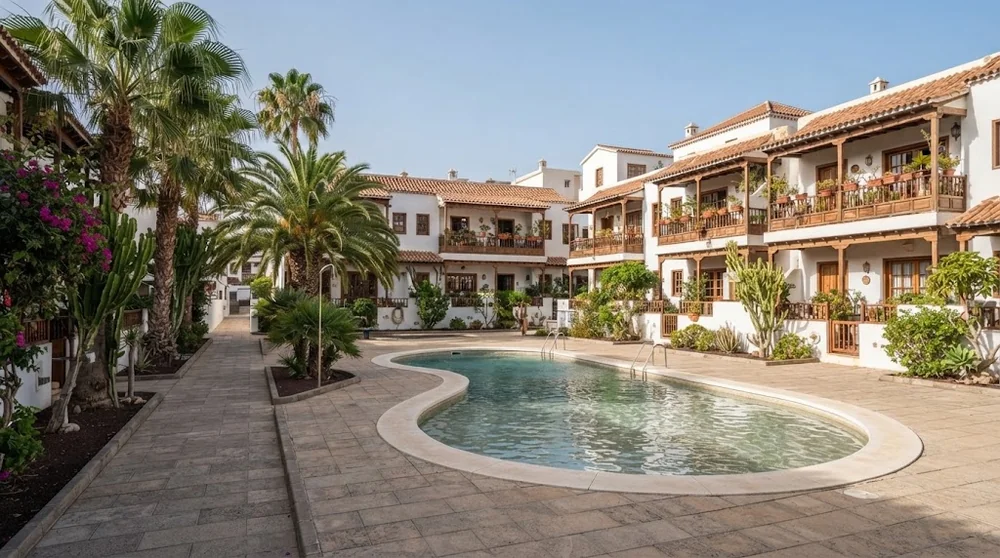
    Communal swimming pool and paved paths between low-rise apartment buildings

    What does penthouse living cost to maintain?

    I’m not quoting euro ranges, because they vary by building, municipality and use, and a made-up average helps nobody. A framework is more useful.

    Cost categoryFrequencyWhat changes the billEvidence to request
    Community charges (the regular share paid to the owners’ association)Regular, set by the communityServices, lifts, pool, gardens, reserves and the flat’s share set in the community documentsCurrent budget, latest annual accounts and a statement that payments are up to date
    IBI (Impuesto sobre Bienes Inmuebles, the annual local property tax)AnnualThe cadastral value (valor catastral), applicable reductions, the municipal tax rate and any reliefsMost recent receipt, with the property’s cadastral reference
    Waste charge, where applicableSet locallyMunicipal rulesLatest bill or confirmation from the town hall
    UtilitiesBilling cycle of each supplierUsage, cooling in summer, tariffs and occupancyBills covering a full year
    InsuranceUsually annualCover, contents, terrace features and exclusionsPolicy schedule, plus the community’s building policy
    Terrace careOccasional or seasonalCleaning, sealing, drain clearing and replacing furniture worn by sun and saltMaintenance records and recent quotes
    Exceptional assessments (derramas)IrregularMajor works agreed by the community, such as roofs, lifts or façadesRecent meeting minutes (actas) and any approved works

    The latest IBI receipt is the practical starting point for the actual charge, because it already reflects the cadastral value, the rate and any reliefs applied to that property. The rules come from the Local Finances Law, which sets the framework for local taxes such as IBI, and each town hall applies its own rate within it.

    The useful habit is to separate three buckets: recurring costs such as community charges, IBI and waste; usage-dependent costs such as utilities and cooling; and exceptional costs such as derramas for major repairs. Ask the seller for actual bills, budgets and the last few sets of meeting minutes, and compare what you find with the brochure’s promises.

    Terrace rights and community responsibilities

    Most Spanish flats belong to a comunidad de propietarios, the owners’ association that manages shared parts of the building. Its framework is the Ley de Propiedad Horizontal, Spain’s horizontal property law, alongside each building’s own statutes and rules. As of October 2026, the law has been amended over time, so check the current consolidated text rather than relying on an old summary.

    The key distinction is between private use and structural ownership. A roof terrace may belong to the flat itself, or it may be a shared element that one owner has the exclusive right to use. Exclusive use alone does not settle who owns or maintains the structure underneath, such as roofs, waterproofing layers or façades. Registry material published through the BOE supports distinguishing use from ownership, but it does not establish a universal repair rule.

    If you’re unsure which documents apply to a particular flat, a short conversation with an adviser can save a lot of head-scratching before you sign anything.

    Ask a question on WhatsApp

    Back to the paperwork: always ask for the nota simple before you commit. A nota simple is an extract from the Land Registry showing the registered owner, the property description and registered charges. It is a starting point, not a technical or planning check, and it does not replace the title deeds, community rules and maintenance records. Repair responsibility depends on the documents, the building element and the cause of the damage, so refer rights, alterations and repairs to an independent lawyer and a suitable technician.

    Year-round home or seasonal base?

    These scenarios are hypothetical. Imagine a retiree who wants a flat with level access from the garage to the lift and a terrace that opens from the living room, because stairs and gradients will matter more every year. Imagine a family who needs lockable storage for beach gear, safety on the terrace for young children and a short walk to school and shops.

    Now imagine a remote worker who needs reliable internet and a quiet room, away from rooftop machinery and nightlife. Then an absent owner who spends months away and needs someone to check drains, ventilation and terrace condition, with a plan for the heat and for calima dust. The question is the same each time: does the flat fit ordinary routines, mobility, storage, safety, work and maintenance, not just a holiday weekend?

    To match your budget, region and goals against real listings, a short questionnaire is a practical first filter.

    Get a tailored selection of properties in Spain

    That filter does not change the rules on staying, which are separate from property. As of October 2026, GOV.UK entry guidance for Spain says qualifying British visitors can generally stay up to 90 days in any 180-day period across the Schengen area. Owning a Tenerife penthouse does not grant residence, and living there year-round needs a lawful basis.

    Test the lifestyle before committing

    Turn aspirations into tests. This checklist is the one I would use for any top-floor flat.

    1. Visit more than once, at different times of day and on a weekday and a weekend.
    2. Sit on the terrace in the chair you would really use, and check shade, wind and the seated view.
    3. Listen for machinery and nightlife, including rooftop air-conditioning, lift motors, pool pumps and bars.
    4. Inspect visible drainage and staining: drains, ceiling marks, tiled thresholds and parapet cracks.
    5. Walk the shopping route to the nearest supermarket, pharmacy and bus stop, with bags and uphill if it applies.
    6. Test lift and garage access, including waiting times and step-free routes.
    7. Review facility rules for pool hours, heating, closures, parking and storage.
    8. Check how the terrace feels when the weather is unsettled, not just in sunshine.
    9. Consider a winter trial stay nearby, to see how the area feels outside the peak season.

    A viewing is not a professional inspection. Walking round with your eyes open is useful, but a technician must still assess the roof, terrace and structure.
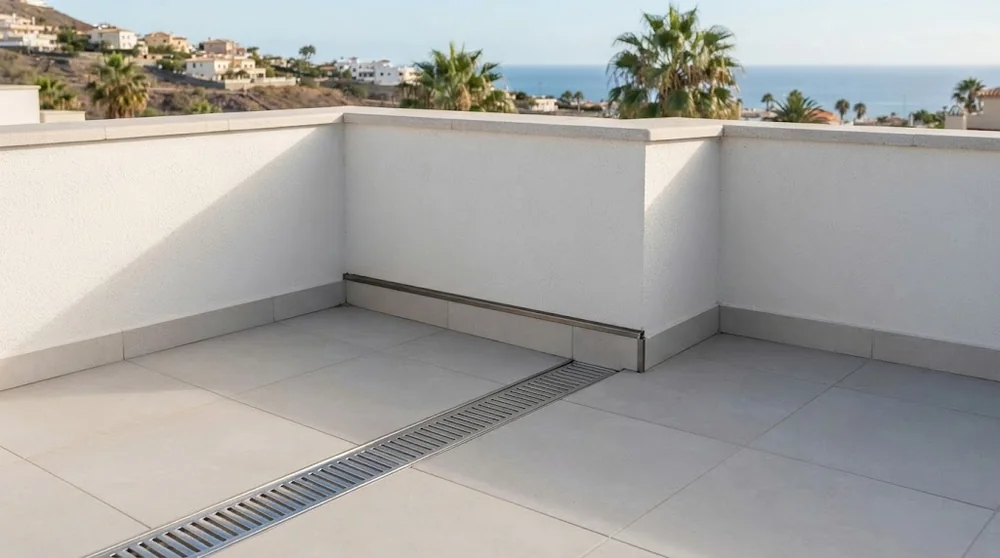
    Terrace drain, tiled threshold and parapet base on a residential rooftop

    Questions about living in a Tenerife penthouse

    What are the disadvantages of living in a penthouse in Tenerife?

    The main trade-offs are stronger exposure to sun and wind, roof or terrace maintenance, and dependence on a lift. Privacy and quiet are property-specific: neighbouring terraces, rooftop equipment and tourist accommodation can all affect them. Check the individual building, its insulation, access arrangements and community finances rather than relying on the penthouse label.

    Is north or south Tenerife better for penthouse living?

    Southern coastal areas generally suit people who prioritise sunshine and resort services, while the north can appeal to those who want established town life and greener surroundings. Neither side guarantees comfort. Elevation, terrace orientation, wind exposure and walking routes often matter more than the broad north–south divide when you choose a particular penthouse.

    Can you use a Tenerife penthouse terrace all year?

    A well-positioned terrace can be useful through much of the year, though use is never guaranteed. Wind, rain, strong sunshine and calima can all interrupt plans. A sheltered terrace on the same level as the living room is usually more practical than a larger rooftop reached only by stairs.

    What amenities should I check in a Tenerife penthouse?

    Check that the lift reaches the apartment, that the route from street and garage suits your mobility, and that any rooftop space is accessible. Confirm pool operation, parking allocation, storage and internet availability. Shared facilities may be seasonal, subject to rules or carry separate charges, so ask for the details in writing.

    Who pays for repairs to a penthouse roof terrace?

    Responsibility depends on the terrace’s legal status, the affected building element and the cause of the damage. Exclusive use alone does not make every structural repair the occupier’s job. Ask an independent lawyer and a suitable building professional to review the title, community documents and technical findings before accepting any payment obligation.

    Can a British owner live in a Tenerife penthouse all year?

    Property ownership does not itself give residence rights. As of October 2026, qualifying British visitors without residence permission are generally limited to 90 days in any 180-day period across the Schengen area. Living in Spain year-round needs a lawful residence basis, so check current official guidance and take advice for your circumstances.

    My view, neighbour to neighbour

    A Tenerife penthouse can be a lovely place to live, with light, air and a terrace that becomes a second living room. It can also be an exposed, costly and awkwardly accessed flat with a good estate-agent photograph. The difference lies in the details: terrace shape and shade, roof condition, lift reach, the exact address and the community behind the building.

    My advice to every British buyer is to test the lifestyle before you commit: sit on the terrace, walk to the shops, listen at night and ask for the actual bills and meeting minutes. The costs, the legal arrangements and the rules on how long you can stay are separate from the view, so treat each as its own question.

    This article offers general lifestyle information as of October 2026 and is not legal, tax, financial or technical advice. Weather figures are historical averages for one station, not forecasts. Questions about terrace rights, repairs, title and residence rules belong with a qualified independent lawyer; tax questions, including IBI and any other taxes, belong with a tax adviser; and the condition of the roof, terrace and structure needs a suitable technician. Legal and travel rules should be re-checked at the time you read this.
  • Mallorca Penthouse Viewing Checklist: 8 Checks

    Mallorca Penthouse Viewing Checklist: 8 Checks

    A penthouse viewing in Mallorca is easy to enjoy and hard to judge. The sea glints, the terrace looks enormous, and the agent is already talking about summer dinners. I have spent over ten years helping English-speaking buyers in Spain from my base in Marbella, and the penthouses that cause grief are rarely the ones that look rough. They are the ones where nobody asked who owns the roof, so this checklist keeps you on the questions that matter before you commit any money.

    A Mallorca penthouse viewing checklist should cover terrace ownership, roof waterproofing, drainage, heat, wind exposure, lift access and community liabilities. Compare the advertised layout with title documents and approved plans, request repair records and community minutes, and arrange independent legal and technical checks before signing or paying a reservation deposit.

    The Mallorca penthouse viewing checklist

    In Spanish listings, ático describes a top-floor flat, usually one with a terrace. It is a marketing and property description. It does not prove that the terrace, the roof above it or the airspace belongs to the flat’s owner. That distinction drives most of the checks below. Work through these eight points at the viewing and again with your advisers afterwards:

    1. Terrace rights: establish whether the terrace is privately owned or a common element reserved for your exclusive use, and which documents say so.
    2. Waterproofing and drainage: look for stains, patched ceilings, lifted tiles and signs of pooling, and ask for the leak and repair history.
    3. Authorised layout: compare what you see with the approved plans, because enclosed terraces and moved walls are common.
    4. Heat and wind: note shade, orientation, glazing and how exposed the terrace feels, ideally at more than one time of day.
    5. Lift and access: walk the route from the street, check for a final flight of stairs, and ask how technicians reach rooftop equipment.
    6. Noise and privacy: listen for plant, lift and neighbours, and look at who can see into the terrace.
    7. Community liabilities: ask for accounts, minutes, debts, approved levies and any roof disputes.
    8. Independent checks before commitment: have your own lawyer review the documents and a qualified building professional assess the roof and terrace.

    The workflow is simple. Record what you observe at the viewing, request the matching documents, send both to your lawyer and technical adviser, and decide only when the evidence answers each point. Anything unanswered goes onto a written list, not into your memory of a nice afternoon.

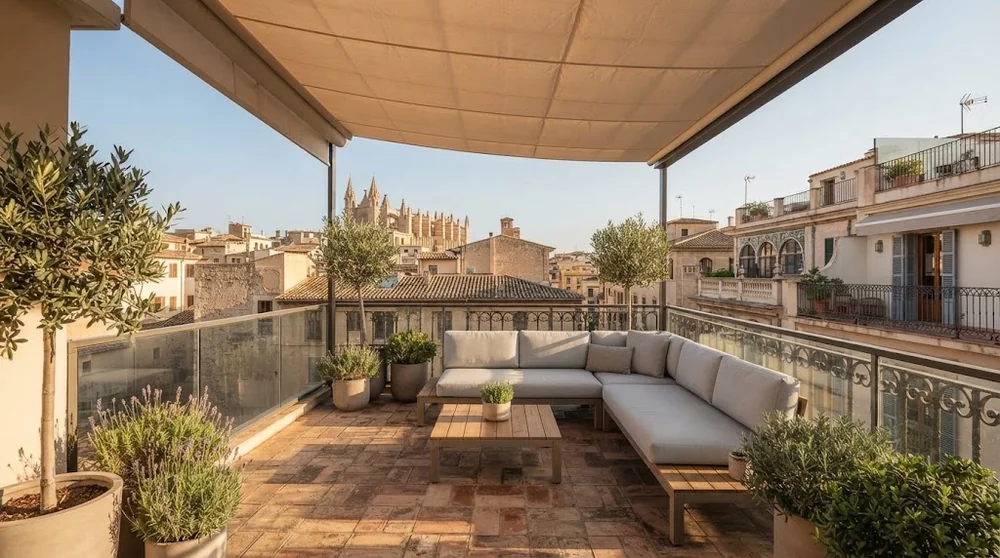
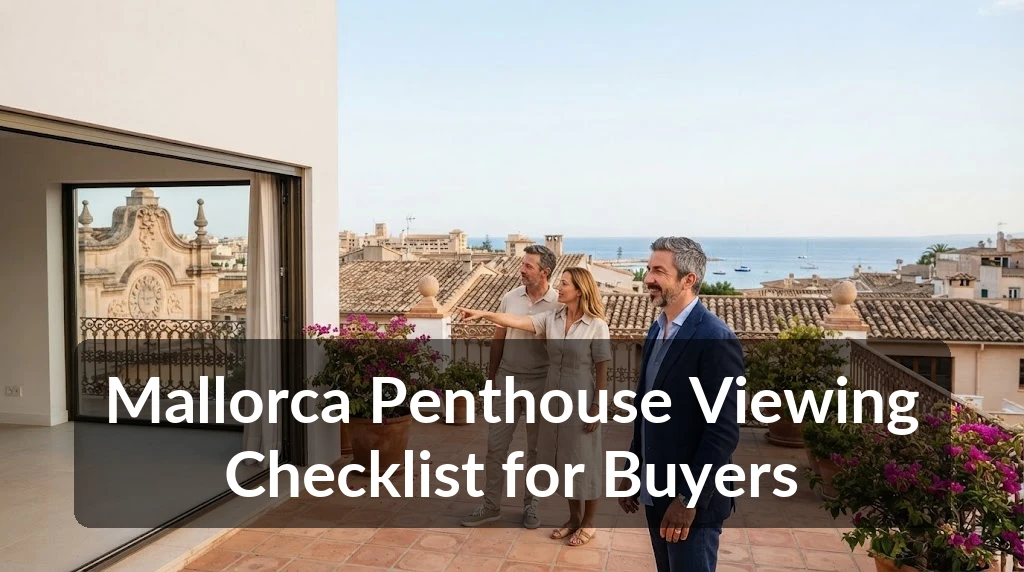
    Property adviser and buyers inspecting a penthouse terrace in Palma

    Request the penthouse documents before viewing

    Ask for paperwork before you travel, not after you have fallen for the flat. Sellers and agents who answer quickly tell you something useful, and slow answers tell you something too. Always ask for the nota simple before you commit. It is the summary extract from the Registro de la Propiedad showing the registered description, owner, charges and mortgages. Your lawyer should obtain a current one, because an older copy may miss a recent charge.

    Here is the core set of documents and what each one can and cannot tell you:

    DocumentQuestion it answersReviewer
    Nota simple from the Registro de la PropiedadWho is the registered owner, how is the property described, and are there mortgages, embargoes or other charges?Independent lawyer
    Escritura (title deed)What did the seller acquire, including any stated terrace, roof rights, parking or storage?Independent lawyer
    Horizontal-division documents and community statutesIs the terrace private or a common element with exclusive use, and what rules apply to alterations and use?Independent lawyer
    Catastro informationWhat areas and use does the cadastral record show, and do they match the deed and listing?Lawyer, with technical adviser for areas
    Approved plans and alteration permissionsDoes the layout, including any enclosure or extension, match what was authorised?Architect or qualified building professional, with lawyer
    Cédula de habitabilidadIs there a habitability certificate, and does it correspond to the current layout?Lawyer, with technical adviser
    Energy certificateWhat energy rating is recorded, and is the certificate in date?Technical adviser
    Parking and storage recordsAre the garage space and storeroom registered with the flat, or documented separately?Independent lawyer

    No single document proves that a property is fully legal. Cadastral registration is not proof of planning legality, and a registry entry does not confirm that building works were authorised. Here’s where people usually come unstuck: they treat one tidy document as the whole answer. Request everything early, and let your lawyer verify the set before you are bound to anything. Where papers are missing, that is a question for the seller to answer, not a gap for you to fill with optimism.

    One extra point if you are not an EU citizen, which now includes British buyers. Ask your lawyer to determine whether a Balearic military authorisation applies to the exact property you are considering, and whether an exemption covers it. It will not be relevant to every Mallorca penthouse, but it is far better to have the answer before you reserve than after.

    Who owns the terrace and roof?

    This is the question I would put at the top of any penthouse list. Spanish apartment buildings sit under the Ley de Propiedad Horizontal (Law 49/1960), which splits a building into private parts and common elements. The consolidated text is published on the official state gazette site: Ley de Propiedad Horizontal on boe.es. Where co-ownership rules fall outside that law, the general co-ownership provisions of the Civil Code, including Article 396 on buildings divided by floors, are also on the state gazette site: Código Civil on boe.es. A penthouse terrace can fall on either side of the private and common line, and the roof above or beneath it may be treated differently again. Your lawyer reconciles the registered title, the deed, the division documents and the statutes of the comunidad de propietarios. Nobody should do that from the sales brochure.

    Private ownership of the terrace

    Sometimes the terrace is part of the flat itself, described in the title with its own area. In that case the deed and registry description should say so clearly. Do not rely on a marketing figure for the terrace. A privately owned terrace surface can still sit on a structural slab and roof system that the community owns, so ownership of the surface does not settle every question.

    Common property with exclusive use

    Many penthouses have an exclusive-use roof terrace. The roof remains a common element, but the documents give one owner the right to use it. Exclusive use is not ownership. It may come with conditions on alterations, maintenance and access, and those conditions normally sit in the statutes or the division documents.

    Access for communal maintenance

    Roofs carry aerials, water tanks, extraction outlets, solar panels and sometimes air-conditioning plant. Ask whether neighbours, the building administrator or technicians have a right to cross the terrace, and how that is arranged. A locked door does not establish title, and a private key proves only that somebody has used the space. Roofs are not one single thing. Railings, waterproof membranes, the structural slab and the surface finish can each require a separate legal analysis, and responsibility for repairs depends on the element affected and the cause of the damage. I will not give you a blanket rule here, because there is not one.

    Inspect waterproofing, drainage and terrace alterations

    Terraces on top floors take the full weight of sun, rain and foot traffic, so waterproofing failure is one of the most expensive faults a penthouse can have. A viewing is not a survey. Your job is to notice and record, then pass the evidence to a specialist. The table translates what you might see into evidence to request and the professional who should follow up.

    CheckVisible warningEvidence to requestSpecialist
    Ceilings below the roofStaining, fresh paint patches, flaking or bubbling plasterDated leak history, repair invoices, insurance correspondenceArchitect or qualified building professional
    Terrace surfaceVisibly lifted, cracked or displaced tiles; loose edgesRecords of resurfacing, contractor details, any warrantyBuilding professional
    Drainage outletsBlocked or debris-filled outlets; water marks suggesting poolingMaintenance records, seller’s account of heavy-rain behaviourBuilding professional
    Door and window thresholdsDamp marks, swollen frames, little height between terrace and interior floorPhotographs over time, any complaint to the communityBuilding professional
    Flashing and perimeter edgesCracked sealant, gaps where the membrane meets walls or railingsWaterproofing works records and warrantiesWaterproofing contractor via your adviser
    Reported poolingSeller or neighbour mentions standing water after rainCommunity minutes recording the issue and any diagnosisBuilding professional, with lawyer for liability

    Ask the seller for a written leak history, repair invoices, warranties and any insurance correspondence. A clear record is reassuring. A vague answer such as “it was sorted years ago” is not evidence.

    Keep your own inspection safe and passive. Do not run flood tests, load the terrace, climb onto roofs or lean over unprotected edges. Those tests can cause damage, create liability and put you at physical risk. A building professional can arrange proper testing with the owner’s permission.

    Alterations need separate scrutiny. Pergolas, glazed enclosures, outdoor kitchens and hot tubs each raise three distinct questions: planning permission from the municipality, approval or rules from the community, and a structural and waterproofing assessment. A yes to one does not answer the others. A previous owner’s enclosure may have been built without any of them, and you would inherit the problem. Repair responsibility after a leak also turns on the cause. A defect in the building’s waterproofing is analysed differently from damage linked to a private alteration, so keep the evidence trail intact.

    Drainage outlet and sliding-door threshold on a tiled penthouse terrace

    Test heat, wind, noise and lift access

    A penthouse can look perfect on a calm spring morning and be a different place in August. Visit at least twice, at contrasting times of day, and ideally in different conditions. Even then, treat your observations as clues. Two visits do not prove how the flat performs across a whole year.

    Outdoor comfort

    • Shade and orientation: note where the sun falls and how much of the terrace has permanent shade or a usable awning.
    • Wind exposure: check how furniture, plants and awnings would cope on an open top floor.
    • Coastal corrosion: look at railings, door tracks and metalwork for rust or salt damage if the building is near the sea.
    • Overlooking: stand where you would sit and see which windows and balconies can see you.

    Indoor services

    • Glazing and heat: check how much sun enters, what blinds or shutters exist, and how hot the rooms feel.
    • Cooling maintenance: ask for service records for air conditioning, and where the outdoor units sit.
    • Water pressure: with the seller’s permission, run taps and showers at the same time on the top floor.
    • Noise: listen for rooftop plant, extraction fans and the lift shaft, particularly from the bedrooms.

    Everyday access

    • The full route: walk from the street and the parking space to the front door, carrying something heavy if you can.
    • Final stairs: check whether the lift stops one floor short, which matters for older buyers and anyone with mobility concerns.
    • Private lift security: if the lift opens straight into the flat, ask how access is controlled and who maintains it.
    • Maintenance routes: ask how technicians reach shared equipment on the roof, and whether that route crosses your terrace or flat.

    A word of personal opinion rather than a rule, because access needs change faster than most buyers expect:

    Judge the stairs and the lift for the person you will be in ten years, not the one standing on the terrace today. A last flight that feels like exercise now can become a daily obstacle as your needs change.

    Lift landing with a short staircase leading to a top-floor apartment

    Compare internal space, terrace area and views

    Listings often quote one large figure that blends several different measurements. Ask for each area separately: usable internal area, constructed area (which can include a share of walls and structure), any allocated communal area, and the terrace area stated on its own. These are not interchangeable, and a figure that mixes them can make a flat look cheaper per square metre than it is.

    Reconcile the listing, the approved plans, the title and the cadastral record. Where they disagree, ask why. A larger terrace in the marketing may reflect an enclosed or extended area, an included common element or simple rounding. Neither the registry nor the cadastre alone proves planning legality, so your lawyer and technical adviser should explain any gap. There is no universal terrace multiplier, and no single percentage discrepancy should be treated as proof that this property’s measurements and legal position are acceptable; ask your advisers to explain each difference. Avoid calculating a price per square metre from blended indoor and outdoor figures.

    Views deserve the same scepticism. A penthouse in central Palma and a top-floor flat in a coastal community elsewhere on Mallorca face different questions about neighbouring plots, height limits and future building. Check what the municipality’s planning information says about nearby land and any permitted development. Nobody can guarantee a view for ever, and a seller’s confident reassurance is not a planning document.

    Penthouse terrace with an awning and neighbouring balconies in Palma

    Check community debts, roof works and derramas

    A penthouse is only as sound as the building around it. The comunidad de propietarios shares costs for the roof, lift, façade and common areas, and a derrama is a special levy raised for works not covered by the regular budget. Ask the seller, through the administrator, for:

    • the latest annual accounts and current budget;
    • the community statutes and any internal rules;
    • minutes of recent meetings, with two to three years being a practical request rather than a universal legal obligation;
    • a certificate confirming whether the seller owes anything to the community;
    • details of approved special levies, including amounts, dates and who pays them;
    • lift maintenance and inspection records, plus any quotes for replacement;
    • any dispute, claim or insurance matter linked to the roof or terraces.

    The debt point matters because it can follow the flat, not just the seller. As of October 2026, Article 9.1.e of the Ley de Propiedad Horizontal (Law 49/1960) makes the acquired property answerable for qualifying community debts attributable to the part of the year in which the purchase takes place and the three preceding calendar years. The same article ordinarily requires the seller to declare the state of community debts and to provide the matching community certificate for the public conveyance deed, unless the buyer expressly waives it. Do not agree to a waiver until your lawyer has reviewed the position. Your lawyer should also confirm the current consolidated wording on the day you buy, and settle how debts and levies are handled in the contract.

    Approved but unbilled levies need the same attention. As of October 2026, Article 17.11 of the same law assigns improvement levies to the owner of the flat when payment becomes due. That is your liability to the community. It is separate from any reimbursement the buyer and seller negotiate between themselves, so a deal on who bears a voted-but-unbilled levy must be written into the contract, not left to goodwill.

    For roof problems, the community minutes may show whether an earlier leak was diagnosed, whose responsibility it was held to be, and whether it was fixed. Technical specialists diagnose the defect and its cause. Lawyers assess legal responsibility, and where liability is disputed it may need agreement between the parties or a decision by a court. Keep those two questions separate, and use independent advisers rather than relying on the seller’s agent for either.

    Finally, look at the running costs of the flat itself. Ask for the community fee, and for recent utility and insurance bills. Community fees on a penthouse can differ from those of lower flats because the building may allocate costs by share, so confirm the figure and what it covers.

    If you would like a second pair of eyes on a specific listing before you travel, send me the details and the documents you have so far, and I will tell you which of the points above look thinnest.

    Questions about a penthouse you are considering in Mallorca? Message David on WhatsApp for a plain-English first look at your documents and the points to raise with your lawyer.

    Confirm your intended use before committing

    Decide how you will use the penthouse and test that plan against the rules. Own use, residential letting and tourist accommodation are three different things, and permission for one does not give you the others. Tourist letting is the one that catches buyers out.

    As of October 2026, the Balearic tourist-accommodation rules are in Decreto-ley 4/2025 as amended by Ley 4/2026. In summary, new activity declarations for ordinary flats under horizontal ownership are prohibited, subject to statutory exceptions. Existing authorisations and the letting of a principal home are treated separately, and your lawyer should check each of those categories for this exact property. Do not assume anything is transferable to you.

    The community adds a second layer. As of October 2026, Article 7.3 of the Ley de Propiedad Horizontal requires express prior community approval for new qualifying tourist activity, and Article 17.12 requires a three-fifths majority of both owners and ownership quotas to adopt it. The absence of a prohibition in the statutes is not enough. Ask your lawyer to check Balearic law, Consell de Mallorca records, the municipal position, the statutes and the minutes for this exact property, and to look separately at transitional treatment and any existing activity. An advertised licence is not enough on its own. Ask what is actually registered, in whose name, and whether it survives the sale.

    One point for British buyers. After Brexit, owning a property in Spain does not itself give you a right to reside or to stay without limit. Immigration status is a separate matter from ownership and from holiday-letting permission, and I will not turn this checklist into a visa or tax guide. The UK government publishes current entry requirements for Spain here: entry requirements for Spain on gov.uk. If your plans depend on living in Mallorca beyond visa-free stays, take specialist advice before you pay a deposit. As a non-EU buyer, also ask your lawyer to confirm whether the Balearic military authorisation mentioned earlier applies to your purchase. Let me put it plainly: ownership, letting permission and immigration status are three separate questions, and each needs its own answer.

    If you want to test how ready you are before you book flights, a short quiz can show you which parts of the checklist you have covered and which still need work.

    Not sure which checks you have missed? Take the short Mallorca penthouse quiz and see which documents and questions to chase before you pay a deposit.

    Decide what needs resolving before a deposit

    There is no pass mark for a penthouse. An arbitrary score could let a strong view outweigh a serious legal defect, which is exactly the trap you are trying to avoid. Sort each finding into one of three groups instead.

    StatusWhat it looks likeExample findings
    Documented and acceptableEvidence supports the point and your advisers see no concernTerrace rights confirmed in title and statutes; clean debt certificate
    Unresolved pending specialist reviewEvidence is missing or unclear and needs a lawyer or technical adviserUnclear roof status; old leak with no repair invoice; enclosure without plans
    Unacceptable to youThe issue conflicts with your plans, budget or comfort whatever the advisers sayMissing terrace-rights evidence you cannot resolve; recurring leaks; unapproved enclosure; unaffordable levies; unsuitable access

    Your independent lawyer advises on title, statutes, debts, contract terms and permitted use. An architect or other appropriately qualified building professional advises on the roof, waterproofing, structure and approved layout. Choose advisers who work for you, not for the seller or the selling agent, and ask each to confirm in writing what they have and have not checked.

    Reservation and arras terms vary, and refunds cannot be assumed. Have your lawyer read the paperwork before you sign or pay, and ask for any outstanding checks to be reflected in writing. If an important point stays unresolved and the seller will not give you time, the honest answer may be to walk away.

    Mallorca penthouse viewing questions

    How do I know whether the penthouse terrace belongs to me?

    Ask your independent lawyer to check the registered title, deed, horizontal-division documents and community statutes. A terrace may be privately owned or a common element allocated for exclusive use. Exclusive access does not establish ownership, and the underlying roof structure may have a different legal status from the terrace surface.

    Who pays if a penthouse roof terrace leaks?

    Responsibility depends on the legal status of the affected element, the cause of the leak and the applicable documents and law. Structural or waterproofing defects need a different analysis from damage caused by private alterations or neglected maintenance. Obtain a technical diagnosis and legal review before accepting the seller’s allocation of responsibility, and bear in mind that a disputed liability may need agreement or adjudication.

    Should I arrange a survey before paying a reservation deposit?

    Arrange an independent technical inspection before any binding commitment where possible, especially if there are leaks, alterations or uncertain roof condition. Have your lawyer review the reservation terms before you sign or pay. If checks remain outstanding, ask the lawyer to negotiate written protections rather than assuming the deposit is refundable.

    Can I add a hot tub or enclose the terrace?

    Do not assume that private use allows structural changes. A hot tub needs assessment of loads, waterproofing and services by an appropriate professional. Enclosures and other alterations may require municipal permission and community approval. Ask your lawyer and technical adviser to establish the requirements for the specific building before proceeding.

    Can I use a Mallorca penthouse for holiday lets?

    Do not assume so. As of October 2026, Decreto-ley 4/2025 as amended by Ley 4/2026 prohibits new activity declarations for ordinary flats under horizontal ownership, subject to statutory exceptions, and existing authorisations and principal-home letting are treated separately. New qualifying activity also needs express prior community approval under Article 7.3 of the Ley de Propiedad Horizontal, adopted by a three-fifths majority of owners and quotas under Article 17.12. Ask a local lawyer to verify the property’s exact position, including transitional treatment, and remember that an advertised licence is insufficient evidence on its own.

    What I would settle before paying a deposit

    My advice to every British buyer is to treat the penthouse viewing as the start of an evidence-gathering exercise, not the moment of decision. The terrace, the roof and the lift matter more than the view, because they decide what you can use, what you must repair and what you will be asked to pay. Ask for the nota simple, deed, statutes, plans and community records early, and put each finding into one of the three groups above.

    Ten years on the Costa del Sol have taught me that most expensive surprises were visible beforehand, usually in a document nobody requested. Use your lawyer for title, levies and permitted use, and a qualified building professional for waterproofing, structure and layout. Everything here reflects my general experience as a Marbella-based adviser to English-speaking buyers, not a view on any particular Mallorca building. The legal references are Law 49/1960 and the Balearic tourist-accommodation rules as of October 2026, and both need confirming on the day you buy.

    General information only: this article is not legal, tax or technical advice and does not guarantee any outcome. Laws, local rules and practice change, and every property is different, so take independent, property-specific legal and technical advice before reserving, paying or signing anything.