Category: Buying Property in Spain

  • Documents Needed to Buy Property in Spain: NIE, Bank, POA

    Documents Needed to Buy Property in Spain: NIE, Bank, POA

    Before you sign anything for a flat in Fuengirola or a townhouse outside Alicante, the paperwork deserves a quiet weekend of your attention. Foreign buyers who sort out identification, payment routes and representation early tend to sign contracts on their own timetable rather than the seller’s. This guide sets out which documents Spain genuinely requires, which ones depend on a particular bank or lender, and which are simply a convenience.

    Foreign buyers normally need a valid identity document (for British buyers, a passport) and an NIE to complete a Spanish property purchase, together with evidence of where their funds come from. A Spanish bank account is often practical but is not a universal legal requirement. A power of attorney is optional when you attend personally and useful when a representative acts for you.

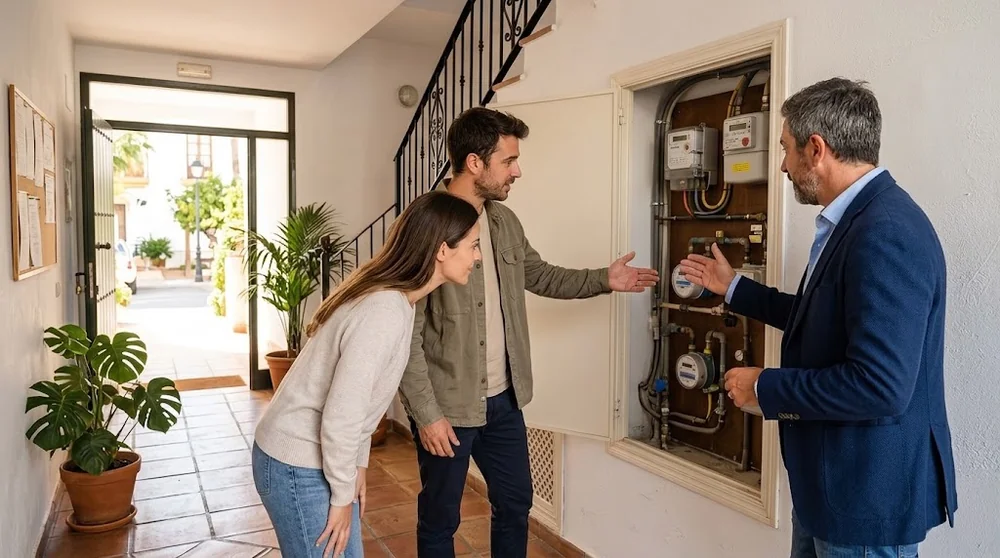
    Property adviser discussing purchase preparations with two buyers in a Marbella apartment

    Which Documents Do Foreign Buyers Actually Need?

    Core documents for a foreign buyer of Spanish property (as of October 2026)
    DocumentPurposeRequired or conditionalWhen neededWho confirms acceptance
    Valid identity documentProves your identity to the notary, bank and authorities; British buyers normally use a passport, EU nationals may use an accepted national identity cardRequiredNIE application, bank onboarding, completionNotary, bank, police or consulate, each for its own procedure
    NIEIdentifies you on the deed and for Spanish tax and registry formalitiesRequired for completionIdeally before signing a private contract; certainly before completionNotary and your lawyer
    Payment or banking arrangementMoves the price, taxes and fees in an accepted wayConditional on the payment route and any lenderBefore the deposit and again before completionLawyer, notary, lender, seller’s side
    Source-of-funds evidenceShows where the purchase money came fromLegally grounded due diligence; evidence requested depends on the transaction and risk assessmentAccount opening and before funds are releasedBank, notary and other covered professionals
    Power of attorneyLets a representative act for youOptionalOnly if someone signs or applies on your behalfReceiving notary, bank, lender

    The table separates three kinds of requirement that often get blurred together. Identification, meaning an accepted identity document and your NIE, is what the notary and the tax system need to put your name on a Spanish deed. British buyers will normally show a passport. EU nationals may use an accepted national identity card for the NIE application, and Article 6 of Real Decreto 304/2014 recognises further identification documents for anti-money-laundering purposes. Even so, the notary and the bank each confirm which document they will accept for their own procedure, so ask both before signing day.

    Anti-money-laundering checks arise from statutory obligations under Ley 10/2010 (as of October 2026). Banks, notaries and other covered professionals apply risk-based procedures, so the supporting documents requested vary. A mortgage lender then adds conditions of its own. A power of attorney, by contrast, is a convenience you choose rather than a legal precondition for buying.

    Let me put it plainly: the legal minimum and the practical minimum are not the same list. A cash buyer attending the notary in person might complete with a passport, an NIE and a properly documented payment. A mortgage buyer living in Leeds might need a Spanish account, a lender-approved power and several weeks of extra paperwork. The sensible approach is to match each document to the purchase stage where it is actually needed, which is exactly what the checklist further down does.

    NIE for Buying Property: Number, Not Residency

    NIE versus TIE

    The Número de Identidad de Extranjero (NIE), or foreigner identity number, is a personal and unique number that Spanish authorities assign to foreigners with economic, professional or social dealings in Spain. Buying a home is a textbook economic reason. The Tarjeta de Identidad de Extranjero (TIE) is a physical identity card issued to foreigners who hold permission to live in Spain, and it displays the holder’s NIE. A non-resident buyer receives the number, usually on a certificate sent by email or issued on paper, not a TIE card. Spanish consular guidance states that an NIE obtained through a consulate identifies the holder to Spanish public administrations but does not entitle the holder to reside in Spain. An NIE is an identification number; it is not residence or work permission.

    Each foreign co-buyer needs their own

    Every foreign individual who will appear on the deed needs a separate NIE. A couple buying jointly therefore needs two numbers, and an adult child taking a share needs a third. There is no household NIE.

    Already have an NIE?

    The number is permanent, so do not apply for a second one if you held an NIE from an earlier job, holiday let or purchase. The certificate is a separate question. Some notaries and banks ask for a recent certificate or other current evidence linking the number to your present passport, particularly after a passport renewal. There is no single universal expiry date for that evidence, so ask the notary and bank what they will accept well before signing day.

    How to Apply for an NIE

    There are three common routes to an NIE for a property purchase. Which one suits you depends on where you live, how soon you need the number and whether you can travel. Each office sets its own appointment system and document checks, so treat any generic checklist, including this one, as a starting point.

    1. In Spain, in person. You book an appointment, known as cita previa, at a Policía Nacional foreigners’ office or a police station that handles NIE applications. The Policía Nacional is Spain’s national police force, and its foreigners’ services assign NIE numbers. Appointment availability varies enormously between provinces and even between towns on the same stretch of coast.
    2. At a Spanish consulate abroad. Spanish consulates accept NIE applications from people living in their consular district, which is the geographical area each consulate serves. A buyer living in Manchester, for example, would normally deal with the consulate covering the north of England rather than choosing any consulate at random. The consulate forwards the application to Spain, and the number is usually emailed back.
    3. Through an authorised representative. Where the receiving office accepts representation, someone else can submit the application for you. Spanish consular guidance requires a power of attorney that expressly authorises the representative to present the NIE application, together with the original and a copy of the representative’s own identity document.

    For any of these routes, expect to prepare the following documents:

    • The EX-15 form, which is the official application form for an NIE, completed and signed, stating the economic reason for the application, such as a property purchase.
    • Your valid identity document and copies of it: British buyers use a passport, while EU nationals may use an accepted national identity card. Some offices ask for certified copies when the application is made by a representative.
    • Supporting evidence of the reason, for instance a reservation document or a letter from your lawyer, if the office requests it.
    • The fee form Modelo 790 código 012, the official tax form used to pay the police fee for foreigners’ documentation, paid at a Spanish bank when applying in Spain.
    • Representation evidence where someone applies for you, including any translation or apostille the office demands.

    As of October 2026, the Spanish police fee schedule under Orden PJC/617/2025 sets €9.84 for assigning an NIE at the applicant’s request. That figure is the government charge only and excludes any professional help. Consulates charge in local currency and set their own figures, so confirm the current consular charge directly before you apply.

    Timing has three separate parts that people tend to merge into one. First comes the wait for an appointment, which can be days or weeks. Second comes issuance after submission: the Manchester consulate’s guidance normally gives two weeks, with possible extensions, while the London consulate’s published page has stated three weeks. Those are local consular estimates, not a Spain-wide promise. Third comes your own preparation time for forms, copies and any powers, which is entirely in your hands.

    Do You Need a Spanish Bank Account?

    A non-resident bank account is a Spanish account opened by someone who does not live in Spain for tax purposes. It is often the easiest way to pay a deposit, receive a mortgage, pay taxes and settle running costs. A Spanish bank account is often convenient, but Spanish law does not make one a universal condition for buying property. Whether you need one in practice depends on how the deal will be paid and who is lending.

    Cash purchase versus mortgage

    A cash buyer can sometimes fund completion without opening a Spanish account, provided the lawyer, the notary and the seller’s side agree how the money will arrive and be documented. A mortgage is different. Spanish lenders normally want the agreed loan disbursement and repayments running through their own account, so a lender’s condition can make an account effectively unavoidable for that transaction. That account arrangement does not by itself oblige you to buy the lender’s own insurance; any insurance conditions should be set out separately in the loan offer. Either way, it is an institutional requirement, not a general rule of property law.

    Eligible EU IBANs versus UK accounts

    The Banco de España, Spain’s central bank and banking supervisor, published guidance on IBAN discrimination in April 2025. Under EU rules, a payer or payee generally cannot refuse a covered euro credit transfer or direct debit simply because the payment account is located in another EU member state. That protection applies to eligible euro payment accounts in the EU and to covered payment types. A UK-issued account should not be assumed to enjoy the same protection or acceptance after Brexit, even though UK banks can send euro payments.

    Completion payment versus running costs

    The completion payment is a one-off event, and the notary records how the price is paid. Running costs are recurring: community fees, local property tax, utilities and insurance are commonly paid by Spanish direct debit, which is where a local account earns its keep. Here’s where people usually come unstuck: they assume a transfer from home will be fine on completion day. Confirm the exact payment method, whether a bank draft, a transfer or another route, with your lawyer, any lender and the notary well in advance.

    Bank Documents and Proof of Funds

    Opening an account and moving purchase money both trigger checks, and banks are not shy about asking. Expect requests in five areas: identity (passport or other accepted identity document), address (a recent utility bill or bank statement), tax residence (where you pay tax, sometimes with a tax identification number), economic activity (employment, pension or business details) and source of funds (where the purchase money came from). A Spanish bank may also request evidence of non-residence, such as a certificate confirming that you are not resident in Spain. The duty to check is statutory, but the exact evidence varies by bank and by customer risk profile.

    Illustrative source-of-funds evidence and transfer trail (requirements vary by bank)
    Source of moneyEvidence of originTransfer trail to show
    SavingsStatements showing the balance built up over time, payslips or pension statementsSavings account to your current account to the agreed completion payment account
    Sale of a propertyCompletion statement from the sale and the solicitor’s payment confirmationSolicitor’s client account to your account to the purchase account
    InheritanceGrant of probate or equivalent, estate accounts and executor’s payment letterEstate account to your account to the purchase account
    GiftSigned gift letter and the donor’s own evidence of where the money came fromDonor’s account to your account to the purchase account

    The aim is an unbroken chain from where the money originated to the account that pays for the property. If someone proposes that funds go into a lawyer’s client account or a notarial deposit instead, treat that as a separate arrangement to confirm in writing: verify who owns the account and that the notary or lawyer actually accepts funds that way. Bank checks do not disappear below any particular amount, and no transfer size is automatically safe from questions. Joint purchasers should make sure the names on the deed, the accounts and the evidence match, since a payment from an account in only one spouse’s name may prompt extra questions. Third-party transfers, such as a parent paying the seller directly, deserve particular care and should be agreed with your lawyer first. Documents in English may need a sworn translation if the bank or notary asks. Finally, allow time for funds to arrive and clear before completion, because money still in transit does not complete a purchase.

    Closed passport cover and folders beside a laptop on a desk

    Power of Attorney: Scope and Safeguards

    A poder notarial is a power of attorney granted before a notary, authorising a named representative to carry out specific legal acts on your behalf. It is genuinely useful when you cannot be in Spain for the NIE appointment, the account opening or completion, and it is how many people buy property in Spain without travelling. It is unnecessary if you are happy to attend everything in person. A transaction-specific power limited to one identified property is very different from a general power that lets someone sell, borrow or sign almost anything in your name.

    Depending on your purchase, a power might include express authority for the following, and only those that apply:

    • Applying for your NIE and collecting the certificate.
    • Negotiating and signing private contracts, including reservation and deposit agreements, for a named property.
    • Opening and operating a Spanish bank account, if the bank accepts representation for that step.
    • Signing the purchase deed at a stated maximum price.
    • Filing purchase taxes and handling registration and utility formalities.
    • Borrowing under a mortgage on stated terms, where a loan is involved.

    Sensible limits include identifying the property, setting a maximum price, requiring your written approval before key signatures and stating an expiry date. Ask your representative to disclose any conflict of interest, such as receiving a commission from the seller or developer. When the purchase is finished, consider arranging a formal revocation before a notary, notifying the representative and any bank or institution that has seen the power, and recovering authorised copies where appropriate. Under the Civil Code, third parties acting in good faith may be protected until they learn of a revocation, so ask your lawyer to confirm when the revocation becomes effective against them.

    Know who does what. Your independent lawyer acts for you, checks the property and drafts or reviews the documents. A Spanish notary is an impartial public official who authenticates documents and checks legality, but who does not represent either party. And a power does not oblige a bank to accept your representative: a bank may still insist on its own identification procedure with you personally, sometimes by video call or visit.

    David’s view: the most worrying documents I see are not missing ones but overly generous ones. A power that allows someone to sell, mortgage or buy any property without limits is far more authority than a single purchase needs. Narrow and dated beats broad and open-ended every time.

    Signing a Spanish Power of Attorney Abroad

    If you live in the UK or elsewhere, you have three realistic ways to sign a power for use in Spain. Each produces a different kind of document, and the receiving notary in Spain has the final say on whether it is usable.

    Routes to a Spanish property power of attorney (as of October 2026)
    RouteLanguageAuthenticationPoints to check
    Spanish notary in SpainSpanish, with interpreter if neededNone further for use in SpainRequires you to be in Spain to sign
    Spanish consular notarial serviceSpanishGenerally no foreign-document apostille needed for use in SpainAppointment availability and wording approved in advance
    Foreign notary, such as a UK notary publicOften bilingual or English with translationHague Apostille or applicable legalisationTranslation, legal equivalence, scope and authorised copy

    A Hague Apostille is a certificate issued under the 1961 Hague Convention that confirms the authenticity of a signature, seal or stamp on a public document so another member country can recognise it. In the UK the Legalisation Office of the Foreign, Commonwealth and Development Office issues apostilles. As of October 2026, GOV.UK lists £45 per document for a standard paper apostille, plus courier or postage. An e-Apostille option is listed at £35, but only use it once the Spanish recipient has confirmed acceptance.

    Authentication is not the same as adequacy. An apostille proves that a signature or seal is genuine; it does not prove that the power contains sufficient authority or meets Spanish legal standards. Do not assume that an ordinary solicitor’s witness signature or every foreign notarisation produces an acceptable property power. Send a draft to your Spanish lawyer and the receiving notary first, confirm translation and authorised-copy requirements, and only then sign. Government charges are separate from drafting, translation and courier costs, which are quote-dependent.

    Buyer meeting a notarial professional in a Spanish office

    Your Checklist Before Arras and Completion

    The contrato de arras is a private deposit contract in which buyer and seller agree the price and a completion deadline, with a deposit paid by the buyer. The label matters less than the wording. Confirmatory arras treat the deposit as part payment, and a breach is handled under the general rules for non-performance. Penal arras add a penalty for breach without releasing either side from the contract. Only penitential arras under Article 1454 of the Civil Code work as a withdrawal mechanism: the buyer may walk away by losing the deposit, and the seller by repaying it doubled. So forfeiture or double repayment follows from an applicable penitential clause, not from every deposit contract. An administrative delay, such as a slow NIE appointment, does not automatically extend the contractual deadline. Use this sequence:

    Before paying reservation money

    1. Instruct an independent Spanish property lawyer who does not act for the seller or agent.
    2. Ask your lawyer to review the reservation document, its refund conditions and its legal effect before any money leaves your account.
    3. Obtain the nota simple, the Land Registry extract showing the registered owner, description and charges such as mortgages or embargoes, before committing. Always ask for the nota simple before you commit. Check planning and legal status separately, because the registry extract does not prove an extension or pool was legally built.

    Before signing arras

    1. Arrange NIEs for every foreign buyer and prepare any power of attorney.
    2. Agree financing: either confirmed cash funds or a lender’s approval in principle, with a clause covering what happens if the loan falls through.
    3. Agree identification requirements, the type of arras and realistic deadlines in the contract, with clauses addressing administrative delay where possible.

    Before completion

    1. Confirm that the notary and bank accept each buyer’s identification and NIE evidence.
    2. Obtain bank acceptance and complete source-of-funds checks.
    3. Move funds early enough to clear, confirm the payment method with lawyer, notary and seller, and keep the payment evidence.
    4. Check that any representative holds sufficient, notarially accepted authority for every act on the day.
    5. Approve the draft deed and completion statement in writing.
    6. Complete, then follow up on tax filings, registration and utility transfers.

    Mortgage buyers have extra steps. A representative needs express authority to borrow on stated terms. Under Ley 5/2019, the lender must provide the documentation, including the FEIN (the European standardised information sheet) and the FiAE (the standardised warnings sheet), at least ten calendar days before signing (as of October 2026). Article 15 then requires a pre-signing transparency procedure before the notary, which the borrower or an appropriately authorised representative may attend. That preliminary act must be completed no later than the day before the mortgage deed is signed. Regional rules may add requirements, so confirm with the lender and notary how a representative can attend and book the dates with room to spare.

    David’s view: hidden debts and unlicensed extensions cause far more heartache than slow paperwork. Ten years on the Costa del Sol have taught me that the buyers who sleep best are the ones whose lawyer checked the building before anyone checked the bank balance.

    Fees and Timelines Without False Promises

    Administrative costs are modest beside the purchase price, but they add up and they arrive from different directions. The table separates official charges from professional and banking costs, and shows the typical waiting periods that catch people out.

    Administration budget and timing for a foreign buyer (as of October 2026)
    ItemAmountTypical timingNotes
    NIE appointment in SpainNo separate chargeDays to weeks, depending on the officeBook as early as possible
    NIE government fee in Spain€9.84Paid before or at the appointmentPaid with Modelo 790 código 012
    Consular NIE charge and issuanceSet locallyManchester normally two weeks; London has stated three weeksLocal estimates; confirm with your consulate
    Professional assistanceQuote-dependentAgree at instructionLawyer or gestor fees
    Power drafting and notarial workQuote-dependentAllow for drafting, approval and signing appointmentVaries by route and length
    UK paper apostille£45 per documentUsually up to 25 working days, plus deliveryPlus courier or postage; delays possible
    UK e-Apostille£35 per documentUp to two working daysOnly if the Spanish recipient accepts it
    Sworn translationQuote-dependentAsk the translatorPer document or page
    Courier and deliveryQuote-dependentSeveral days internationallyOriginals often required
    Bank account feesQuote-dependentOnboarding can take weeksVaries by bank and profile
    Payment costsQuote-dependentAllow clearing time before completionExchange margins, transfer or draft fees

    These timings are October 2026 estimates, not promises. Recheck GOV.UK and the relevant Spanish office before you book a completion date, because a paper apostille alone can swallow five weeks. Purchase taxes are a separate budget. They depend on the region, whether the property is new or resale, and your circumstances, so there is no single Spain-wide rate to quote here. Ask your lawyer or tax adviser for a property-specific calculation before you agree a price.

    British Buyers: Ownership Is Not Residency

    Since Brexit, British buyers are non-EU nationals in Spain, and three matters must be kept apart. Owning property is a question of property law. Holding an NIE is a question of identification. Living in Spain beyond permitted visits is a question of immigration permission, which neither the deed nor the number provides. Buying a home in Spain does not by itself give a British buyer the right to live there. My advice to every British buyer is to plan extended stays separately, with current immigration advice.

    Not sure which of these documents apply to your own purchase? A few quick questions can point you in the right direction before you speak to a lawyer.

    Take my short buyer-readiness quiz to see which documents you still need for your Spanish purchase.

    Location can matter too. Under Ley 8/1975 on zones and installations of interest to national defence and its implementing regulation, Real Decreto 689/1978 (as of October 2026), some areas can require military authorisation before non-EU buyers acquire property. Property-specific checks are especially sensible on islands such as Mallorca and Tenerife. That does not mean every island purchase needs military permission; it means your lawyer should check whether the specific plot falls within a designated zone and whether any exemption applies, before you sign. Elsewhere, appointment availability and contract practice differ between Malaga, Marbella and Alicante, so plan around local conditions rather than national averages.

    Frequently Asked Questions

    Do I need an NIE to buy property in Spain?

    Foreign buyers normally need an NIE to complete the purchase and handle the associated Spanish tax and registration formalities. Arrange it early for every foreign co-buyer. A reservation or private deposit agreement is a separate stage: ask your lawyer which identification it requires and how an outstanding NIE application affects the contractual deadlines.

    Do I legally need a Spanish bank account to buy property?

    A Spanish account is often convenient, but it is not a universal legal condition for buying property. The acceptable route depends on completion arrangements and any mortgage lender’s requirements. Eligible EU-issued accounts benefit from rules against IBAN discrimination for covered payments. A UK account should not be assumed to receive the same protection or acceptance.

    Can I buy property in Spain without travelling there?

    A properly drafted power of attorney can allow a representative to handle purchase documents and sign for you in Spain. Remote completion still depends on accepted identification, cleared funds and sufficient authority. Banks and mortgage lenders may require additional checks, so ask your independent lawyer to confirm the entire process before agreeing a completion date.

    Can someone apply for my NIE on my behalf?

    An authorised representative can apply where the receiving office accepts representation and the documents meet its requirements. The power should expressly cover the NIE application. Identity-document certification, translation and authentication requirements depend on the document and submission route. Confirm these with the relevant police office or consulate rather than relying on a generic checklist.

    Can I sign a Spanish power of attorney in the UK?

    You can use a Spanish consular notarial service or sign before a suitable UK notary, normally followed by an apostille for use in Spain. Translation and document requirements should be confirmed in advance. Have your Spanish lawyer and receiving notary approve the wording: an apostille authenticates the document but does not prove that its powers are sufficient.

    Does an NIE or a Spanish property purchase give me residency?

    An NIE identifies you for dealings with Spanish authorities; it is not permission to live or work in Spain. Buying a home does not by itself grant residence rights. British non-resident buyers must consider immigration permission separately from ownership and banking, and obtain current advice before planning extended stays or a permanent move.

    Conclusion

    If you only do one thing this month, instruct an independent Spanish lawyer before any money moves. Then work backwards from your intended completion date: the slowest items are usually the NIE appointment, bank onboarding and, for anyone signing a power in the UK, the paper apostille. Start those first, and you take the deadline pressure off everything else.

    Next, decide early whether you will attend in person or use a representative, because that single choice shapes your power of attorney, your bank’s identification process and, for mortgage buyers, who attends the notarial transparency appointment. Here’s where people usually come unstuck: they sign arras first and discover the paperwork timetable afterwards.

    Message me on WhatsApp to talk through your location, cash or mortgage plans and the paperwork you already hold.

    When we chat, I will ask about the area you have in mind, your travel plans and which documents you already have, so we can spot the gaps. Please do not send passports or bank statements through WhatsApp or any public form; we can agree a secure route if documents are ever needed.

    Official sources (as of October 2026): Orden PJC/617/2025 on immigration and foreigners’ fees (BOE-A-2025-12056); Ley 10/2010 on the prevention of money laundering and Real Decreto 304/2014, Article 6; Ley 5/2019 regulating real estate credit contracts, Article 15; Spanish Civil Code, Article 1454 and the provisions on revocation of mandates; Ley 8/1975 and Real Decreto 689/1978 on zones of interest to national defence; Banco de España guidance on IBAN discrimination (April 2025); Spanish consulates in London and Manchester, NIE guidance; GOV.UK, Get your document legalised.

    This article provides general information as of October 2026 and is not legal, tax or financial advice. Rules, fees and office procedures change, and David is not a lawyer or regulated financial adviser. Consult an independent Spanish property lawyer and a suitable tax adviser before signing any contract or transferring funds.

  • Offer Accepted in Spain: Your Next Steps to Completion

    Offer Accepted in Spain: Your Next Steps to Completion

    So the seller has said yes. The haggling is over, and somewhere a bottle of cava is probably being eyed up. Before you celebrate too hard, though, remember that the weeks between an accepted offer and the notary are where Spanish purchases are really won or lost. I’m David, a Mancunian who has spent more than ten years in Marbella helping English-speaking buyers through this stage, and this is what happens next.

    After your offer is accepted in Spain, ask an independent lawyer to review the agreed terms before signing or paying. The usual next steps are reservation, legal checks, a private purchase contract, financing if needed, and completion before a notary. Deposit protection and withdrawal rights depend on the contract and applicable law.

    An estate agent discussing a property purchase with two buyers on a terrace in Spain

    What an Accepted Offer Means in Spain

    Let me put it plainly: an accepted offer in Spain is not a polite gesture that binds nobody until the notary. Under Article 1450 of the Spanish Civil Code, a sale is perfected once buyer and seller agree on the property and the price, even if neither the property nor the money has yet changed hands. You can read the consolidated text of the Spanish Civil Code on the BOE website. That rule does not mean every email saying “offer accepted” creates an enforceable sale. The answer depends on what was actually agreed, how consent was expressed and which law applies.

    It helps to separate four things. Agreement on terms is the handshake on price and conditions. Contractual obligations arise when that agreement is concrete enough to be enforced, which can happen through a reservation form, an arras contract or, in some cases, earlier correspondence. Ownership normally passes through completion and delivery, which in practice usually means signing the escritura pública de compraventa, the public deed of sale, before a Spanish notary. Registration in the Registro de la Propiedad, the Spanish Land Registry, then follows and protects the new owner against third parties.

    The route described below (reservation, legal checks, a private contract, financing and completion) is the common resale pattern in Spain. It is not a compulsory procedure with identical stages, and some purchases merge or skip steps entirely.

    Your First 48 Hours After Acceptance

    The first two days set the tone for everything that follows. This is the order I would work through, and who is responsible for each step.

    1. Preserve the agreed terms. Buyer: save the emails, messages and any offer form showing the price, included furniture, conditions and dates. Agent: confirm the accepted terms to both sides in writing.
    2. Appoint an independent lawyer. Buyer: instruct a Spanish property lawyer who acts only for you and has no connection to the seller or the agent’s commission.
    3. Review the reservation draft before signature or payment. Agent: supplies the draft. Lawyer: reviews and amends it. Buyer: signs nothing and pays nothing until the lawyer has replied.
    4. Request the documents. Lawyer or agent: ask the seller for the title deed, the latest IBI (local property tax) receipt, community details, the energy certificate and any licences. Lawyer: obtains a fresh nota simple from the Land Registry.
    5. Check NIE and mortgage readiness. Buyer: confirm you hold an NIE (Número de Identidad de Extranjero, the identification number foreigners need for tax and property matters) or start the application. Lender or broker: confirm exactly what a formal application requires.
    6. Agree a provisional schedule. Lawyer and agent: propose realistic dates for checks, the private contract and completion.
    7. Verify payment instructions independently. Buyer: phone your lawyer on a number you already know before transferring anything, because an email announcing “new bank details” is a classic fraud signal.

    If you have already signed something or paid money, send the signed document and the payment record to your lawyer immediately. Do not assume that a signed reservation or payment can be cancelled freely; your position depends on the wording and the applicable law.

    Reservation Deposits: What to Check Before Paying

    A reservation stage, usually documented in a contrato de reserva (reservation agreement), is common on Spanish resales but optional. Its usual purpose is to take the property off the market for a short period while your lawyer carries out checks. Some guides report reservation deposits of around €3,000 to €6,000, but these figures are examples of negotiated practice. No statute fixes the amount, and higher sums are common on more expensive homes.

    Before paying, ask your lawyer to confirm that the document deals clearly with:

    • the agreed price and exactly what it includes;
    • the length of the reservation period and what happens when it expires;
    • signed acceptance by the seller, not just by the agent;
    • an obligation to stop marketing the property and decline other offers;
    • whether the payment is credited towards the purchase price;
    • specific refund triggers, such as undisclosed debts, title defects or planning irregularities;
    • the deadline and the evidence needed to claim a refund;
    • who holds the money, whether the agent, the seller or a lawyer’s client account;
    • the written instructions under which that holder may release it.

    If the seller has not signed the document, ask whether it binds the seller at all. The title of a document does not decide its legal effect either: a form headed “reservation” can contain wording that behaves like arras. Here’s where people usually come unstuck: they assume the money comes back automatically if a problem turns up. A reservation deposit is refundable only on the terms agreed and under the applicable law. A vague clause can leave you arguing about evidence and deadlines while your money sits in someone else’s account.

    Legal Checks Before a Larger Commitment

    Always ask for the nota simple before you commit. A nota simple is an information extract from the Registro de la Propiedad showing the registered owner, the registered description of the property and recorded charges such as mortgages or court embargoes. It is valuable, but a nota simple does not establish planning legality or structural condition, so it is the start of the checks rather than the end. The Catastro, the national property register used mainly for tax purposes, is a separate record that may describe the same property differently.

    EvidenceWhat it helps establishAdditional checkAction if unresolved
    Fresh nota simpleRegistered owner, description and chargesObtain again shortly before completionPause until each charge has a cancellation plan
    Seller identity and powersThat the signatory may sellPassports, company powers, inheritance documents, spousal consentDo not sign until authority is documented
    Registered chargesMortgages, embargoes and annotationsLender’s redemption figure and cancellation arrangementsRequire discharge at or before completion
    Catastro recordCadastral reference, use and sizeCompare with registry, deed and the physical propertyInvestigate differences before fixing the price
    Planning and occupancy documentsWhether the home and its works appear authorisedTown hall licences, any open planning files and the local occupancy document, such as a licencia de primera ocupación, a declaración responsable de ocupación in Andalucía or a cédula de habitabilidad in CataloniaSeek specialist advice; renegotiate, or withdraw only if the contract allows
    Community debt certificate and minutesUnpaid community fees and approved worksRead recent meeting minutes for agreed leviesAgree in writing who pays approved works
    IBI receiptLocal property tax positionCheck the year and that the reference matchesRequire proof of payment or a retention
    Occupants and leasesWhether the home will be emptyAsk about tenants, family occupiers and holiday-let registrationsMake vacant possession a written condition
    Energy certificateEnergy rating needed for saleConfirm it is valid and registeredAsk the seller to supply it before completion
    Independent surveyPhysical condition, damp and structureInstruct a surveyor or architectRenegotiate, require repairs, or withdraw if permitted

    Pools, extensions, enclosed terraces and boundaries deserve particular attention. A pool missing from the registered description is not automatically illegal; it may simply never have been declared. It may also have been built without a licence. Ten years on the Costa del Sol have taught me that this question is worth answering before any costly signature, because the answer can affect the price, the bank valuation and your plans. As a hypothetical example, a villa in Malaga province registered at 180 square metres but recorded at 230 in the Catastro needs an explanation, not an assumption.

    A surveyor inspecting a villa extension and boundary wall in Spain

    The Arras Contract and Withdrawal Rights

    Once the checks look satisfactory, the next stage is usually the contrato de arras, a private purchase contract signed with a deposit. A deposit of around 10% of the price is customary in Spain, but it is not a legal minimum or maximum. The legal effect of the deposit depends on how the contract defines it.

    Three types of deposit

    Confirmatory arras treat the deposit as part-payment confirming a binding contract, so a party in breach can face a claim for performance or damages. Penal arras set a penalty for breach, often without excluding other remedies. Arras penitenciales, or penitential arras, are the type covered by Article 1454 of the Civil Code (as of October 2026): the buyer may withdraw by forfeiting the deposit, and the seller may withdraw by returning double the amount.

    The “lose the deposit or return double” rule applies only where valid penitential arras were clearly agreed. Spanish courts tend to require clear wording before treating a deposit as penitential, and under other arrangements the deposit may not cap what one party can claim from the other. In Catalonia, Article 621-8 of the Catalan Civil Code governs arras under its own rules, so a purchase in Barcelona or elsewhere in Catalonia should be reviewed under Catalan law rather than the general Spanish rule.

    Terms your lawyer should check

    Ask your lawyer to confirm the price and payment schedule, the completion date, the furniture inventory, any conditions such as finance or planning confirmations, how and where notices must be sent, what happens if a deadline is missed, and who pays which costs. I won’t offer clause wording here, because a clause copied from a blog into the wrong contract is a remarkably expensive souvenir.

    Mortgage Approval, FEIN and Financing Conditions

    Three things often get mixed up. An indicative borrowing assessment tells you what a lender might offer based on your income. A valuation by an approved appraiser tells the lender what it considers the property to be worth. Binding lender documentation is what the lender actually commits to, and only binding lender documentation should be treated as a mortgage offer.

    Low valuations cause the most grief, because lenders typically lend a percentage of the lower of price and valuation. In a hypothetical case, a buyer agrees €300,000 and expects a 70% loan of €210,000. If the valuation comes in at €270,000, the same percentage produces €189,000, leaving a €21,000 gap to fund from savings. Non-resident buyers are often offered lower percentages, so ask early.

    For mortgages covered by Law 5/2019 on real estate credit contracts, the lender must provide the FEIN (Ficha Europea de Información Normalizada, the European Standardised Information Sheet) and the other pre-contractual documents at least ten calendar days before signing, as of October 2026. The borrower must also attend a separate notarial appointment before the mortgage deed to confirm understanding of the loan. Catalan consumer rules set a longer period, which your lawyer should confirm locally. How long a particular FEIN remains valid depends on what that document states.

    Mortgage refusal does not create a nationwide right to recover your deposit. Protection usually comes from an express financing condition with a clear deadline and evidence requirements. Under Article 621-49 of the Catalan Civil Code, as of October 2026, a buyer can recover amounts paid only where the contract specified the financing, the refusal is documented within the agreed period, nothing in the contract says otherwise and the buyer was not negligent.

    My view, for what it’s worth: if you need a mortgage, don’t sign arras until your lawyer and your lender have lined up the contract dates with the bank’s real timetable.

    When You Pay: Deposits, Balance and Costs

    This hypothetical €300,000 resale shows how payments fit together. The figures are an illustration, not market data.

    StagePaymentTotal paid towards priceNotes
    Reservation€5,000€5,000Credited towards the negotiated €30,000 deposit
    Private contract (arras)€25,000€30,000Completes the 10% deposit
    Completion€270,000€300,000Price balance paid at the notary
    Taxes and feesSeparateNot part of the priceBudgeted on top of the €300,000

    In this example the €5,000 reservation forms part of the €30,000 deposit; it is not an extra payment on top of the price. Taxes and fees are separate.

    On a resale, the buyer normally pays ITP (Impuesto sobre Transmisiones Patrimoniales, the regional property transfer tax). As of October 2026, the general ITP rate is 7% in Andalucía and 6% in the Community of Madrid, with the correct tax base and any qualifying relief assessed separately. On the first sale of a new home by a developer in mainland Spain or the Balearics, IVA (Spanish VAT) generally applies at 10%, plus AJD (stamp duty on documented legal acts) at the applicable regional rate, as of October 2026. Tenerife and the other Canary Islands use IGIC, the Canary Islands general indirect tax, instead of IVA, so a new build there needs its own tax review.

    Other costs to budget for usually include:

    • your lawyer’s fees;
    • notary fees for the purchase deed;
    • Land Registry fees;
    • valuation fees if you borrow;
    • bank and currency-transfer charges;
    • sworn translations and document authentication.

    Keep purchase-deed costs distinct from mortgage-deed costs, which are allocated differently under Law 5/2019, and ask for a written estimate instead of relying on rough percentages.

    From Accepted Offer to Completion: The Timeline

    The clock usually starts informally at acceptance, but the dates that matter legally are those in your signed documents. Practitioner estimates differ: Platinum Legal Spain suggests four to eight weeks for a straightforward, well-prepared cash resale, while Voya gives eight to twelve weeks, and mortgage purchases usually take longer. These timeframes are illustrative planning estimates, not official averages or guarantees.

    MilestoneResponsible personPlanning allowancePrerequisite
    Reservation signedBuyer, seller, agentFirst weekLawyer has reviewed the draft
    Legal checksBuyer’s lawyerOne to three weeksSeller’s documents and fresh registry data
    NIE and Spanish bank accountBuyer, lawyerIn parallel with checksPassport, appointment or representative
    Mortgage applicationBuyer, lenderIn parallel; often several weeksIncome evidence and valuation
    Arras signedBuyer, seller, lawyersAfter satisfactory checksAgreed terms and deposit funds
    CompletionNotary, both partiesBy the contractual deadlineFunds, NIE, FEIN period, charge cancellations

    Reservation expiry and the completion deadline are separate dates with separate consequences. If either is approaching and something remains unresolved, agree a written extension before it expires. A delay does not automatically extend a contract.

    British Buyers, Regional Rules and New Builds

    Signing remotely

    A lawyer can often complete on your behalf under a power of attorney, provided it covers the right acts: buying, paying, signing the deed, any mortgage and the tax steps. A power signed in the UK usually needs translation and may need an apostille or legalisation; signing before a Spanish notary or consulate is an alternative. Prepare source-of-funds evidence, such as bank statements and sale proceeds of a UK home, because notaries, banks and lawyers must ask under anti-money-laundering rules, and procedures differ between banks.

    Owning property in Spain does not give you a right to live there. As of October 2026, British citizens without residence generally face the 90-days-in-180 limit and need a separate visa or residence route for longer stays. The UK government’s Living in Spain guidance is a sensible place to check the current position.

    Location-specific checks

    Under Law 8/1975 on zones of interest for national defence, some purchases by non-EU buyers, which now includes most British buyers, require military authorisation. This matters particularly in the Balearic and Canary Islands, including Mallorca and Tenerife, although exemptions can apply depending on the property’s classification, so your lawyer should verify the position for the specific property.

    New builds and off-plan purchases

    Off-plan payments follow construction milestones, not a resale timetable. Before paying anything, verify the building licence and the bank guarantee or insurance protecting advance payments under the Building Planning Act (Ley de Ordenación de la Edificación), together with the special account into which payments must go.

    Completion Day at the Notary

    Completion means signing the escritura pública de compraventa before a notary. The notary is a public official who checks identities and legality and confirms that the parties understand the deed, but acts impartially rather than for either side. Your independent lawyer works for you alone. My advice to every British buyer is to have both, because they do different jobs.

    Before and during the appointment, check that:

    • you have read the draft deed in advance and understand it, with translation if needed;
    • identities and any powers of attorney are in order;
    • title information has been updated shortly before signing;
    • the seller’s mortgage will be repaid at signing, with arrangements for its cancellation at the registry;
    • payment methods, such as bank drafts or verified transfers, match what was agreed;
    • you have made a final inspection;
    • agreed inventory items are present;
    • vacant possession is given where agreed;
    • all keys, garage remotes and access cards are handed over;
    • meter readings are recorded.

    Where the seller is not tax resident in Spain, the Agencia Tributaria requires the buyer to withhold 3% of the agreed consideration and pay it to the tax authority, as of October 2026. The 3% non-resident withholding is deducted from the money paid to the seller; it is not an extra charge on top of the price.

    Buyers and a seller attending a property completion appointment in a Spanish office

    After the Keys: Taxes and Registration

    Getting the keys is not quite the end. Agree in writing who handles each task, usually your lawyer or a gestor (administrative agent), and what evidence you will receive.

    • Modelo 211: where it applies, the 3% withholding is declared and paid on Modelo 211, the Agencia Tributaria form for this withholding, within one month of the transfer, as of October 2026.
    • ITP or AJD: as of October 2026, Madrid generally allows 30 business days from the taxable act or contract, while Andalucía allows two months from the day after accrual. Ask your adviser to identify the actual trigger, including any relevant private agreement, rather than assuming every deadline starts at the notary.
    • Registration: your lawyer or the notary submits the deed to the Land Registry; you should receive the registered deed and every tax receipt.
    • Utilities: transfer electricity, water and internet contracts into your name.
    • Community: notify the administrator and set up fee payments.
    • Insurance: arrange buildings and contents cover from completion.
    • Records: keep the deed, tax receipts and invoices for works, because you will need them when you sell.

    Frequently Asked Questions

    Is my accepted offer legally binding before I sign arras?

    An accepted offer can create obligations before an arras contract or notarial deed. The legal effect depends on the agreed terms, evidence of consent and applicable law. Do not assume that an email, reservation form or verbal agreement has no consequences. Ask an independent Spanish property lawyer to review what has already been agreed and any documents you have signed.

    Will I get my reservation deposit back if the checks reveal a problem?

    A reservation deposit is not automatically refundable when a problem appears. Your rights depend on the agreement, the relevant legal rules and whether any stated refund condition has been met. Before paying, have your lawyer check the refund triggers, evidence requirements, deadlines, fund holder and release process. Keep the signed agreement and payment receipt.

    What happens if I change my mind or the seller pulls out?

    Withdrawal consequences depend on the contract. Properly agreed penitential arras generally allow the buyer to withdraw by losing the deposit, or the seller by returning double. Other deposit arrangements can involve different remedies, including performance or damages. Do not assume the deposit limits every possible claim; obtain advice before sending a cancellation notice.

    Can I recover my deposit if the bank refuses my mortgage?

    Mortgage refusal does not automatically protect your deposit throughout Spain. Check the financing condition and its evidence deadlines before signing. Where Catalan law applies, Article 621-49 may provide protection subject to specified requirements and any contrary agreement. A borrowing estimate is not final mortgage approval, so your lawyer should coordinate the contract with your lender.

    How long should I allow between offer acceptance and completion?

    There is no fixed nationwide completion period. Practitioner guides suggest roughly four to twelve weeks for straightforward cash purchases, with mortgages often requiring longer. These are planning estimates, not guarantees. Your agreed deadline should allow for legal checks, financing, identification documents and any necessary permissions. Arrange any extension in writing before the deadline expires.

    Can my lawyer complete the purchase while I am in the UK?

    A lawyer can often complete a Spanish purchase under a suitable power of attorney, provided the authority and documents are accepted for that transaction. Confirm the required wording, identity checks, translation and any apostille or legalisation before arranging signature. If a mortgage is involved, ask the lender and notary about their separate representation requirements.

    Your Next Step Before You Commit

    Once your offer is accepted, the useful question is not “when do I get the keys?” but “what exactly am I committing to next?” Before each signature or payment, get written advice from an independent Spanish property lawyer on the terms, outstanding checks, payment arrangements and deadlines, and involve a tax adviser where your situation calls for one.

    This article is general information as of October 2026 and is not individual legal or tax advice. Rules change and differ between regions, so please consult a qualified independent Spanish property lawyer and, where relevant, a tax adviser about your own purchase.

  • Buying a House in Spain: 12 Steps From Search to Keys

    Buying a House in Spain: 12 Steps From Search to Keys

    Buying a house in Spain is a chain of commitments, and each one is a little harder to undo than the last: who will own the property, how you will pay for it, what you sign and when your money leaves your account. Get the order right and the process is far calmer than the horror stories suggest. Get it wrong and you can lose a deposit or inherit a terrace the town hall never approved. I’m David, a Mancunian who has lived in Marbella for more than ten years, and this is the order I walk English-speaking buyers through.

    Buying a house in Spain involves setting a full budget, choosing a property, arranging identification and finance, checking ownership and planning, agreeing protected contract terms, and completing before a notary. Check the property before committing a deposit. After receiving the keys, complete tax filings, registration and utility transfers; requirements vary by region.

    Buying a House in Spain: The 12-Step Overview

    This roadmap assumes a residential resale purchase, the most common route for British buyers. Where a cash purchase, a mortgage or a new build changes things, the relevant step says so. The steps follow the order of commitment rather than a strict calendar: getting your NIE, lining up funding and appointing a lawyer usually run in parallel from the first week.

    1. Define your budget, use and location, including total costs and who will own the property.
    2. Shortlist homes and inspect the area, finishing with written questions rather than a deposit.
    3. Appoint an independent abogado with a written scope and fee quote.
    4. Arrange your NIE and payment documents, including source-of-funds evidence.
    5. Confirm finance before making commitments (mortgage branch; cash buyers prove funds instead).
    6. Make a conditional written offer.
    7. Check title, debts and planning, which is the main due-diligence stop point.
    8. Review any reservation contract, which is optional.
    9. Agree the contrato de arras, usually the first major binding commitment.
    10. Finalise the mortgage (financed buyers only) and the completion pack.
    11. Sign the escritura before a notary and receive the keys.
    12. File taxes and register the purchase.

    Money or binding obligations usually change hands at three points: any reservation payment, the arras contract and completion. New-build and off-plan purchases branch off at Steps 2, 7 and 9, where extra safeguards apply. An unresolved problem found at Step 7 should stop you before you sign anything at Step 9. That single rule prevents most of the expensive mistakes I see.

    A property agent and two buyers outside a Mediterranean house in Spain

    Step 1: Define Your Budget, Use and Location

    Start with what the house is for. A main home, a holiday home and a retirement move lead to different decisions about location, ownership and running costs. A holiday home in Marbella that sits empty in February needs a different budget from a year-round family home in Madrid with school runs to think about.

    Next, decide who will own it. Sole ownership, joint ownership with a spouse or partner, and the shares each person holds all affect inheritance, tax and the paperwork every owner must produce. Settle the buying parties before any offer, because changing names after the arras contract is signed can be awkward or impossible.

    Your budget must cover far more than the price. Purchase taxes, notary and registry charges, legal fees, a survey, any valuation and bank charges all come on top. If your savings are in sterling, currency movements between offer and completion can change what the house costs you; a specialist payment provider or your bank can explain options for fixing a rate. Then budget for ownership itself: IBI (the annual municipal property tax), community fees, insurance, utilities and maintenance.

    Purchase tax depends on the property type and the region. As of October 2026, the Agencia Tributaria (AEAT) states that the first qualifying supply of a new home generally attracts IVA, Spain’s VAT, at 10%, plus AJD (stamp duty on documented legal acts) at the regional rate. A private resale generally attracts ITP, the regional property-transfer tax, instead. The Canary Islands, including Tenerife, use IGIC rather than mainland IVA, so the correct rate must be confirmed for the specific property.

    Regional examples and the purchase-tax and legal points to confirm (as of October 2026)
    LocationAutonomous communityTaxes and local checks to confirm
    BarcelonaCataluñaRegional ITP rate and reliefs; Catalan civil law, which can differ on deposits and community debts
    MadridComunidad de MadridRegional ITP rate and reliefs; municipal planning and community checks
    Valencia and AlicanteComunitat ValencianaRegional ITP rate and reliefs; local rules before relying on holiday-letting income
    Málaga and MarbellaAndalucíaGeneral ITP 7% and AJD 1.2%, subject to conditions and reliefs; occupation documentation; coastal and rural planning
    MallorcaIlles BalearsRegional ITP scale and reliefs; rural-land and holiday-letting restrictions
    TenerifeCanariasIGIC instead of IVA on qualifying new builds; regional ITP on resales; local letting rules

    Here is a hypothetical example. You buy a €300,000 resale home in Andalucía, and the taxable base is assumed to be €300,000. At the general 7% rate, ITP comes to €21,000, before separately quoted notary, registry, legal, survey and bank costs. The taxable base is not always the price: under the reference-value rules, ITP is generally calculated on the higher of the declared value and the valor de referencia, a figure set by the Dirección General del Catastro. If that reference value were a hypothetical €320,000, the ITP would rise to €22,400. The valor de referencia is a separate figure from the older cadastral value used for IBI, so do not mix the two up.

    A common planning shortcut is to allow 10–15% on top of the price for taxes and fees. Treat that as a rough estimate, not a quote. Ask your lawyer for an itemised figure once you have a specific property.

    Step 2: Shortlist Homes and Inspect the Area

    Most searches start on property portals and with local agents. Here’s where people usually come unstuck: the same house often appears on several portals at different prices, listed by different agents, sometimes with old photographs. Ask which agent holds the instruction and compare listing details before you fall for the pool.

    On a viewing trip, judge the area as much as the house. Use this checklist:

    • Visit in the evening and, ideally, out of season; a lively coastal street in August can be shuttered in January.
    • Check road access, parking and whether a car is essential for shops, healthcare and transport.
    • Listen for noise from bars, main roads, building sites and flight paths.
    • Assess accessibility: steps, steep drives and lifts matter more at seventy than at fifty.
    • Ask about water supply, internet, rubbish collection and drainage, particularly for rural homes.
    • Note visible maintenance issues such as damp, cracks, flat-roof wear and pool equipment.
    • Ask the agent for the cadastral reference, community fees and annual IBI.

    A viewing is not a legal or structural check. It tells you whether you like the house; it cannot tell you whether the extension is legal or the roof is sound. If you are considering a new build or off-plan home, extra safeguards apply, such as how stage payments are protected, the building licence and the developer’s position, and these need specialist verification. Step 2 ends with a shortlist and a written list of questions for your lawyer, not a deposit.

    Two buyers inspecting a Spanish townhouse terrace and its surroundings

    Step 3: Appoint an Independent Abogado

    An abogado is a qualified Spanish lawyer, and the word that matters is independent. Your lawyer should act only for you, not for the seller, the developer or the agent who found you the property. Check that the lawyer is registered with the local Colegio de Abogados, the regional bar association, and ask for a written engagement letter setting out the scope of work and the fee before anything else. A fixed fee or a clearly stated percentage is fine; a vague quote is not.

    It helps to know who does what. The agent markets the property and is usually paid by the seller. Your abogado reviews documents, negotiates contract terms and advises you. The notario is a public official who must remain impartial: the notary identifies the parties, checks their capacity, checks the registry position, records the payment methods, explains the deed and carries out legal checks that the law imposes. The notary’s role is serious, but it does not replace advice given only in your interest. A gestor handles administrative filings, and a technical inspector, often an arquitecto técnico, examines the building itself.

    Remote purchases are common. A limited power of attorney (poder notarial) lets your lawyer or another trusted person sign specific documents on your behalf. Keep it narrow: name the property, the acts permitted and the price limits. A power signed before a UK notary usually needs an apostille under the Hague Convention, and possibly a sworn translation, before a Spanish notary will accept it. Here is a hypothetical example: a retired couple in Leeds signs a power covering only the purchase, mortgage and tax filings for one named Alicante flat, so their lawyer can complete without a second flight.

    My advice to every British buyer is to hire the lawyer before you fall in love with a house, not after. A lawyer chosen in a hurry, on the agent’s recommendation, the day before a deposit is due, is not much of a safeguard.

    Step 4: Arrange Your NIE and Payment Documents

    The NIE (Número de Identidad de Extranjero) is the tax and identification number that every foreign buyer needs to sign the deed and pay taxes in Spain. You can apply through a Spanish consulate, at a police office in Spain, or through a representative with a power of attorney. Appointments can take weeks in busy areas, so start in parallel with your search.

    An NIE is an identification number, not permission to live in Spain. Prepare these documents early:

    • A valid passport for every buyer, with names spelled exactly as they will appear on the deed.
    • The NIE application form and supporting evidence of the reason for applying, such as a reservation or a lawyer’s letter.
    • Proof of address and, where relevant, marriage certificates or a prenuptial agreement.
    • Source-of-funds evidence: savings statements, sale proceeds, pension or inheritance documents.
    • Sworn translations or apostilles where your lawyer or bank requires them.

    Spanish banks and notaries carry out anti-money-laundering checks, so evidence that your funds came from legitimate sources is not optional. Mismatched names between passport, NIE and bank account cause delays, so check them now. A Spanish bank account is practical for paying taxes, utilities and IBI by direct debit, and a Spanish lender may require one, but it is not a universal statutory requirement for every purchase.

    For British buyers, the post-Brexit picture separates ownership from residence. Owning a Spanish home gives you no right to live in Spain. As of October 2026, ordinary British short stays generally follow the Schengen rule of 90 days in any 180-day period; longer stays need a visa or residence permit. New applications for Spain’s investor visa, the so-called golden visa, ended on 3 April 2025 under Organic Law 1/2025, with transitional rules for applications already in progress. GOV.UK’s guidance on living in Spain also notes that non-EU buyers may need a military permit for property in designated restricted areas, so your lawyer should check this for the specific location.

    Step 5: Confirm Finance Before Making Commitments

    Mortgage buyers should approach a lender or broker before making an offer. An early assessment reviews your income, pension, existing debts, tax residence and the documents the lender needs from a non-resident. Let me put it plainly: an indicative assessment is not mortgage approval. It is a lender’s preliminary view, given before the property is valued and before your file passes underwriting. Lending limits for non-residents vary by bank and circumstances, so ignore any website promising a fixed percentage for everyone. Cash buyers skip the mortgage but still need clear proof of funds and source-of-funds evidence.

    Here is a hypothetical cash-flow example. You agree a €300,000 purchase and a lender agrees in principle to lend €180,000. You need €120,000 of your own money towards the price, plus taxes and fees. If you pay a €30,000 arras deposit, that €30,000 is part of your €120,000 equity, not an extra cost, so €90,000 of price equity remains due at completion. Using the Andalucía example from Step 1, you would still need around €21,000 for ITP, plus separately quoted fees, on top of the €120,000.

    The danger lies in valuation. Banks usually lend against the lower of price and valuation. If the tasación (the bank’s valuation) comes in low and the lender’s hypothetical offer falls from €180,000 to €168,000, you must find €12,000 more. Make sure the arras deadline leaves time for formal approval and that any finance condition covers a valuation shortfall.

    Step 6: Make a Conditional Offer

    Put your offer in writing, even if the negotiation began on WhatsApp. A good written offer records the price, the full names of buyers and sellers, the property’s address and cadastral reference, the furniture and fittings included, the proposed reservation and completion dates, the requirement for vacant possession and the checks still outstanding.

    The legal effect of an offer depends on its wording and on how the seller accepts it. Some offers are simple expressions of interest; others, once accepted and signed, can bind the parties. Do not assume that every Spanish property offer is automatically non-binding.

    Before you sign any offer or transfer any money, ask your lawyer to set out explicit conditions: approval of finance on stated terms, a satisfactory survey, and satisfactory results from the legal checks in Step 7. At this stage the preliminary checks are basic: a current nota simple, the seller’s identity and a first look at debts and planning. Full due diligence comes before any unconditional commitment. The deliverable from Step 6 is a lawyer-reviewed written offer with clear conditions.

    Step 7: Check Title, Debts and Planning

    This is the step that protects you most. Always ask for the nota simple before you commit. The nota simple is an extract from the Registro de la Propiedad, the Land Registry, showing the registered owner, the description and any registered charges such as mortgages or embargoes. It is essential, but it does not prove structural condition or reveal every planning problem. Each check below answers a different question, so treat each one separately.

    Due-diligence checks before any unconditional commitment
    CheckEvidenceResponsible professionalIf unresolved
    Title and seller authorityRecent nota simple, seller identities, powers or probate documentsAbogadoDo not sign arras until every registered owner can sell
    Charges and easementsNota simple entries, lender redemption statementAbogadoRequire cancellation at completion, written into the contract
    Registry, Catastro and physical matchNota simple, cadastral certificate, plans, site visitAbogado and technical inspectorClarify discrepancies and agree who corrects them before arras
    Extensions and planning statusTown hall planning certificate, licences, plansAbogado, with technical inputRenegotiate, require legalisation or walk away
    Occupation or habitabilityOccupation licence or the regional equivalentAbogadoCheck utility, mortgage and letting consequences before proceeding
    Structural conditionWritten survey reportTechnical inspectorObtain repair quotes; renegotiate or withdraw within the conditions
    Energy certificateCertificado de eficiencia energéticaSeller, checked by abogadoRequire it before signing the deed
    IBI and local chargesLatest IBI receipt and debt confirmationAbogado or gestorSeller pays or amount is retained at completion
    Community debts and assessmentsDebt certificate from the comunidad’s administrator, recent minutesAbogadoSeller settles; clarify who pays approved works
    Tenants and possessionLease review, seller declaration, site visitAbogadoRequire vacant possession as a completion condition

    The Catastro, the tax property register, describes boundaries and built area for tax purposes; the Registry protects ownership rights. On the Costa del Sol it is common to find a house whose registered size, cadastral size and actual size all differ because of an undeclared extension or an enclosed terrace. An illegal alteration can mean fines, difficulty obtaining a mortgage or, in serious cases, demolition orders, so planning legality is a check in its own right.

    Apartments and many urbanisations belong to a comunidad de propietarios, the owners’ association that manages shared areas. Under national Horizontal Property Law, the property can answer for certain unpaid community fees from the current year and the three preceding years. Catalonia applies its own civil code, so a Barcelona purchase needs confirmation of the applicable rule. Read the recent minutes for approved works, such as a new lift or roof, which can mean a large bill shortly after you buy.

    Location adds checks where relevant: Coastal Law (Ley de Costas) easements near the shoreline, rural-land restrictions inland, and the restricted-area permits mentioned in Step 4. Complete due diligence before any unconditional commitment.

    Ten years on the Costa del Sol have taught me that hidden debts and paper-less extensions are rarely hidden from someone who looks properly. The trouble almost always comes from nobody looking until the money has gone.

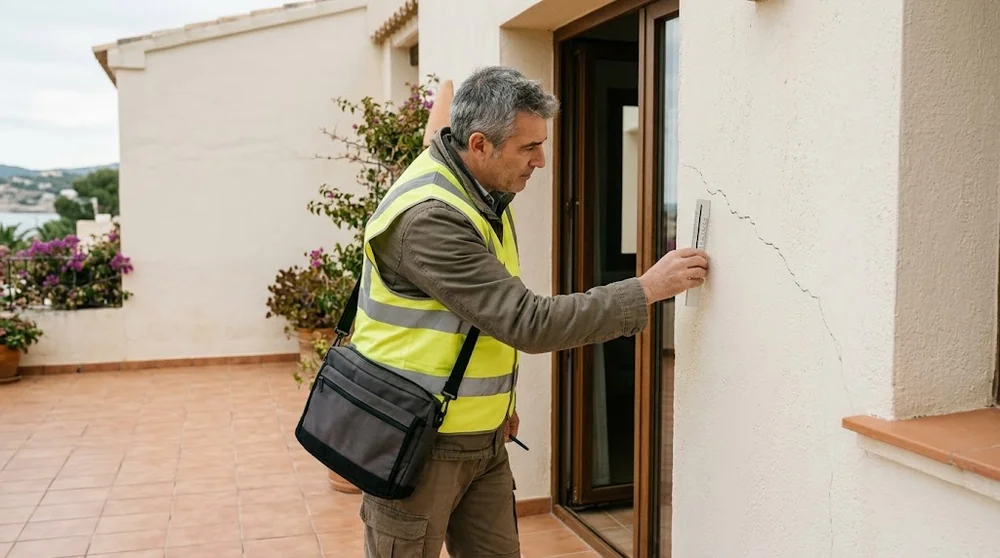
    A building inspector examining a crack beside a terrace doorway

    Step 8: Review Any Reservation Contract

    A contrato de reserva is a short agreement in which the buyer pays a reservation fee and the seller takes the property off the market for a set period. A separate reservation is optional, and its effect depends entirely on the wording. The preferred route is to complete the checks in Step 7 before paying anything. If an agent insists on a reservation while full checks are pending, have your lawyer review written safeguards first.

    Check these points before paying a reservation fee:

    • Refund triggers: the fee should be refundable if title, debts, planning or finance checks fail.
    • Recipient: who receives the money, and in which account it is held.
    • Holding arrangements: whether funds are held by a lawyer or released straight to the seller.
    • Exclusivity: a clear commitment that the property is withdrawn from sale.
    • Expiry: a fixed date after which the reservation lapses and the refund position is clear.
    • Payment evidence: a receipt naming the parties, the property and the purpose of the payment.

    Never assume a reservation fee is held in escrow or refunded automatically. Decline to pay, or ask for amended terms, if the document is missing refund conditions, names the wrong parties or sends money to a personal account without explanation. Any reservation fee should be credited against the price in the arras contract.

    Step 9: Agree the Contrato de Arras

    The contrato de arras is the private purchase agreement in which the buyer pays a deposit and both parties commit to completing on agreed terms. It is normally signed once due diligence is complete, and it is far more significant than a reservation. A deposit of 10% of the price is common practice, but no law sets that figure; the amount is negotiated. Any reservation fee already paid normally counts towards the total agreed deposit, so a €3,000 reservation followed by a €30,000 agreed deposit means €27,000 more, not €30,000.

    Spanish law and practice recognise different types of arras. Confirmatory arras treat the payment as part of the price and leave contractual remedies open. Penalty arras set a sum payable on breach. Withdrawal arras, known as arras penitenciales, allow either party to walk away at a price. As of October 2026, Article 1454 of the Spanish Civil Code provides that, where withdrawal arras have been agreed, a withdrawing buyer loses the deposit and a withdrawing seller returns it doubled. Article 1454 consequences apply only where the contract actually creates withdrawal arras. Do not treat every Spanish deposit as withdrawal arras, and confirm whether a regional civil law, such as Catalonia’s, changes the analysis.

    Finance protection must be written into the contract. A conditional clause might say: if the buyer’s mortgage of a stated amount is refused in writing by a stated date, or the valuation falls below a stated figure, the deposit is returned in full. Without such a clause, a mortgage refusal does not automatically release the buyer or guarantee a refund. The arras contract should also set the completion deadline, how extensions are agreed, what happens on default, and which fixtures and furniture stay.

    If you have an arras draft in front of you and are unsure what the finance clause actually protects, a short one-to-one conversation before you sign can clear up the taxes, deadlines and legal steps for your case.

    Ask David a question on WhatsApp

    Whatever you decide, keep a copy of the signed arras contract and the deposit transfer receipt together. Both are needed at completion and again when taxes are filed.

    Step 10: Finalise the Mortgage and Completion Pack

    Financed buyers now move from indicative terms to binding documentation. Cash buyers skip only the mortgage-specific tasks; every legal check still applies.

    • Tasación versus survey: the bank’s valuation tells the lender what the property is worth as security; a technical survey tells you about the building’s condition. One does not replace the other.
    • FEIN and FiAE: under Law 5/2019 on real-estate credit contracts, the lender must provide the FEIN (Ficha Europea de Información Normalizada, the standard European mortgage information sheet) and the FiAE (Ficha de Advertencias Estandarizadas, a warnings sheet on key clauses).
    • Documentation period: as of October 2026, Law 5/2019 sets a national minimum of ten calendar days between receiving the documentation and signing; check whether a longer regional requirement applies.
    • Notarial advice: before signing, you attend a notary, free of charge, who checks the documentation and explains the loan in a recorded transparency act.
    • Expense allocation: Banco de España guidance distinguishes mortgage expenses generally borne by the lender, such as mortgage-deed notary fees, mortgage registration and the AJD on the mortgage deed, from your own purchase expenses, such as ITP or IVA, sale-deed costs and the valuation.
    • Refreshed title check: your lawyer obtains an updated nota simple shortly before completion.
    • Draft deed: your lawyer reviews the draft escritura against the arras contract.
    • Funding: the mortgage funds and your equity are confirmed and arranged in the agreed form.
    • Seller’s charges: arrangements to cancel any existing seller mortgage at completion.
    • Interpretation: arrange an interpreter if you are not fluent in Spanish.
    • Final inspection: visit before signing to confirm condition, inventory and vacant possession.

    A lender’s early assessment is not final approval; only the binding offer and the documents above commit the bank.

    Step 11: Sign the Escritura and Receive Keys

    Completion happens at the notary’s office with the signing of the escritura pública de compraventa, the public deed of sale. You attend in person or are represented under the power of attorney from Step 3. The notary confirms identities, reads or summarises the deed, records the price and the payment method, and checks that legal requirements are met.

    • Payment method: the deed records how the price is paid, commonly by bank draft or bank transfer.
    • Payment instructions: verify any bank details by telephone through an independently confirmed number; never trust account changes sent by email alone.
    • Discharge: any seller mortgage is repaid from the proceeds, with arrangements for its formal cancellation.
    • Possession: keys are handed over on the terms agreed, normally at signing.
    • Handover: check the inventory, collect all keys, gate remotes and alarm codes, and photograph the meter readings.
    • Vacant possession: confirm that the property is empty if that was agreed.

    Where the seller is not tax-resident in Spain, the buyer must generally withhold 3% of the price and pay it to the AEAT using Modelo 211 within one month of completion, as of October 2026. The 3% withholding comes out of the seller’s proceeds and is not an extra cost on top of the price. In a hypothetical €300,000 purchase, the buyer pays €291,000 to the seller and €9,000 to the tax agency, so the buyer’s total remains €300,000. The deed should name who files Modelo 211, normally the buyer’s lawyer.

    Receiving keys means you are in possession, but registration in the Registro de la Propiedad is a separate task that follows.

    House keys being handed to a buyer at a Spanish home

    Step 12: File Taxes and Register the Purchase

    Under Spanish law, ownership generally passes through a valid contract together with delivery, which the signing of the public deed usually achieves. Registration protects your title against third parties. Receiving the keys is not the same as completing registration. Your lawyer or gestor should handle these tasks and confirm each one in writing:

    • Deed presentation: the notary usually sends the deed electronically to the Registry on the day of signing.
    • Purchase tax: file and pay ITP, or AJD on a new build, with the regional tax office within its deadline; confirm the regional deadline rather than assuming one national rule.
    • Modelo 211: where the seller is non-resident, file within one month of completion, as of October 2026.
    • Registration: after the tax filing, the Registry records you as owner; obtain an updated nota simple as evidence.
    • Catastro: confirm any cadastral notifications required for the change of owner.
    • Utilities: transfer electricity, water, gas and internet contracts into your name.
    • Insurance: arrange buildings and contents cover from completion; lenders often require it.
    • Community: notify the comunidad’s administrator of the new owner and payment details.
    • Ongoing taxes: diarise IBI and, for non-residents, annual non-resident income tax filings.

    The deliverable for Step 12 is written confirmation from your lawyer or gestor that every filing has been completed, with copies of the receipts.

    How Long Does Buying a House in Spain Take?

    No Spanish law fixes the length of a whole purchase. Many guides estimate around 8–12 weeks from accepted offer to keys for a straightforward resale, with longer estimates where a mortgage is involved. That figure is a planning estimate, not a legal period, and it assumes you started on your NIE and funding early.

    Indicative purchase stages and common delay triggers (estimates unless stated as legal minimums)
    StageIndicative timingCommon delay triggers
    NIE and documentsDays to several weeks (estimate)Appointment shortages, translations, apostilles
    Offer to arrasOne to three weeks (estimate)Missing seller documents, planning discrepancies
    Mortgage approval and valuationSeveral weeks (estimate)Income evidence, valuation shortfall
    Mortgage documentation periodAt least ten calendar days (Law 5/2019 minimum, as of October 2026)Late FEIN delivery, notary availability
    CompletionDate set in the arras contractPayment compliance checks, cancelling seller charges
    Tax filing and registrationWeeks to months after completion (estimate)Registry queries, missing filings

    Off-plan purchases are different again: completion depends on the developer finishing the building and obtaining the required documentation, which can take a year or more after signing.

    The practical conclusion is simple. Start the paperwork early, check before you pay, put every protection in writing and name who files what after completion. Buyers who follow that order rarely face the nasty surprises that fill expat forums.

    If you are still working out which region, budget and type of property suit your goals, a short purchase-readiness check can help you build a realistic shortlist before you book a viewing trip.

    Get a tailored selection of properties in Spain

    There is no obligation attached to that, and the steps above work just as well with any independent lawyer you choose. What matters is that each check happens in the right order.

    Disclaimer: This article provides general information on Spanish property law, tax and finance as of October 2026. It is not legal, tax or financial advice. Rules, rates and deadlines vary by region and can change, so consult an independent lawyer, tax adviser or lender about your circumstances before making commitments.

    Buying a House in Spain: Frequently Asked Questions

    Can British citizens buy a house in Spain after Brexit?

    British citizens can generally buy residential property in Spain without becoming residents. Ownership does not grant residence or extend permitted visitor stays. As of October 2026, ordinary short stays generally follow the Schengen 90-days-in-180 rule, and new investor visas ended on 3 April 2025. A lawyer should check property-specific restrictions, including permits in designated military areas.

    How long does it take to buy a house in Spain?

    A straightforward resale purchase is often planned over roughly eight to twelve weeks from an accepted offer to completion, but this is an estimate, not a legal deadline. NIE appointments, mortgage approval, missing documents and planning problems can extend the process. Your contract should set a realistic completion date and explain how agreed extensions will work.

    What documents do I need to buy a house in Spain?

    Buyers normally need identification, an NIE and evidence supporting the source of their funds. Mortgage applicants also need lender-specific income and financial documents. The property file should include title information, relevant planning and occupation evidence, energy documentation and debt checks. Your lawyer should confirm the exact list for the property, region and way you are buying.

    How much extra should I budget when buying a house in Spain?

    Budget for the price plus applicable taxes, legal work, notary and registration charges, and any survey, valuation or payment costs. A rough allowance of 10–15% is only a starting point. The actual total depends on location, property type, taxable value and agreed fees. Reservation and arras payments normally count towards the price rather than adding another purchase cost.

    Can I get my deposit back if my Spanish mortgage is refused?

    A refused mortgage does not automatically entitle every buyer to a refund. Recovery depends on the contract, the applicable law and any valid financing condition. Before paying, have your lawyer agree what happens if lending is refused, the valuation is too low or approval arrives late. Do not rely on an agent’s verbal assurance that the deposit is protected.

    Do I need a Spanish bank account and a lawyer to buy property?

    A Spanish bank account is often practical and may be required by your lender, but it is not a universal statutory condition for every purchase. Using an independent lawyer is generally a protective recommendation rather than a universal legal requirement. Ask your lawyer and bank to confirm acceptable payment arrangements and who will handle contracts, taxes and registration.

    Final Thoughts

    Buying a house in Spain follows a clear sequence: budget for the full cost, get your NIE and finance moving early, appoint an independent abogado, and finish every title, debt and planning check before signing an arras contract. Deposits count towards the price, a non-resident seller’s 3% withholding comes out of their proceeds, and a mortgage refusal protects you only if the contract says so.

    In my professional view, the buyers who do best are not the ones who move fastest but the ones who insist on paperwork at every stage. The keys are a lovely moment, but the job is finished only when the taxes are filed, the Registry shows your name and someone has confirmed it to you in writing.

  • Reservation Deposit Scams in Spain: Red Flags

    Reservation Deposit Scams in Spain: Red Flags

    You have found a flat in Estepona or a villa near Alicante, and within a day someone is asking you to reserve it with a bank transfer, ideally before the weekend. Ten years on the Costa del Sol have taught me that this is the moment when buyers are most excited and least protected, because the checks that matter have not been done yet. A reservation deposit is a small payment that can still cause a very large problem. This guide covers the red flags, the paperwork and the steps to take if money has already left your account.

    Reservation deposit scams in Spain can involve fake sellers, unauthorised agents or intercepted bank details. Before paying, have an independent Spanish lawyer check the seller’s authority, property records, refund conditions and payment recipient. A genuine reservation can still be binding, and neither a refund nor double repayment is automatic.

    A property adviser discusses a reservation agreement with buyers on a shaded terrace in Spain.

    Reservation Deposit Scams: What Counts as Fraud?

    This article is about purchase reservation deposits, the money a buyer pays to take a Spanish property off the market while checks continue. Tenancy deposits and holiday bookings follow different rules and sit outside its scope.

    Not every bad outcome is a scam. Suspected deliberate deception covers impersonating an owner, claiming authority to sell or collect money without having it, or diverting a payment by changing bank details. A genuine seller who lawfully keeps a deposit under a disclosed non-refundable clause is a different matter, and so is a refund argument between honest parties. That distinction matters because it decides whether you need the police, a lawyer’s letter or a negotiation.

    Here is how the three situations compare in practice.

    SituationWhat it looks likeTypical first response
    Suspected fraudThe person taking the money is not the owner and has no verifiable authority, or the account was changed by a third party posing as the seller or agent.Contact your bank at once, then involve your lawyer and report to the police.
    Contractual riskThe seller is genuine, but the agreement makes the deposit non-refundable or ties repayment to narrow conditions you accepted.Have a lawyer read the wording before signing, and negotiate the conditions beforehand.
    Civil refund disputeBoth sides are genuine, but they disagree on whether a refund trigger was met or who must repay.Gather evidence, give written notice as the agreement requires and take legal advice on the claim.

    A warning sign is a reason to verify, not proof of criminal conduct. Plenty of honest agents send untidy emails and plenty of honest owners are slow to answer. Treat each red flag as a question that needs a documented answer before you pay.

    Contrato de Reserva Versus Contrato de Arras

    A contrato de reserva is a reservation agreement. A contrato de arras is a deposit contract, usually signed when the main terms of the sale have been settled. The two are not compulsory sequential stages: some buyers reserve and then sign arras, some go straight to arras and some use only a private purchase contract. The document’s title does not decide its effect. The wording and the applicable law govern the consequences, so a lawyer should read the text, not the heading.

    Spanish law recognises several kinds of arras, and here’s where people usually come unstuck. The table below gives a simplified comparison for general understanding, as of October 2026.

    TypeMain purposeCommitmentPossible consequence of withdrawal
    Reservation (contrato de reserva)Takes the property off the market for a period while checks continue.Depends on the wording and the applicable mandatory law; it may or may not bind either side to buy or sell.Whatever the agreement says about refund, retention or expiry, within the limits of mandatory law.
    Arras penitencialesGives each side a paid-for right to withdraw.The sale proceeds unless a party uses the agreed withdrawal right.A withdrawing buyer typically loses the deposit and a withdrawing seller typically returns it doubled, if this is clearly agreed.
    Arras confirmatoriasConfirms the contract and acts as part payment.Both sides are bound to complete.Breach is dealt with under general contract rules, not an automatic withdrawal right.
    Arras penalesFixes an agreed penalty for non-performance.Both sides are bound to complete.The penalty applies to the breaching party as the contract provides, subject to legal review.

    Article 1454 of the Spanish Civil Code is the source of the well-known double-repayment idea. As of October 2026, it provides that where arras have been given, the buyer can withdraw by losing them and the seller can withdraw by returning double. The consolidated Code is published on the state gazette site, boe.es, and the courts have made clear that this depends on the parties having agreed a withdrawal right in unequivocal terms. It does not make every deposit refundable, and it does not give automatic double repayment for every breach. Regional civil-law differences should also be checked with your lawyer.

    Take a hypothetical €5,000 reservation. If the later arras contract does not say that the €5,000 is credited towards the price or towards the arras deposit, you may end up arguing about whether you have paid it twice. Any later agreement should state clearly whether the reservation payment is credited towards the purchase price or a subsequent deposit.

    Red Flags Before You Pay a Deposit

    Let me put it plainly: most red flags are mismatches. The name on the listing differs from the name on the paperwork, or the account holder differs from the person you are buying from. Direct payment to a genuine seller is not automatically fraud, since private sales between individuals sometimes work that way. What matters is whether every discrepancy is explained and documented before you transfer anything.

    Red flagEvidence to requestImmediate action
    Seller’s name differs from the owner shown in property recordsA current nota simple and a copy of the seller’s identity document, checked by your lawyer.Pause until the difference is explained in writing.
    Agent or representative cannot show authority to sell or collect moneyA written mandate or a poder notarial naming the person and the powers granted.Do not pay until your lawyer has reviewed the document.
    Payment recipient is not clearly identifiedThe full legal name of the account holder and the capacity in which it receives funds.Ask for this in the agreement itself.
    Bank details change unexpectedly, often by emailA callback to a number you verified independently, plus written confirmation of the change.Stop the transfer and check through a separate channel.
    Refusal to let an independent lawyer review the papersAn explanation for the refusal and a reasonable time to review.Treat this as a reason to step back.
    Artificial urgency, such as another buyer arriving tonightEvidence that the property is genuinely available and that the offer is real.Take the time you need. Losing an opportunity hurts less than paying before the checks are done.
    Listing cannot be verifiedA registry reference, an address and an independent check that the property exists and is for sale.Do not pay on the strength of photographs alone.
    Request for cash, cryptocurrency or an unusual payment methodA documented reason and a traceable payment route.Decline and take advice before continuing.

    I would not use accent, nationality or poor grammar as a fraud test. Honest sellers write badly, and polished fraudsters write beautifully.

    My own rule after ten years here: if the pressure to pay is bigger than the paperwork on the table, I walk away from the deal, however much I like the flat. Verification reduces the risk without removing it, but it is the best protection you have.

    Pressure tactics are often the first thing buyers notice and the last thing they act on, so write down any deadline you are given and ask what it is based on.

    Check the Seller, Nota Simple and Authority

    Always ask for the nota simple before you commit. The nota simple is an informative extract from the Registro de la Propiedad, the Spanish property registry. According to Registradores de España, it shows the registered holders and the rights and limitations recorded against the property. As of October 2026, it is informative in nature and does not certify planning compliance, physical condition, occupation or whether a particular person may receive your money. Here is the chain of checks I would expect your lawyer to complete.

    1. Instruct an independent Spanish lawyer who acts for you, not for the seller or the agent, and who can review the registry extract and the agreement.
    2. Obtain a current nota simple independently, rather than relying only on the copy the seller sends, so the information is fresh and has not been edited.
    3. Match the registered property and owners to the transaction. The address, registry details and named owners should line up with the listing and the draft agreement.
    4. Verify identity and every necessary signature. If the property has several owners, or belongs to a couple, all required parties must be involved.
    5. Check company representation or the poder notarial. A poder notarial is a notarised power of attorney. If a company owns the property, ask who is entitled to sign for it and how that authority is evidenced.
    6. Confirm authority to receive the deposit. The person who may sign a sale is not automatically the person entitled to collect money on the owner’s behalf.

    Registry information does not replace planning, survey or occupation checks, which are separate. Whether the property is in Barcelona, Madrid, Valencia, Malaga, Alicante, Marbella, Mallorca or Tenerife, the same chain applies, although local planning and tourist-licence questions differ and need local advice. I am not describing different national deposit rules for each place; the local variation lies in planning, licences and regional civil law.

    Verify Bank Details and Deposit Holding Terms

    INCIBE, Spain’s national cybersecurity institute, explains how criminals who compromise an email account can substitute bank details in genuine-looking messages. This is payment diversion fraud: the money goes to an account controlled by the fraudster, while the email thread looks entirely normal. Here is a procedure to follow before every transfer.

    1. Call using a number you already verified, such as one from your lawyer’s own records or an official registry, not a number supplied in the email asking for payment.
    2. Confirm the beneficiary’s identity and capacity. Ask who owns the account and in what role they receive your money.
    3. Verify the IBAN by reading it back digit by digit and matching it with the reviewed agreement.
    4. Use your bank’s name-check service where it is offered. Since 9 October 2025, banks in the euro area have had to offer Verification of Payee on relevant euro transfers. You enter the beneficiary’s name with the IBAN and the bank reports one of four results: a match, a close match, a no match, or that the check could not be carried out. A close match or no match is a reason to stop and find out why, not to click through. If the check is unavailable, ask your bank whether the service covers your payment route, because transfers sent from outside the euro area or in other currencies may not be covered.
    5. Understand what a match proves. It indicates that the name and IBAN correspond. It does not show that the named person is the owner, or that they have contractual authority to collect your deposit.
    6. Confirm the holding and release conditions in writing. You need to know who holds the money, when it may be released and who must repay it.
    7. Obtain a payment receipt that identifies the amount, the date, the payer and the purpose.

    A genuine email chain is not enough on its own, because the chain may be the very thing that has been compromised. A PDF with a bank logo is easy to fabricate. An account described as a client account proves little by itself, since the label does not establish who controls it. A small test payment cannot prove ownership or lawful authority; it only shows that an account exists and can receive money.

    Consider a hypothetical. You agree a reservation by email, and two days before payment a message arrives saying the account has changed because of an audit. The sender’s signature and the thread look identical. The safe response is to stop and call the number you verified at the start. If the callback cannot confirm the change, do not transfer.

    One habit I recommend to every client: send the money on a weekday morning, never at five on a Friday. If something looks off, your bank’s fraud team is at their desks and you still have the whole day to sort it out.

    Finally, distinguish three things. Segregated holding means the money is kept apart from the holder’s own funds. Escrow terms are the contractual conditions under which a holder may release funds. A refund right is an entitlement to repayment under stated triggers. None of these is risk-free, and none guarantees recovery. The Banco de España publishes general guidance on payments and transfers at bde.es, which is a sensible place to start if you want the regulator’s own explanation.

    A buyer makes a verification phone call beside a closed laptop in a Spanish apartment.

    Refund Conditions Your Reservation Agreement Should Address

    What follows is a checklist of questions to put to your independent lawyer. It is not a ready-to-sign clause template, and the right answers depend on the property, the parties and the applicable law.

    • Who accepts the offer? Is the seller bound by the reservation, or does the buyer pay before the seller has agreed?
    • What happens if the property is withdrawn from the market? Is the money returned, and when?
    • When does the reservation expire? There is no mandatory reservation period, so the date must be written down.
    • Which legal, survey and finance conditions apply? Are they defined clearly enough that both sides would agree whether they have been met?
    • What objective evidence triggers a refund? A lender’s refusal letter, a survey report or a registry extract each count differently.
    • How and when must notice be given? Check the required method, the recipient and the deadline.
    • Who authorises release of the funds? One signature, two signatures or the holder’s decision?
    • Who repays, and how quickly? The seller, the agent or the holder, and by what date?
    • Can fees be deducted? Ask what charges might reduce the amount returned.
    • How is the payment treated at arras stage? It should be credited or dealt with expressly.

    A checklist only helps if you turn it into a workflow, so here is how I would run a refund claim from the start. First, diarise every date in the agreement the day you sign, including the expiry date and any notice period. Second, collect the objective evidence for the trigger as soon as it exists, for example the lender’s written refusal or the survey report, and keep the originals. Third, give notice in the exact manner the agreement requires, whether that is a burofax, an email to a named address or a letter to the notary, and keep proof of sending. Fourth, ask in writing who will release the money and by what date. Fifth, if the other side stays silent past the deadline, take your lawyer’s advice on a formal demand before the position gets harder to prove.

    A neutral hypothetical shows why the wording matters. A buyer reserves a property intending to finance it with a mortgage, and the lender later declines the application. A failed mortgage application does not universally trigger a refund, because entitlement depends on whether the agreement includes a finance condition and how it is drafted.

    Regional law can change the picture. In Catalonia, Article 621-49 of the Catalan Civil Code can allow a buyer to withdraw where the specified financing is refused, subject to its conditions and to any contrary agreement between the parties. As of October 2026 that is a Catalan rule, not a national one, so the same facts in Malaga or Alicante may lead somewhere different. Have your lawyer confirm which regime governs your contract before you pay.

    The commonest mistake I see is a buyer who relies on a friendly promise that the deposit is refundable if the mortgage falls through. If the promise is not in the paperwork, it is not worth much when the lender says no.

    Ask for any assurance to be written into the agreement before the money moves.

    UK and US Buyer Assumptions That Create Risk

    Buyers from the United Kingdom and the United States often bring assumptions from home. The UK is not one conveyancing system, since England and Wales, Scotland and Northern Ireland differ, and the US is not one either, because earnest-money and escrow practice varies by state. A Spanish reservation document does not inherit English subject-to-contract status or a US state-specific earnest-money arrangement. It is a Spanish contract, interpreted under Spanish law and its own wording.

    Many buyers also assume that someone neutral holds the money, as in an escrow arrangement at home. In Spain you should not assume automatic escrow, an automatic cooling-off right or protection against a change of mind. Those features exist only if the agreement or the applicable law provides them.

    Cross-border banking protection is another trap. Banking reimbursement rules for scams in one country do not necessarily cover a transfer sent abroad, and a US wire recall request does not guarantee that funds come back. Ask your own bank what its policy is for international transfers before you send anything.

    Finally, post-Brexit status matters for a few practical points, such as how long a British visitor can stay in Spain without a visa, but it does not itself create a reservation refund right. If an adviser claims that a particular residency or tax outcome follows from a deposit, ask for the current official source, because immigration and tax rules change and must be verified separately.

    Off-Plan Reservations Need Additional Checks

    Buying off-plan means buying a property that is not yet built. The first additional provision of Ley 38/1999, Spain’s building regulation law, deals with advance payments to developers. As of October 2026, it concerns amounts paid by buyers before construction is finished. It has two separate parts. The first is a guarantee: from the point when the building licence is obtained, the promoter must guarantee repayment of qualifying advances through insurance or a bank guarantee. The second is an account requirement: qualifying amounts must be paid into a special account kept apart from the promoter’s other funds. The guarantee covers the advances plus the taxes paid and legal interest, if construction does not start or is not completed within the agreed period. That does not mean that every reservation paid before the licence exists is automatically covered. The consolidated text is published on boe.es, and your lawyer should read the current wording rather than rely on a summary.

    So ask for the actual guarantee or insurance document and the account arrangement. Do not stop at matching account details. Your lawyer should confirm directly with the issuer of the guarantee or policy the identity of the issuer, the buyer, the dwelling, the payments covered, the delivery deadline and the conditions for making a claim. They should also check that the receiving account matches the one in the guarantee documents and that the building licence timing fits what you are being told.

    Here is what I tell clients about off-plan reservations: a glossy brochure and a smiling sales team are not a guarantee. The only document that counts is the one with your name, your dwelling and your payment on it, confirmed by whoever issued it.

    Several protections get mixed up in off-plan sales. An advance-payment guarantee protects the return of qualifying amounts if the building is not completed or handed over. A structural warranty covers defects in the finished building and has nothing to do with your deposit. A developer’s relationship with a bank is a commercial connection, not a protection for you. A client account label proves none of them.

    Ley 57/1968 is repealed, so a seller or agent who presents it as the regime governing a new purchase is working from outdated information. Ask your lawyer to confirm, as of October 2026, whether the specific payment you are asked to make qualifies for protection.

    Apartment buildings under construction beside completed homes on the Spanish coast.

    Already Paid? Act on Suspected Deposit Fraud

    If you think you have paid a fraudster, speed matters more than perfect paperwork. The bank call comes first and should not wait for documents. After that, several things should run in parallel rather than one after another, because a delay on one front should not hold up the others.

    1. Call the sending bank or payment provider’s fraud team immediately. Do this before assembling any documents.
    2. Request an attempted recall and ask the bank to contact the receiving bank straight away. Recovery is never guaranteed, but early action gives the best chance of stopping a transfer.
    3. Then work on the next steps at the same time. Alert your independently verified lawyer, meaning one you found and checked yourself, not one recommended in the suspect emails.
    4. Preserve your evidence: the agreement, the listing, complete email threads with headers, bank instructions, receipts and a written chronology.
    5. Report to the Spanish police, since the property, the receiving account or the people involved may be in Spain.
    6. Use your home-country reporting route. US buyers can report internet-enabled fraud to the FBI’s Internet Crime Complaint Center, known as IC3, which FBI guidance says should be done promptly. UK buyers in England, Wales and Northern Ireland can use the national Report Fraud service through gov.uk, and buyers in Scotland should report to Police Scotland on 101. Check the current route with your bank if in doubt.

    Keep two things apart. Help from a cybersecurity body, such as INCIBE’s guidance on compromised accounts, helps you deal with the technical incident. A formal police complaint is the legal report. You may need both, and neither replaces the other.

    Beware of upfront-fee recovery scams. Once a fraud becomes known, strangers may contact you promising to recover the money for a fee. Do not pay an unsolicited recovery agent, and treat any guarantee of recovery as a warning sign. There is also no fixed legal deadline that I can responsibly give you, so act quickly and take advice on your specific position.

    Frequently Asked Questions About Spanish Property Deposits

    Is a reservation deposit refundable in Spain?

    A reservation deposit in Spain is not automatically refundable. The agreement, the applicable law and the reason the purchase stops decide the position. Before signing, ask an independent Spanish lawyer to review refund triggers, evidence, notice and repayment deadlines. A verbal assurance that the money is refundable should be reflected accurately in the written agreement.

    How much should I pay to reserve a property in Spain?

    No single reservation amount makes a Spanish property transaction safe, and the research for this article found no statutory reservation amount. Agents quote different ranges, but those are commercial observations, not legal limits. The identity checks and contract terms matter more than the size of the payment. Ask your lawyer whether a reservation is necessary at all.

    Who should hold my Spanish property deposit?

    The deposit holder should be expressly named, independently verified and authorised under the agreed arrangement. Ask who owns the receiving account, whether funds are segregated, when they can be released and who must repay them. A lawyer’s client account can provide useful controls, but a client-account label alone does not establish protection or guarantee recovery.

    Does the seller have to return double my deposit?

    Double repayment is not the rule for every Spanish property deposit. Article 1454 of the Civil Code provides for a seller’s withdrawal by returning double where arras penitenciales have been agreed in unequivocal terms. Other agreements can have different consequences. Your lawyer must assess the wording, applicable law and circumstances rather than relying on a document’s title.

    How can I check bank details before sending a property deposit?

    Call the intended recipient on a previously verified number and confirm the beneficiary, the account details and the authority to receive the payment. Use your bank’s name-check service where it applies, and investigate any close match or no match before transferring. Investigate any unexpected change in bank details, even inside an existing email conversation, and match the instructions to the reviewed agreement. A successful test payment is supplementary and does not prove the recipient is entitled to your deposit.

    What should I do if I have sent a deposit to a scammer?

    Contact your bank or payment provider’s fraud team immediately and request an attempted recall and contact with the receiving bank. Alert your independently verified lawyer, preserve payment instructions and communications, and report the incident to Spanish police. US buyers can also report internet-enabled fraud to IC3, and UK buyers can use the Report Fraud service or Police Scotland. Recovery is uncertain, so avoid anyone demanding upfront payment for guaranteed recovery.

    Conclusion

    My advice to every British buyer, and to American buyers too, is simple: pause whenever identity, authority, contract conditions or payment details remain unexplained, and proceed only after your own independent lawyer has reviewed the evidence and the agreement. A reservation deposit is small money with large consequences, because it is often paid before any of the real checks have happened.

    The pattern behind nearly every case is the same. The seller, the signatory, the contractual recipient and the account holder are four different questions, and each needs its own documented answer. Call a number you trust, use your bank’s name check, get the refund triggers and notice method into writing, and keep your evidence tidy from day one. No check makes a purchase risk-free, but together they will tell you what you are agreeing to before the money leaves your account.

    If you would like a second pair of eyes on a reservation before you pay, you can message me on WhatsApp and I will point you towards the right questions to put to an independent Spanish property lawyer.

    Message David on WhatsApp

    Whatever you decide, take the time to read the paperwork properly and do not let a deadline set by someone else make the decision for you.

    General information only, as of October 2026. This article is not legal, financial or tax advice, and it does not create a lawyer-client relationship. Spanish law, regional civil law and official guidance change, so confirm the current position with a qualified independent Spanish property lawyer before signing or paying anything.

  • Buying Property in Malaga: Timeline Explained

    Buying Property in Malaga: Timeline Explained

    Most buyers ask one question first: how long until the flat is mine? The honest answer is that “completion” is really several events, and they do not happen on the same day or in the hands of the same person. Ten years on the Costa del Sol have taught me that nearly every misunderstanding about a Spanish purchase comes from squashing those events into one. This guide pulls them apart for a resale home in Málaga city, and shows who owns each step and what proof you should hold. Legal rules and rates are stated as of October 2026.

    The buying property in Malaga timeline has separate milestones: the private contract, notarial completion and Land Registry registration. Completion follows the agreed contract date; registration comes afterwards. Andalucía generally allows two months for purchase-tax filing, while a correct, tax-compliant registry file normally has a 15-working-day processing period. Neither guarantees an overall completion date.

    A property adviser and buyers discussing a home purchase in a Málaga apartment

    Buying Property in Malaga: The Timeline at a Glance

    In this guide, Day 0 is the day the public deed is signed before the notary. The deed is the escritura pública de compraventa, the formal sale document drawn up by a Spanish notary. Everything before Day 0 is preparation, and everything after it is paperwork that protects what you have just bought. Keeping that anchor fixed is what lets you compare different routes fairly.

    The table below separates six things that many guides blur into one “completion”. The timing column mixes two kinds of information, so read it carefully. Legal deadlines come from legislation. Preparation windows are my own planning estimates and vary with the property, the sellers and the lender. None of this is an official Málaga average, so please do not build your moving date on a number you read in a brochure.

    MilestoneTiming basisResponsible partyProof to hold
    Private contract (contrato de arras, a deposit contract)Before Day 0. Preparation window is an estimate that depends on the checks.Buyer and seller, advised by their own lawyersSigned contract, deposit receipt, agreed completion date
    Deed signing (Day 0)The agreed completion date, not a statutory periodBuyer, seller, notarySigned deed, payment confirmations, simple copy
    Possession and keysUsually Day 0, if the contract or deed says soSeller hands over; buyer confirms conditionKeys, meter readings, handover note
    Registry presentationNormally promptly after Day 0, electronicallyWhoever you instructed in writing, often the notary or your lawyerPresentation receipt (asiento de presentación, the registry’s dated entry)
    Tax evidenceLegal deadline: two months after accrual for general Andalucía ITP/AJD, as of October 2026Buyer is liable; a named professional usually filesFiled and paid Modelo 600, receipts
    Completed registration15 working days once requirements are met; elapsed time can be longerRegistrar; your adviser chasesRegistered deed details and an updated nota simple

    My advice to every British buyer is to ask your lawyer for one dated list of who does what, from the arras to the updated nota simple. If no name sits next to a task, nobody owns it. Use the checklist in the section on what happens after signing as the template.

    Before Signing: Arras, NIE and Completion Readiness

    A Málaga purchase is won or lost before Day 0. Get a lawyer who acts for you alone, not one shared with the seller or the agency, before you sign any binding commitment, including a reservation or arras. The checklist below is the short version of what has to be ready.

    Legal readiness

    • Independent legal review of the arras contract. The contrato de arras is a private contract with a deposit, and its consequences depend on its wording and type. Some forms let a buyer walk away by forfeiting the deposit, while others commit both sides to complete. Never assume which you have signed.
    • NIE. The número de identidad de extranjero is the tax identification number every foreign buyer needs for the deed and the tax forms. Start it early, because the rest of the file waits on it.
    • Seller authority. Your lawyer should confirm the sellers are who the registry says they are, that all co-owners sign, and that anyone acting by power of attorney holds a valid one.
    • An updated nota simple. This is a short registry extract showing owner, description and charges. Always ask for the nota simple before you commit, and again shortly before Day 0.
    • Community debts. In Spanish apartment blocks, unpaid community fees can follow the property in part. A certificate from the community administrator tells you where you stand.
    • Condition and planning checks. Here’s where people usually come unstuck: an extension, a closed-in terrace or an unlicensed conversion that does not match the registry description. Illegal building is a genuine risk, so have your lawyer and, where relevant, a technician check it.

    Funds and readiness

    Funds are the other half. You need to be able to show where the money comes from, because notaries and banks apply anti-money-laundering checks. Gather bank statements, a sale or savings trail and, for sterling transfers, a clear record of the exchange. Allow time for the transfer itself, and confirm how the seller wants to be paid, usually by bank transfer or banker’s draft handled in the notary’s presence.

    Separate this from the completion date. The date in your arras is a contractual promise, and every document on the list above has to be ready by it. Where a mortgage is involved, the lender adds its own steps; I deal with those in the scenarios section. If a seller’s mortgage is still outstanding, your lawyer should agree how it will be repaid on the day, not “sort it later”.

    If you are coming from the UK, the GOV.UK guidance on living in Spain is a sensible starting point for post-Brexit entry and residence rules, and it is worth reading before you plan your signing trip.

    Day 0: Signing the Escritura Before the Notario

    Day 0 is less dramatic than people expect. You sit in a notary’s office, the notary reads or summarises the deed, everyone signs, payments are confirmed and the keys change hands. The details matter more than the ceremony.

    1. Identity. Bring your passport and NIE. Sellers bring theirs. The notary records identities and, for non-residents, tax details.
    2. Representation. If anyone signs through a representative, the notary checks the power of attorney. A defective one can stop the signing.
    3. Understanding the deed. You are entitled to understand what you sign. Ask for an English explanation from your own lawyer or a translator. The buyer or the buyer’s lawyer should request the draft deed from the notary in advance, and I recommend reading it a few days before.
    4. Payments. Payment methods are checked and recorded in the deed, and large cash payments are restricted, so settle this with your lawyer beforehand. Remaining price is normally paid by bank transfer or banker’s draft, with confirmation of the arras deposit already paid.
    5. Existing seller mortgage. If the seller still has a loan, the deed or a side arrangement should say how it is repaid from your funds and how the lender’s release will follow. Paying the bank is not the same as the charge disappearing from the registry. More on that later.
    6. Copies. The original deed (the matriz) stays in the notary’s protocol, and you receive copies. I explain simple and authorised copies in the next section.
    7. Keys. Hand over keys against the signed deed, take meter readings, and note any agreed contents. Photograph the property’s condition on the day.

    The notary and your own adviser

    Let me put it plainly: the notary is impartial and is not your lawyer. The notary is a public official who checks legality, identity and that both parties understand the deed. That is valuable, but a notary does not negotiate for you, review your risk or tell you the price is fair. Your independent buyer’s adviser, a Spanish property lawyer, does that work, ideally from before the arras to after registration. The General Council of Spanish Notaries publishes general information on how notarial deeds work, which is useful background before you attend.

    Title, delivery and Article 1462

    People often ask whether they own the flat the moment they sign. In an ordinary sale, Spanish ownership generally follows a valid title plus delivery, a principle found in the Civil Code, which includes Articles 609 and 1095. Article 1462 of the Civil Code provides that signing a public deed normally counts as delivery, unless the deed’s terms indicate otherwise. So for an ordinary resale, Day 0 is usually the moment the property is treated as delivered to you. You can read the Civil Code text itself in the consolidated legislation on the BOE website.

    That does not make registration pointless. For an ordinary purchase, registration in the Registro de la Propiedad is generally voluntary, but I strongly recommend it. It gives you protection against later claims and against sellers who sell twice, and lenders and future buyers will expect to see it. It does not magically wipe out every hidden charge, which is why the nota simple and your lawyer’s checks come first. A mortgage is different: a mortgage only comes into legal existence once it is registered, so a lender will insist on it. Ask your lawyer to confirm how your deed is worded, because special terms, conditions or deferred delivery can change the picture.

    Buyers attending a meeting in a Spanish notarial office

    After Signing: Presentation and the Document Trail

    Once the deed is signed, three jobs start: the deed must be presented to the registry, the purchase taxes must be filed and paid, and the registry has to be followed until the file is closed. A common mistake is to assume the agent, the notary or the bank will quietly do all three. Never assume; instruct a named person in writing.

    1. Electronic presentation. The deed is usually sent electronically to the competent Registro de la Propiedad. In Málaga city, several registries exist, and the competent one depends on the property’s address, so your lawyer should confirm which applies.
    2. Proof of presentation. The registry issues the asiento de presentación, a dated entry that fixes the order of priority among documents presented. Ask for the receipt. Presentation is not completed registration; it means the file is in the queue.
    3. Tax filing. The buyer is liable for transfer tax (ITP) or, on a qualifying first supply, stamp duty (AJD). A named professional should file Modelo 600 and give you the receipt. The registry generally needs evidence of this before registering.
    4. Registry follow-up. Someone must watch for defect notices or requests for documents. Ask who is receiving those messages, and ask for a copy.
    5. Copies. A simple copy is for information. An authorised copy (copia autorizada) carries the notary’s authority and is the copy you may need to prove title, for example in a later sale or mortgage. Keep it safe, and ask your notary how to request extra copies.

    Use this single handover checklist with whoever you instruct, and keep it to hand until the file is closed:

    • Tax: evidence of Modelo 600 filing and payment, with the next action and date.
    • Registry: presentation receipt and the registry’s reference.
    • Documents: list of outstanding items, such as cancellation of any seller’s loan, seller non-resident withholding evidence or municipal plusvalía evidence.
    • Contact: the named person responsible and how often they will update you.

    Andalucía Tax Deadlines: ITP, AJD and Modelo 211

    Tax timing is where the purchase timeline and the registry timeline collide. As of October 2026, the general Andalucía rules give you two months to file and pay ITP or AJD, counted from the day after the transaction accrues. Accrual often matches the deed date, but do not assume it always does, and let your lawyer confirm for your contract. The table sets out the main items.

    EventPayer or filerGeneral rate (as of October 2026)Deadline basisProof
    Resale of a home in Andalucía: ITP (transfer tax)Buyer, through Modelo 6007% in general; reductions need individual verificationTwo months from the day after accrualFiled Modelo 600 and payment receipt
    Qualifying first supply of residential property: IVA plus AJDIVA is charged by the seller; AJD is paid by the buyer, normally through Modelo 600IVA generally 10%; AJD generally 1.2%AJD: two months from the day after accrual; IVA follows the invoicing rulesInvoice showing IVA, AJD receipt
    Non-resident seller: buyer’s withholdingBuyer withholds and files Modelo 2113% of the relevant consideration, for qualifying purchasesOne month from transferFiled Modelo 211 and payment evidence
    Municipal plusvalía (tax on increase in urban land value)By law, normally the seller; the buyer becomes substitute taxpayer if the seller is a non-resident individual. A contract may shift the cost, but not the legal liability.Set locallyNational rule: declaration within 30 working days for transfers between living persons; payment follows the Málaga municipal procedureMunicipal declaration and payment evidence, or exemption evidence

    For forms, guides and the electronic filing office, the official source is the Spanish tax agency (AEAT) page for Modelo 211, which is where that return is filed.

    Resale versus first supply

    Most Málaga homes you will see are resales, taxed at general ITP of 7%. A first supply, where IVA applies, mostly concerns newly built or substantially refurbished property sold by a developer or business. Do not treat every new-looking flat as a first supply, because a freshly renovated home sold by a private owner is usually still a resale. Ask your lawyer to confirm which tax regime the seller’s invoice and deed follow, and whether any reduced rate genuinely applies to you.

    Tax base and reference value

    The advertised price is not automatically the tax base. Under Article 10 of the transfer tax law, where the cadastre has certified a reference value (valor de referencia) for the property, that value is the statutory starting point. In practice, the tax base is the highest of three figures: the certified reference value, the value you declare and the price actually agreed. So if the reference value is higher than your price, the higher figure is the base, and you cannot simply file on the lower price. Where no reference value exists for the property, the general valuation rules apply instead. If you think the reference value is wrong, there is a route to challenge it or to ask for rectification, and your adviser should look at that before you file, not after. This is a technical area, and I would not guess it.

    Non-resident seller withholding

    This is the clock that catches people out. If the seller is not tax resident in Spain, the buyer generally has to withhold 3% of the relevant consideration and submit it with Modelo 211 to the Spanish tax agency, the AEAT, within one month of the transfer. The test is the seller’s tax residence, not their nationality. A British seller living in Spain and a Spanish national living in Manchester produce opposite answers. Exceptions and co-ownership treatment need checking, so your lawyer should handle it from the beginning, not after Day 0.

    Plusvalía

    The municipal plusvalía is a local tax on the increase in value of urban land. Under Article 106 of the local taxes law, the seller is normally the taxpayer when the transfer is for payment. The exception matters to you: if the seller is a non-resident individual, the buyer becomes the substitute taxpayer and is the one the town hall will chase. The contract can say the buyer or seller bears the cost, but that is a private reimbursement arrangement between you, not a change to who the law makes liable. The national rule gives 30 working days to submit the declaration for transfers between living persons. Declaring and paying are separate steps under the municipal procedure, so ask the Málaga municipal tax administration how it handles each, and keep the evidence for the registry file. Do not rely on an old blog for this one.

    Land Registry Registration: Timing, Defects and Follow-Up

    Registration at the Registro de la Propiedad is the last milestone, and the one with the loosest relationship to your moving date. As of October 2026, guidance from the Colegio de Registradores, the professional body for registrars, describes a general processing period of 15 working days. That period is conditional: it runs from presentation, once the relevant legal and tax requirements have been satisfied, and earlier presented documents that touch the same property can affect it. So it is not a promise that you are registered 15 working days after signing.

    What does hold is the logic: a clean file, with tax evidence in place and no earlier entry pending, can move to the registrar’s decision in the statutory period, while a file with gaps can sit far longer. Ask your adviser what the actual state of your file is, not what the average is.

    Several things can change the starting point. Tax evidence may be filed after presentation, and the registry will wait for it. The same goes for evidence of the municipal plusvalía declaration or exemption, which the registry can ask for. An earlier title presented on the same property, such as a mortgage or another transfer, goes first. Errors in names, NIE numbers or property descriptions can lead the registrar to question the deed. Here’s where people usually come unstuck: they hear “it’s with the registry” and assume it is progressing, when it is actually waiting on a missing receipt.

    Negative qualification and corrections

    If the registrar finds a problem, the result is a calificación negativa, a written decision. There are two very different outcomes. If the defect can be fixed, registration is suspended while you correct it. If the defect cannot be fixed, registration is denied. Ask for the written notice either way, because it states what is wrong and why. The correction then goes to whoever is appropriate: the notary for a deed error, your tax adviser for a tax document, or the seller’s side for an outstanding charge.

    Your adviser should record in writing the date you were notified, how long the presentation entry stays valid, the deadline for correcting or appealing, and any extension or protective step needed to keep your place in the queue. I cannot promise a correction deadline, and I would not recommend waiting indefinitely on a vague update. Ask for a dated plan and chase it.

    Repayment versus registered cancellation

    If the seller’s mortgage was repaid at the notary, that is only part of the job. Repaying a loan does not itself remove the charge from the registry; the lender must grant cancellation, and a deed or document of cancellation must be registered. Until then, a nota simple can still show the old mortgage. Check that the cancellation is requested, who is paying for it, and that the final registry extract shows the charge gone. Do not close the file on trust.

    Cash, Mortgage, Remote and New-Build Timelines

    The table compares four routes using the same anchor, deed signing on Day 0. It describes what changes, not how many days each takes, because I have no honest Málaga-wide figure to give you. Legal timings are as of October 2026.

    ScenarioBefore Day 0At Day 0After Day 0Main risk
    Cash resaleNo lender steps, but full legal, tax and source-of-funds checksPayment confirmed and deed signedITP filing, registry follow-upAssuming cash means no paperwork
    Mortgage resaleFEIN (standardised information sheet) and related documents delivered to you at least 10 calendar days before signing; separate prior notarial act (acta previa) completed no later than the day before the mortgage deedPurchase deed and mortgage deed signed togetherYou normally handle purchase ITP on a resale; the lender is the taxpayer for AJD on the mortgage-loan deed; registry presentation of both documentsTreating the ten days as an approval time
    Remote buyerPower of attorney prepared, translated or apostilled as needed; accepted by the notaryRepresentative signs on your behalfSame filing and registry work, with you informed remotelyInstrument rejected late
    Completed new buildCompletion certificate, occupation licence, building registration and separate-unit title documents checked; IVA and AJD analysisDeed and invoice signedPurchase AJD filing and registry follow-upMissing documents for a finished building

    Cash purchases

    Paying cash avoids the lender but not the work. Due diligence, ITP and registration all apply, and you must still evidence the source of the money. Cash buyers tend to move faster on the date, which is a choice, not a legal advantage.

    Mortgage purchases

    As of October 2026, with a mortgage on a home, Spanish rules require the lender to deliver the FEIN and related pre-contractual documentation to you at least 10 calendar days before signing. The notary then carries out a separate prior act (the acta previa) to confirm you understood the loan, and it has to be completed no later than the day before the mortgage deed is signed. That ten-day period is a consumer-protection requirement, not a mortgage approval time. Approval, valuation and lender conditions happen earlier and cannot be predicted here.

    Keep the taxes straight, too. On a resale, you normally handle the purchase ITP. The AJD on the mortgage-loan deed is a separate tax, and the lender is the taxpayer for it. Purchase AJD only comes into play on a qualifying first supply. The Banco de España publishes guidance for borrowers, and I would read it before meeting the bank.

    Remote signing

    You can often complete without travelling by giving a power of attorney to a trusted, authorised representative. The notary must accept it. Check whether your instrument needs an apostille, a sworn translation or both, and allow time. British nationality does not itself decide your tax residence, and owning a Spanish home does not itself give you residence rights, so do not let anyone tell you otherwise.

    Completed new builds

    A finished new build needs more paperwork than a resale. Depending on the property, ask your lawyer to check the certificate of completion of works (certificado final de obra), the first-occupation licence, the registration of the new building (declaración de obra nueva) in the Registro and the separate-unit title if it sits in a block (división horizontal). The tax analysis can differ from a resale, too. Off-plan delivery schedules sit outside this guide, and I am not covering them. For a completed home, ask for the paperwork list before the arras, not afterwards.

    Not sure which of these routes fits your purchase? [WHATSAPP_BLOCK: approved wa.me URL and exact anchor text to be supplied by the publisher]

    How to Confirm the Purchase File Is Finished

    A file is finished when the registry, the tax office, the bank and the town hall all agree with each other, not when you receive the keys. Use this checklist with your lawyer.

    • Registered deed: confirmation of registry completion details and the date.
    • Updated nota simple: shows the right owners, correct ownership shares and the right description.
    • Charges: any seller loan or embargo is removed, and agreed cancellations are registered.
    • Tax evidence: filed and paid Modelo 600, and Modelo 211 if a non-resident seller applied.
    • Municipal plusvalía: evidence that the declaration was submitted or communicated to the Málaga town hall, or that an exemption applies, in case the registry required it.
    • Invoices and funds: final bills from the notary, registry and adviser, reconciled against the money you provisioned (provisión de fondos), with any balance returned.
    • Administrative updates: utilities, community fees and municipal records changed to your name.

    Catastro and the Registro are not the same thing. The Catastro is the property tax and physical description record, while the Registro de la Propiedad records legal title and charges. A change in one does not automatically fix the other, so check both. The Catastro update and the town hall’s billing of the municipal property tax (IBI) are administrative steps; who is legally liable for IBI, and from when, follows the tax’s own accrual rules and what your contract says about the year’s bill. Ask your lawyer to confirm the position for your completion date.

    A hypothetical example

    Here is a hypothetical Málaga example, not a client case. A couple sign on a Tuesday and receive the keys that afternoon. They assume everything is done. Weeks later, their lawyer notices that the transfer tax receipt was never filed because each side thought the other would do it. The registry file is waiting. Nobody did anything dishonest, but nobody was named. The couple own the flat in everyday terms, yet their registration is stalled. The fix is simple once found: file the tax, supply the receipt, ask for confirmation.

    Homeowners checking meter locations in a Málaga apartment building

    This guide is general information, not legal or tax advice. Consult an independent Spanish property lawyer and, where relevant, a tax or mortgage specialist about your own purchase.

    Want a quick read on where your own purchase stands? [QUIZ_BLOCK: approved quiz URL and exact anchor text to be supplied by the publisher]

    Malaga Property Purchase Timeline: FAQs

    How long does it take to buy a house in Malaga?

    There is no fixed Málaga-wide duration. The agreed completion date depends on legal checks, funds, identification documents and any mortgage. Treat offer-to-completion and deed-to-registration as separate periods, and ask your adviser for a timetable based on the actual property’s documents.

    What happens on completion day at a Spanish notary?

    The parties or their authorised representatives sign the public purchase deed, with identification, payment arrangements and terms checked through the notarial process. Payment and keys commonly change hands then, subject to your agreement. Ask for confirmation of registry submission and for the name of whoever will handle taxes and remaining registration work.

    How long does property registration take after signing in Spain?

    The general registry processing period is 15 working days once the relevant legal and tax requirements are satisfied. That is not a guarantee of registration within 15 working days of signing. Missing tax evidence, correctable defects or earlier pending documents can change the starting point and lengthen the elapsed time.

    Do I own the property before Land Registry registration?

    In an ordinary Spanish sale, ownership generally depends on a valid transfer title and delivery. Signing a public deed normally counts as delivery unless the deed says otherwise. Registration gives important legal protection and public recognition, but it is not universally the event that first transfers ownership. Ask your lawyer to confirm your deed’s terms.

    Can I complete a property purchase in Malaga without travelling to Spain?

    An authorised representative can often complete the purchase using a power of attorney accepted for the transaction. Arrange it early, because identity checks, wording, translation and any apostille can affect timing. Remote signing does not remove legal checks, funding rules, taxes or registration. Confirm the arrangement with your independent lawyer and the notary.

    What can delay a Spanish property purchase after signing?

    After signing, missing tax evidence, mistakes in party details, unresolved earlier registry entries or other document defects can delay registration. Ask for the presentation receipt and any written defect notice, not a vague update. Your appointed professional should explain what must be corrected, who provides it and when the next follow-up will happen.

    Conclusion

    A Málaga purchase has several separate clocks, and each one has its own trigger. Tax accrual sets the regional filing deadline, which is two months as of October 2026. The transfer itself sets the one-month Modelo 211 deadline if the seller is non-resident, and the 30-working-day plusvalía declaration. The registry’s 15-working-day processing period runs from presentation once the legal requirements are satisfied, not automatically from signing. Day 0 matters to all of them, but it finishes none of them.

    My own view, offered as opinion and not law, is that most delays are administrative, not dramatic. Before you sign, ask your independent lawyer for the written list of tasks, owners, proofs and dates described above. That list is worth more than any average timeline you will read online.

    This article is general information as of October 2026 and does not constitute legal, tax or financial advice. Rules, rates and deadlines change, and individual circumstances differ. Always confirm your position with an independent Spanish property lawyer and, where relevant, a qualified tax or mortgage specialist.

  • Reservation Deposit Refund in Spain: Rules and Clauses

    Reservation Deposit Refund in Spain: Rules and Clauses

    You have found the apartment, the agent wants a few thousand euros to “take it off the market”, and everyone assures you it is a formality, or you have already paid and your refund request has met a polite but firm no. I am David, a Mancunian who has spent more than ten years helping English-speaking buyers on the Costa del Sol. This guide explains when a reservation deposit in Spain can come back, which clauses decide it, and what to do before you cancel anything.

    You may recover a reservation deposit in Spain if an agreed refund condition applies, the seller breaches the agreement, or another legal remedy is available. Changing your mind does not automatically entitle you to repayment. The contract’s substance, applicable law, payment recipient and evidence determine your position; obtain independent legal advice before cancelling.

    Property adviser and buyers discussing a reservation payment at a dining table in Spain

    When is a reservation deposit refundable in Spain?

    Let me put it plainly: there is no single “refundable” or “non-refundable” answer for a Spanish reservation deposit. The outcome depends on what the document actually says, whether the seller accepted it, which law governs it, who received the money and what evidence you hold. A receipt with “non-refundable” printed in bold does not settle every dispute, and a receipt that says nothing about refunds does not mean you have no rights.

    It helps to separate three different questions. The first is entitlement: does an agreed condition or a clear breach give you a right to repayment? The second is disputed legal remedies: arguments such as misrepresentation, unfair terms or a seller’s failure to perform, which may be strong but are contested. The third is actual recovery: whether the person holding the money pays, and what it would cost to make them. A buyer can have a solid claim and still face months of correspondence, so a right to a refund and money back in your account are not the same thing.

    EventPossible outcomeGoverning conditionEvidence to keep
    Buyer changes mindOften no automatic refund; the deposit may be forfeited or other obligations may applyWithdrawal and forfeiture wording; applicable law on any penaltySigned agreement, payment receipt, any withdrawal notice
    Owner rejects offer before acceptanceRepayment is normally expected, as no bilateral agreement formedOffer terms and the basis on which the agent holds the moneyOffer document, rejection message, holding terms
    Seller withdraws after acceptanceRefund, and possibly further remedies depending on the agreementSeller obligations, any penitential arras clause, breach rulesAccepted agreement, seller’s withdrawal, correspondence
    Failed finance conditionRefund if the condition’s terms are metExact mortgage condition wording, deadline and noticeLender refusal letter, application dates, notice sent
    Title or planning issuePossible refund, renegotiation or dispute; not automaticDue diligence condition, seller warranties, misrepresentationNota simple, planning report, lawyer’s written findings
    Missed deadlineDepends on who missed it and whether time was essentialDeadline clauses, extension rights, cure periodsDated messages, requests for extension, replies
    Mutual cancellationWhatever the parties agree in writingSigned cancellation and release agreementCancellation agreement, repayment instructions

    Contrato de reserva versus contrato de arras

    Here’s where people usually come unstuck: British buyers assume Spanish documents work like an English offer “subject to contract”, where either side can walk away until exchange. That is not a safe assumption in Spain. The title of a Spanish property document does not decide its legal effect; the obligations written inside it do. Neither a contrato de reserva nor a contrato de arras is a mandatory stage in every sale. Some purchases go straight to a private purchase contract or to the notary, and some reservation documents are drafted so fully that they already bind both parties.

    Contrato de reserva

    A contrato de reserva commonly records a small payment that holds the property while the buyer’s lawyer carries out checks and the parties prepare a fuller agreement. As commercial practice on the Costa del Sol, reservation amounts of roughly €3,000 to €6,000 are often discussed, as of October 2026, but that figure is a negotiable example, not a legal requirement or a verified average. A reservation document can itself create significant obligations, including a commitment to buy at an agreed price by a fixed date.

    Arras confirmatorias

    Arras confirmatorias generally treat the payment as proof of a binding contract and part payment of the price. Neither side gains a free right to walk away; if one party fails to complete, the other may typically pursue performance or termination with damages under the general rules of the Spanish Civil Code.

    Arras penitenciales

    Arras penitenciales give each party a right to withdraw at a known price. Spanish Civil Code Article 1454 provides, as of October 2026, that where arras are agreed in this way, a buyer who withdraws loses them and a seller who withdraws returns them doubled. You can read the consolidated text of the Spanish Civil Code on the official BOE website. Article 1454 is not a blanket rule for every deposit; courts generally require the parties’ intention to create a withdrawal right to be clear.

    Arras penales

    Arras penales operate as a penalty for breach, usually without releasing the defaulting party from the contract. Whether the innocent party can also claim performance or further damages depends on the wording.

    Around 10% of the price is a common figure for arras in many Spanish sales as of October 2026, again as negotiable practice rather than law. Where Catalan civil law governs, Catalan Civil Code Article 621-8 contains its own arras provision, so a lawyer should check which rules apply.

    FeatureContrato de reservaArras confirmatoriasArras penitencialesArras penales
    Usual purposeHold the property while checks are doneConfirm a binding sale and part-pay the priceAllow either party to withdraw at a fixed costPenalise breach
    CommitmentVaries from light to fully bindingBinding on both partiesBinding, with an agreed exitBinding
    WithdrawalAs the document providesNo unilateral rightBuyer forfeits; seller repays doubleGenerally no exit; penalty applies
    Typical remediesContractual terms and general lawPerformance or termination plus damagesForfeiture or double repaymentPenalty, possibly plus other remedies if agreed

    Seller acceptance and who holds your deposit

    An offer awaiting the owner’s acceptance is very different from an accepted bilateral agreement. If you pay money with an offer and the owner never accepts it, the usual expectation is repayment, because no deal was struck. Once the owner accepts, the payment may become part of a binding arrangement with real consequences for both sides. Before you transfer anything, check the following:

    • Owner acceptance: has the registered owner signed, or only the agent?
    • Co-owners: do all owners shown on the nota simple consent, including spouses or heirs?
    • Agent authority: does the agent hold written authority to accept offers and receive money?
    • Receipt: does it name the payer, property, amount, date and purpose?
    • Beneficiary: is the money going to the seller, the agent, or a lawyer’s account?
    • Capacity: is the recipient holding the money for the seller, as a neutral stakeholder, or on its own account?
    • Release instructions: who can authorise payment out, and in what circumstances?

    These distinctions decide who actually owes you repayment. Money paid directly to the seller is seller funds. Money held in a stakeholder/client account should be held under agreed release conditions. A separately agreed agency fee is payment for the agent’s services and is not credited towards the price unless the paperwork says so. A stakeholder/client account is not an unconditional refund guarantee; it simply means a third party holds the money under instructions, and those instructions decide what happens next. My advice to every British buyer is to read the release instructions as carefully as the price.

    Refund clauses to negotiate before paying

    The best time to protect a deposit is before the money leaves your account. Once you have paid, your negotiating power drops sharply. Vague wording creates uncertainty and disputes. Interpretation depends on the agreement and applicable law; ambiguity must not favour the party responsible for it, and additional interpretation protections may apply to consumers. A refund clause is only useful if it states the trigger, the evidence, the notice method and the repayment deadline. The table below sets out what an independent lawyer would typically review.

    ClauseWhat to checkCommon weakness
    Parties and propertyFull names, ID numbers, registry details, parking and storageProperty described only by street address
    Seller acceptance deadlineDate by which the owner must accept, or the money returnsNo deadline, leaving funds held indefinitely
    Off-market obligationSeller’s duty to stop marketing and refuse other offersObligation binds the buyer only
    Legal and technical checksTitle, debts, planning status, licences, survey findings“Satisfactory checks” left undefined
    FinanceLoan amount, lender, deadline, what counts as refusalRefers only to “mortgage approval”
    Documentary triggersWhat evidence proves the condition has failedNo agreed evidence, inviting argument
    Notice recipient and methodNamed addresses, emails, burofax or other methodNotice to the agent only, without seller authority
    Cure and extension periodsTime to fix a problem before cancellationNo route to extend, so deals collapse unnecessarily
    Repayment deadlineDays within which money must be returned“Will be refunded” with no timescale
    Permitted deductionsWhether any costs may be deducted, and whichOpen-ended “administration” deductions
    Custody and releaseWho holds funds and who authorises releaseRelease depends on the seller’s goodwill
    Credit against priceWhether the payment counts towards arras and priceSilent, causing double payment disputes
    Language precedenceWhich version prevails if Spanish and English differEnglish translation with no precedence clause

    A few short English discussion examples may help you brief a Spanish lawyer. They are not universal legal templates and must be adapted, translated and checked against the governing law and the rest of the agreement.

    Discussion example one: “If the buyer’s lawyer reports in writing, before [date], that the property has registered charges, unpaid debts or planning irregularities not disclosed in this agreement, the buyer may cancel by written notice to the seller and the holder of the funds, and the reservation payment shall be repaid in full.”

    Discussion example two: “The holder of the funds shall repay the reservation payment to the buyer’s nominated account within seven working days of receiving a valid cancellation notice, without deduction.” The seven-working-day period is proposed contractual wording for negotiation, not a statutory deadline.

    Discussion example three, pulling the pieces together: “The buyer may cancel if the condition in clause [X] fails. Failure is evidenced by [the lender’s written refusal / the buyer’s lawyer’s written report identifying the defect]. Notice shall be sent by burofax and email to the seller at [address] and to the holder of the funds at [address]. Where the defect can be remedied, the seller shall have [number] days from notice to remedy it and provide written evidence of that remedy; if it is not remedied within that period, cancellation takes effect. The holder of the funds is irrevocably instructed by both parties to repay the reservation payment to the buyer within [number] working days after cancellation takes effect, with no deduction other than [specified bank charges]. If the seller disputes the cancellation in writing within that period, stating reasons, the holder shall retain the funds until the parties agree in writing or a final decision is issued.” The holder of the funds should sign the agreement or a separate acceptance confirming it accepts these instructions; otherwise it is not bound by them.

    That last part matters more than buyers think. Without a dispute mechanism, a seller can simply say “I don’t accept the cancellation” and the stakeholder, unsure who to obey, sits on the money. With one, everybody knows in advance whether the funds move automatically or stay frozen until the disagreement is resolved, and a short, specific window for objections stops a seller from raising vague complaints months later.

    Always ask for the nota simple before you commit, and make sure the clause tells you what happens if it shows something unwelcome.

    Buyers reviewing paperwork beside house keys at a consultation table

    Mortgage refusal and the Catalan financing rule

    Overseas buyers often treat “mortgage refused” as a single event. In practice, a lending decision has several stages, and each one fits a finance condition differently. An approval in principle is an indication, not a binding offer. Final approval usually follows a valuation and full document checks. A low valuation may produce an offer for less than you need, which is not necessarily a refusal. A lender may approve a smaller loan than requested, which again may fall outside narrow wording. And if a lender declines because the buyer never supplied payslips or tax returns, a seller may argue the buyer caused the failure. A low bank valuation is not automatically the same as a mortgage refusal under a Spanish finance condition.

    A well-drafted mortgage condition therefore specifies the minimum loan amount or loan-to-value, the lender or type of lender, the deadline for a decision, the documents that prove refusal or inadequate lending, and the method and recipient for notice. It may also oblige the buyer to apply promptly and cooperate fully. Without that detail, both sides are left arguing about what “subject to mortgage” was meant to cover.

    Catalonia is a genuine exception worth understanding, but only in its proper place. Where Catalan civil law governs the sale, Catalan Civil Code Article 621-49 may allow a buyer to withdraw if the bank financing contemplated in the contract, or the buyer’s subrogation into the seller’s existing mortgage, is refused by the designated lender and the refusal is documented within the agreed period, as of October 2026. The provision is qualified: it can be displaced by contrary agreement, and it does not protect a buyer whose own negligence caused the refusal. Article 621-49.2 then deals with the consequences of withdrawal: the seller must return the sums received, including any penitential arras, while the buyer must restore whatever it has received under the contract. You can check the text of Law 3/2017 on Book Six of the Catalan Civil Code on the official BOE website, and the precise current wording should be confirmed by a lawyer on the date you sign.

    A Barcelona purchase does not mean Article 621-49 applies identically in every case, and it certainly does not justify exporting the rule to a Marbella or Alicante purchase governed by the common Spanish Civil Code. If you are buying in Catalonia, ask your lawyer which civil law governs, whether the contract waives the financing rule, and what evidence the lender must provide. Everywhere else, rely on an express, carefully worded finance condition.

    Legal defects, unfair terms and off-plan reservations

    Three different checks protect you against three different risks, and buyers often confuse them. A nota simple from the Land Registry shows registered ownership, charges such as mortgages and embargoes, and certain restrictions. A planning review checks whether the building, extensions and use are lawful and whether any infringement proceedings exist. A technical survey looks at the physical condition: damp, structure, installations and so on.

    • Nota simple: registered owner, mortgages, embargoes and registered limitations.
    • Planning review: licences, legality of works, infringement files and permitted use.
    • Technical survey: physical condition, defects and likely repair costs.

    Discovering a problem does not automatically entitle you to cancel and recover your money. A defect supports a refund only where the agreement, a seller breach or another legal remedy connects that defect to cancellation. Possible arguments include seller breach of a warranty, misrepresentation about the property’s legal status, or a due diligence condition. Each depends on facts and wording, and none can be promised in advance.

    Ten years on the Costa del Sol have taught me that an attractive villa with an unregistered extension or an outstanding community debt is far more common than buyers expect, which is why all three checks matter before the reservation, not after it.

    Consumer-law arguments need equal care. Royal Legislative Decree 1/2007 protects consumers dealing with businesses, so a purchase from a developer may raise unfair-term issues that a sale between two private individuals usually does not. A one-sided forfeiture clause imposed by a developer may be challengeable; the same clause agreed between private parties is assessed differently. An ordinary Spanish property purchase carries no general 14-day cooling-off right, and Article 93 of that Decree excludes, as of October 2026, contracts for the acquisition of immovable property from the distance and off-premises withdrawal rules, subject to legal review of your facts. A separate agency service contract may need its own analysis.

    Off-plan purchases are a different category. The first additional provision of Law 38/1999 requires developers, as of October 2026, to guarantee qualifying advance payments for housing through a bank guarantee or insurance, and that guarantee runs from the moment the building licence is obtained. The coverage extends to the qualifying amounts advanced plus applicable taxes and legal interest. Separately, the developer must receive those advances through a special account; the account obligation and the guarantee are two distinct protections, and one does not replace the other. The regime concerns qualifying advances against failures such as non-completion or non-delivery, so it should not be assumed to cover every generic reservation payment, especially one made before the licence exists. Ask for the individual guarantee or insurance certificate in your name and have your lawyer check what it actually covers.

    How to claim your reservation deposit back

    If a refund has been refused, resist the urge to fire off an angry email cancelling everything. A hasty cancellation can turn a buyer with a good claim into the party in breach. Follow a sequence instead:

    1. Gather evidence. Collect the signed agreement, any translation, the bank transfer confirmation, the receipt, WhatsApp messages, emails, and documents supporting the refund trigger, such as a lender’s letter or a lawyer’s report on the nota simple.
    2. Identify your grounds. Decide, with help, whether you rely on an agreed condition, seller breach, a failed acceptance, misrepresentation or a consumer-law argument. Different grounds need different evidence.
    3. Obtain advice before cancelling. An independent Spanish property lawyer should confirm the governing law, deadlines and the correct way to exercise any right before you send anything final. After a refusal, a specialist disputes lawyer may be needed.
    4. Send compliant, evidenced notice. Notice should go to the parties and addresses the agreement specifies, by a method you can prove. A burofax with certification of content and delivery is one common evidence-preserving method in Spain, though not the only one.
    5. Seek repayment and consider negotiation. Request repayment from the party that actually holds or owes the money, whether seller, agent or stakeholder. A negotiated settlement can save time and cost.
    6. Assess further action. If payment is still refused, weigh the amount at stake against likely costs, time and evidence with your lawyer before deciding on proceedings.

    One change matters before any court claim. Organic Law 1/2025 introduced, as of October 2026, a requirement in many civil matters to attempt appropriate dispute-resolution methods (MASC) before filing proceedings. MASC can include negotiation, mediation or other recognised methods, and the law sets out how the attempt must be evidenced. A simple demand letter is not automatically sufficient, so ask your lawyer which MASC requirements apply to your claim and how to document them.

    Paid a reservation and now facing a refund refusal? Send David a WhatsApp message with the key dates and the name of the document you signed, and he can help you put the paperwork in order before you speak to a lawyer.

    Costs deserve the same honesty as the law. Depending on the claim, they may include your own lawyer’s fees, a court representative (procurador) where one is required, expert evidence such as a surveyor’s or planning report, sworn translations of English documents and correspondence, burofax and notarial fees, and the risk of being ordered to pay part of the other side’s costs if you lose. On a €5,000 reservation, some of those items alone can eat a large share of the amount at stake. Ask your lawyer for a written fee quote and a short written proportionality assessment comparing the sum claimed, the strength of your evidence, the likely cost range and the realistic chance of actually collecting.

    I will not give you a universal limitation period, recovery cost or timetable, because those depend on the nature of the claim, the parties and the governing law. Your lawyer should confirm the deadlines that apply to your claim in writing at the outset.

    Worked examples: refunds and double repayment

    The following figures are hypothetical and simplified for illustration only.

    Suppose a buyer pays a €5,000 reservation, and the later contrato de arras sets total arras of €30,000, with the reservation expressly credited. The buyer pays a further €25,000 at that stage, not another €30,000. Getting the credit clause right avoids the awkward conversation about whether €5,000 has been paid twice or not at all.

    Now suppose the €30,000 is validly subject to an applicable penitential arras arrangement, and the seller exercises the agreed withdrawal right. Double repayment in this hypothetical totals €60,000, which includes the buyer’s original €30,000; it is not €60,000 on top of the money already paid. If the buyer had withdrawn instead, the €30,000 would normally be forfeited under the same arrangement.

    Not sure which type of deposit you have signed up to? Take David’s short quiz on reservation and arras documents to see which questions to put to your lawyer first.

    Contrast a different scenario: the €5,000 reservation contains an agreed refund condition linked to a satisfactory legal report, and the report reveals an undisclosed charge. If the condition is properly triggered, the buyer expects €5,000 back, with no automatic doubling. A credited reservation payment does not always acquire the same legal classification as the later arras, so the documents at each stage need separate review.

    Reservation deposit refund FAQs

    Is a reservation deposit refundable in Spain if I change my mind?

    Changing your mind does not automatically give you a right to recover a Spanish property reservation deposit. The agreement may permit repayment, impose a withdrawal cost or create wider obligations. Applicable law may also affect the outcome. Ask an independent Spanish lawyer to review the document before you cancel or miss a deadline.

    What is the difference between a reservation deposit and arras?

    A reservation payment commonly holds a property while the parties arrange checks and further terms. Arras provisions address a payment within a purchase agreement and can have different legal consequences. The document’s title is not decisive. Check the actual obligations, withdrawal rights and whether the initial reservation payment is credited towards the later deposit.

    Can I get my deposit back if my Spanish mortgage is refused?

    Mortgage refusal may support a refund where an agreed financing condition applies and you meet its evidence and notification requirements. Where Catalan civil law governs, Article 621-49 may provide a qualified withdrawal route, subject to its conditions and any contrary agreement. A low valuation or smaller loan is not necessarily covered by the same wording.

    Does the seller have to return double my reservation deposit?

    Double repayment is not an automatic consequence of every Spanish reservation. It is associated with an applicable penitential arras arrangement when the seller exercises the agreed withdrawal right. Other agreements or breaches can produce different remedies. Your lawyer should identify the arrangement, the relevant payment amount and the legal basis before demanding double repayment.

    Can an estate agent keep my reservation deposit?

    An agent’s entitlement to retain money depends on the agreement, the agent’s authority, what the payment represents and applicable law. Money held for the seller differs from a separately agreed agency fee. Ask for the receipt, written holding instructions and the clause relied upon. A non-refundable label does not settle every legal dispute.

    How do I claim back a reservation deposit in Spain?

    Collect the signed agreement, transfer receipt, messages and evidence supporting the refund trigger. Obtain legal advice before cancelling, then send notice through the required channel and request repayment from the responsible party. If payment is refused, discuss negotiation and any applicable MASC requirement with your lawyer before deciding whether court action is proportionate.

    Conclusion

    If you have not paid yet, you hold the strongest cards. Ask for the draft reservation document, the nota simple and the holding instructions, and have an independent Spanish property lawyer review the refund conditions, deadlines and credit clause before any money moves. Independent review can help identify costly risks before you pay; request a written fee quote.

    If you have already paid, do not cancel in a hurry. Gather the contract, receipt, correspondence and key dates, and get advice on your grounds, the correct notice and any MASC step. I am not a lawyer, but if you would like to talk through your purchase with me, I am happy to help you organise the paperwork and arrange suitable independent legal advice.

    Disclaimer: This article provides general legal information about Spanish property reservation deposits as of October 2026. It is not legal or financial advice on your specific contract or circumstances. Laws and practice can change; consult an independent Spanish lawyer before signing, paying, cancelling or claiming.

  • Spanish Notary Process for Foreign Property Buyers

    Spanish Notary Process for Foreign Property Buyers

    The notary appointment is where a Spanish property purchase becomes a public deed, and it rewards buyers who arrive prepared rather than hopeful. This guide follows a foreign buyer from choosing a notary to checking the final Land Registry entry. It explains who does what, which documents matter, how costs are calculated and where completions most often stall. I’ve written it for buyers who already have a property agreed and want to know exactly what happens next.

    The Spanish notary process involves checking the parties and property documents, reviewing the purchase deed, confirming payment arrangements and signing the escritura pública. Foreign buyers should organise identification, their NIE, language support and any power of attorney beforehand. After signing, purchase taxes and Land Registry registration still need to be completed.

    What a Spanish Notary Does

    A Spanish Notario is a qualified legal professional who holds public office and authorises public documents, including the escritura pública de compraventa (the public deed of sale). A Spanish notary must act impartially and advise both buyer and seller, rather than representing one side. Before authorising a deed, the notary checks the identity of the people signing, their legal capacity, their authority to act (for example under a power of attorney) and whether the transaction as drafted complies with the law. The notary also explains the content of the deed to the parties.

    Let me put it plainly: the notary is far more than someone who watches you sign. But the notary is not your private investigator, your negotiator or your surveyor either.

    Who checks what in a Spanish property purchase
    ProfessionalMain functionLimits of the check
    Notary (Notario)Impartial legal advice; identity, capacity, authority and legality of the deed; authorises the public documentDoes not represent the buyer alone or investigate every buyer-specific risk
    Independent buyer’s lawyerActs only for you: due diligence, contract negotiation, planning and debt checks, coordination of taxes and filingNot a building surveyor; scope depends on the engagement agreed
    Technical inspectorAssesses the physical condition, defects and visible works of the buildingDoes not give legal advice on title or planning status unless specifically qualified and instructed
    Land registrar (Registrador)Reviews the deed and decides whether it can be entered in the Registro de la PropiedadAssesses registrability of the document, not the building’s condition or your personal objectives

    Why a notarised deed does not replace a survey or use check

    A notarised purchase does not confirm that a building is free of defects or suitable for the use a buyer intends. A cracked terrace, an unlicensed extension or a plan to let the property to tourists all require separate checks by your lawyer, a technical inspector and, for licensing, the relevant local and regional authorities.

    Private contract, public deed and registration

    Under Spanish law, a private purchase contract can be valid between the parties, so not every private sale is automatically void. The public deed gives the transaction a formal, authenticated status with stronger evidential effect. As of October 2026, Article 1462 of the Código Civil also provides that granting a public deed of sale generally counts as delivery of the property, unless the deed itself states or clearly implies otherwise. That is why possession arrangements, conditions and any delayed handover need to be written into the deed rather than agreed with a handshake. Registration in the Registro de la Propiedad (Land Registry) is a further step that protects the buyer’s title against third parties. These are three separate stages, and buyers benefit from completing all of them.

    A property adviser and buyers meeting a legal professional in a Spanish notary office

    The Spanish Notary Process in Eight Steps

    By the time the notary is involved, most buyers have already signed a contrato de arras (a deposit contract) and completed initial checks. The notary stage then follows a broadly predictable map, although several preparatory steps run side by side rather than one after another.

    1. Choose your advisers and notary and agree a completion date with the seller and any lender.
    2. Submit documents for the parties, the property and the payments to the notary’s office.
    3. Approve the draft escritura and language arrangements, including any interpreter or representative.
    4. Complete applicable mortgage preliminaries, such as the advance information period and the acta previa.
    5. Confirm payments and handover terms, including retentions and the seller’s mortgage discharge.
    6. Read and sign the escritura at the notary appointment.
    7. Confirm filing and pay purchase taxes through whoever has been instructed to do so.
    8. Verify registration by obtaining evidence of the completed Land Registry entry.

    In practice, document collection, draft review and mortgage paperwork often overlap. A cash buyer skips step 4 entirely, while a mortgage buyer may find it sets the pace for everything else.

    Step 1: Choose Your Notary Early

    Ten years on the Costa del Sol have taught me that a completion date only becomes real once the notary’s office has it in the diary. Agreeing which notary will act is a practical decision that should involve the seller, any lender and anyone signing under a power of attorney. The choice of notary is governed by Spanish notarial rules and consumer protections rather than simply by who pays the bill, so ask your lawyer which rules apply to your purchase, particularly where a bank or developer has proposed a particular office.

    Once chosen, contact the office early. You can ask the notary’s office questions before any money changes hands, and doing so is sensible. Request an estimate of the notarial charges, confirm which documents the office will need, and tell them now if you will need the deed translated or explained in English. Leaving language support until the day before signing is how appointments get postponed.

    A quick word for British buyers. An NIE is a tax identification number for foreigners; it is not a residence permit, and buying property in Spain does not by itself grant any right to live there. Since Brexit, UK nationals are treated as third-country nationals, so residence depends on a separate visa or permit route. Owning a flat in Marbella and being entitled to stay in it beyond the standard visitor limits are two different questions.

    Being a non-EU buyer can matter in one more, less familiar way. Certain locations, for example some areas classified as zones of interest for national defence, including parts of the islands and border areas, can require a military authorisation before a non-EU buyer acquires property. Exemptions can apply, often depending on how the land is classified, so ask your lawyer and the notary early whether this applies to your property rather than discovering it at the signing table.

    Step 2: Prepare the Notary Documents

    Most delays at the notary stage come down to paperwork that is missing, out of date or inconsistent. The table below sets out the documents commonly requested in a residential resale, who usually supplies each one, when it is needed and what to look for. Treat it as a working guide rather than a universal list, because the exact requirements depend on the property, the financing and the region.

    Common documents for a Spanish notary property purchase
    DocumentSupplied byWhen neededPurposeIssue to resolve
    Valid passport or accepted IDBuyer and sellerAt execution (copy sent to the office beforehand)Confirms identityExpired documents or names that differ from the NIE record
    NIEBuyer (and non-resident seller)Before the arras contract; quoted in the draft deedTax identification for the deed and filingsName spelling and number must match the passport
    Marital status and property regime evidenceBuyer and seller, where relevantFor the draft deed, before signingShows who must consent and how ownership is heldWhich legal regime applies to a foreign marriage; shares between co-buyers
    Power of attorney (poder notarial)Represented partyWording approved before granting; original at executionAuthorises a representative to signInsufficient powers, wrong form, missing apostille or translation
    Seller’s title deedSellerBefore contractual commitmentProves how the seller acquired the propertyDiscrepancies with the registry description
    Recent nota simpleNotary, lawyer or registryBefore commitment, then updated shortly before signingShows registered owner, description and chargesMortgages, embargoes or other entries to cancel
    Cadastral informationSeller or adviserBefore commitment; reference included in the deedCadastral reference and description for the CatastroArea or boundaries that do not match the registry
    IBI receiptSellerChecked before commitment; latest receipt at executionShows the annual municipal property tax is paidUnpaid years, which can affect the property itself
    Community of owners debt certificateSeller, issued by the community administratorUpdated close to signing; presented at executionConfirms whether service charges are outstandingArrears or approved special levies not yet paid
    Energy performance certificateSellerAvailable when marketing; delivered at executionRecords the property’s energy ratingMissing or expired certificate
    Occupancy or first-use documents, where applicableSeller or adviserChecked before commitment; presented at execution if requiredSupports lawful residential use and utility connectionsRequirements vary by region, municipality and property type
    Military authorisation, where applicableNon-EU buyer, through the lawyerBefore signing, if the location requires itPermits a non-EU acquisition in certain defence-interest areasWhether an exemption applies to the property’s classification
    Payment and source-of-funds evidenceBuyer and bankGathered from the first payment; shown at executionRecords payments and supports anti-money-laundering checksUntraceable transfers or deposits paid through unclear routes
    Mortgage documentsLender and buyerDuring the statutory information period before signingLoan offer, FEIN and related informationTimetable for statutory information periods

    The occupancy or first-use paperwork required depends on the region, the municipality and the type of property, so ask your lawyer what applies to a particular home rather than relying on a generic list. The useful pattern in the table is the timing: most checks belong before you commit to a deposit, a few must be refreshed shortly before signing, and some originals simply need to be on the table on the day.

    Always ask for the nota simple before you commit, and then ask for an updated one shortly before signing. Here’s where people usually come unstuck: they assume the Catastro and the Registro are the same thing. The Catastro is a tax and mapping register that describes a property’s physical and valuation data, while the Registro de la Propiedad records legal ownership and charges. The two do not always agree, and a mismatch in surface area is something to resolve before the appointment rather than at it.

    Closed folders and identification prepared for a property purchase appointment

    Step 3: Review the Escritura and Language Arrangements

    The notary’s office prepares a draft deed from the information and documents supplied. Ask for the draft a few days before the appointment and have your lawyer review it with you. Reading a legal document properly for the first time at the signing table is nobody’s idea of a relaxing morning.

    What to check in the draft

    • Identities: full names, passport numbers and NIE numbers for every party.
    • Marital status and shares: how ownership is held, for example 50/50 between a couple.
    • Property description: address, registry details, cadastral reference and any annexes such as a parking space or storage room.
    • Price and payments: the full price, amounts already paid under the arras contract and the balance due.
    • Charges: how any mortgage or other registered entry will be cancelled.
    • Possession: when and how the property and keys pass to you, and in what condition.

    Interpreting and powers of attorney

    As of October 2026, Article 150 of the Reglamento Notarial (the Spanish notarial regulations) addresses parties who do not understand Spanish. Under the current framework, a notary who knows the relevant language can translate and explain the deed, and where that is not the case, an interpreter takes part. Not every foreign buyer is required to bring a sworn interpreter; the arrangement depends on the notary’s language ability and the requirements applied to the transaction, so confirm it with the office in advance.

    If you cannot attend, a representative can sign using a poder notarial (a notarial power of attorney). Send the proposed wording to the Spanish notary for acceptance before you sign it, because the notary must be satisfied that the powers are sufficient for the specific purchase and any mortgage. A power granted outside Spain usually needs to be in an acceptable documentary form and may require an apostille or other legalisation, plus translation where applicable. Representation is a well-established route, but it does not mean every purchase can simply be completed by video call.

    Step 4: Complete Any Mortgage Formalities

    A cash purchase has no lending formalities, so a cash buyer can move straight to payment arrangements. A buyer taking out a mortgage on a home in Spain will usually fall within Ley 5/2019, the Spanish law regulating real estate credit agreements, which adds steps that must happen before the mortgage deed is signed.

    The lender must provide the prescribed pre-contractual documents, including the FEIN (Ficha Europea de Información Normalizada, the standardised European information sheet on the loan). As of October 2026, Article 14 of Ley 5/2019 requires the prescribed information to be made available at least ten calendar days before the loan agreement is signed in applicable cases. Calendar days include weekends and public holidays, which differs from working days.

    During that period, the borrower attends the notary chosen for the mortgage, receives impartial advice on the loan terms and answers questions to show understanding. The notary records this in an acta previa (the preliminary act of transparency). As of October 2026, Article 15 of Ley 5/2019 requires the acta previa to be completed no later than the day before the mortgage deed is signed. The same article provides that this preliminary act carries no notarial tariff charge for the borrower.

    Some regions have their own consumer rules for home loans, and these can set a longer period than the national minimum in applicable cases. Catalonia is the region buyers in Barcelona most often ask about. Check the applicable regional rule with your lawyer rather than assuming ten days is always enough, and remember that these mortgage periods do not apply automatically to a purchase with no loan.

    Step 5: Confirm Payments and Completion Costs

    Money is where good preparation pays for itself. Two separate questions matter: what you will pay in completion costs, and exactly how the purchase price will move on the day.

    Spanish notarial fees are governed by the arancel notarial, the regulated tariff set out in Real Decreto 1426/1989 as amended. As of October 2026, Spanish notarial charges follow a regulated tariff based on factors such as the deed’s value, length and copies, rather than one universal percentage of the purchase price. Percentages quoted online are rough market observations, not a quotation for your transaction, so ask the notary’s office for an itemised estimate.

    Separating Spanish completion costs
    CostBasis of calculationWho usually paysEvidence to keep
    Purchase deed (notary)Regulated arancel notarialDefault rule under Código Civil Article 1455, subject to what the contract agreesItemised notary invoice
    Mortgage deed (notary)Regulated tariffThe lender, in cases covered by Ley 5/2019; copies are paid by whoever requests themSeparate notary invoice for the loan
    Mortgage registration and gestoríaRegistry tariff and agency feesThe lender, in cases covered by Ley 5/2019Confirmation from the lender that these are settled
    Property valuation (tasación)Valuation company’s feeThe borrower, in cases covered by Ley 5/2019Valuation report and invoice
    Purchase registration (Land Registry)Registry tariffGenerally the buyerRegistrar’s invoice and registration evidence
    Translation and power of attorneyInterpreter, translator and overseas notary feesThe party who needs the serviceReceipts and apostilled documents
    Purchase taxesRegional or state tax rules depending on the property and transactionAs the relevant tax law provides, generally the buyerFiled tax forms and payment receipts

    As of October 2026, Article 1455 of the Código Civil sets a default rule for the costs of the purchase deed: the seller pays for the original deed and the buyer pays for the first and later copies, unless the parties agree otherwise. Many contracts change that split, so the buyer is not invariably liable for every deed cost.

    Mortgage costs are a separate bill with separate rules. As of October 2026, Article 14 of Ley 5/2019 allocates them in covered cases: the lender pays the notary for the mortgage deed, the mortgage registration and the gestoría, the borrower pays for the valuation, and each party pays for any copies it requests. Taxes are not allocated by that article; they follow tax law, which as of October 2026 makes the lender the taxpayer for the stamp duty on the mortgage deed. Keep the purchase and mortgage invoices apart so you can check each one against the right rule.

    Now the arithmetic. This is a hypothetical illustration, not a quote. Imagine a resale home at €300,000, with €30,000 already paid under the arras contract. That leaves €270,000 outstanding before any agreed retentions. If the entire property is sold by a qualifying non-resident seller, then as of October 2026 Article 25.2 of the non-resident income tax law requires the buyer to withhold 3% of the full agreed price, here €9,000, and pay it to the AEAT (the Spanish Tax Agency) using Modelo 211 within one month of the transfer. So, before other adjustments, €261,000 goes to the seller at completion and €9,000 is withheld. The €9,000 comes out of the seller’s money; it is not an additional tax on the buyer. Where only some of the sellers are non-resident, for example a couple where one lives in Spain and one in the UK, the withholding applies to the share of the price attributable to the non-resident seller. Confirm applicability with a specialist, because there are exceptions.

    There is a second, municipal trap with non-resident sellers. Where applicable, a buyer acquiring urban land from a non-resident individual can be treated as the substitute taxpayer for the municipal plusvalía tax, under Article 106.2 of the local finance legislation as of October 2026. That is separate from the 3% withholding. Ask your lawyer to confirm whether it applies and to agree a settlement mechanism, often a further retention from the price, before you sign.

    Finally, verify the seller’s bank details independently, by phoning a number you already trust, never one taken from a fresh email. Then deal with any seller’s mortgage, which is really three separate tasks. First, the debt is settled: the lender issues a settlement figure, and the money is paid from the purchase price, usually by bank cheque or transfer arranged beforehand. Second, the lender executes the cancellation documentation, normally a notarial deed of cancellation, which may be signed on the day or afterwards. Third, that cancellation is filed so the registrar removes the charge from the Land Registry. Your lawyer should confirm who funds the settlement, who instructs the lender and who checks, in an updated nota simple, that the charge has actually gone.

    Step 6: Attend the Notary Appointment

    On the day, the appointment usually follows a familiar shape, though the length varies with the number of parties, the language arrangements and whether a mortgage is signed at the same time. Any time estimate is an organisational guess, not a legal rule. A typical sequence looks like this:

    1. Identities and powers: the notary checks everyone’s identification and any power of attorney.
    2. Explanation of the escritura: the deed is read or explained, with translation where arranged.
    3. Questions and corrections: you raise anything unclear and agree any corrections before signing.
    4. Payment details: the amounts and payment methods are confirmed and recorded in the deed.
    5. Signatures and authorisation: the parties sign and the notary authorises the deed.
    6. Keys and documents: keys and agreed documents pass over in line with what the parties have arranged.

    A bank representative attends where your own mortgage is being granted. Whether the seller’s lender sends someone depends on the transaction: some lenders attend to collect the settlement and sign the cancellation deed on the day, while others accept payment and sign the cancellation later. Your lawyer should agree the arrangement with the lender and the notary well in advance. If you are not there in person, your representative signs under the accepted power of attorney. A Spanish notary does not normally hold the purchase money as an escrow agent; payments are made by the parties as agreed and recorded in the deed.

    My advice to every British buyer is to bring a short list of questions and not to be shy about using it. Useful ones include: does the price in the deed match the contract; are all charges being cancelled; who is filing the taxes and the registration; and when exactly do I receive the keys? A notary would much rather answer a question than authorise a deed you misunderstood.

    In my view, the best completions are slightly boring. Everyone has read the draft, the money is where it should be, and the only excitement is someone fumbling with a new set of keys.

    A buyer signing a property document during a notary appointment

    Steps 7–8: Taxes and Land Registry Registration

    Filing is not completed registration

    Signing the escritura generally completes the sale between the parties and, unless the deed provides otherwise, counts as delivery of the property, subject to any conditions and possession arrangements written into it. It does not mean the purchase has been registered. Several distinct stages follow, and it helps to know which is which:

    • Deed execution: the escritura is signed and authorised at the notary’s office.
    • Presentation entry: the deed is submitted to the Land Registry, commonly electronically by the notary, creating an asiento de presentación (a presentation entry).
    • Tax compliance: the applicable purchase taxes are filed and paid, along with any Modelo 211 withholding and, where relevant, the plusvalía.
    • Registrar’s review: the registrar examines the deed and may raise queries that must be answered.
    • Completed registration: the purchase is entered and the buyer appears as registered owner.

    The original deed stays in the notary’s protocol, the archive held in notarial custody. You receive copies: a copia simple is an informational copy, while a copia autorizada is an authorised copy with full legal value. Agree in writing who handles taxes, submission and any registrar’s queries. In most purchases, that is your lawyer or a gestoría (an administrative agency), but the responsibility needs to be named rather than assumed.

    If you are unsure who is responsible for each post-completion task in your own purchase, a short conversation before signing can save weeks of chasing afterwards.

    Have a question about the taxes, filing or registration for your own purchase? I’m happy to talk it through one to one before you sign.

    Ask David a question on WhatsApp

    For any specific legal or tax position, a regulated Spanish lawyer or tax adviser remains the right person to confirm the details for you.

    What evidence to collect

    Purchase taxes and their deadlines depend on where the property is and what kind of transaction it is. Barcelona falls under Catalonia and Madrid under the Community of Madrid; Valencia and Alicante share the Valencian Community’s framework; Malaga and Marbella share Andalusia’s; Mallorca sits under the Balearic Islands and Tenerife under the Canary Islands. A new-build in Tenerife, for example, sits within the Canary Islands’ own indirect tax system, so mainland IVA treatment cannot simply be assumed. There is no single tax filing deadline for the whole of Spain, so check the rules of the relevant regional authority. At the end, you should hold:

    • a copy of the signed escritura;
    • proof of submission to the Land Registry;
    • the filed tax forms and payment receipts;
    • confirmation of the completed registry entry; and
    • an updated nota simple showing you as owner.

    Check that updated nota simple carefully against your deed. Registration is the step that protects your ownership against third parties, so it deserves a final look rather than a quick glance.

    When to Pause Before Signing

    Sometimes the right decision at the notary’s office is not to sign that day. Common warning signs, and the sensible next action for each, include:

    • Identity or property mismatch: ask your lawyer and the notary to check the records before going further.
    • Unresolved charges: confirm exactly how each mortgage or embargo will be cancelled and paid.
    • Inadequate power of attorney: agree a correction or a new power with the notary.
    • You do not understand the text: arrange translation or explanation before signing.
    • Unverified payments: stop the settlement until bank details and funds are independently confirmed.

    A postponement needs to be agreed with the other side, and its consequences under the contrato de arras should be assessed with a lawyer. Delaying a completion does not automatically entitle a buyer to a refund of the deposit; the outcome depends on the contract terms and on which party caused the delay.

    Here is a hypothetical Costa del Sol example. A buyer arrives to sign for an apartment in Estepona and the updated nota simple shows an embargo registered by a creditor last month. The seller says it will be settled “soon”. The sensible step is to pause until the lawyers agree a documented mechanism, such as a retention from the price paid directly to the creditor, rather than signing on a promise. Even then, paying the creditor does not by itself remove the entry from the Land Registry. The embargo comes off only when the court or administration that ordered it issues the formal cancellation document and that document is filed with the registry. Your lawyer should verify how that cancellation will be obtained and who will file it before recommending that you complete.

    Spanish Notary Process: Frequently Asked Questions

    What happens at the notary appointment when buying property in Spain?

    The notary checks the parties’ identities and authority, explains the purchase deed and confirms the transaction’s recorded terms, including payment arrangements. You can ask questions before signing. The deed is then signed and authorised, with keys normally handed over as agreed. Tax filing and completed Land Registry registration remain separate tasks that follow after the appointment.

    What documents do I need as a foreign buyer?

    Prepare your valid passport or accepted identification, NIE, relevant marital-status information and evidence of payments and the source of funds. A representative needs an acceptable power of attorney. The seller and advisers supply property and transaction documents. Ask the notary for a case-specific checklist, because financing, ownership arrangements and regional requirements can change what is needed.

    How much will the Spanish notary charge for my purchase?

    Spanish notarial charges follow a regulated tariff rather than one universal percentage of the purchase price. The deed’s value, length, copies and other applicable items affect the bill. Request an itemised estimate, and distinguish the purchase deed from mortgage-related charges, Land Registry fees, taxes, interpretation and representation costs. A published estimate is not your transaction’s quotation.

    Do I still need my own lawyer if a notary is involved?

    A Spanish notary provides impartial legal advice and checks the deed within the notarial function. Your independent lawyer can investigate issues affecting your particular purchase, negotiate protections and coordinate matters outside that function. A technical inspector assesses the building’s condition. For a foreign buyer, understanding these different responsibilities helps prevent gaps in preparation.

    Can I complete the purchase without travelling to Spain?

    A suitably authorised representative can generally sign for you using a power of attorney accepted by the Spanish notary. Arrange approval of its wording, scope and documentary form before completion. A document signed abroad may require an apostille or other legalisation and translation. Do not assume every property purchase can instead be signed through a video appointment.

    Am I finished once I have signed the escritura?

    Signing the escritura is a major completion milestone, but it does not mean the Land Registry has finished registering the purchase. Confirm who will handle the applicable taxes, submission and any registrar’s queries. Obtain evidence of filing, tax compliance and completed registration, then check the updated registry information against your purchase.

    Your Final Completion Checklist

    Before you sit down at the notary’s table, run through these final checks:

    • The draft escritura has been reviewed and approved by you and your lawyer.
    • All parties, identities, NIE numbers and any power of attorney have been confirmed by the notary.
    • Language support, whether the notary, a translator or an interpreter, has been arranged.
    • Payment amounts, retentions and independently verified bank details are agreed.
    • Every registered charge has a documented cancellation mechanism.
    • Responsibility for taxes, registry submission and registrar’s queries is named in writing.
    • You know how and when keys and documents will be handed over.

    Conclusion

    The Spanish notary process works well when each professional does their own job and the buyer understands where one role ends and the next begins. The notary gives impartial advice and authorises the deed, your lawyer protects your specific interests, the surveyor looks at the building and the registrar protects your title. Most of the problems I see at completion are not legal mysteries; they are preparation gaps, such as a power of attorney nobody checked, a seller’s mortgage nobody arranged to cancel or a set of bank details nobody verified.

    In my experience on the Costa del Sol, the buyers who have the smoothest completions start early, read the draft deed before the day and know exactly who is responsible for taxes and registration afterwards. If you are still deciding where and what to buy, settle that before you start lining up notaries and paperwork.

    If you haven’t yet settled on the right area, budget or type of home, a short questionnaire can narrow things down before the legal steps begin.

    Get a shortlist of properties in Spain

    Once you have the right property agreed, the steps in this guide will help you reach the notary’s office organised, and leave it with a clear plan for the tasks that still follow.

    This article provides general information only and is not legal or tax advice. Rules, rates and deadlines described here reflect the position as of October 2026 and can change or vary by region and transaction. Please consult an independent Spanish lawyer or tax specialist about your own purchase.

  • Negotiating Property Offers in Spain: Deposits & Norms

    Negotiating Property Offers in Spain: Deposits & Norms

    If you are about to make an offer on an older flat in Barcelona, a family apartment in Madrid or a resale villa in Marbella, the number you put in your first email matters less than most buyers think. What really decides the outcome is the evidence behind that number, the legal position of the property and the exact wording of whatever you sign before any money moves. This guide explains how offers, reservation payments and arras deposits work in these three very different markets as of October 2026, and how to protect yourself at each step.

    Negotiating property offers in Spain means comparing local asking prices, checking the property’s legal position and agreeing written terms before paying a deposit. Barcelona, Madrid and Marbella have different market conditions, so no fixed discount applies. Reservation payments and arras deposits are negotiable; refund rights depend on the contract. Independent legal checks should precede commitment.

    Property agent discussing a residential purchase offer with buyers beside large apartment windows

    Can You Negotiate Property Prices in Spain?

    Yes. In Spain, an asking price is the seller’s opening position, not the price the property will necessarily sell for. A seller who receives your offer can accept it, reject it or come back with a counteroffer, and several rounds of counteroffers are perfectly normal in Barcelona, Madrid and Marbella alike. Whether a seller moves, and by how much, depends on property-specific evidence: comparable sales, condition, legal status, time on the market and the seller’s own circumstances.

    Price is only one lever. You can also negotiate the completion date, which furniture and fixtures are included, the size and timing of the deposit, and the protective conditions written into the contract. A seller who needs to complete quickly may value a fast, well-financed buyer more than an extra €10,000, while a buyer relying on a mortgage may value a financing condition more than a small price cut.

    If you are reading this, I assume you are close to making an actual offer rather than idly browsing portals on a Sunday evening. So here is the starting point: a sensible offer begins with an affordability ceiling and a legal-risk checklist, not an arbitrary discount. Work out the maximum you can pay once taxes, fees and a contingency are included, then decide what the property is worth to you after the checks.

    David’s professional observation, based on experience rather than statistics: the buyers who negotiate best are rarely the ones who open lowest. They are the ones who can explain their number calmly, show proof of funds and sign quickly once the paperwork checks out.

    Barcelona vs Madrid vs Marbella: Negotiation Norms

    Barcelona, Madrid and Marbella are three distinct property markets with different housing stock, buyer profiles and pressure points. The table below uses idealista’s advertised averages for September 2026. These figures are asking prices per square metre, not achieved transaction values, and idealista changed its price methodology in July 2026, so comparisons with figures published before that change should be treated with caution.

    Advertised asking prices and negotiation context in three Spanish markets, September 2026
    CityAdvertised average (Sept 2026, idealista)Annual change in asking priceRepresentative submarketsPossible sources of buyer leverageKey risks to check
    Barcelona€5,462/m²+5.8%Eixample, Gràcia, Sarrià-Sant GervasiRenovation needs in older buildings, unresolved paperwork, long-listed flatsBuilding-wide works, community levies, licence and tourist-use restrictions
    Madrid€6,458/m²+2.4%Salamanca, Chamberí, outer districtsCertainty of financing, flexible completion, properties priced above local evidenceCompeting offers, valuation shortfalls, outdated installations
    Marbella€5,967/m²+3.2%Golden Mile, Nueva Andalucía, Marbella PuebloTechnical defects, planning history, overpriced listings, seller timingUnregistered extensions, planning irregularities, pool and terrace legality

    The city averages hide enormous variation. In Barcelona, a renovated corner flat on a chamfered Eixample street and a dark interior flat in a 1960s block in the same district may sit at very different price levels, and an older building may carry pending façade or lift works that a buyer can legitimately price in. Gràcia attracts strong demand for character flats, while Sarrià-Sant Gervasi tends towards larger family homes.

    Madrid’s prime areas such as Salamanca and Chamberí often see well-presented apartments attract interest quickly, so a buyer’s leverage may come from speed and verified finance rather than a deep discount. Outer districts offer a different mix of stock and competition. In Marbella, the Golden Mile, Nueva Andalucía and the old town of Marbella Pueblo are practically separate markets: a well-priced prime villa may draw little room for manoeuvre, while a villa needing a new roof or carrying an undeclared extension is a different negotiation altogether.

    My view is simple: no city-wide average tells you what a particular seller will accept. Rising asking prices in Barcelona, for instance, do not mean every Barcelona seller is inflexible, and slower annual growth in Madrid does not mean Madrid sellers are desperate.

    Historic apartment buildings and balconies on a tree-lined Barcelona street

    How Much Below Asking Price Should You Offer?

    There is no correct percentage. The first step is to separate four different numbers: the asking price advertised today; any asking-price reductions the seller has already made; the negotiated discount between final asking price and agreed price; and the registered transaction price eventually declared in the public deed. Only the last one shows what buyers actually paid, and it is the strongest evidence you can use.

    Published estimates of negotiating margins vary. An article from September 2024 attributed a 10% negotiation margin to Alfa Inmobiliaria, while a March 2026 report on research by Tecnocasa and Universitat Pompeu Fabra described an average margin of 6.2%. These figures come from different organisations, dates, samples and definitions, so they cannot be compared directly without examining methodology. Neither the 2024 10% estimate nor the 2026 6.2% finding is an automatic opening bid for a property in Barcelona, Madrid or Marbella.

    A defensible offer instead follows a comparable-property method:

    1. Obtain genuinely comparable properties. Use recent sales where available, plus current listings in the same building, street or urbanisation, of similar size, floor, orientation and age. Treat portal listings as the weakest evidence.
    2. Adjust for condition and legal status. Deduct realistic renovation costs and price in any documentary problems, such as an extension missing from the Registro de la Propiedad or a terrace closure without a licence.
    3. Consider market exposure and seller motivation. A property listed for many months, re-advertised at lower prices or sold by heirs who need to divide proceeds may justify a firmer approach than a fresh, well-priced listing.
    4. Set three numbers before you speak to anyone. Decide your opening offer, your preferred ceiling and your walk-away limit, and keep your walk-away limit below your affordability ceiling.

    Illustrative calculation (hypothetical): a flat is advertised at €500,000. Your comparable analysis suggests a value of roughly €480,000 to €490,000. You open at €475,000, which is €25,000 or 5% below asking. Your preferred ceiling is €485,000 (3% below), and you walk away above €490,000 (2% below).

    David’s opinion: an offer supported by three sold comparables and a builder’s quote will get a far more serious reply than a round number pulled from a forum thread.

    How to Make a Property Offer in Spain

    Making a property offer in Spain works best as a sequence, with money moving only at the very end. This is the order I recommend to buyers in all three markets:

    1. Establish your total budget. Include purchase taxes, notary, registry, legal fees, any mortgage costs and a contingency, not just the headline price.
    2. Request a nota simple and essential documents. A recent nota simple from the Registro de la Propiedad, which can be requested online through the land registry’s official service, shows the registered owner, description and recorded charges. Also ask for the cadastral reference, energy certificate, community-fee position and the last IBI receipt.
    3. Check the property and the selling authority. Confirm that the person selling, or the agent instructing you, is authorised by every registered owner.
    4. Review market comparables. Apply the four-step method above.
    5. Communicate a conditional written offer. Send it through the agent or your lawyer, stating clearly that it is subject to contract and to satisfactory checks.
    6. Negotiate price and other terms. Expect counteroffers on price, timing, contents and deposit.
    7. Have an independent lawyer review every document. This includes any reservation form the agent produces.
    8. Transfer an agreed deposit only after that review.

    Be careful with the idea that offers “don’t count until the notary”. Under the Spanish Civil Code, a contract is formed by the meeting of offer and acceptance on the property and the price, so an oral or written offer may have legal effect depending on its content and how it is accepted. A vague expression of interest is very different from a signed offer specifying price, deposit and dates that the seller then accepts in writing.

    A well-drafted written offer should include:

    • full identification of the property, ideally with the registry and cadastral references;
    • the offered price and the date on which the offer expires;
    • the proposed deposit amount, timing and recipient;
    • conditions, such as legal checks, survey and financing;
    • the target dates for the private contract and completion;
    • furniture, fixtures, parking spaces or storerooms included;
    • the name of the seller or authorised party to whom the offer is addressed.

    Buyer reviewing residential property photographs and handwritten notes before making an offer

    Reservation Deposits vs Arras Contracts

    Buyers often hear “deposit” used for three different payments. Spanish purchases usually move from an offer to a possible contrato de reserva (reservation agreement), then to a contrato de arras (private purchase contract with a deposit), and finally to completion by escritura pública before a notary. Not every transaction includes a reservation stage, and each stage carries different risks.

    Four stages of a Spanish resale purchase compared
    StagePurposePayment and negotiabilityUsually paid toRefund or withdrawal consequencesKey buyer safeguards
    Written offerProposes price and termsOften no payment; any payment is negotiableNot applicable unless agreedDepends on wording and acceptanceExpiry date, “subject to contract”, conditions
    Contrato de reservaTakes the property off the market brieflyNegotiable amount, set by contractAgent or seller, as statedPurely contractual; no universal refund ruleRefund if checks fail, crediting, named payee
    Contrato de arrasFixes price, dates and deposit termsNegotiable; around 10% is commonly reportedUsually the seller, unless held by an agreed third partyDepends on arras type and draftingConditions, deadlines, arras type, charges cleared
    Escritura públicaCompletes the sale before a notaryBalance of price, less sums creditedSeller and, where relevant, the seller’s lenderTransfer completed; registration followsUpdated registry check, mortgage cancellation at signing

    A reservation payment is governed by the contract you sign, not by a single statutory refund rule. Some reservation agreements are refundable if legal checks reveal problems; others are not refundable at all. Read the form before you transfer anything, because agents’ standard forms are written for the agent’s convenience.

    For the arras stage, a deposit of roughly 10% of the price is frequently described as conventional, but 10% is a market practice, not a legal minimum or a statutory rate. Smaller or larger deposits can be agreed.

    The crediting of earlier payments must be explicit. Hypothetical example: on a €400,000 purchase, you pay a €5,000 reservation, then €35,000 on signing the arras contract. If both documents expressly state that the €5,000 is credited towards the arras deposit and the price, your total credited funds are €40,000, or 10%, and the balance due at the notary is €360,000. If the arras contract is silent, you may find yourself arguing about whether the €5,000 counts at all.

    What Happens If Either Side Pulls Out?

    The consequences of withdrawal depend on which type of arras the contract creates. Spanish law and practice distinguish three types, and their effects are not interchangeable.

    Arras penitenciales give both parties a right to withdraw at a price. Article 1454 of the Spanish Civil Code provides, in substance, that where arras have been given in a sale, the contract may be terminated by the buyer agreeing to lose them or by the seller agreeing to return them doubled. As of October 2026, Spanish courts have generally applied this penitential structure only where the contract clearly expresses that intention, which is why the wording matters so much. In Barcelona, the Catalan Civil Code also contains its own rules on purchase contracts, so a lawyer familiar with Catalan civil law should review Barcelona contracts.

    Arras confirmatorias treat the deposit as a part payment and evidence that a binding contract exists. If one side breaches, the other may typically seek performance or termination with damages, rather than relying on a fixed forfeiture. Arras penales work as a penalty for breach and may sit alongside other remedies depending on drafting. In both cases the outcome can differ substantially from the penitential “lose it or pay double” rule.

    So the classic formula applies to qualifying penitential arras, not automatically to every reservation payment or private agreement.

    Hypothetical example: you pay a €30,000 deposit under a valid arras penitenciales contract. If you exercise the withdrawal right, you generally forfeit the €30,000. If the seller exercises it instead, the seller generally pays you €60,000. That €60,000 is a gross figure: €30,000 is simply your own money coming back, and only the second €30,000 is additional compensation. It is not a €60,000 windfall.

    David’s observation from practice: I have seen buyers assume they hold a penitential contract when the document actually describes confirmatory arras. Let me put it plainly: read the clause, not the title at the top of the page.

    Seven Deposit Clauses Worth Negotiating

    Protective clauses only exist if the seller agrees to them and they are correctly drafted. Three kinds of wording behave very differently: a condition precedent means the obligation only becomes binding when a defined event happens; a termination right lets you end the contract on stated grounds and recover the deposit; and a general statement of intent, such as “the buyer intends to obtain a mortgage”, usually protects nobody. These are the seven protections I suggest buyers discuss:

    1. Independent title review. The deposit becomes refundable if your lawyer’s review of the nota simple, title deed and cadastral records reveals defects not disclosed before signing.
    2. Financing approval and mortgage valuation. State the loan amount required, the deadline for a decision, what evidence of refusal is acceptable and what happens if the bank’s valuation comes in below the price. A mortgage refusal does not automatically make an arras deposit refundable; only an accepted, well-drafted financing clause does that.
    3. Satisfactory technical inspection. Allow a defined period for a survey, with a right to renegotiate or withdraw if defects above an agreed cost threshold appear.
    4. Planning and permitted-use verification. Make completion subject to confirmation that the property, extensions and pool have the necessary licences, and that the intended use is lawful.
    5. Seller’s discharge of mortgages, charges and specified debts. Require existing mortgages to be cancelled at completion and community fees, IBI and utilities to be paid up to date, with retentions from the price if necessary.
    6. Clear completion deadlines, extensions and default procedure. Set the completion date, any extension mechanism, how a party is formally put on notice and what happens if a deadline is missed.
    7. Identified payee, deposit accounting and refund mechanics. Name exactly who receives each payment, confirm how earlier sums are credited, and state the refund period and account if a condition fails.

    A seller may reject some of these clauses or ask for something in return, such as a higher price, a shorter condition period or a larger deposit. That is normal negotiation, and it is better to discover a seller’s position on conditions before you pay than afterwards.

    Buyers and a legal adviser reviewing property documents before signing

    Property Taxes and the Real Offer Budget

    Transfer tax can shift your affordable price significantly, so it belongs in offer strategy from day one. For resale homes, the buyer usually pays the Impuesto sobre Transmisiones Patrimoniales (ITP), which is set regionally. As of October 2026, the general resale rates in the three regions are as follows.

    General resale ITP, October 2026, with a hypothetical €500,000 purchase
    Region (city)General resale ITP, October 2026Illustrative ITP on €500,000Notes
    Catalonia (Barcelona)Progressive: 10% up to €600,000, then 11%, 12% and 13% on higher bands€50,000Reduced rates for qualifying groups; special higher rates for certain large holders
    Community of Madrid6% general rate€30,000Reduced rates for qualifying cases, such as large families
    Andalusia (Marbella)7% general rate€35,000Reduced rates for qualifying cases subject to conditions

    These illustrations assume a qualifying resale purchase at €500,000, a tax base equal to that price and no reduced rate. In Catalonia, the progressive scale matters at higher prices: a €700,000 purchase would generally attract 10% on the first €600,000 (€60,000) plus 11% on the remaining €100,000 (€11,000), totalling €71,000.

    On 5 October 2026, the Madrid regional government announced a proposed 4% rate for buyers under 40 purchasing a resale main home, to be included in the 2027 regional budget. As of October 2026, that proposed Madrid youth rate is not an applicable rate; it depends on the legislation being approved and coming into force.

    The tax base is not always your negotiated price. Since 2022, Spanish transfer tax generally uses the higher of the declared price and the valor de referencia catastral, a statutory reference value published by the Dirección General del Catastro on its official electronic office. If you negotiate a flat down to €480,000 but its reference value is €500,000, ITP is generally calculated on €500,000. Check the reference value before you finalise your offer, because a price reduction may not reduce your tax proportionally.

    New-build homes bought from a developer are different: they generally carry VAT, usually 10% for dwellings, plus stamp duty (AJD) at regional rates, rather than ITP. The Agencia Tributaria manages VAT. Notary, registry, legal and mortgage costs come on top. Keep these taxes separate from deposit percentages: a 10% arras deposit is part of the price, while ITP is an additional cost.

    Special Considerations for British Property Buyers

    British nationality does not stop you making an offer or owning property in Spain. Post-Brexit residency is a separate question from the basic ability to buy. These are the practical points I raise with every British buyer:

    • NIE (Número de Identidad de Extranjero). You need an NIE to complete the purchase and pay taxes. Apply early through a Spanish consulate or in Spain, because appointment availability varies and delays can push back completion.
    • Independent representation. The agent usually works for the seller. Instruct your own lawyer, ideally one who can explain documents in English, before signing a reservation or arras contract.
    • Proof of funds. Have bank statements and the source of funds ready. Sellers take you more seriously, and Spanish anti-money-laundering checks at the notary and bank will require evidence.
    • Non-resident mortgage timing. Lending terms for non-residents depend on the bank, income and risk profile, so there is no standard loan-to-value ratio to rely on. Seek an agreement in principle before signing arras.
    • Valuation risk. The bank lends against its own valuation, which may be below your agreed price. Keep cash available to cover a shortfall.
    • Sterling-to-euro exposure. A currency movement between signing arras and completion can change your real cost by thousands of pounds. Plan conversions and consider regulated currency providers.
    • Residency is separate. Buying property does not by itself grant residency. Spain closed its property-investment visa route to new applications in April 2025, and UK nationals without residency remain subject to the Schengen 90/180-day rule.

    My advice to every British buyer is to arrange liquidity for the deposit, taxes and fees separately from the mortgage, because a bank decision that arrives two weeks late can collide with a fixed arras deadline. If you are still deciding which area and budget suit you, it helps to narrow the field before any offer conversation begins.

    If you are still weighing up regions, budgets and buying goals, a short questionnaire can help match your priorities to suitable properties before you start negotiating.

    Get a tailored property shortlist in Spain

    Once you have a realistic shortlist, the numbers in the next section show how offers, deposits and conditions can play out in each of the three markets.

    Three Realistic Property Offer Scenarios

    The three cases below are fictional composite scenarios created for illustration. They are not real client transactions, and the outcomes are hypothetical. Percentages are calculated as the difference between asking price and offer, divided by the asking price.

    Three hypothetical offer scenarios in Barcelona, Madrid and Marbella
    ElementBarcelona: older apartmentMadrid: high-demand urban flatMarbella: resale villa
    Asking price€420,000€610,000€1,250,000
    Illustrative offer€390,000€600,000€1,150,000
    Difference€30,000 (7.1% below)€10,000 (1.6% below)€100,000 (8.0% below)
    Negotiating evidenceRenovation quote, pending building works, registry description not matching layoutSold comparables in the street, verified mortgage approval, flexible completionSurvey showing roof and pool repairs, extension not shown in registry
    Proposed deposit approachRefundable reservation until legal review, then arrasPrompt arras signing to show commitment10% arras only after planning review
    Key safeguardsTitle and licence condition, community debts clearedFinancing and valuation clause, clear deadlinesPlanning condition, survey threshold, retention for repairs

    Barcelona (hypothetical): the offer of €390,000 reflects the cost of renovation and the time needed to regularise the registry description. The buyer proposes a small reservation, refundable if the lawyer finds that the layout changes lack the necessary licence. In this illustration, the seller counters at €402,000 and accepts the condition.

    Madrid (hypothetical): here the buyer recognises that other offers are likely, so the headline discount is modest. Certainty is the bargaining chip: an approved mortgage, a short timetable and a clean contract. In this illustration, the seller accepts €600,000 over a slightly higher offer from a buyer who still needed financing.

    Marbella (hypothetical): the buyer offers €1,150,000 and proposes a 10% arras deposit of €115,000, payable only after the planning history has been reviewed. The contract would allow withdrawal with a full refund if the extension cannot be legalised. In this illustration, the parties agree €1,180,000 with a retention for roof repairs. That 10% figure is one negotiated choice, not a requirement in Marbella or elsewhere.

    Contemporary Marbella villa with a terrace and landscaped garden

    Before Paying a Deposit: Buyer Checklist

    Before transferring any reservation or arras deposit in Spain, run through this stop/go list with your independent lawyer:

    • The seller’s identity and every signatory’s authority match the registered owners on the nota simple.
    • The nota simple is current, ideally obtained within the last few days.
    • The registry, cadastral and physical description of the property are consistent, and planning status has been checked.
    • Mortgages, embargoes and other charges are identified, with a plan to cancel them at completion.
    • Community fees, IBI and any approved special levies are confirmed in writing.
    • Survey findings are known, or a survey condition is included.
    • Taxes are budgeted, including the reference value, and financing status is realistic.
    • The contract type, arras wording, deadlines, conditions and refund clauses are written and understood.
    • The deposit recipient is correctly identified, and a written receipt will be issued.

    Payment fraud is a real risk. Verify bank details by calling the recipient on a telephone number you obtained independently, not one taken from the email containing the instructions. Never rely solely on changed account details sent within an existing email thread, and never pay an unverified third party. Do not assume a notary or an agent automatically holds your money in independent escrow; that only happens if the arrangement is expressly agreed.

    David’s practical rule: Always ask for the nota simple before you commit. Ten minutes of checking can save months of trying to recover money from the wrong account.

    Then make a decision. If every point checks out, proceed. If something is unclear, seek clarification in writing before paying. If the seller refuses basic documents or pressures you to pay immediately, stop.

    When to Get Help Negotiating an Offer

    Different professionals protect different parts of the deal. A local agent or market specialist can supply comparables and handle communication, but an estate agent is commercially involved, usually paid by the seller, and is not your legal representative. An independent property lawyer reviews title, drafts or amends the reservation and arras contracts and advises on your rights. A technical surveyor assesses condition and building works, and a mortgage adviser checks whether your financing timetable can meet contract deadlines.

    Here’s where people usually come unstuck: they sign the agent’s reservation form on the day of the viewing and only call a lawyer afterwards. If you would like a second pair of eyes on a specific property before money moves, I can help with comparables, offer terms and coordinating the checks with your independent lawyer and surveyor.

    Thinking of paying a reservation deposit soon? Send me the listing and your proposed offer, and we can look at the price evidence, legal steps and taxes for that property.

    Ask about your offer on WhatsApp

    That review is practical guidance on the deal, not legal representation, and any contract should still be checked by a qualified independent lawyer. This article provides general information as of October 2026 and is not tailored legal, tax or financial advice.

    Frequently Asked Questions About Property Offers

    How much below the asking price should I offer on a Spanish property?

    There is no standard discount that works across Spain. Your offer should reflect comparable properties, the home’s condition, time on the market and the seller’s circumstances. Research published in 2026 reported an average negotiation margin of 6.2% in its studied market, but that is not a recommended discount for an individual Barcelona, Madrid or Marbella property.

    Are property prices negotiable in Barcelona, Madrid and Marbella?

    Yes. Sellers in all three markets can consider offers below asking price, although willingness to negotiate varies by neighbourhood, property type and competition. A desirable Madrid apartment may attract different responses from a Marbella villa needing repairs or an older Barcelona flat. Use property-specific evidence rather than assuming that one city’s prices are always more flexible.

    How much deposit do I need to pay when making an offer in Spain?

    A written offer does not automatically require a fixed deposit. Some transactions involve a reservation payment before an arras agreement, while others move directly to a negotiated private contract. An arras deposit of around 10% is commonly reported, but it is not a universal legal requirement. Confirm when payment is due, who receives it and how earlier sums are credited.

    Can I get my reservation deposit back if I change my mind?

    A reservation deposit is not automatically refundable or non-refundable under one universal rule. The outcome depends on the agreement, the reason for withdrawal, applicable consumer protections and the surrounding circumstances. Before transferring money, ask an independent lawyer to confirm the refund conditions, any review period, the recipient’s obligations and what happens if legal or financing checks fail.

    What happens if the seller pulls out after signing an arras contract?

    For a qualifying arras penitenciales agreement governed by Article 1454 of the Spanish Civil Code, a seller who exercises the contractual withdrawal right generally returns double the deposit received. Different arras arrangements may have different remedies, and the precise wording matters. Your independent lawyer should verify the type of agreement, conditions, deadlines and enforcement options before signing.

    Can I make a Spanish property offer subject to mortgage approval?

    Yes, you can propose a mortgage-approval condition, but the seller must agree to the relevant wording. A failed mortgage application does not automatically entitle you to recover an arras deposit. The contract should specify the required financing amount, evidence of refusal, decision deadline, valuation shortfall treatment and refund process. Arrange realistic financing discussions before committing funds.
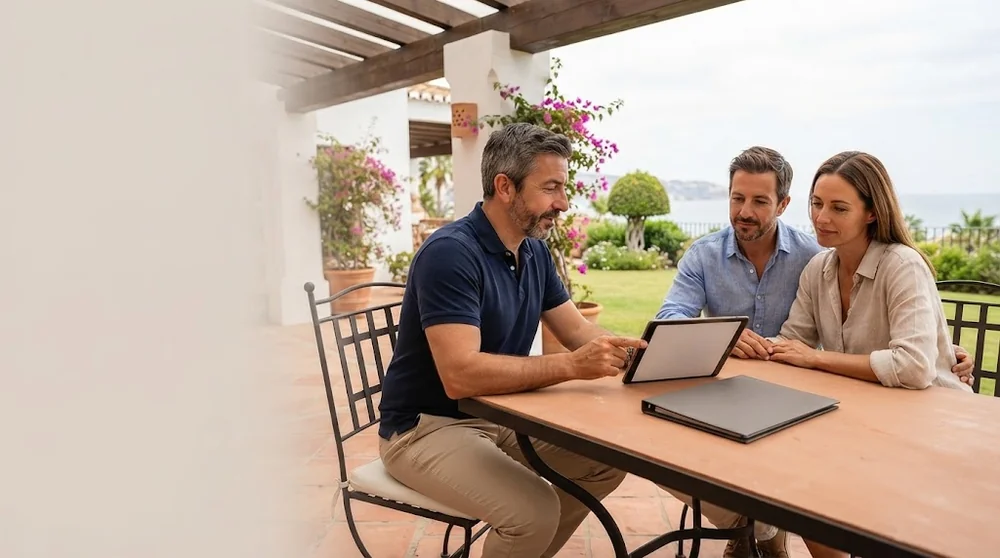
    My Bottom Line on Making an Offer in Spain

    Negotiating a property offer in Barcelona, Madrid or Marbella comes down to three things: evidence, certainty and wording. Use sold comparables and the property’s condition to set an opening offer, a preferred ceiling and a walk-away limit. Remember that September 2026 asking-price averages describe what sellers hope for, not what buyers pay, and that published negotiation margins such as 10% in 2024 or 6.2% in 2026 are not a formula for your offer.

    Treat deposits as legal commitments rather than formalities. A contrato de reserva is only as safe as its refund clause, and a contrato de arras can mean forfeiture, double repayment or a claim for damages depending on whether it is penitential, confirmatory or penal. Budget ITP from the start, check the valor de referencia catastral, and make sure every payment is credited, receipted and sent to a verified account.

    I swapped Manchester for Andalusia for the light and the pace of life, and more than ten years later I still enjoy watching a well-prepared buyer get the right home on fair terms. The pattern rarely changes: the buyers who check first and pay second are the ones who sleep well afterwards.

    General information only, current as of October 2026. Tax rates, legislation and market data can change; take advice from a qualified independent lawyer and relevant regulated advisers before signing or paying any deposit.

  • How to Make an Offer on a Spanish Property (2026 Guide)

    How to Make an Offer on a Spanish Property (2026 Guide)

    You have found the apartment in Malaga or the villa above Marbella, the viewing went well, and now the agent wants to know what you are offering. Knowing how to make an offer on a property in Spain comes down to four decisions: what price to put forward, what conditions to attach, what to check before any money moves, and in which situations a deposit can be lost. Getting those four right matters far more than haggling over the last few thousand euros. This guide follows a real transaction in the order it happens, so you can make your next move with your eyes open.

    Property agent discussing a house purchase offer with buyers on a villa terrace in Spain

    To make an offer on a property in Spain, compare recent local sale prices, confirm your budget and financing, and submit a written offer stating the price, conditions and proposed completion date. Have an independent lawyer review the property and any reservation agreement before paying money. Deposits and withdrawal rights depend on the contract you sign.

    How Making an Offer in Spain Works

    Making an offer in Spain usually follows a predictable sequence, although only part of that sequence is required by law. Most of what buyers experience is agency custom: the estate agent passes offers between buyer and seller, suggests a reservation payment and recommends a timetable. The legal framework sits underneath those customs, mainly in the Spanish Civil Code and, in Catalonia, the Catalan Civil Code.

    1. Market research. You compare the property with recent local sales and similar listings and fix your maximum all-in budget. This stage is pure common sense, not a legal requirement.
    2. Offer submission. You send your offer, normally through the agent and ideally in writing, stating the price, conditions and timetable.
    3. Response or counter-offer. The seller accepts, rejects or counters. Several rounds are normal, and nothing obliges a seller to answer within a set time.
    4. Possible reservation. Many agents ask for a contrato de reserva, a short reservation agreement with a payment intended to take the property off the market. A reservation is common practice on the Costa del Sol but is not legally compulsory in every transaction.
    5. Lawyer-led verification. Your independent Spanish property lawyer (an abogado) checks ownership, charges, debts, licences and planning status.
    6. Private agreement, then notarial completion. The parties usually sign a contrato de arras (a private deposit contract) or a private purchase contract, then sign the public deed before a notary, when the balance is paid and keys are handed over.

    Let me put it plainly: the idea that “nothing is binding until you sign the arras” is unsafe. Under Spanish law, a sale contract can come into existence when the parties agree on the property and the price, even before any notarial deed. Whether a particular email exchange or signed offer creates obligations depends on its wording, the evidence and the circumstances. Equally, not every informal offer or friendly email binds anyone. The sensible approach is to treat any written acceptance of essential terms as potentially significant and have it reviewed before you rely on it.

    How Much Should You Offer Below Asking Price?

    There is no universally safe discount in Spain. Advice that you should “always offer 10% under” is folklore, not evidence. Some properties are priced optimistically and sit for a year; others are priced sensibly and attract several buyers within a fortnight. The right opening offer comes from a repeatable method rather than a rule of thumb.

    A repeatable valuation method

    Start by separating two kinds of evidence. An asking price is what a seller hopes to achieve; a completed sale price is what a buyer actually paid. Portal listings show asking prices only. Completed-sale evidence comes from notarial and Land Registry statistics, valuation reports and your agent’s or lawyer’s access to recorded transactions. Official registry and notarial statistics are published at area level, which is useful for trends but rarely precise enough to value one specific flat.

    Then work through these factors in order: comparable completed sales in the same building or street; current competing listings; condition and likely renovation costs; time on the market and any price reductions; local supply; what you can learn about the seller’s motivation; and finally your own maximum all-in budget, including taxes and fees. Your maximum should be fixed before you negotiate, not discovered during it.

    A worked example on a €350,000 listing

    The table below shows three possible opening offers on a hypothetical resale property advertised at €350,000. The percentages are simple arithmetic illustrations, not recommended national or regional discount rates and not market averages for any city.

    Opening offerReduction from €350,000When this offer may be credibleMain risk
    €315,000€35,000 (10%)Long time on market, documented price cuts, renovation needed, comparable sales clearly lowerSeller may feel insulted and stop engaging, especially if demand is strong
    €330,000€20,000 (about 5.7%)Fairly priced property with some evidence of overpricing or work requiredCompeting buyer may offer closer to asking
    €340,000€10,000 (about 2.9%)Well-priced property, low supply, recent interest from other buyersLeaves little room to negotiate after survey findings

    A modest offer is often more credible than an aggressive one when the comparable sales support the asking price. In a tight pocket of Malaga’s centre or a sought-after Mallorca village, a lowball figure may simply end the conversation. In a slower development with dozens of similar units, a lower offer backed by evidence is perfectly reasonable. The same logic applies in Alicante, Valencia, Madrid, Barcelona and Tenerife: local evidence, not a national percentage, should set your figure.

    If you would like help pulling together a comparison of similar local properties before you commit to a number, that groundwork is usually the best money and time you will spend in the whole process.

    Residential properties on a Spanish street being compared before a purchase offer

    How to Submit a Written Property Offer

    A written offer protects you in two ways: the seller sees exactly what you are proposing, and you have a record if anyone later disputes what was said. Verbal offers relayed through a busy agent have a habit of losing a condition or two along the way.

    1. Identify the property precisely: address, unit number, and the cadastral or registry reference if available.
    2. State the exact price offered, in euros.
    3. Explain your finance position: cash with proof of funds, mortgage in principle, or application in progress.
    4. List inclusions such as furniture, appliances, a parking space or storage room.
    5. Set out your conditions: satisfactory legal checks, survey, mortgage approval and valuation where relevant.
    6. Propose a timetable for any reservation, the private contract and completion.
    7. Give a validity period, for example five working days.
    8. Ask for a written response and name your lawyer as the contact for documents.

    Example email an overseas buyer could adapt

    The example below expresses commercial terms for discussion. It is not an enforceable legal template, and any version containing payment commitments or deadlines should be reviewed by your lawyer before you send it.

    Subject: Offer for Apartment 3B, Calle Example, Malaga

    Dear [Agent], following our viewing on 14 October, we would like to offer €330,000 for Apartment 3B, including the parking space, storage room and the furniture listed in the attached inventory. We are buying with a Spanish mortgage of approximately 60% of the price; a preliminary assessment from our lender is attached, and formal approval is subject to valuation. Our offer is subject to satisfactory legal due diligence by our independent lawyer, a building survey, mortgage approval and confirmation that the property is free of charges, debts and occupants on completion. We would hope to complete within 10 weeks. This offer is valid until 5pm on 24 October 2026 and is not a commitment to pay any deposit until a written agreement has been reviewed by our lawyer. Kind regards, [Names]

    A cash buyer can present a simpler, stronger offer: proof of funds, fewer conditions and a shorter timetable. Sellers often value that certainty, which can justify a lower price. A finance-dependent offer needs clearer conditions and more realistic deadlines, because a valuation shortfall or slow lender can derail everything. For British buyers, post-Brexit lending to non-EU non-residents is generally more conservative, so allow extra time for Spanish bank paperwork and the NIE (your foreigner’s tax identification number).

    Which Offer Conditions Protect the Buyer?

    A condition only protects you if the seller agrees to it and it is written into the relevant document in enforceable terms. Nothing in Spanish law automatically makes an ordinary resale offer “subject to survey” or “subject to mortgage”. If a protection is not in the agreement, you should assume you do not have it.

    Essential protections to request

    • Legal due diligence: satisfactory checks by your independent lawyer, with a right to withdraw and recover money if serious problems appear.
    • Title: the seller is the registered owner with authority to sell, confirmed through a recent nota simple, an extract from the Registro de la Propiedad (Land Registry).
    • Registered charges: mortgages, embargoes or other charges cancelled at or before completion.
    • Community and tax debts: up-to-date community fees and IBI (local property tax), with certificates provided.
    • Licences and planning: first occupation licence or equivalent where applicable, and no open planning infringement.
    • Unlawful alterations: any extension, enclosed terrace or converted garage must be legal, regularised or properly accounted for.
    • Description match: the physical property must reasonably match the registry and cadastral descriptions.
    • Vacant possession: no tenants or occupants on completion unless expressly agreed.
    • Mortgage finance and valuation where you are borrowing.

    Negotiable commercial preferences

    • Furniture, appliances and fittings listed in a signed inventory.
    • Flexible completion date or early access for measurements.
    • Survey findings leading to a price adjustment rather than withdrawal.

    Always ask for the nota simple before you commit. It is a valuable starting point, but a nota simple is not an exhaustive technical, planning or debt audit: it will not reveal an unlicensed extension, unpaid community fees or a leaking roof. Here’s where people usually come unstuck: an agent says “the extension is fine, everyone has one” and the buyer treats that as a legal finding. An agent’s opinion is an opinion. A legal finding comes from your lawyer checking the registry, the town hall and the documents. Ten years on the Costa del Sol have taught me that enclosed terraces and garage conversions are among the most common surprises on resales, from Marbella to Mijas.

    Surveyor inspecting a window frame and wall inside a Spanish resale apartment

    Reservation Deposits vs Arras Contracts

    Spanish property deposits come in several forms, and the label on the document matters less than what the document actually says. Five arrangements are worth understanding.

    An informal offer is a proposal by email or letter with no payment. A signed reservation agreement (contrato de reserva) is a short document, often prepared by the agent, in which the buyer pays a sum to take the property off the market for a period, typically while the lawyer carries out checks. Arras confirmatorias (confirmatory arras) are a payment on account of the price that confirms a concluded contract; if one party fails to perform, the other can generally demand performance or termination with damages, rather than simply walking away. Arras penitenciales (penitential arras) give each side a right to withdraw at a known price. Arras penales (penalty arras) act as a penalty or compensation for breach without giving a free right to withdraw.

    The key legal rule is Article 1454 of the Spanish Civil Code. As of October 2026, Article 1454 provides that where arras have been given in a sale contract, the contract may be terminated by the buyer forfeiting the arras or the seller returning them doubled. Spanish courts interpret penitential arras restrictively and generally require a clear agreement that the parties intended a withdrawal right. The double-return rule is not an automatic feature of every Spanish deposit, reservation or private contract. A document must be read as a whole, and a mere reference to Article 1454 may not be enough if the rest of the wording points elsewhere.

    Catalonia is different. Under Article 621-8 of the Catalan Civil Code, as of October 2026, money handed over by a buyer is presumed to be confirmatory arras on account of the price, and penitential arras must be expressly agreed. Do not assume the Andalusian or Madrid position applies in Barcelona.

    ArrangementTypical rolePayment practicePotential binding effectBuyer withdrawal consequencesSeller withdrawal consequences
    Informal offerOpens negotiationUsually no paymentLimited, but acceptance of essential terms may have legal effectUsually no money at riskDepends on what was agreed
    Reservation agreementTakes property off market during checksOften a few thousand euros; amounts vary widelyDepends entirely on wordingRefund only if conditions allow it; otherwise often forfeitedDepends on wording; refund at minimum is common, double not automatic
    Arras confirmatoriasConfirms the sale, paid on account of priceOften around 10% of price by customStrong: contract concludedSeller may claim performance or termination with damagesBuyer may claim performance or termination with damages
    Arras penitencialesGives a priced right to withdrawOften around 10% of price by customBinding, with agreed exit routeGenerally forfeits the arrasGenerally returns double where validly agreed
    Arras penalesPenalty for breachVariesBinding; no free withdrawalForfeiture as penalty, and possibly performance claimPenalty as agreed, possibly with performance claim

    An arras payment of around 10% of the agreed price is common practice in Spain, not a compulsory legal rate, and reservation sums vary widely between agencies and price points. Whatever the amount, insist on a written refund clause saying exactly when money comes back, within how many days and to which account.

    My advice to every British buyer is to read the deposit clause as if the deal has already gone wrong. If you cannot tell from the wording who keeps the money and why, nobody else will be able to tell either.

    If you would like to talk through the order of payments and checks before handing over a deposit, I am happy to map out the sequence with you. Contract review itself belongs with your independent lawyer.

    House keys, pen and closed folder on a desk during a property purchase

    How to Avoid Losing Your Property Deposit

    Deposits are rarely lost through bad luck. They are usually lost because a condition was never written down, a deadline was missed or the money went to the wrong person. Five broad outcomes are possible:

    1. Buyer withdraws by choice. Under penitential arras, the buyer generally forfeits the deposit. Under confirmatory arras, the buyer may also face a claim for performance or damages.
    2. Seller breaches or withdraws. Depending on the contract, the buyer may recover the deposit, double the deposit, damages or performance.
    3. Adverse legal findings. If the agreement makes the purchase subject to satisfactory due diligence, serious title, debt or planning problems should allow withdrawal with a refund.
    4. Failure of an express condition. A mortgage refusal or failed survey triggers a refund only if the condition was agreed and the buyer followed its procedure.
    5. Completion delay. Missing the deed date can amount to breach. Extensions must be agreed in writing.

    Receipts and crediting

    Every payment needs a signed receipt stating the amount, the property, the payer, the recipient and the legal character of the payment, for example “reservation, to be credited against the arras deposit”. A receipt that describes a payment as credited against the price prevents disputes about whether the reservation counts towards the later deposit.

    Who actually holds the money

    Find out whether the money goes to the seller, the agent or a lawyer’s client account, and whether that recipient has written authority from the registered owner to receive it. An estate agent or solicitor account is not automatically a regulated escrow arrangement in Spain. Ask in writing who holds the funds, on what terms and when they will be released. In Catalonia, the law contemplates arras being deposited with a notary, which can add security where the parties choose it.

    Payment instruction fraud

    Fraudsters target property buyers by hacking email accounts and sending “updated” bank details at the last minute. Verify any account by telephone using a number you already hold, never one in the email. Treat any change of account as suspicious until confirmed by your lawyer in person or by a trusted channel. A Spanish IBAN in the payee’s own name is easier to trace than a foreign account in a third party’s name.

    Final payment-authorisation checklist

    • Agreement reviewed and approved by your independent lawyer.
    • Payee name matches the authorised recipient in the agreement.
    • Bank details confirmed by phone on a known number.
    • Payment reference includes property and purpose.
    • Refund conditions and deadline written into the agreement.
    • Signed receipt requested before or immediately after transfer.

    Property buyer discussing deposit payment arrangements with a legal adviser

    What If Your Spanish Mortgage Is Refused?

    A mortgage refusal after signing an arras contract is one of the most painful ways to lose money in a Spanish purchase, and it is avoidable. Start by understanding three different stages. A mortgage application is simply a request. A preliminary assessment, sometimes called an approval in principle, is the lender’s initial view based on your income and documents. A formal financing commitment follows valuation, risk approval and verification, and only then is the lender’s position reasonably firm. Many buyers sign arras at the first stage while believing they are at the third.

    Valuation is the usual trap. Spanish lenders lend against the lower of price and valuation, so a valuation below the agreed price leaves a gap the buyer must fill in cash. Lenders also set their own requirements for non-residents, including income documentation, tax returns and sometimes translations, which can stretch timetables beyond a typical arras deadline of eight to ten weeks. British buyers should check how a lender treats UK income and currency risk before agreeing dates.

    Outside Catalonia, a mortgage refusal does not automatically entitle a buyer to recover a deposit. A refund depends on a properly drafted mortgage financing condition: one that names the lender or lending criteria, the maximum loan, a deadline, the evidence required and the consequence of refusal. That condition must be agreed and assessed under the applicable law. Do not assume rules from one region apply in Madrid or Andalusia.

    Catalonia has specific statutory rules. As of October 2026, Article 621-49 of the Catalan Civil Code provides that where the sale contract provides for financing of all or part of the price by a credit institution, the buyer may, unless otherwise agreed, withdraw if the buyer documents within the agreed period the designated lender’s refusal to grant the financing or to allow subrogation into an existing mortgage, provided the refusal is not due to the buyer’s negligence. Article 621-8 links to this rule by allowing the buyer to recover penitential arras where withdrawal is justified under Article 621-49. Four points matter: the contract must provide for third-party financing, the refusal must be documented, the deadline must be met, and the parties can agree otherwise. A clause excluding Article 621-49 can remove that protection.

    Consider an illustrative example, not a real client: a buyer agrees to purchase a flat for €300,000 and pays a €30,000 arras deposit, planning a 60% mortgage. The bank values the flat at €270,000 and declines the application. Without an effective financing condition, the buyer may lose the whole €30,000, which is 10% of the price. With a carefully drafted condition and timely documentary evidence, the buyer may be entitled to a refund. The difference lies entirely in the wording signed weeks earlier.

    What Your Offer Really Costs

    Buyers often mix up the purchase price, deposit payments and taxes. The table below reconciles a hypothetical resale property advertised at €350,000 and purchased for €330,000, with a €5,000 reservation that the contract expressly credits against a cumulative 10% arras deposit.

    ItemAmountExplanation
    Asking price€350,000Advertised figure
    Accepted price€330,000Negotiated purchase price
    Reservation payment€5,000Paid first, credited towards arras
    Total arras deposit (10%)€33,000Cumulative deposit, including the reservation
    Additional arras payment€28,000€33,000 minus the €5,000 already paid
    Balance at completion€297,000€330,000 minus €33,000

    The €5,000 reservation is not added twice. Total payments towards the price are €5,000 + €28,000 + €297,000 = €330,000. If the contract does not say the reservation is credited, ask for that wording before signing.

    Taxes and acquisition costs sit on top

    Taxes, notary, Land Registry, lawyer, mortgage and renovation costs are paid in addition to the €330,000 price. As of October 2026, Spanish resales generally attract ITP (Impuesto sobre Transmisiones Patrimoniales, transfer tax), whose rate is set by each autonomous community, so Andalusia, the Valencian Community, Madrid, Catalonia and the Balearic Islands each apply their own rules and reliefs. First-supply new residential property in mainland Spain and the Balearic Islands is generally subject to IVA (VAT) at 10%, with specific exceptions, and AJD (stamp duty on documented legal acts) may also arise, at regional rates, on transactions such as new-build purchases and mortgage deeds. Tenerife is in the Canary Islands, where IGIC (the Canary Islands’ indirect tax) replaces IVA and distinct regional tax rules apply. Check current rates with the Spanish Tax Agency and the relevant regional tax authority, and ask your lawyer for a written cost estimate before you make the offer, not after.

    Negotiating in Different Spanish Property Markets

    Spain is not one property market. The table below compares the factors that shape negotiation in different areas. It deliberately avoids assigning bargaining percentages, because reliable city-wide discount figures do not exist for individual properties.

    MarketEvidence and demandPlanning and legal exposureTax and law notes
    Marbella and MalagaStrong international demand; wide micro-location gaps between streets and urbanisationsHistoric planning irregularities, enclosed terraces and rustic-land villas need careful checksAndalusian ITP rules; Spanish Civil Code applies
    Alicante and ValenciaLarge resale stock; seasonal coastal demandOlder coastal developments may have licence gapsValencian ITP rules
    Madrid and BarcelonaDeep local buyer pools; faster sales in central areasBuilding community works and rental regulation can matterBarcelona: Catalan Civil Code, arras presumed confirmatory; Catalan ITP
    MallorcaLimited supply; premium on views and rural fincasRural building and tourist-licence rules require specialist reviewBalearic ITP; 10% IVA on qualifying new homes
    TenerifeMixed holiday and residential demandTourist-zone and coastal rules varyCanary Islands IGIC and regional taxation instead of mainland IVA

    Resale and developer purchases need different strategies. A private seller may negotiate on price, furniture or timing; a developer usually works from a price list and negotiates on extras, parking or payment stages. Off-plan purchases are a separate category: advance payments for qualifying residential construction generally require bank guarantees or insurance under Spanish statute, and payments should go into the account specified for that purpose. An off-plan contract deserves specialised legal review before any stage payment.

    Different buyers also need different deposit strategies. A cash buyer can usually accept a shorter timetable and fewer conditions. A mortgage buyer needs a financing condition and realistic deadlines. An overseas buyer needs time for the NIE, currency transfer and remote signing by power of attorney. Choosing the right area and property type for your budget and goals is the step that makes every later negotiation easier.

    Not sure which area or property type fits your budget, region and buying goals? A short questionnaire helps narrow the options before you start making offers.

    Get a tailored selection of Spanish properties

    Once you have a shortlist, the negotiation itself becomes more focused, because you can compare like with like. That leads naturally to the moment every buyer dreads: the seller saying no, or not quite.

    What to Do When the Seller Counters or Rejects

    A counter-offer is a normal part of the process, not a rejection of you as a buyer. The aim is to respond calmly, protect your maximum budget and remember that price is only one of several levers.

    1. Assess the counter against your evidence. If comparable sales support the seller’s figure, a move towards it may be rational. If not, explain your reasoning politely with data.
    2. Trade terms instead of euros. A faster completion, a smaller reservation, flexible timing or leaving the furniture can be worth thousands to a seller. Deposit deadlines and completion flexibility often matter as much as price.
    3. Handle competing buyers carefully. Ask whether another offer is in writing and on what terms. You cannot verify a rival bid, so decide based on your own maximum, not on pressure.
    4. Respond to survey concerns with numbers. Obtain a repair estimate and propose a specific price reduction or seller repair before completion.
    5. Deal with a valuation shortfall early. Renegotiate the price, increase your cash contribution or rely on your financing condition. Do not let the arras deadline pass in silence.
    6. Treat delayed replies and deadlines firmly. If the seller misses a response date, your offer lapses on its own terms. If either side may miss a contractual deadline, agree a written extension.
    7. Walk away when risk exceeds reward. Unresolved title problems, illegal works the seller refuses to address or insistence on paying before checks are rational reasons to stop.

    Any agreed price change, extended deadline or new condition should be documented in a written amendment reviewed by your lawyer. An informal “yes, fine” by WhatsApp is not a safe way to change a contract involving tens of thousands of euros.

    Checklist Before You Sign or Pay

    Use this checklist immediately before you sign any offer document, reservation or arras contract, or transfer any money.

    • Property identified by address, unit, registry and cadastral references.
    • Legal owner confirmed and matching the seller.
    • Recent nota simple from the Registro de la Propiedad reviewed.
    • Independent Spanish property lawyer instructed, not chosen by the seller.
    • Title, charges, licences and planning checked, including any extensions.
    • All-in budget calculated: price, taxes, fees, mortgage costs and works.
    • Financing evidenced, with a financing condition if borrowing.
    • Deposit structure clear, including whether the reservation is credited.
    • Contract type identified: reservation, confirmatory, penitential or penalty arras.
    • Refund conditions, deadlines and evidence requirements written down.
    • Payment recipient authorised and bank details verified by phone.
    • Completion deadline realistic for your lender and travel plans.
    • Included furniture and items listed in a signed inventory.
    • Every document understood in English, with a translation where needed.

    The pattern I see most often on the Costa del Sol is pressure to pay quickly: another buyer is “coming on Saturday”, or the reservation must go today. In my experience, a property worth buying is still worth buying after your lawyer has had 48 hours to look at it.

    That observation comes from years of watching deals rather than from any single transaction, and the lesson is consistent: urgency usually serves the person receiving the money, not the person sending it. If you have identified a Spanish property and want a second opinion on the price, the sequence of payments, or how to organise independent checks, a short conversation before you commit can save a great deal of stress later.

    Weighing up an offer, a reservation request or the tax and legal steps ahead? Send me the details and I will give you a practical one-to-one view of the next sensible step.

    Ask your question on WhatsApp

    Bear in mind that this kind of help covers pricing, coordination and the practical sequence of the purchase. Legal review of contracts, title and planning remains the job of your independent Spanish property lawyer.

    Frequently Asked Questions About Offers in Spain

    Can you offer less than the asking price on a property in Spain?

    Yes. Asking prices are generally negotiable in Spain, but there is no standard discount that every seller will accept. Compare recent local transactions, the property’s condition, competing listings and how long it has been advertised. Base your opening offer on evidence and your maximum overall budget rather than assuming that every property is overpriced by a fixed percentage.

    How do you make an offer on a house in Spain?

    You can usually submit an offer through the estate agent, preferably in writing. State the proposed price, financing position, conditions, included items and intended completion timetable. Ask for a written response and involve an independent Spanish property lawyer before signing an offer document, reservation or deposit agreement. The legal effect depends on the wording and circumstances.

    Is an accepted property offer legally binding in Spain?

    It can be. Spanish law does not make every informal offer automatically binding, but contractual obligations may arise when the parties agree essential sale terms, even before the notarial deed. Signed reservation and arras agreements may also create obligations. An independent lawyer should review any written acceptance, especially if it contains deadlines, payments or penalties.

    How much deposit do you pay when making an offer in Spain?

    Making an informal offer does not necessarily require a payment. A reservation agreement may involve several thousand euros, while an arras deposit is often around 10% of the agreed price. Neither amount is a universal statutory requirement. Check whether earlier reservation money is included in the later deposit and whether the contract provides for repayment.

    Can you get your deposit back if a Spanish property purchase falls through?

    Possibly, depending on the agreement and why the transaction fails. A reservation deposit may be refundable under expressly agreed conditions. Under valid arras penitenciales, a buyer withdrawing without a protected reason generally forfeits the deposit, while a seller exercising the agreed withdrawal right returns double. Other arras arrangements can produce different remedies.

    What happens if my Spanish mortgage is refused after signing an arras contract?

    Outside any applicable statutory protection, mortgage refusal does not automatically entitle you to a deposit refund. A properly agreed financing condition may protect you. Catalonia has specific provisions under Article 621-49 when the contract provides for third-party financing, subject to conditions and contrary agreement. Obtain legal advice before signing and keep documentary evidence of any refusal.

    Key Takeaways Before You Make Your Offer

    A good offer on a Spanish property rests on evidence, not on a magic percentage. Compare completed sales rather than asking prices, fix your all-in budget before negotiating, and put your price, conditions, inclusions and timetable in writing. Remember that agreement on essential terms can carry legal weight, so treat written acceptances with care.

    Deposits deserve the most attention. A reservation, confirmatory arras, penitential arras and penalty arras lead to very different results if the deal collapses, and the double-return rule in Article 1454 applies only where the agreement validly provides for it. Mortgage protection must be written into the contract outside Catalonia, and even in Catalonia the statutory route under Article 621-49 has conditions and can be excluded. Verify who receives your money and confirm every bank instruction independently.

    After more than a decade helping English-speaking buyers on the Costa del Sol and beyond, my honest view is simple: the buyers who do best are rarely the toughest negotiators. They are the ones who slow down at the right moment, ask for the nota simple, let an independent lawyer read the small print and only then pay.

    Disclaimer: This article provides general information about Spanish property transactions as of October 2026 and is not legal, tax or financial advice. Laws, tax rates and regional rules change, and their application depends on your circumstances and the exact wording of any agreement. Before making an offer, signing a reservation or arras contract, or paying any money, obtain advice from an independent qualified Spanish property lawyer and, where appropriate, an independent tax adviser or mortgage specialist.

  • Reservation Deposit in Spain: Costs, Timing and Refunds

    Reservation Deposit in Spain: Costs, Timing and Refunds

    You have viewed the property, the terrace catches the afternoon sun, and the agent is now asking for a reservation deposit to take it off the market. This is the point where otherwise sensible people make hurried bank transfers from a café table. Before any money leaves your account, you need to know what amount is reasonable, what the payment actually secures, who holds it and what happens to it if the purchase stalls. I’m David, a Mancunian who swapped Manchester for Marbella over ten years ago, and this is the conversation I would want every buyer to have before paying.

    A reservation deposit in Spain is often €3,000–€6,000, although the amount is negotiable and some properties require more. It is commonly paid after an offer is accepted and the reservation terms are agreed. Have an independent lawyer review those terms before payment: refund rights, deadlines and credit towards the purchase price need explicit confirmation.

    Property adviser discussing a home reservation with a couple in a Marbella apartment

    How much is a reservation deposit in Spain?

    As of October 2026, several reviewed Spanish property market guides describe €3,000–€6,000 as a common reservation deposit range. That figure is an indicative market observation, not a legal tariff and not a measured national average. No Spanish statute sets a single national amount for a reservation deposit. The sum is agreed between the parties, so it can be negotiated alongside the price, the reservation period and the conditions attached.

    Resale properties

    On resale homes, the request usually comes from the listing agency on the seller’s behalf. A fixed sum within the range above is common, but higher-value properties may attract larger requests, and some arrangements use a percentage of the price instead. A request outside the usual range is not automatically suspicious, but it deserves a clear explanation.

    New-build and developer requests

    Developers often use their own standard reservation forms, and amounts vary from one development to the next. There is no universal new-build reservation amount. What matters more is how the developer’s later payment schedule works, which I cover in the off-plan section below.

    A bigger payment is not better protection

    Let me put it plainly: paying a larger reservation deposit does not give you stronger legal protection. Protection comes from the written terms, the identity and authority of the recipient and the conditions under which the money can be released or returned. A €10,000 payment made on a vague one-page form can leave you more exposed than €3,000 paid under a carefully reviewed agreement.

    Price credit or separate charge?

    A reservation deposit should normally be a payment towards the purchase price, not an extra fee. Buyers often confuse it with other purchase costs, so the table below separates them.

    PaymentUsually paid toCounts towards the price?
    Reservation depositAgent, seller, developer or lawyer, as agreedOnly if the agreement expressly says so
    Arras or private-contract depositSeller, or a holder agreed in the contractNormally yes, when stated in the contract
    Mortgage equity contributionPaid as part of the priceYes; it is your share of the price, not a fee
    Agency commissionAgencyNo; who pays it depends on the agency agreement
    Purchase taxes, notary, registry and legal feesTax authority and professionalsNo; these are costs on top of the price

    When should you pay the reservation deposit?

    There is a real difference between a payment requested in the car park after a viewing and a payment made after the seller has accepted your offer, the signatory’s authority has been checked and the terms have been agreed. A request for an immediate transfer does not show that the property or the agreement has been checked. A sensible sequence looks like this:

    1. Agree the offer price and the essential conditions, such as the timetable, finance and what is included.
    2. Confirm that the seller has accepted in writing and that whoever signs or receives the money has authority to do so.
    3. Obtain the draft reservation agreement and the property documents available, including a recent nota simple.
    4. Have an independent lawyer, acting only for you, review the draft and documents.
    5. Agree the conditions, dates, refund triggers and payment controls in writing.
    6. Sign, then pay exactly as the agreement states, using bank details verified independently.
    7. Obtain a signed acknowledgement or receipt identifying the property, parties, amount and date.

    A reservation is common practice in Spain, but it is not a compulsory national stage. Some buyers move directly to a contrato de arras. Reservation periods are purely contractual: 14–30 days is an illustrative period often seen, not a legal entitlement, and some arrangements are shorter.

    Here’s where people usually come unstuck: they let the reservation period run out while waiting for a bank valuation or a missing document. If you need more time, agree a written extension before the reservation period expires, signed by someone with authority. A friendly phone call saying “don’t worry about it” will not help much later. In my experience, a seller who refuses any protective wording at all is telling you something useful about the rest of the transaction.

    Reservation deposit versus arras: your payment timetable

    The reservation deposit is usually the first of several payments, and it should fit into the overall timetable rather than sit beside it. The next stage is often a private contract, commonly a contrato de arras, under which a larger deposit is paid. Around 10% of the price is customary in many arras arrangements, but it is not legally mandatory, and the parties can agree a different figure.

    StageTypical timingIllustrative amountPurposeCredit treatment
    ReservationAfter offer acceptance and legal reviewOften €3,000–€6,000Takes the property off the market while checks proceedCredited to the price if the agreement says so
    Arras or private contractWhen checks are satisfactory, by the agreed dateOften around 10% of price, including the reservationCommits both parties under defined termsNormally credited to the price
    CompletionSigning the deed before a notaryThe remaining price balanceTransfers ownershipPays the rest of the price

    Hypothetical cash-purchase arithmetic

    These hypothetical examples assume a cash purchase, a total agreed deposit of 10% and a reservation expressly credited towards it. The balances below exclude taxes, notary, registry, legal and other fees.

    For a €250,000 purchase, the buyer pays a €3,000 reservation. The total agreed deposit is €25,000, so the top-up at the arras stage is €22,000. The remaining price at completion is €225,000. Total price paid: €3,000 + €22,000 + €225,000 = €250,000.

    For a €500,000 purchase, the buyer pays a €6,000 reservation. The total agreed deposit is €50,000, so the top-up is €44,000. The remaining price at completion is €450,000. Total price paid: €6,000 + €44,000 + €450,000 = €500,000.

    If the agreement does not credit the reservation, you might be asked for the full €25,000 or €50,000 at the arras stage on top of the reservation. That is precisely why the credit wording matters.

    Where mortgage money fits

    Buyers using a mortgage sometimes add their equity contribution on top of these payments, as though it were another charge. It is not. Your mortgage equity contribution is the part of the price you fund yourself, and the reservation and arras payments form part of it. In a hypothetical €250,000 purchase where a lender advances €150,000, your share of the price is €100,000. If €25,000 has already been paid through the reservation and arras, a further €75,000 of your own money is needed at completion, plus taxes and fees, which lenders generally expect you to fund separately.

    Who should receive and hold your money?

    The reservation deposit may be paid to the agency, the seller, the developer or a lawyer, depending on what is agreed. None of these arrangements is automatically safe or automatically risky. What matters is control: who holds the money, on what terms it can be released, and who must repay it if the agreement says it should be returned. Before transferring, confirm:

    • The full identity of the recipient, whether an individual or a company, and their tax identification details.
    • Their authority to receive funds for the seller, ideally in writing from the seller.
    • Who owns the receiving account, and that the name matches the recipient in the agreement.
    • The capacity in which the money is held: as payment to the seller, or held pending conditions.
    • When and to whom it can be released, and what must happen first.
    • Who is responsible for repayment if a refund condition is triggered, and within what period.

    A lawyer’s or agent’s client account can add useful separation, but a client account is not automatically insured escrow. Ask your own lawyer how the funds are protected in practice and what happens if the holder fails to pay them on.

    Verify bank details independently through a contact channel you already know, such as a telephone number from the agreement or an existing professional relationship. Be particularly cautious when an email announces “updated” bank details just before payment. Email interception fraud is a known risk in property transactions, and a two-minute phone call costs far less than recovering a misdirected transfer. After paying, keep the signed agreement and a receipt identifying the property, the parties, the amount, the date and how the payment is credited.

    My advice to every British buyer is to treat bank details like a passport: check them against a source you already trust, every single time, however friendly the email sounds.

    Buyer checking payment arrangements by telephone beside a laptop

    Is the reservation deposit refundable?

    A reservation deposit in Spain is neither automatically refundable nor automatically forfeited. The outcome depends on the written terms, how the agreement is legally classified, the applicable law and the reason the purchase stops. Mandatory consumer or statutory protections can also matter in some cases. The title on the document and the small size of the payment do not settle its legal effect on their own. The table shows what to check and what to keep, rather than promising results.

    ScenarioContractual protection to checkEvidence to retain
    Seller rejects the offer or withdrawsRefund on non-acceptance; consequences of seller withdrawal; repayment periodWritten acceptance or rejection; withdrawal notice; payment proof
    Buyer changes their mindWhether the payment is lost, and whether exposure is limited to itSigned agreement; dated withdrawal notice
    Title, debt or planning defects foundCondition making the purchase subject to satisfactory legal checksLawyer’s written findings; nota simple; correspondence
    Mortgage refusedFinance condition with loan amount, deadline and evidence requiredLender’s written refusal; application records
    A deadline is missedWho was responsible; any extension; effect of expiryWritten extensions; emails showing the cause of delay

    Arras types and Spanish Civil Code Article 1454

    Spanish practice distinguishes three types of arras. Arras penitenciales allow either party to withdraw: the buyer by losing the deposit, or the seller by returning it doubled. That double-return mechanism comes from Spanish Civil Code Article 1454 (consolidated text on the official BOE website), but Spanish courts generally apply it only where the parties have clearly agreed penitential arras. It is not an automatic rule for every holding payment, so not every seller withdrawal leads to double repayment.

    Arras confirmatorias are a part-payment confirming the contract; withdrawal does not simply cost the deposit, and the other party may seek performance or termination with damages under the general rules. Arras penales operate as a penalty for breach, and depending on the wording, exposure is not always capped at the deposit. Your lawyer should identify which type your contract creates before you sign it.

    Notification, evidence and repayment timing

    If you rely on a refund condition, notify the other party in writing, by a method the agreement specifies or that provides proof of delivery, such as a burofax. Send it before any contractual deadline, attach your evidence and keep copies. The agreement should state the repayment period; if it does not, refund timing becomes a matter for negotiation or a claim. Ask a lawyer to assess your position before accepting a refusal to repay.

    Mortgage refusal and regional legal differences

    If you need a Spanish mortgage, the reservation agreement should say so. A mortgage finance condition is a contractual term making the purchase dependent on obtaining a loan. To be useful, it should specify the loan amount or loan-to-value required, the buyer’s obligation to apply promptly and properly, the evidence of refusal that counts, the deadline for obtaining approval and how refusal must be notified. Vague wording such as “subject to finance” invites argument later.

    Be realistic about your own obligations, too. If you apply late, to one lender only or with incomplete paperwork, a seller may argue that the refusal was your doing.

    Preliminary indications versus a binding offer

    A preliminary indication from a bank or broker, based on a quick look at your income, is not firm approval. A preliminary mortgage indication is not a binding loan offer, and approval can still depend on valuation, documentation, affordability and the lender’s checks. Non-resident buyers, including British buyers after Brexit, may face different lending criteria from residents, so the finance condition should allow time for that process rather than assuming a quick yes.

    Catalonia: a qualified exception, using Barcelona as an example

    Spain is not a single civil-law territory, and some regions have their own civil codes. Where Catalan law applies, as it may for a purchase in Barcelona, Catalan Civil Code Article 621-49 concerns contracts that envisage financing through a credit institution. As of October 2026, subject to its conditions and unless the parties agree otherwise, documented refusal of that financing within the agreed period may allow the buyer to withdraw, except where the refusal results from the buyer’s negligence. This is a conditional route, not a promise that every Barcelona buyer recovers every payment. A lawyer must confirm whether the provision applies and how it interacts with your actual reservation agreement. Outside Catalonia, as in Madrid or Malaga, look first to the contract’s own finance condition. There is no separate statutory reservation tariff for any Spanish city.

    New-build and off-plan reservation payments

    With developers, the label on a payment matters less than its substance. A reservation arrangement may simply hold a unit, while an advance payment is money paid towards the purchase price before the home is built or delivered. Whether off-plan protection applies depends on the payment’s substance and recipient, not the name on the form.

    Law 38/1999, Additional Provision One

    As of October 2026, the current framework for amounts paid towards housing under construction is Law 38/1999, Additional Provision One, Spain’s Building Regulation Act provision on buyer guarantees. Older references to Law 57/1968 describe a repealed regime and should not be treated as the governing law for a new transaction. Under the current provision, a developer receiving amounts from buyers is obliged, from the point the building licence is obtained, to guarantee their return, together with legal interest, through an aval bancario or a seguro de caución issued by a credit institution or insurer. The amounts must also be received through a special account, separate from the developer’s other funds.

    I would not assume that every pre-licence reservation is automatically protected, nor that it is automatically excluded. The timing, the nature of the payment and how it is applied can all affect the answer, so have your lawyer assess it.

    Checking the protection documents

    Ask for buyer-specific documentation rather than a general assurance. The bank guarantee or insurance certificate should identify you, the property, the amounts covered, whether applicable VAT is included, and the legal interest within the policy’s scope. Confirm that your payments go into the designated special account and that each subsequent instalment is covered as it is made. Do not rely on a fixed interest rate quoted in a brochure; the guarantee wording and the law determine what is covered. Ten years on the Costa del Sol have taught me that the developers worth buying from produce these documents without fuss.

    Apartment development under construction on Spain's Mediterranean coast

    Your checklist before signing a contrato de reserva

    A contrato de reserva can be short, but it should not be thin. Use this checklist with your lawyer; it is a prompt for review, not a template that guarantees recovery.

    • Parties: full names, identification and the authority of anyone signing for the seller.
    • Property identifiers: address, registry details and cadastral reference.
    • A current nota simple from the Registro de la Propiedad.
    • The agreed price and what is included, such as parking or furniture.
    • The reservation amount and an express statement that it is credited towards the price.
    • Written seller acceptance and any exclusivity obligation to stop marketing the property.
    • The recipient, the holding arrangement and the conditions for releasing the money.
    • Legal-check and finance conditions, with clear tests for when each is satisfied.
    • The expiry date and how extensions are agreed in writing.
    • Refund triggers, the evidence required, the notification method and the repayment period.
    • The terms of the next contract, including the arras type, deposit amount and completion date.

    Always ask for the nota simple before you commit. A nota simple shows registered ownership and registered charges, such as mortgages and embargoes, but it does not establish complete planning compliance. As the Colegio de Registradores explains, it is an informative extract of the register. Unregistered extensions, unauthorised building work, unpaid community fees or local taxes may not appear, so your lawyer should also check planning, catastro, community and tax records.

    Preparation for British buyers

    Prepare before you find the property, not after. Have your passport ready and keep evidence of where your money comes from, such as savings statements, sale proceeds or pension lump-sum documentation, because banks, lawyers and notaries carry out anti-money-laundering checks. Allow realistic time for international transfers and currency exchange from a UK account, and do not promise a seller same-day payment you cannot control. Since Brexit, British buyers are non-EU nationals for Spanish purposes, but there is no Brexit-specific reservation deposit rule, and buying property does not by itself give you a right to live in Spain. The UK government’s Living in Spain guidance is a sensible starting point for residence and visa questions.

    Frequently asked questions about reservation deposits

    How much is a reservation deposit in Spain?

    As of October 2026, several Spanish property guides describe €3,000–€6,000 as a common reservation range. The amount is negotiated, and some properties or developments require more. This is market practice, not a nationwide legal tariff. Ask whether the payment is credited towards the price and what written conditions govern its return before you agree to pay it.

    When should I pay a Spanish property reservation deposit?

    Pay according to a written agreement reviewed by your independent lawyer, after confirming seller acceptance and the authority of whoever signs or receives the money. Agree the reservation period, conditions and payment instructions first. A request to transfer funds immediately after a viewing does not establish that the agreement or the property has been checked.

    Is a reservation deposit refundable in Spain?

    A reservation deposit is not automatically refundable or automatically forfeited. Recovery depends on the agreement, its legal character, the applicable law and the reason the purchase stops. Written conditions should address legal checks, financing and seller withdrawal, with clear notification and repayment arrangements. Ask a lawyer to assess your rights before accepting a refusal.

    Does the reservation deposit count towards the 10% deposit?

    It commonly does when the agreement expressly credits it towards the purchase price and the subsequent deposit. For a hypothetical €250,000 purchase with an agreed total 10% deposit, a credited €3,000 reservation leaves €22,000 to pay at the next stage. Ten per cent is customary in many transactions rather than a statutory requirement.

    Who should hold my reservation deposit?

    The recipient may be an agent, seller, developer or lawyer, depending on the agreed arrangement. Confirm their authority, account details, release conditions and responsibility for repayment. A lawyer’s client account does not remove every risk. Have your own lawyer explain who controls the funds, and independently verify bank instructions before transferring money.

    Can I get my deposit back if my Spanish mortgage is refused?

    Mortgage refusal does not create an automatic refund right throughout Spain. Negotiate a finance condition covering the required loan, evidence and deadlines before paying. Where Catalan law applies, Article 621-49 can provide a conditional withdrawal route when credit-institution financing is envisaged, unless agreed otherwise. Its requirements and application to your agreement need legal review.

    Before you commit your reservation money

    Before paying, you should be able to answer five questions in a sentence each: how much you are paying, what it secures, who controls it, when the next deadline falls and how you would get it back if a condition fails. If any answer is “I’m not sure”, the transfer can wait a day. In my view, a good property rarely disappears because a buyer asked for proper wording; deals fall apart far more often because nobody asked.

    If you would like to talk through a specific property, the payment timetable or how the reservation fits your budget, I’m happy to discuss it with you. For advice on your actual contract, instruct an independent Spanish property lawyer who acts only for you.

    This article provides general information about Spanish property law and market practice as of October 2026, with legal content reviewed in October 2026. It is not legal, tax or financial advice, and it does not guarantee any outcome. Laws, practice and individual circumstances vary, so obtain independent professional advice before signing or paying.