Costa del Sol and Costa Blanca both sell sunshine, but they sell it at different prices, through different airports, with different winter habits and different bills once you hold the keys. For a home you will use for a few weeks a year, those differences matter more than they do for someone living in Spain full time. I have spent more than ten years helping British buyers on this stretch of the Mediterranean, and the honest answer depends on the town rather than the coast. Here is how the two compare as of November 2026.
Costa Blanca generally offers better value for a second home, particularly around Torrevieja, Alicante and Orihuela Costa. Costa del Sol suits buyers prioritising Málaga’s connections, Marbella’s amenities and premium coastal living. Neither is universally better: compare individual towns, purchase taxes, annual running costs, winter accessibility and rental restrictions before choosing.
Costa del Sol vs Costa Blanca at a Glance
The table below compares the two coasts on the points that matter most to second-home buyers. The price figures are provincial asking-price indicators for Málaga province and Alicante province, not coastal-town valuations, and the tax rows apply to standard resale purchases. Treat the “suitability” row as my professional opinion rather than a statistic.
| Comparison factor | Costa del Sol (Málaga province) | Costa Blanca (Alicante province) |
|---|---|---|
| Geographic setting | Coastline from Torremolinos and Málaga west to Estepona, backed by mountains. | Coastline from Torrevieja and Orihuela Costa north through Alicante, Altea, Calpe, Jávea and Moraira. |
| Price position (asking-price indicator, October 2026) | About €4,322/m² for Málaga province, per idealista. | About €2,783/m² for Alicante province, per idealista, roughly 35.6% below Málaga. |
| Principal airport | Málaga-Costa del Sol Airport. | Alicante-Elche Miguel Hernández Airport. |
| Typical second-home stock | Apartments, townhouses, golf and hillside villas, and premium new developments. | Apartments, bungalows, urbanisation villas and, in the north, premium villas. |
| Lifestyle | International resorts, golf, marinas, Málaga city culture and Marbella dining. | Large residential resorts in the south, smaller coves and towns in the north. |
| Town variety | Wide, from city living to exclusive resorts. | Wide, from lower-priced resort towns to premium northern coves. |
| Winter services | Strongest in Málaga, Fuengirola and Marbella; quieter in some urbanisations. | Strongest in Alicante and Torrevieja; quieter in some coastal villa districts. |
| Car dependence | Lower in Málaga, Fuengirola and Benalmádena Costa; higher in hillside and golf districts. | Lower in central Alicante and Torrevieja; higher in urbanisations and northern villa areas. |
| Standard resale transfer tax (ITP), as of November 2026 | 7% general rate in Andalusia. | 9% general rate in the Valencian Community, effective 1 June 2026. |
| Rental rules | Depend on the Andalusian framework, the municipality and community rules. | Depend on the Valencian framework, the municipality and community rules. |
| Second-home suitability (professional opinion) | Strong where connections and amenities matter more than entry price. | Strong where entry price and running costs matter, if car use and winter are checked. |
A second home, a relocation and an investment property are three different purchases, and many comparisons blur them. A second home is a property you use intermittently for your own holidays. A relocation means living in Spain, which brings residency, healthcare and tax-residence questions. An investment property is bought mainly for rental income or resale. Intermittent use changes the sums: you pay for the home 365 days a year and enjoy it for a fraction of them, so a cheap purchase with high running costs can cost more per night than a dearer, simpler home.
My quick reading for three types of buyer, again as opinion rather than advice:
- Budget-conscious buyer: start with Alicante, Torrevieja and Orihuela Costa, then check winter use and car needs.
- Premium lifestyle buyer: start with Marbella and Estepona, or the northern Costa Blanca towns of Jávea and Moraira.
- Occasional visitor: start with towns close to the airport and a rail or tram line, such as Málaga, Fuengirola or central Alicante.
Property Prices: Málaga vs Alicante
In October 2026 idealista reported an asking-price indicator of about €4,322/m² for Málaga province and €2,783/m² for Alicante province. These are provincial figures built from advertised prices. They are not matched property sales, not beachfront averages and not notarised transaction values. idealista has also reported a methodology improvement from July 2026, so I have not mixed these figures with older series, and you should not either.
| Measure (October 2026 unless stated) | Málaga province | Alicante province |
|---|---|---|
| Asking-price indicator, €/m² | €4,322 | €2,783 |
| Difference in €/m² | €4,322 − €2,783 = €1,539/m² | |
| Málaga premium, Alicante as denominator | €1,539 ÷ €2,783 = about 55.3% higher | |
| Alicante discount, Málaga as denominator | €1,539 ÷ €4,322 = about 35.6% lower | |
| Notional 80 m² home at the indicator (arithmetic only) | €345,760 | €222,640 |
| Notional 120 m² home at the indicator (arithmetic only) | €518,640 | €333,960 |
The two percentages describe the same gap from different starting points. Málaga is about 55.3% more expensive than Alicante when Alicante is the base, and Alicante is about 35.6% cheaper than Málaga when Málaga is the base. The last two rows are simple multiplication to show scale. They are illustrative arithmetic, not listings, and no real two-bedroom flat or three-bedroom villa is guaranteed to sit at those figures.
Provincial averages hide a great deal. Málaga province includes Marbella and inland towns, and Alicante province includes Benidorm, Torrevieja and the premium northern coves, so the mix of properties drives each number. Asking prices also differ from sale prices, and both differ from the appraisal values lenders use. Here’s where people usually come unstuck: they see “cheaper province” and assume every Costa Blanca home is cheaper, when a villa in Moraira or Jávea can cost more than a flat in a less expensive Costa del Sol town.
To compare equivalent property types fairly, I suggest gathering five current listings of the same type in each town you are considering, for example a two-bedroom apartment within walking distance of the beach. Record the date, the size and the asking price per square metre, and then compare the towns rather than the provinces. I have not quoted flat or villa prices here because I would be inventing them without dated comparables.
Best Second-Home Towns on Each Coast
Towns on the same coast are priced very differently, so I group them by buyer type rather than by coast. The price comments below are my professional impressions as of November 2026, not dated price rankings, and you should confirm them against current listings for the exact property type.
Costa del Sol: Málaga, Fuengirola, Benalmádena, Mijas, Estepona and Marbella
Urban and rail-linked buyers tend to look at Málaga, Fuengirola and Benalmádena. Málaga city offers year-round services, culture and the nearest airport, though parking and older building condition need checking. Fuengirola and Benalmádena Costa are largely apartment markets with walkable seafronts, and the local rail line makes a car optional for many visits.
Golf and resort buyers usually look at Mijas Costa, Estepona and Marbella. Mijas Costa has many urbanisations where a car is essential, and community fees can be substantial where pools, gardens and security are shared. Estepona combines an old town with newer developments. Marbella sits at the premium end, with high-quality amenities and a correspondingly higher entry price.
Costa Blanca: Alicante, Torrevieja, Orihuela Costa, Calpe, Jávea and Moraira
City-and-beach buyers look at Alicante, which has a major airport, a working Spanish city around it and services that carry on all winter. Value-oriented buyers tend to start with Torrevieja and Orihuela Costa, which have large stocks of apartments, bungalows and villas. Torrevieja is a town with year-round life, while parts of Orihuela Costa are residential urbanisations where shops, parking and winter opening hours deserve a visit in January.
Premium northern buyers look at Calpe, Jávea, Moraira and Altea. Hillside villas, sea views and quieter coves put many of these towns in the same price conversation as some Costa del Sol locations. They are lovely places, but steep streets, limited public transport and quiet winters are common trade-offs.
| Town | Coast | Budget position (opinion, November 2026; verify with dated listings) | Transport to airport and local links | Amenities outside summer | Car needed? |
|---|---|---|---|---|---|
| Málaga | Costa del Sol | Mid to upper; wide range by district | Closest to the airport; rail and bus links | Strong all year | Often not |
| Fuengirola | Costa del Sol | Mid; mainly apartments | Rail line to the airport and Málaga | Strong all year | Often not |
| Benalmádena | Costa del Sol | Mid to upper, by district | Rail on the coast; hills need a car | Good on the coast | Depends on district |
| Mijas | Costa del Sol | Mid to upper; golf-led | Road-based; bus and car | Mixed; better in larger hubs | Usually yes |
| Estepona | Costa del Sol | Upper; wide range | Road-based; bus and car | Good in the centre | Often yes |
| Marbella | Costa del Sol | Premium | Road-based; bus and car | Strong in central areas | Often yes |
| Alicante | Costa Blanca | Lower to mid; city premium in prime districts | Close to the airport; bus and tram options | Strong all year | Often not |
| Torrevieja | Costa Blanca | Lower to mid | Road transfer or bus from the airport | Strong in the centre | Depends on district |
| Orihuela Costa | Costa Blanca | Lower to mid | Road-based | Mixed; check by urbanisation | Usually yes |
| Calpe | Costa Blanca | Mid to upper | Road-based; longer transfer | Good in the centre | Often yes |
| Jávea | Costa Blanca | Upper | Road-based; longer transfer | Quieter in winter | Usually yes |
| Moraira | Costa Blanca | Upper to premium | Road-based; longer transfer | Quiet in winter | Usually yes |
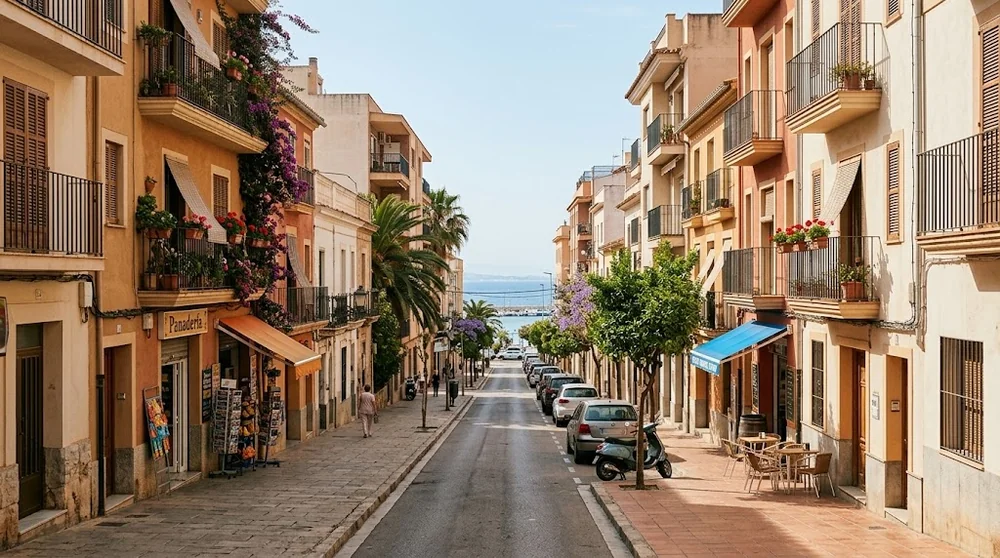
My opinion, not a rule: the cheapest Costa Blanca home and the most expensive one are further apart than any two Costa del Sol towns I would shortlist for a normal budget. Compare towns, not coasts.
Weather, Beaches and Winter Living
Both coasts enjoy a Mediterranean climate, and neither is a guaranteed January sun-trap. I have avoided sunshine-day counts because they depend on the station, the year and the method, and brochure figures rarely say which. The Spanish state meteorological agency, AEMET, publishes station-level climate records, and I recommend reading the figures for the nearest station to any town on your shortlist.
As a broad pattern, parts of Alicante province record less rainfall than some parts of Málaga province, while the mountains behind the Costa del Sol shelter many coastal areas from colder air. Those are generalisations. A south-facing apartment in Fuengirola, a north-facing villa in Jávea and a hillside house above Mijas will feel very different on the same day.
A pleasant summer viewing may not represent January living. Many Spanish homes have no central heating, and a property that is empty for months can turn damp, with mould appearing on cold external walls. My advice to every British buyer is to visit once between November and February and to check these points:
- Orientation: sun on the main rooms in winter, and shade from neighbouring buildings.
- Heating and insulation: reversible air conditioning, radiators or a log burner, and how well the walls, windows and roof perform.
- Humidity: signs of damp on ceilings, in wardrobes and behind furniture.
- Services: which restaurants, supermarkets and clinics stay open when the tourists leave.
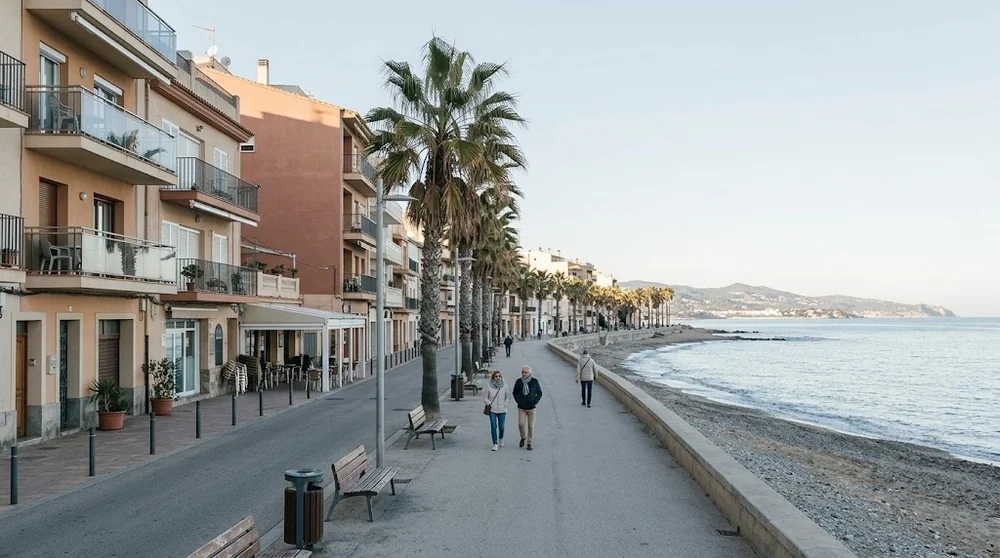
Beaches vary as well. Exposed beaches can be rough, and some are narrow or cleared of sunbeds outside the season. Central Málaga, Fuengirola, Alicante and Torrevieja generally keep businesses open all year, while some urbanisations on Orihuela Costa and the northern coves can feel very quiet in winter. That suits some owners perfectly and others not at all.
Flights, Transport and Car-Free Holidays
Judging an airport by size misses the point. What matters is whether your airline flies from your UK airport on the days you want, in the months you want, and how long the journey from the terminal to your front door really takes. Flight schedules change every season, so check them for your own dates.
| Transport factor | Málaga-Costa del Sol Airport | Alicante-Elche Miguel Hernández Airport |
|---|---|---|
| Main areas served | Málaga, Torremolinos, Benalmádena, Fuengirola, Mijas, Marbella, Estepona. | Alicante, Torrevieja, Orihuela Costa, and the northern coast towards Calpe, Jávea and Moraira. |
| Flight pattern to check | Year-round and seasonal routes from UK airports; compare your own departure airport and weekdays. | Year-round and seasonal routes from UK airports; compare your own departure airport and weekdays. |
| Rail and public transport | The C1 commuter rail line links the airport area with Málaga and Fuengirola; Marbella and Estepona rely on buses and roads. | Buses and a tram network serve Alicante and parts of the north; many villa districts have limited public transport. |
| Car-free potential | Realistic in Málaga, Fuengirola and parts of Benalmádena. | Realistic in central Alicante and parts of Torrevieja. |
Málaga’s C1 corridor is a genuine advantage for car-free holidays. A flat within walking distance of a C1 station in Fuengirola or Benalmádena Costa can work without hiring a car. Elsewhere, many Costa del Sol urbanisations and Costa Blanca villa districts are car-dependent, with the nearest supermarket a drive away.
Distinguish airport-to-town from airport-to-property. A town may be close to an airport while the specific street sits up a hill, behind a security gate or at the end of a long urbanisation road. Before committing, run this checklist for the exact address:
- Check the actual door-to-door journey at the time of day you would usually arrive.
- Compare taxi, transfer, bus, rail and hire-car costs, including baggage costs for the airline you would use.
- Confirm the nearest supermarket, pharmacy and restaurant, and whether you could reach them on foot.
- Look at winter flight schedules, not only summer timetables.
Ten years on the Costa del Sol have taught me that a half-hour transfer feels very different after a delayed evening flight with two children and four suitcases. Test the journey, not just the map.
Buying Taxes and Total Purchase Costs
The rates below apply to standard resale purchases as of November 2026. The general resale transfer tax, ITP (Impuesto sobre Transmisiones Patrimoniales), is 7% in Andalusia as of November 2026. The general ITP rate in the Valencian Community is 9% as of November 2026, effective 1 June 2026. The Valencian Community also applies an 11% rate under a rule for transactions above €1 million, and the exact condition needs verifying for any high-value purchase. Primary-residence reductions do not automatically apply to a second home. For the legal texts, see the official gazette, the Boletín Oficial del Estado (BOE), and have your lawyer confirm any amendments before you sign.
The tax is charged on a taxable base, which is not always the price in the contract. Spain’s tax authorities can use a reference value (valor de referencia) set by the cadastre, and the base can be the higher of the price and that value. For a worked example, I assume the base equals a €300,000 purchase price.
| Illustrative cost item (€300,000 resale, November 2026) | Andalusia (Costa del Sol) | Valencian Community (Costa Blanca) |
|---|---|---|
| Purchase price | €300,000 | €300,000 |
| ITP (7% or 9%, assuming base equals price) | €21,000 | €27,000 |
| Legal fees (assumed 1%, illustrative) | €3,000 | €3,000 |
| VAT on legal fees (21%, illustrative) | €630 | €630 |
| Notary and registry (assumed 0.8%, illustrative) | €2,400 | €2,400 |
| Administrative extras: NIE, translations, bank (assumed) | €500 | €500 |
| Total costs on top of the price | €27,530 | €33,530 |
| Total cash needed (before any mortgage costs) | €327,530 | €333,530 |
The ITP difference is €27,000 − €21,000 = €6,000, and it widens as the price rises. The fees in the table are my planning assumptions for illustration, not published tariffs. Quotes vary by lawyer, notary and property, and any mortgage adds valuation, arrangement and registration charges.
New-build purchases work differently. A qualifying new residential property normally carries 10% IVA (Spanish VAT) on the price, so a contract price of €300,000 before IVA would carry €30,000 of IVA, plus regional stamp duty (AJD). The AJD rate is set regionally, and my understanding is that it commonly sits around 1.2% in Andalusia and 1.5% in the Valencian Community, which you should confirm for your transaction. Resale ITP and new-build IVA do not apply to the same standard transaction, so never add them together.
Then there is sterling. Your home costs euros, but your savings are probably in pounds. At an illustrative rate of €1.15 per £1, the €327,530 above costs about £284,809. At €1.10 per £1 it costs about £297,755, a difference of roughly £12,946 on the same house. Those rates are examples only. Consider how a rate move between reservation and completion would affect your budget, and speak to a currency specialist about fixing it.
Annual Costs of Owning a Spanish Second Home
Annual running costs decide whether a second home feels like a pleasure or a drain. The figures below are hypothetical inputs I have chosen to show the structure of the bill. They are not researched market averages, and actual costs vary by municipality, building and usage.
| Illustrative annual cost (hypothetical, €/year) | Apartment with shared pool | Detached villa with private pool |
|---|---|---|
| IBI (local property tax, Impuesto sobre Bienes Inmuebles) | €350 | €900 |
| Refuse and other local charges | €150 | €250 |
| Community fees (comunidad) | €1,500 | €600 |
| Home insurance | €250 | €450 |
| Utilities at low occupancy | €600 | €1,100 |
| Internet and phone | €360 | €360 |
| Maintenance and repairs reserve | €500 | €2,000 |
| Keyholding and property checks | €300 | €500 |
| Pool and garden upkeep | €0 (in community fees) | €1,800 |
| Non-resident tax on imputed income (illustrative) | €264 | €449 |
| Illustrative total per year | €4,274 | €8,409 |
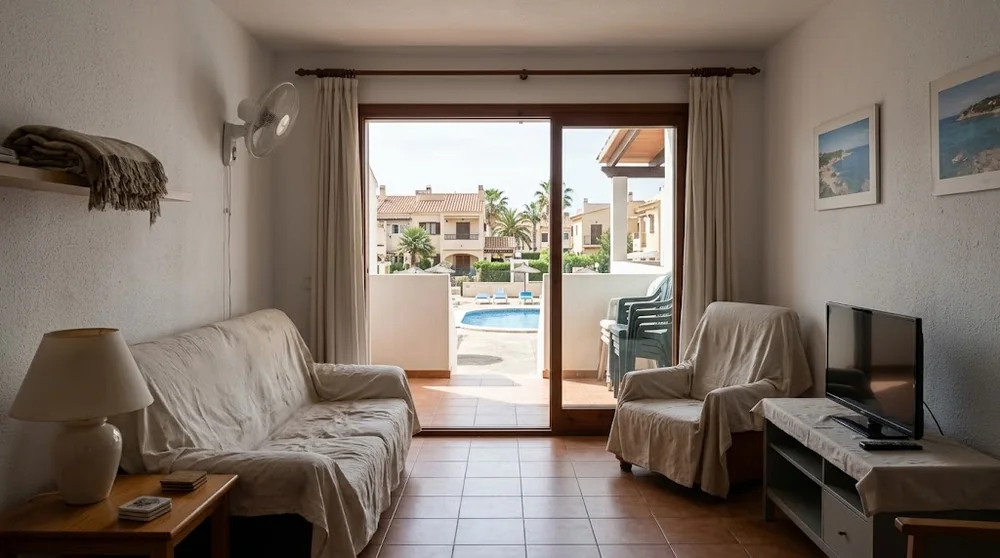
Most items are self-explanatory. IBI is the annual municipal property tax. The community fee pays for shared pools, lifts, gardens and insurance in an apartment block or urbanisation. Always check how much is owed and whether any special levy is planned.
Spanish non-resident tax can apply even if you never rent the property out. For an urban home, owners are generally taxed on imputed income, a notional income based on the property’s cadastral value. The Agencia Tributaria sets the filing route through Modelo 210. The general rates are 19% for qualifying EU/EEA residents and 24% for other taxpayers, and a UK tax resident is generally in the 24% group, which a tax adviser should confirm. The 24% is charged on the taxable base, not on the market value of the home. As an illustration, a cadastral value of €100,000 with imputed income at 1.1% gives €1,100, and 24% of that is €264. The percentage applied depends on whether the cadastral value has been revised, so check the figures on your property’s local tax receipt.
Now divide by use. At 40 nights a year, the apartment above costs about €4,274 ÷ 40 = €107 per night used, and the villa €8,409 ÷ 40 = about €210. At 100 nights, those fall to about €43 and €84. These figures exclude mortgage interest, purchase costs, flights and the value of the capital tied up. A villa that looks cheap to buy can be expensive to operate if it sits empty for nine months, so low occupancy is the number to watch.
What British Second-Home Buyers Need to Know
British nationals can generally buy property in Spain, but owning a Spanish home does not give a right of residence. Let me put it plainly: ownership is a property matter, while your right to stay is an immigration matter. The two are separate, and I regularly meet buyers who assume otherwise.
- Count your days. As of November 2026, ordinary visa-free visits by British nationals are limited to 90 days in any rolling 180-day period. That allowance is shared across all Schengen countries, so a week in France and a long weekend in Portugal both count towards the same total. Check the current GOV.UK Spain entry requirements for any new border or travel-authorisation systems before you plan stays.
- Do not rely on an outdated investor-residence route. Property ownership alone does not provide residence, and rules for longer stays or residence permits change. Take independent immigration advice before assuming any route is available.
- Get your NIE. The NIE (Número de Identidad de Extranjero) is the foreigner identification number you need for the purchase, tax filings and utilities. Your lawyer can usually arrange it.
- Prepare proof of funds. Spanish banks and notaries ask where the money came from, so keep statements and records of sales, savings or gifts ready.
- Open a Spanish bank account. Many owners use it for utilities, community fees and taxes, and the notary will normally expect payment by bank transfer.
- Understand your tax position. Tax residency depends on where you live, not where you own property. A non-resident owner can still owe Spanish tax, as explained above, and may have obligations in the UK too.
Keep your own records of the dates you enter and leave the Schengen area. Border systems are changing, and you want to be able to show your own count. A property purchase takes weeks rather than days, and the administration is easier when documents are ready in advance.
If you have a specific question about your purchase steps, tax position or paperwork, a quick one-to-one conversation can save you weeks of guesswork.
Whatever the answer, confirm anything that affects your legal or tax position with a qualified, independent adviser who acts for you alone.
Can Your Holiday Home Earn Rental Income?
Ownership does not automatically permit holiday lets. Three scenarios are legally and financially different: occasional personal use, long-term letting to a resident tenant, and tourist accommodation let to short-stay guests. This section describes general principles, not a rule for any particular property, and I have not published yields because they would mislead.
Tourist letting is regulated regionally. Andalusia and the Valencian Community each have their own registration frameworks, and tightened rules have been introduced in recent years. A national registration number for rentals has also been introduced, and building-community rules can matter: my understanding is that a majority vote of owners may be required in some circumstances, which your lawyer should verify. Municipalities can restrict tourist use through planning rules. Registering a tourist property is not the same as receiving unconditional authorisation.
Before counting on rental income, work through these checks for the exact property:
- Ask whether the property is already registered for tourist use, and what the registration actually covers.
- Confirm that the municipality’s planning rules allow tourist use in that building and zone.
- Read the community statutes and recent minutes for any ban or restriction on holiday lets.
- Check that insurance covers short-term guests and liability.
- Ask a tax adviser how non-resident rental income is taxed for you and which deductions, if any, apply.
Never treat advertised gross yields as income you keep. Here is a hypothetical calculation for a two-bedroom apartment, with every input assumed for illustration:
| Hypothetical annual rental calculation (illustrative only) | Amount |
|---|---|
| Gross rent: 100 nights let at €100 per night (about 27% occupancy) | €10,000 |
| Management and platform fees at 25% | −€2,500 |
| Cleaning and linen | −€1,200 |
| Extra utilities and consumables | −€800 |
| Fixed ownership costs (apartment from the earlier annual-cost table) | −€4,274 |
| Result before Spanish tax on rental income | €1,226 |
| Possible tax if charged at 24% on gross rent with no deductions (a general rule for some non-EU/EEA residents; confirm with a tax adviser) | −€2,400 |
| Hypothetical result after tax | −€1,174 |
This example is not a forecast. Different occupancy, prices, costs or tax treatment would give a very different result, and the point is that the outcome is property-specific and uncertain. Resale liquidity is the same: some properties sell quickly and some do not, and no coast guarantees demand or price growth.
Legal Checks Before Buying on Either Coast
Most problems I see are avoidable with a few checks done before money changes hands. Work through these seven steps with an independent lawyer who acts for you, not for the seller or the agent.
- Request a current nota simple. This is a summary from the Registro de la Propiedad (the Land Registry) showing the registered owner, the property description and any registered charges. Always ask for the nota simple before you commit, and check that the seller named in it is the person selling.
- Confirm ownership and charges. Look for mortgages, embargoes or other charges. Debts attach to Spanish property, so unpaid ones can pass to you unless they are cleared at completion.
- Obtain a community debt certificate. Ask the community administrator to confirm that fees are paid up and whether any extra levies are planned.
- Check IBI and local charges. Obtain proof that the last IBI bills and local charges are paid.
- Verify planning legality and licences. Make sure the property matches its planning permission. Extensions, terraces, pools and enclosed porches added without permission are a common problem, and the solution may be costly or impossible.
- Compare registry and cadastre descriptions and inspect the building. Cadastral and registry discrepancies in size or layout can delay a sale. Commission a surveyor to assess structural condition, roof, damp and drainage. Near the coast, ask whether coastal protection rules affect the plot.
- Review the contract before any deposit. Do not pay a binding deposit before your lawyer has reviewed the private contract (contrato de arras), because its terms on deposit loss and penalties can be severe. If buying off-plan, check the bank guarantee for your stage payments and the developer’s licences.
An agent’s assurance is not verification. A friendly reassurance that everything is fine does not replace the nota simple, the certificates and your own lawyer’s report. Hold off on any binding deposit until those documents are in your hands.
Opinion, from the practical side of the table: the dullest documents in the file are the ones that save you money. A day spent chasing paperwork is cheaper than years of fixing a problem you bought without knowing.

Which Coast Suits Your Second-Home Budget?
Purchase price is not the same as all-in budget. The table below uses three illustrative price points, the 7% and 9% ITP rates as of November 2026 for standard resale purchases, and other costs of roughly 2.2% of the price based on the worked example above. Availability, legal checks and the taxable base must be confirmed for any real property, and none of this is a promise that specific homes exist at these prices.
| Property price (illustrative) | ITP Andalusia (7%) | ITP Valencian Community (9%) | Other costs (assumed, approx.) | All-in cash, Andalusia | All-in cash, Valencia |
|---|---|---|---|---|---|
| €200,000 | €14,000 | €18,000 | €4,400 | €218,400 | €222,400 |
| €300,000 | €21,000 | €27,000 | €6,530 | €327,530 | €333,530 |
| €500,000 | €35,000 | €45,000 | €10,900 | €545,900 | €555,900 |
What each budget might plausibly look at, subject to current listings:
- Around €200,000: apartments or bungalows in Torrevieja, Orihuela Costa or parts of Alicante, and smaller or older apartments in Fuengirola or Benalmádena.
- Around €300,000: larger apartments in Alicante and Torrevieja, or in Calpe, and apartments in Fuengirola, Estepona or Málaga.
- Around €500,000: villas on Orihuela Costa, apartments in Jávea or Moraira, or apartments in Estepona and Marbella.
Annual running costs, as in the earlier illustration, then sit on top of those figures, and travel patterns decide how much of the property you actually use. Match the coast to the buyer, not the other way round:
| Buyer profile | Costa del Sol towns to check first | Costa Blanca towns to check first | What to test |
|---|---|---|---|
| British family using school holidays | Fuengirola, Benalmádena, Estepona | Torrevieja, Orihuela Costa, Alicante | Beach distance, pool, peak-season flight prices, winter use |
| Retired couple staying in winter | Málaga, Fuengirola, Estepona | Alicante, Torrevieja | Heating, healthcare access, services open in January |
| Golf-focused buyer | Mijas Costa, Estepona, Marbella | Orihuela Costa, Alicante surroundings | Course access, community fees, car needs |
| Occasional weekend traveller | Málaga, Fuengirola | Alicante city | Flight frequency, rail or tram access, walkability |
Each shortlist is conditional. A town only makes the list if a suitable property is actually available, passes the legal checks above and works for your transport needs. Sterling’s value, interest rates and your own plans can change the picture, so I would revisit the numbers before reserving anything.
To match these budgets to specific towns, property types and your likely travel pattern, a short questionnaire is the quickest route to a tailored shortlist.
The shortlist is a starting point for your own checks, not a recommendation to buy a particular home.
Costa del Sol or Costa Blanca: Final Verdict
Neither coast is objectively superior. The right answer comes from your priorities, and my summary below is professional opinion, not financial or legal advice.
- Costa Blanca usually deserves the first look for affordability. Provincial asking prices were about 35.6% lower in Alicante than in Málaga in October 2026, and standard resale ITP is higher in Valencia at 9% versus 7% in Andalusia, which narrows but rarely erases the gap.
- Costa del Sol deserves the first look for connections and premium living. Málaga’s airport, rail corridor and Marbella’s amenities suit buyers who value convenience over entry price.
- The exceptions matter. Premium northern Costa Blanca towns such as Jávea and Moraira can rival Costa del Sol prices, and more modest Costa del Sol towns can be less expensive than prime beachfront anywhere.
Five questions to settle the choice:
- What is your all-in budget once purchase taxes, fees and a year of running costs are included?
- How many nights will you realistically use the home, and how many visits will you make?
- Will you rely on a car, or do you need rail, tram or walking access?
- Will you stay in winter, when heating, damp and open services matter?
- Do you want to let the property, and has its legal eligibility been verified?
For a first-look shortlist, I would suggest Fuengirola, Estepona and Málaga for connections-led buyers, Torrevieja, Alicante and Orihuela Costa for value-led buyers, and Marbella or Jávea and Moraira for premium-led buyers, all subject to the checks above. If useful, you are welcome to ask for a shortlist that compares towns, estimated total costs, transport and legal-check priorities for your situation. There is no obligation, and I cannot promise savings or any particular result.
Frequently Asked Questions
Is Costa Blanca cheaper than Costa del Sol?
Generally, yes, when measured by provincial asking prices. In October 2026, idealista reported about €2,783/m² for Alicante province and €4,322/m² for Málaga province, so Alicante was roughly 35.6% lower than Málaga. These are not matched property prices, however. A villa in Moraira or Jávea can cost more than a flat in a less expensive Costa del Sol town, so compare similar properties.
Which is better for a holiday home, Costa del Sol or Costa Blanca?
It depends on how you will use it. Costa Blanca often suits buyers who want lower entry prices, residential neighbourhoods and plenty of mid-budget apartments. Costa del Sol can suit buyers who want Málaga’s airport connections, golf, international amenities and premium developments. Neither wins outright: test your budget, the number of visits each year, whether you will need a car and how your chosen town operates in winter.
Which coast has better weather in winter?
Both coasts have mild Mediterranean winters, but conditions vary by town, elevation and exposure. Some Costa Blanca locations are drier than parts of Málaga province, while sheltered Costa del Sol areas can feel pleasantly mild. Cool nights, damp and limited heating still affect unoccupied homes on both coasts, so check AEMET records for the town and inspect the property’s insulation, heating and orientation.
Can British citizens buy a second home in Spain after Brexit?
Yes. British citizens can generally buy Spanish property without becoming Spanish residents, and you will need an NIE (Número de Identidad de Extranjero) to complete the purchase. Ownership does not give a right to live in Spain. As of November 2026, ordinary visa-free visits are limited to 90 days in any 180-day period, shared with other Schengen trips. Longer stays need separate immigration advice.
How much tax will I pay when buying a second home in Spain?
For a standard €300,000 resale purchase, the general transfer tax (ITP) as of November 2026 is 7% in Andalusia, or €21,000, and 9% in the Valencian Community, or €27,000, assuming the taxable base equals the price. Notary, registry and professional costs are extra. New-build purchases generally attract IVA, normally 10% for qualifying homes, plus regional stamp duty (AJD), instead of resale ITP.
Can I rent out my Spanish holiday home when I am not using it?
Possibly, but owning a home does not automatically permit tourist lets. Eligibility depends on regional legislation, municipal planning rules, registration and sometimes your building community’s rules, so verify the exact property before buying. Judge income after management fees, vacancy, maintenance and Spanish non-resident tax, not on advertised gross figures, and never assume a licence transfers or can be obtained.
My Takeaway After a Decade on the Coast
Costa Blanca is usually the better place to start if your priority is a lower entry price and sensible running costs, and Costa del Sol is usually the better place to start if you want Málaga’s connections or premium amenities. The October 2026 indicators of about €4,322/m² for Málaga province and €2,783/m² for Alicante province show the gap, but they are provincial asking prices, so the town and the exact property decide the real numbers.
Whichever coast you pick, budget for the whole picture: ITP of 7% or 9% on a standard resale, other purchase costs, annual running costs and the nights you will actually use the home. Check winter conditions, the journey to the front door and the legal file before you pay a deposit. Rental income and resale demand are uncertain, property by property, so never build your plan on them.
I swapped Manchester drizzle for Marbella more than ten years ago and have never regretted it, but I am wary of anyone who says one coast suits everybody. Shortlist two or three towns, compare them with real figures and take independent legal and tax advice before you commit.
Disclaimer: This article is general information as of November 2026 and does not constitute legal, tax, financial or immigration advice. Tax rates, regional regulations, rental rules and entry requirements change, and the calculations shown are illustrative. Take independent advice from a qualified Spanish property lawyer, a tax adviser and, where relevant, an immigration specialist before buying.
Leave a Reply