If your Spanish new build is nearly finished, or you have just been handed the keys, the next few weeks matter more than the day you reserved it. This is when you check what has actually been built against what you agreed to buy, write down every defect and make sure the paperwork is complete. Get the inspection and handover right and later problems are much easier to deal with. Get them wrong and you can spend months arguing over whether a cracked tile was there “from the start”.
A new build snagging checklist in Spain helps you inspect the property, document defects and check handover paperwork. If access is permitted, inspect before signing the purchase deed, compare the home with the agreed plans and specification, and record each issue with photographs. Ask your lawyer and an independent technical professional to assess serious concerns.
What Is a Snagging Inspection in Spain?
A snagging inspection is a methodical check of a newly built home to identify defects, unfinished work and differences from the agreed specification before or shortly after the buyer takes possession. The resulting document is called a snagging list in English and a lista de repasos in Spanish. It typically covers everything from scuffed paintwork and misaligned doors to dripping taps, missing kitchen appliances and water pooling on a terrace.

Most readers of this guide fall into one of two camps. Some are approaching completion and have been told the property is “ready”. Others have already signed and collected the keys and are now noticing things. The checklist works for both, but timing changes what you can do with it. Here’s where people usually come unstuck: they treat several different events in the purchase as one, when Spanish law treats them very differently.
The builder-to-developer acta de recepción
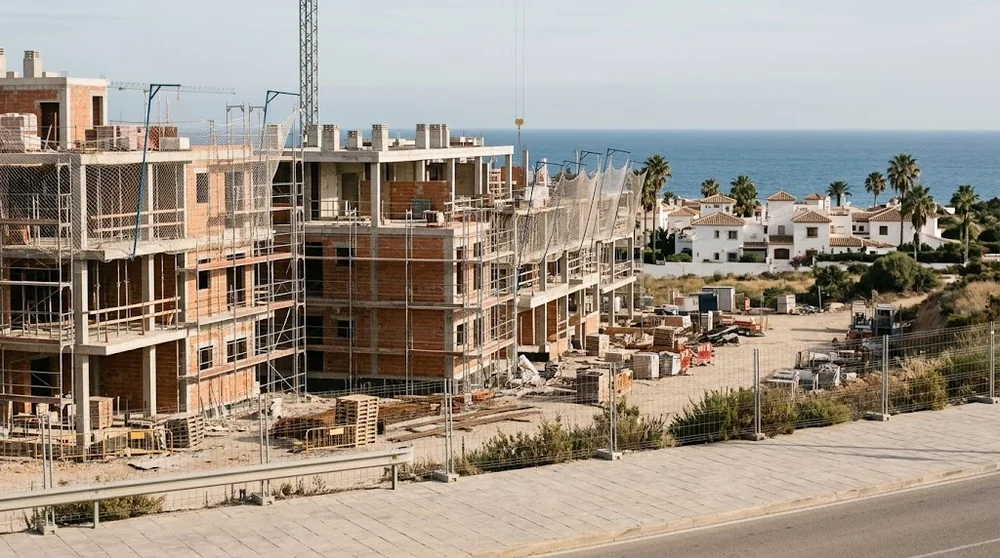
Under the Ley de Ordenación de la Edificación (LOE), Law 38/1999, the acta de recepción de obra is the record in which the builder (constructor) hands the finished works to the developer (promotor), who accepts them with or without reservations. As of October 2026, Article 6 of the LOE requires this record to be signed at least by the developer and builder and to state the date of the certificado final de obra, any reservations and the deadline for correcting them. Article 6 also provides that, unless agreed otherwise, receipt is deemed to have occurred tacitly if the developer raises no written reservations within 30 days of written notification of completion. The buyer is normally not a party to the acta de recepción, yet its date matters to the buyer because the LOE liability periods run from receipt of the works.
The buyer’s snagging inspection
The buyer’s inspection is a practical visit, usually arranged with the developer’s after-sales or site team, to check condition and specification. It has no fixed legal form. Its value lies in the evidence it creates: a dated, photographed list showing what was wrong and when you reported it.
The escritura and the key handover
The escritura de compraventa is the public purchase deed signed before a Spanish notary, at which point the balance is normally paid and ownership passes. The key handover often happens on the same day, but not always. The date you sign the deed or receive the keys is not automatically the date from which the statutory 1-, 3- and 10-year periods start. When you speak to a lawyer about a defect, give them all three dates: the acta de recepción (ask the developer for it), your deed and your key handover.
When to Arrange Your New Build Inspection
My advice to every British buyer is to plan the inspection as a sequence rather than a single visit. Developments rarely finish neatly, and utilities, lifts and communal pools are often the last things to come online. The following order works well in practice.
- Request access once the home is substantially complete. Ask the developer in writing whether a pre-completion visit is allowed and on what dates. Some developers welcome it; others limit access for site-safety reasons. Your purchase contract may already say something about this, so check with your lawyer first.
- Inspect before the escritura where permitted. Before signing is generally the best time, because the developer is motivated to tidy up outstanding items and you can raise them with your lawyer before the notary appointment. Allow enough time in the diary: if the deed is booked for the day after the visit, there is little room to respond.
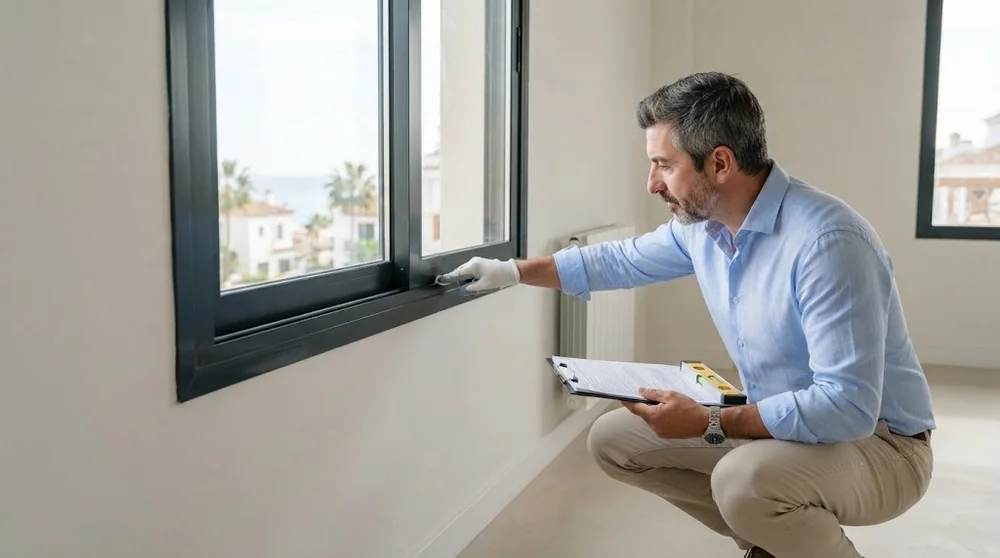
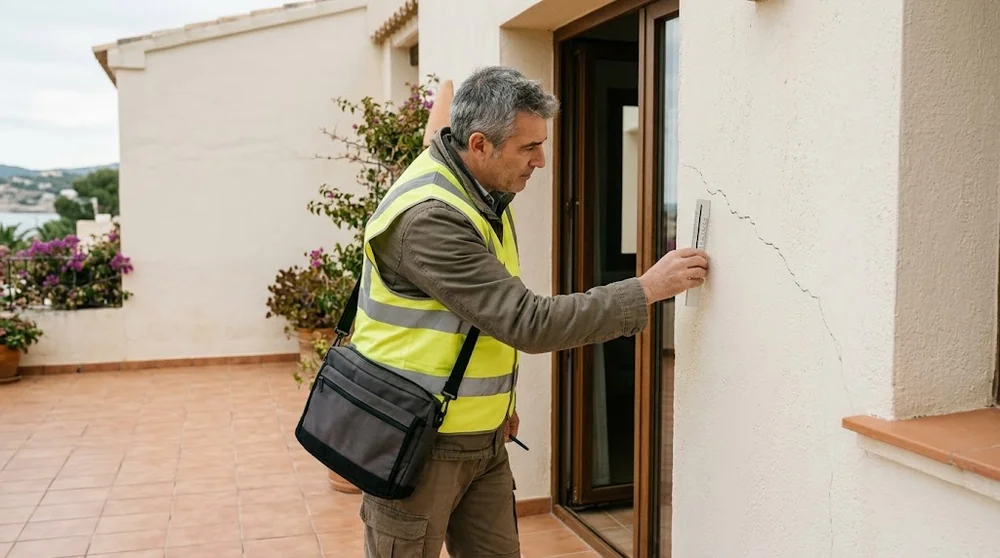
- Decide who attends. You can inspect yourself, bring a family member with sharp eyes, or instruct an independent architect or technical architect (arquitecto or arquitecto técnico). An independent professional is particularly useful for larger villas, for buyers who cannot travel, and wherever you suspect damp, cracking, drainage problems or poor waterproofing. In my personal assessment, a professional’s written report also carries more weight with a developer than a list typed up on a phone.
- Record what could not be tested. If electricity or water is not yet connected, if the air conditioning has not been commissioned, or if a garage or storeroom is locked, do not leave those items blank or tick them as fine. Mark each one not tested, write down why (for example, “no mains supply on 12 March”), photograph the situation and ask the developer to confirm a date when the item will be available for checking.
- Tell your lawyer straight away. Send your lawyer the list, including the untested items, before the deed. They can then advise whether anything should be raised with the developer, recorded in writing or reflected in the completion arrangements.
- Book a follow-up visit. Return once utilities are live and equipment has been commissioned. Test the items you previously marked as not tested and check that earlier repairs have been completed.
- Reinspect every repair. A snag is resolved only when you or your professional have seen the repair. An email saying “done” is a promise, not evidence.
Remote buyers often ask whether one trip is enough. Sometimes it is. Often it is not, and a local professional attending the follow-up on your behalf can save a second flight from Manchester or Bristol.
Prepare Your Spain Snagging Checklist
An inspection is only as good as the documents you compare the property with. Before your visit, gather the paperwork and a small kit. Use equipment only with the developer’s permission and where it is safe to do so.
- Private purchase contract (contrato privado de compraventa) and any reservation agreement, so you know exactly what was promised and by when.
- Plans and floor layouts attached to the contract, including terrace dimensions, storage and parking space numbers.
- Memoria de calidades, the specification of materials and finishes. It should state the flooring, kitchen units, appliances, sanitaryware, window type and climate system included in the price.
- Agreed variations such as upgraded tiles, extra sockets or a changed kitchen layout, with written confirmation from the developer.
- Inclusions list: appliances, wardrobes, lighting, air conditioning, solar panels, underfloor heating, private pool equipment and so on.
- A note on pre-installations. Brochures sometimes advertise features that are only pre-installed, such as ducting for air conditioning or conduit for a car charger. Check what the agreed specification actually says before marking anything as missing.
- A phone with plenty of storage for wide and close-up photographs and short videos.
- A torch for cupboards, under sinks and dim corners.
- A tape measure to compare room, terrace and parking dimensions with the plans.
- Removable low-tack markers or tape to flag defects, if the developer permits it.
- A phone charger or simple plug-in device to check that accessible sockets work, only where the supply is live and the socket is undamaged.
- Daylight and time. Book a morning or early afternoon slot and allow at least two to three hours for an apartment; more for a villa. Late-afternoon light hides a surprising amount.
- Access to annexes. Ask in advance for keys to the storeroom, garage, roof terrace and any communal areas you are allowed to enter.
Room-by-Room New Build Snagging Checklist
The table below is the heart of this guide. Print it, copy it into a spreadsheet or work through it on a tablet. For each line, choose one status: OK, Action required, Not tested or N/A (not applicable). A visual inspection can identify obvious problems and differences from the documents; a visual check cannot confirm that a building complies with technical regulations, which is a matter for qualified professionals.

One rule overrides everything in the table: do not open electrical panels, remove covers, dismantle appliances, climb onto roofs or test anything that looks damaged. If something seems unsafe, photograph it from a safe position, mark it action required and leave it to the developer or a qualified professional.
| Area | What to check (visual and simple use) | Compare against | Status |
|---|---|---|---|
| Walls and ceilings | Even paint coverage, drips, patches, cracks, stains, damp marks, rough plaster around sockets and switches, gaps at junctions with ceilings and skirting. | Memoria de calidades (paint finish and colour) | OK / Action required / Not tested / N/A |
| Floors and skirting | Chipped, cracked, loose or hollow-sounding tiles; uneven grout; lippage between tiles; scratches on wood or laminate; skirting gaps; correct flooring material in each room. | Memoria de calidades; agreed upgrades | OK / Action required / Not tested / N/A |
| Internal doors | Open and close without catching, latch properly, even gaps, no damage to faces or edges, handles secure, any locks supplied with keys. | Specification (door type and finish) | OK / Action required / Not tested / N/A |
| Entrance door | Locks operate smoothly with every key, door closes fully, seals intact, spyhole present if specified, no scratches or dents. | Specification (security door, lock type) | OK / Action required / Not tested / N/A |
| Windows and sliding doors | Open, close and lock; runners clean and smooth; seals continuous; no cracked or scratched glass; shutters or blinds operate (manual or, if powered and live, motorised). | Plans; specification (glazing, shutters, mosquito screens) | OK / Action required / Not tested / N/A |
| Kitchen units and worktops | Doors and drawers aligned and closing softly if specified; no chips to worktop edges; sealant neat around sink and hob; plinths fitted; layout matches plans. | Kitchen plan; memoria de calidades | OK / Action required / Not tested / N/A |
| Kitchen appliances | Every listed appliance present and the specified brand or model; no transit damage; if power is live, switch on briefly using normal controls only (hob zone, oven light, extractor, fridge). | Inclusions list | OK / Action required / Not tested / N/A |
| Bathrooms: tiling and fittings | Cracked or chipped tiles, uneven grout, gaps in silicone around bath, shower tray and basin; secure towel rails, mirrors and screens; shower screen seals. | Memoria de calidades (sanitaryware, taps, screens) | OK / Action required / Not tested / N/A |
| Bathrooms: water use | Where water is live: taps run hot and cold, toilets flush and refill, basins, baths and showers drain without gurgling or pooling; look under basins with a torch for drips. | Specification; manufacturer manuals | OK / Action required / Not tested / N/A |
| Electrical fittings (safe checks only) | Where supply is live: light switches work, accessible sockets power a phone charger, faceplates straight and undamaged, number of sockets matches plans. Never open the consumer unit or remove faceplates. | Electrical layout on plans | OK / Action required / Not tested / N/A |
| Heating, cooling and ventilation | Units and grilles present where specified; if commissioned and live, run each zone briefly from the wall control or remote; listen for unusual noise; check condensate drains are not dripping indoors. | Specification (full system or pre-installation) | OK / Action required / Not tested / N/A |
| Hot water and solar | Water heater or aerothermal unit installed as specified; visible pipework neat and insulated; no visible leaks; controls accessible. Do not adjust pressure valves. | Specification; installation documents | OK / Action required / Not tested / N/A |
| Terraces and balconies | Tiles secure; visible falls towards drains; drains present and not blocked with debris; balustrades and glass panels firm; no staining below; dimensions match plans. | Plans (terrace area); specification | OK / Action required / Not tested / N/A |
| Roof terrace and private garden | Paving and coping stones secure, irrigation points if included, external lights and sockets present, boundary walls without cracks. Only access areas that have safe stairs and protection. | Plans; inclusions list | OK / Action required / Not tested / N/A |
| Parking space | Correct space number and size, markings visible, no water ingress or staining overhead, car-charger point or pre-installation if agreed. | Contract and plans (space number, dimensions) | OK / Action required / Not tested / N/A |
| Storeroom (trastero) | Correct unit number, door locks with your key, light works if live, no damp or standing water. | Contract and plans | OK / Action required / Not tested / N/A |
| Accessible communal areas | Entrance doors, lifts, stairwells, corridors, pool surrounds and gardens that you are allowed to enter: obvious damage, unfinished work, missing lighting, trip hazards. Note what is still closed or under construction. | Development brochure only as context; contract for communal facilities promised | OK / Action required / Not tested / N/A |
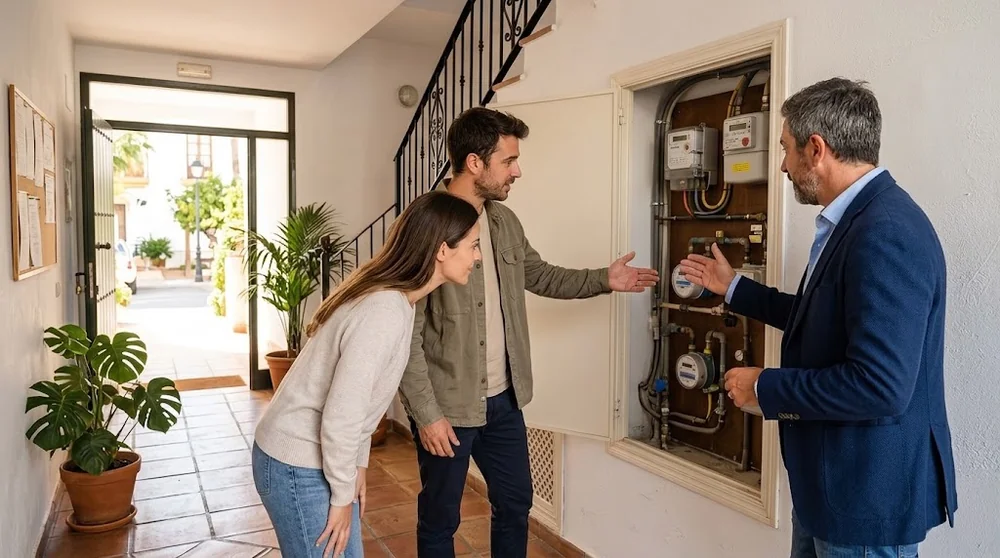
| Meters and supplies | Electricity and water meters installed and identifiable for your unit; gas if applicable; note whether supplies are active. | Handover information from developer | OK / Action required / Not tested / N/A |
Two practical tips. First, measure the things you paid extra for: a terrace sold as 25 square metres and delivered noticeably smaller is a question for your lawyer, not a snag for the after-sales team. Second, check the obvious last. Ten years on the Costa del Sol have taught me that buyers spend twenty minutes admiring the sea view and five seconds on the bathroom silicone, which is precisely the wrong way round.
How to Record and Report Snags
A good record turns a frustrating conversation into a manageable one. Every snag should be written down as a factual observation, linked to a location and a photograph, and dated. Avoid diagnosing causes you are not qualified to judge; “damp stain approx. 30 cm wide on ceiling below terrace” is more useful than “the waterproofing has failed”.
It helps to sort issues into three groups. Cosmetic issues affect appearance only, such as paint drips or a scratched door. Functional failures stop something working properly, such as a window that will not lock or a shower that does not drain. Potentially serious concerns are signs that need professional assessment, such as cracks that are wide, long or reappear after filling, persistent damp, water entering the property or anything that might affect safety. Assigning a group is a working label, not a technical conclusion.
| No. | Location | Observation | Photos | Spec reference | Date reported | Status | Developer response and agreed action | Access / reinspection |
|---|---|---|---|---|---|---|---|---|
| 1 | Main bedroom, sliding door to terrace | Door does not lock; handle turns but latch does not engage | IMG_0412 (wide), IMG_0413 (close) | Memoria de calidades, carpentry section | 10/03 | Action required | Acknowledged 12/03; adjustment by carpentry contractor | Access 19/03 10:00; reinspect 26/03 |
| 2 | Bathroom 2, shower tray | Gap in silicone along back edge, approx. 40 cm | IMG_0420, IMG_0421 | Sanitaryware spec | 10/03 | Action required | Awaiting response | To be agreed |
| 3 | Living room, air conditioning | System not commissioned; unable to test | IMG_0430 | Climate system spec | 10/03 | Not tested | Commissioning promised w/c 24/03 | Test at follow-up visit |
| 4 | Living room ceiling, below upper terrace | Brown stain approx. 30 cm wide, slightly damp to touch | IMG_0435, IMG_0436, video 0437 | N/A | 10/03 | Action required (professional assessment requested) | Developer to inspect; own technical architect to attend | Joint visit 21/03 |
Once your list is ready, send it to the developer in writing, by email or through their after-sales portal if they have one, and copy your lawyer. Ask for written acknowledgement and a proposed timetable. Keep the sent email, any portal confirmation and the attachments together in one folder, because proof of what you sent and when may matter later.
Keep the same item numbers throughout. When a repair fails, reopen the original number rather than creating a new one; a single line showing “reported March, repaired April, failed May” tells its own story. Mark an item resolved only after you, or your professional, have checked the repair in person. Let me put it plainly: a snagging report is evidence of what you found and when, but a snagging report does not by itself prove a statutory claim under the LOE. Whether a defect falls within the law is a question for technical and legal assessment.
New Build Handover Documents in Spain
The documents are as much a part of the handover as the keys. Some need checking by your lawyer before you sign; others you collect at or after completion. Always ask for the nota simple before you commit, and ask for an updated one shortly before the deed.
| Document | What it does | When it matters |
|---|---|---|
| Nota simple | An extract from the Land Registry (Registro de la Propiedad) showing the registered owner, description of the property and any charges such as the developer’s mortgage. | Before completion, and updated shortly before the deed |
| Escritura de compraventa | The public purchase deed signed before a notary, transferring ownership and recording the price, charges cancelled and conditions. | Reviewed in draft before signing; copy obtained at and after completion |
| Certificado final de obra | The final works certificate signed by the works director and the director of execution confirming that the works have been completed in accordance with the project. | Before completion |
| Occupation documentation | First-occupation authorisation, licence or declaración responsable, depending on the region, municipality and project. | Before completion; your lawyer confirms which applies |
| Evidence of seguro decenal | Ten-year insurance covering specified structural damage, required by the LOE for buildings whose main use is housing. | Before completion |
| Energy performance certificate | Rates the energy efficiency of the home and must be made available when a property is sold. | Before completion |
| Libro del Edificio or owner information | The record of the completed building, including the acta de recepción, the agents involved and use and maintenance instructions. | At or after handover |
| Installation documents and manuals | Certificates for electrical and other installations, appliance manuals and manufacturer warranties. | At or after handover |
| Community details | Statutes and rules of the owners’ community, administrator contact, fees and first meeting information. | Before completion (rules) and at handover (contacts) |
As of October 2026, Article 7 of the LOE states that the documentation of the completed works, including the acta de recepción, the list of agents involved and the use and maintenance instructions, constitutes the Libro del Edificio and must be delivered to the final users. In a large apartment development, the full book is often held by the community or its administrator, with each owner receiving the information relevant to their home. Ask who holds it. Article 20 of the LOE also provides that a deed declaring a completed new building cannot be authorised or registered without evidence of the required guarantees, which is one reason your lawyer looks closely at the developer’s own title documents.
Occupation rules are where generic guides most often go wrong. Spain does not have a single nationwide first-occupation licence procedure; the occupation requirement depends on the autonomous community, the municipality and the project. Some areas use a licence issued by the town hall, others a declaración responsable (a sworn statement filed with supporting documentation), and some regions also use a separate habitability certificate. As of October 2026, Andalusia’s planning law, Ley 7/2021 (known as LISTA), lists occupation of completed buildings covered by a prior building licence among the actions that can proceed by declaración responsable, typically accompanied by a final works certificate and other technical documentation. That is a general example, not a rule for every Andalusian property: the town hall retains powers of later checking, and individual municipalities publish their own forms and requirements. Your lawyer should confirm what has been filed or granted for your specific home and whether utility companies and your lender will accept it.
Spain’s 1-, 3- and 10-Year Building Liability Periods
The phrase “Spain new build warranty 1 3 10 years” is shorthand that hides some important detail. The periods come from Article 17 of the LOE and relate to specified categories of material damage, not to every snag. The summary below reflects the consolidated text as of October 2026.
| Period | Category of material damage (LOE Article 17.1) | Who is liable |
|---|---|---|
| 1 year | Material damage caused by execution defects affecting finishing elements (elementos de terminación o acabado) | The builder |
| 3 years | Material damage caused by defects in construction elements or installations that result in non-compliance with the habitability requirements in Article 3.1(c): hygiene and health, noise protection, energy saving and insulation, and other functional aspects | The agents involved in the building process, as applicable |
| 10 years | Material damage caused by defects affecting the foundations, supports, beams, slabs, load-bearing walls or other structural elements that directly compromise mechanical resistance and stability | The agents involved in the building process, as applicable |
As of October 2026, Article 17.1 of the LOE states that these periods are counted from the date of receipt of the works without reservations, or from the correction of those reservations. Article 6.5 adds that the liability and guarantee periods start from the date the acta de recepción is signed or from the date receipt is deemed to have occurred tacitly. That statutory event is the builder-to-developer receipt, not your deed or the day you were handed the keys. In many developments the gap is weeks or months; in a development that sold slowly, it can be much longer, which is worth knowing if you are buying a “new” home that has been finished for some time.
A separate rule governs how long you have to bring a claim. As of October 2026, Article 18 of the LOE provides that actions to enforce Article 17 liability for material damage arising from defects become time-barred two years from when the damage occurs. The same article preserves any contractual claims that may exist. How that two-year limitation applies to a particular defect, and when damage is treated as having occurred, is a matter for a Spanish lawyer.
Insurance is a different question again. As of October 2026, the LOE makes the ten-year guarantee, the seguro decenal, compulsory for buildings whose main use is housing, with limited exceptions such as an individual self-builder of a single home for their own use. The one-year and three-year guarantees described in Article 19 depend on being made compulsory by Royal Decree, so your lawyer should confirm what cover, if any, exists for your development. The LOE also lists exclusions from these guarantees unless agreed otherwise, including damage caused by misuse or poor maintenance and claims originating in parts of the works subject to reservations in the acta de recepción until those reservations are corrected and recorded. Seguro decenal is not blanket cover for every snag; it relates to specified structural damage. Article 17.9 also keeps the seller’s separate contractual and Civil Code liability towards the buyer, which is why the purchase contract matters alongside the LOE.
For British buyers, one clarification: Brexit changed residency and some tax rules for UK nationals, but it did not change Spain’s building-defect regime. The LOE applies to the building in the same way regardless of the owner’s nationality.
My honest assessment, after a decade of handovers: buyers who understand the difference between a snag, a statutory defect and an insurance claim make calmer, better decisions. Those who assume “it’s under warranty” for everything tend to be disappointed.
Can You Delay Completion for Defects?
This is the question I am asked most often in the week before a notary appointment, usually with a slightly raised voice. The short answer is that a snagging list does not automatically entitle a buyer to delay the escritura, refuse completion or withhold part of the price. What you can do depends on the wording of your purchase contract, the nature and seriousness of the defects, the applicable law and the practical consequences of each option.
Refusing to complete carries real risk. If the developer is ready to deliver a property that meets its contractual obligations and you decline to sign, you could face consequences under the contract, which in some cases may involve your deposit. On the other hand, a home that is clearly unfinished, unsafe or missing its occupation documentation may justify a different approach. Telling those situations apart is a legal judgement, not a matter of how annoyed you feel about the grout.
Some buyers and developers agree a retention, where part of the price is held back until specific repairs are done, or a revised completion date. A retention needs an agreed legal basis, such as a contract clause or a written agreement with the developer; it is not a right a buyer can simply assume. Developers are under no general obligation to accept one, and banks financing the purchase may have their own requirements.
If you have concerns before signing, send your snagging list to your lawyer early and ask for advice on the contract, the severity of the issues and the options. A short conversation before you sign is worth a great deal more than a long one afterwards.
If you are days away from the notary and unsure how your defects list fits your purchase contract, a quick one-to-one conversation about the legal steps can help you prepare the right questions for your lawyer.
Whatever you decide, read every document before you sign it and make sure you understand it, using a translator if needed. Keep your unresolved items recorded in writing so that completing the purchase does not leave them forgotten.
What to Do If the Developer Does Not Fix Defects
Most developers do fix most snags, though rarely as quickly as owners would like. When repairs stall or are refused, a calm, documented and proportionate approach works far better than an angry phone call. The steps below are general; the right sequence for your case depends on legal advice.
- Make urgent hazards safe. If water is coming in, a balustrade is loose or there is a smell of burning, deal with safety first: isolate the area, stop using the affected item, call the emergency number or relevant supplier where appropriate and notify the developer and the community administrator immediately.
- Document the problem. Take wide and close photographs, short videos and dated notes. Record how the issue has developed, for example a crack that has lengthened, using the same item number from your snagging list.
- Notify promptly in writing. Send a clear, dated message to the developer describing each issue, its location and your photographs, and ask for an inspection and a timetable for repair. Keep the language factual.
- Keep proof of receipt. Retain sent emails, portal confirmations, delivery receipts and replies. A delay in reporting can complicate matters later.
- Allow and record access. Give the developer reasonable opportunities to inspect and repair. Write down every visit, who attended, what was done and whether the repair worked.
- Obtain an independent technical assessment where needed. For serious, recurring or disputed issues, an independent architect or technical architect can examine the defect and produce a report on its likely nature and possible causes.
- Consult a Spanish lawyer. Your lawyer can advise on who may be responsible (developer, builder, designers or others), whether insurance may respond, which limitation periods apply and what remedies are available. They may recommend formal notice such as a burofax, a certified postal communication that provides evidence of the content sent and its delivery. No single notice method automatically preserves every possible claim, so the form and timing of any formal notice should follow legal advice.
Keep the tone professional throughout. Developers’ after-sales teams are human, and in my experience a well-organised, polite owner usually gets their repairs done sooner than one who sends capital letters at midnight.
Your Final Handover and Keys Checklist
Before you shake hands and head off to celebrate with a cold drink on the terrace, run through this final list. It closes the gaps that most often cause problems in the first few months.
- Keys and access devices: count every key for the front door, communal doors, mailbox, storeroom and pool area, plus garage remotes and access fobs. Note what is missing.
- Meter identifiers and readings: photograph electricity, water and any gas meters, recording the meter numbers and opening readings with the date.
- Utility status: confirm which supplies are active and in whose name, and book follow-up tests for anything that was inactive during your inspection.
- Manuals and warranties: collect appliance manuals, manufacturer warranties, installation certificates and the use and maintenance instructions.
- Contacts: get the developer’s after-sales contact, the community administrator and emergency contacts for lifts, gates and communal installations.
- Outstanding works: attach your updated snagging list, with each item marked OK, action required or not tested, and send it to the developer and your lawyer the same day.
- Access arrangements: agree how contractors will get in for repairs if you are not living in Spain, and who will be present.
- Reinspection: put a date in the diary to check the repairs and any items previously marked not tested.
- Remote buyers: if someone is completing on your behalf under a power of attorney, ask your lawyer to confirm the scope of that authority and exactly what the representative should check and sign for.
If any part of this feels like too much to manage from abroad, independent help from a Spanish lawyer and a local technical professional is available, and it is usually far cheaper to arrange before completion than to unpick problems afterwards.
Frequently Asked Questions
When should I inspect a new build in Spain?
Arrange an inspection when the developer says the home is ready and, if access is permitted, before signing the purchase deed. Take the agreed plans and specification with you. If utilities are inactive or access is restricted, record the untested items and arrange a follow-up inspection. Ask your lawyer how the inspection fits your contract.
What should I check during a snagging inspection in Spain?
Check finishes, doors, windows, kitchens, bathrooms and accessible outdoor areas against the agreed plans and specification. Where safe and utilities are live, test taps, lights, accessible sockets, appliances and heating or cooling controls. Record each issue by location with photographs. An independent technical professional should assess significant cracks, persistent damp or suspected safety problems.
What documents should I receive when buying a new build in Spain?
Ask your lawyer to check the purchase deed, land registry information, final works certificate and the occupation documentation applicable to the property. Request the building information available to owners, relevant insurance evidence, energy certificate, installation documents, manuals and community details. The exact documents and occupation procedure depend on the region, municipality and development.
What warranties apply to new build defects in Spain?
As of October 2026, Spain’s Building Act establishes one-, three- and ten-year liability periods for specified categories of material damage involving finishes, habitability and structural safety. The statutory starting point concerns receipt of the works and any reservations, not automatically the buyer’s key date. Insurance and claim deadlines are separate questions for a Spanish lawyer.
Can I delay completion or withhold payment if I find defects?
Finding defects does not automatically give a buyer the right to delay completion or retain part of the price. The answer depends on the purchase contract, the seriousness of the issue and applicable law. Before refusing to sign or pay, ask an independent Spanish lawyer to assess the consequences and whether an agreed retention or other arrangement is possible.
What can I do if the developer refuses to fix defects?
Notify the developer promptly in writing, describe each issue and retain photographs, correspondence and proof of delivery. Request an inspection and keep a record of visits and attempted repairs. For serious or disputed defects, obtain an independent technical report and consult a Spanish lawyer about formal notice, responsible parties, deadlines and the remedies available in your case.
My Bottom Line on Snagging and Handover
A new build snagging inspection in Spain is about evidence and timing. Inspect before the escritura if the developer allows it, compare the home line by line with your contract, plans and memoria de calidades, and record every issue with a location, a photograph and a date. Mark anything you could not check as not tested and go back to it. A snag is closed only when you have seen the repair.
Keep the legal events separate in your mind. The acta de recepción between builder and developer is the reference point for the LOE’s 1-, 3- and 10-year periods, while your deed and keys are different dates, and the two-year limitation rule in Article 18 is a separate matter again. Defects do not automatically let you delay completion or hold back money, and seguro decenal covers specified structural damage rather than every chipped tile. When the stakes rise, bring in an independent technical professional and a Spanish lawyer early.
Still looking for the right new build, or weighing up a second home in a different part of Spain? Matching budget, region and buying goals at the outset makes the eventual handover a great deal smoother.
I have watched plenty of handovers on the Costa del Sol, in Málaga, Alicante and Mallorca, and the owners who end up happiest are rarely the ones with the fewest snags. They are the ones who wrote everything down, stayed polite and asked the right professionals at the right time.
Disclaimer: This article is general information based on Spanish legislation as consolidated and checked in October 2026. It is not legal, technical or financial advice and does not create a professional relationship. Laws, regional rules and municipal procedures change and vary by location and project. For decisions about a specific property, contract or defect, consult an independent Spanish lawyer and a suitably qualified technical professional.