Blog

  • Negotiating Property Offers in Spain: Deposits & Norms

    Negotiating Property Offers in Spain: Deposits & Norms

    If you are about to make an offer on an older flat in Barcelona, a family apartment in Madrid or a resale villa in Marbella, the number you put in your first email matters less than most buyers think. What really decides the outcome is the evidence behind that number, the legal position of the property and the exact wording of whatever you sign before any money moves. This guide explains how offers, reservation payments and arras deposits work in these three very different markets as of October 2026, and how to protect yourself at each step.

    Negotiating property offers in Spain means comparing local asking prices, checking the property’s legal position and agreeing written terms before paying a deposit. Barcelona, Madrid and Marbella have different market conditions, so no fixed discount applies. Reservation payments and arras deposits are negotiable; refund rights depend on the contract. Independent legal checks should precede commitment.

    Property agent discussing a residential purchase offer with buyers beside large apartment windows

    Can You Negotiate Property Prices in Spain?

    Yes. In Spain, an asking price is the seller’s opening position, not the price the property will necessarily sell for. A seller who receives your offer can accept it, reject it or come back with a counteroffer, and several rounds of counteroffers are perfectly normal in Barcelona, Madrid and Marbella alike. Whether a seller moves, and by how much, depends on property-specific evidence: comparable sales, condition, legal status, time on the market and the seller’s own circumstances.

    Price is only one lever. You can also negotiate the completion date, which furniture and fixtures are included, the size and timing of the deposit, and the protective conditions written into the contract. A seller who needs to complete quickly may value a fast, well-financed buyer more than an extra €10,000, while a buyer relying on a mortgage may value a financing condition more than a small price cut.

    If you are reading this, I assume you are close to making an actual offer rather than idly browsing portals on a Sunday evening. So here is the starting point: a sensible offer begins with an affordability ceiling and a legal-risk checklist, not an arbitrary discount. Work out the maximum you can pay once taxes, fees and a contingency are included, then decide what the property is worth to you after the checks.

    David’s professional observation, based on experience rather than statistics: the buyers who negotiate best are rarely the ones who open lowest. They are the ones who can explain their number calmly, show proof of funds and sign quickly once the paperwork checks out.

    Barcelona vs Madrid vs Marbella: Negotiation Norms

    Barcelona, Madrid and Marbella are three distinct property markets with different housing stock, buyer profiles and pressure points. The table below uses idealista’s advertised averages for September 2026. These figures are asking prices per square metre, not achieved transaction values, and idealista changed its price methodology in July 2026, so comparisons with figures published before that change should be treated with caution.

    Advertised asking prices and negotiation context in three Spanish markets, September 2026
    CityAdvertised average (Sept 2026, idealista)Annual change in asking priceRepresentative submarketsPossible sources of buyer leverageKey risks to check
    Barcelona€5,462/m²+5.8%Eixample, Gràcia, Sarrià-Sant GervasiRenovation needs in older buildings, unresolved paperwork, long-listed flatsBuilding-wide works, community levies, licence and tourist-use restrictions
    Madrid€6,458/m²+2.4%Salamanca, Chamberí, outer districtsCertainty of financing, flexible completion, properties priced above local evidenceCompeting offers, valuation shortfalls, outdated installations
    Marbella€5,967/m²+3.2%Golden Mile, Nueva Andalucía, Marbella PuebloTechnical defects, planning history, overpriced listings, seller timingUnregistered extensions, planning irregularities, pool and terrace legality

    The city averages hide enormous variation. In Barcelona, a renovated corner flat on a chamfered Eixample street and a dark interior flat in a 1960s block in the same district may sit at very different price levels, and an older building may carry pending façade or lift works that a buyer can legitimately price in. Gràcia attracts strong demand for character flats, while Sarrià-Sant Gervasi tends towards larger family homes.

    Madrid’s prime areas such as Salamanca and Chamberí often see well-presented apartments attract interest quickly, so a buyer’s leverage may come from speed and verified finance rather than a deep discount. Outer districts offer a different mix of stock and competition. In Marbella, the Golden Mile, Nueva Andalucía and the old town of Marbella Pueblo are practically separate markets: a well-priced prime villa may draw little room for manoeuvre, while a villa needing a new roof or carrying an undeclared extension is a different negotiation altogether.

    My view is simple: no city-wide average tells you what a particular seller will accept. Rising asking prices in Barcelona, for instance, do not mean every Barcelona seller is inflexible, and slower annual growth in Madrid does not mean Madrid sellers are desperate.

    Historic apartment buildings and balconies on a tree-lined Barcelona street

    How Much Below Asking Price Should You Offer?

    There is no correct percentage. The first step is to separate four different numbers: the asking price advertised today; any asking-price reductions the seller has already made; the negotiated discount between final asking price and agreed price; and the registered transaction price eventually declared in the public deed. Only the last one shows what buyers actually paid, and it is the strongest evidence you can use.

    Published estimates of negotiating margins vary. An article from September 2024 attributed a 10% negotiation margin to Alfa Inmobiliaria, while a March 2026 report on research by Tecnocasa and Universitat Pompeu Fabra described an average margin of 6.2%. These figures come from different organisations, dates, samples and definitions, so they cannot be compared directly without examining methodology. Neither the 2024 10% estimate nor the 2026 6.2% finding is an automatic opening bid for a property in Barcelona, Madrid or Marbella.

    A defensible offer instead follows a comparable-property method:

    1. Obtain genuinely comparable properties. Use recent sales where available, plus current listings in the same building, street or urbanisation, of similar size, floor, orientation and age. Treat portal listings as the weakest evidence.
    2. Adjust for condition and legal status. Deduct realistic renovation costs and price in any documentary problems, such as an extension missing from the Registro de la Propiedad or a terrace closure without a licence.
    3. Consider market exposure and seller motivation. A property listed for many months, re-advertised at lower prices or sold by heirs who need to divide proceeds may justify a firmer approach than a fresh, well-priced listing.
    4. Set three numbers before you speak to anyone. Decide your opening offer, your preferred ceiling and your walk-away limit, and keep your walk-away limit below your affordability ceiling.

    Illustrative calculation (hypothetical): a flat is advertised at €500,000. Your comparable analysis suggests a value of roughly €480,000 to €490,000. You open at €475,000, which is €25,000 or 5% below asking. Your preferred ceiling is €485,000 (3% below), and you walk away above €490,000 (2% below).

    David’s opinion: an offer supported by three sold comparables and a builder’s quote will get a far more serious reply than a round number pulled from a forum thread.

    How to Make a Property Offer in Spain

    Making a property offer in Spain works best as a sequence, with money moving only at the very end. This is the order I recommend to buyers in all three markets:

    1. Establish your total budget. Include purchase taxes, notary, registry, legal fees, any mortgage costs and a contingency, not just the headline price.
    2. Request a nota simple and essential documents. A recent nota simple from the Registro de la Propiedad, which can be requested online through the land registry’s official service, shows the registered owner, description and recorded charges. Also ask for the cadastral reference, energy certificate, community-fee position and the last IBI receipt.
    3. Check the property and the selling authority. Confirm that the person selling, or the agent instructing you, is authorised by every registered owner.
    4. Review market comparables. Apply the four-step method above.
    5. Communicate a conditional written offer. Send it through the agent or your lawyer, stating clearly that it is subject to contract and to satisfactory checks.
    6. Negotiate price and other terms. Expect counteroffers on price, timing, contents and deposit.
    7. Have an independent lawyer review every document. This includes any reservation form the agent produces.
    8. Transfer an agreed deposit only after that review.

    Be careful with the idea that offers “don’t count until the notary”. Under the Spanish Civil Code, a contract is formed by the meeting of offer and acceptance on the property and the price, so an oral or written offer may have legal effect depending on its content and how it is accepted. A vague expression of interest is very different from a signed offer specifying price, deposit and dates that the seller then accepts in writing.

    A well-drafted written offer should include:

    • full identification of the property, ideally with the registry and cadastral references;
    • the offered price and the date on which the offer expires;
    • the proposed deposit amount, timing and recipient;
    • conditions, such as legal checks, survey and financing;
    • the target dates for the private contract and completion;
    • furniture, fixtures, parking spaces or storerooms included;
    • the name of the seller or authorised party to whom the offer is addressed.

    Buyer reviewing residential property photographs and handwritten notes before making an offer

    Reservation Deposits vs Arras Contracts

    Buyers often hear “deposit” used for three different payments. Spanish purchases usually move from an offer to a possible contrato de reserva (reservation agreement), then to a contrato de arras (private purchase contract with a deposit), and finally to completion by escritura pública before a notary. Not every transaction includes a reservation stage, and each stage carries different risks.

    Four stages of a Spanish resale purchase compared
    StagePurposePayment and negotiabilityUsually paid toRefund or withdrawal consequencesKey buyer safeguards
    Written offerProposes price and termsOften no payment; any payment is negotiableNot applicable unless agreedDepends on wording and acceptanceExpiry date, “subject to contract”, conditions
    Contrato de reservaTakes the property off the market brieflyNegotiable amount, set by contractAgent or seller, as statedPurely contractual; no universal refund ruleRefund if checks fail, crediting, named payee
    Contrato de arrasFixes price, dates and deposit termsNegotiable; around 10% is commonly reportedUsually the seller, unless held by an agreed third partyDepends on arras type and draftingConditions, deadlines, arras type, charges cleared
    Escritura públicaCompletes the sale before a notaryBalance of price, less sums creditedSeller and, where relevant, the seller’s lenderTransfer completed; registration followsUpdated registry check, mortgage cancellation at signing

    A reservation payment is governed by the contract you sign, not by a single statutory refund rule. Some reservation agreements are refundable if legal checks reveal problems; others are not refundable at all. Read the form before you transfer anything, because agents’ standard forms are written for the agent’s convenience.

    For the arras stage, a deposit of roughly 10% of the price is frequently described as conventional, but 10% is a market practice, not a legal minimum or a statutory rate. Smaller or larger deposits can be agreed.

    The crediting of earlier payments must be explicit. Hypothetical example: on a €400,000 purchase, you pay a €5,000 reservation, then €35,000 on signing the arras contract. If both documents expressly state that the €5,000 is credited towards the arras deposit and the price, your total credited funds are €40,000, or 10%, and the balance due at the notary is €360,000. If the arras contract is silent, you may find yourself arguing about whether the €5,000 counts at all.

    What Happens If Either Side Pulls Out?

    The consequences of withdrawal depend on which type of arras the contract creates. Spanish law and practice distinguish three types, and their effects are not interchangeable.

    Arras penitenciales give both parties a right to withdraw at a price. Article 1454 of the Spanish Civil Code provides, in substance, that where arras have been given in a sale, the contract may be terminated by the buyer agreeing to lose them or by the seller agreeing to return them doubled. As of October 2026, Spanish courts have generally applied this penitential structure only where the contract clearly expresses that intention, which is why the wording matters so much. In Barcelona, the Catalan Civil Code also contains its own rules on purchase contracts, so a lawyer familiar with Catalan civil law should review Barcelona contracts.

    Arras confirmatorias treat the deposit as a part payment and evidence that a binding contract exists. If one side breaches, the other may typically seek performance or termination with damages, rather than relying on a fixed forfeiture. Arras penales work as a penalty for breach and may sit alongside other remedies depending on drafting. In both cases the outcome can differ substantially from the penitential “lose it or pay double” rule.

    So the classic formula applies to qualifying penitential arras, not automatically to every reservation payment or private agreement.

    Hypothetical example: you pay a €30,000 deposit under a valid arras penitenciales contract. If you exercise the withdrawal right, you generally forfeit the €30,000. If the seller exercises it instead, the seller generally pays you €60,000. That €60,000 is a gross figure: €30,000 is simply your own money coming back, and only the second €30,000 is additional compensation. It is not a €60,000 windfall.

    David’s observation from practice: I have seen buyers assume they hold a penitential contract when the document actually describes confirmatory arras. Let me put it plainly: read the clause, not the title at the top of the page.

    Seven Deposit Clauses Worth Negotiating

    Protective clauses only exist if the seller agrees to them and they are correctly drafted. Three kinds of wording behave very differently: a condition precedent means the obligation only becomes binding when a defined event happens; a termination right lets you end the contract on stated grounds and recover the deposit; and a general statement of intent, such as “the buyer intends to obtain a mortgage”, usually protects nobody. These are the seven protections I suggest buyers discuss:

    1. Independent title review. The deposit becomes refundable if your lawyer’s review of the nota simple, title deed and cadastral records reveals defects not disclosed before signing.
    2. Financing approval and mortgage valuation. State the loan amount required, the deadline for a decision, what evidence of refusal is acceptable and what happens if the bank’s valuation comes in below the price. A mortgage refusal does not automatically make an arras deposit refundable; only an accepted, well-drafted financing clause does that.
    3. Satisfactory technical inspection. Allow a defined period for a survey, with a right to renegotiate or withdraw if defects above an agreed cost threshold appear.
    4. Planning and permitted-use verification. Make completion subject to confirmation that the property, extensions and pool have the necessary licences, and that the intended use is lawful.
    5. Seller’s discharge of mortgages, charges and specified debts. Require existing mortgages to be cancelled at completion and community fees, IBI and utilities to be paid up to date, with retentions from the price if necessary.
    6. Clear completion deadlines, extensions and default procedure. Set the completion date, any extension mechanism, how a party is formally put on notice and what happens if a deadline is missed.
    7. Identified payee, deposit accounting and refund mechanics. Name exactly who receives each payment, confirm how earlier sums are credited, and state the refund period and account if a condition fails.

    A seller may reject some of these clauses or ask for something in return, such as a higher price, a shorter condition period or a larger deposit. That is normal negotiation, and it is better to discover a seller’s position on conditions before you pay than afterwards.

    Buyers and a legal adviser reviewing property documents before signing

    Property Taxes and the Real Offer Budget

    Transfer tax can shift your affordable price significantly, so it belongs in offer strategy from day one. For resale homes, the buyer usually pays the Impuesto sobre Transmisiones Patrimoniales (ITP), which is set regionally. As of October 2026, the general resale rates in the three regions are as follows.

    General resale ITP, October 2026, with a hypothetical €500,000 purchase
    Region (city)General resale ITP, October 2026Illustrative ITP on €500,000Notes
    Catalonia (Barcelona)Progressive: 10% up to €600,000, then 11%, 12% and 13% on higher bands€50,000Reduced rates for qualifying groups; special higher rates for certain large holders
    Community of Madrid6% general rate€30,000Reduced rates for qualifying cases, such as large families
    Andalusia (Marbella)7% general rate€35,000Reduced rates for qualifying cases subject to conditions

    These illustrations assume a qualifying resale purchase at €500,000, a tax base equal to that price and no reduced rate. In Catalonia, the progressive scale matters at higher prices: a €700,000 purchase would generally attract 10% on the first €600,000 (€60,000) plus 11% on the remaining €100,000 (€11,000), totalling €71,000.

    On 5 October 2026, the Madrid regional government announced a proposed 4% rate for buyers under 40 purchasing a resale main home, to be included in the 2027 regional budget. As of October 2026, that proposed Madrid youth rate is not an applicable rate; it depends on the legislation being approved and coming into force.

    The tax base is not always your negotiated price. Since 2022, Spanish transfer tax generally uses the higher of the declared price and the valor de referencia catastral, a statutory reference value published by the Dirección General del Catastro on its official electronic office. If you negotiate a flat down to €480,000 but its reference value is €500,000, ITP is generally calculated on €500,000. Check the reference value before you finalise your offer, because a price reduction may not reduce your tax proportionally.

    New-build homes bought from a developer are different: they generally carry VAT, usually 10% for dwellings, plus stamp duty (AJD) at regional rates, rather than ITP. The Agencia Tributaria manages VAT. Notary, registry, legal and mortgage costs come on top. Keep these taxes separate from deposit percentages: a 10% arras deposit is part of the price, while ITP is an additional cost.

    Special Considerations for British Property Buyers

    British nationality does not stop you making an offer or owning property in Spain. Post-Brexit residency is a separate question from the basic ability to buy. These are the practical points I raise with every British buyer:

    • NIE (Número de Identidad de Extranjero). You need an NIE to complete the purchase and pay taxes. Apply early through a Spanish consulate or in Spain, because appointment availability varies and delays can push back completion.
    • Independent representation. The agent usually works for the seller. Instruct your own lawyer, ideally one who can explain documents in English, before signing a reservation or arras contract.
    • Proof of funds. Have bank statements and the source of funds ready. Sellers take you more seriously, and Spanish anti-money-laundering checks at the notary and bank will require evidence.
    • Non-resident mortgage timing. Lending terms for non-residents depend on the bank, income and risk profile, so there is no standard loan-to-value ratio to rely on. Seek an agreement in principle before signing arras.
    • Valuation risk. The bank lends against its own valuation, which may be below your agreed price. Keep cash available to cover a shortfall.
    • Sterling-to-euro exposure. A currency movement between signing arras and completion can change your real cost by thousands of pounds. Plan conversions and consider regulated currency providers.
    • Residency is separate. Buying property does not by itself grant residency. Spain closed its property-investment visa route to new applications in April 2025, and UK nationals without residency remain subject to the Schengen 90/180-day rule.

    My advice to every British buyer is to arrange liquidity for the deposit, taxes and fees separately from the mortgage, because a bank decision that arrives two weeks late can collide with a fixed arras deadline. If you are still deciding which area and budget suit you, it helps to narrow the field before any offer conversation begins.

    If you are still weighing up regions, budgets and buying goals, a short questionnaire can help match your priorities to suitable properties before you start negotiating.

    Get a tailored property shortlist in Spain

    Once you have a realistic shortlist, the numbers in the next section show how offers, deposits and conditions can play out in each of the three markets.

    Three Realistic Property Offer Scenarios

    The three cases below are fictional composite scenarios created for illustration. They are not real client transactions, and the outcomes are hypothetical. Percentages are calculated as the difference between asking price and offer, divided by the asking price.

    Three hypothetical offer scenarios in Barcelona, Madrid and Marbella
    ElementBarcelona: older apartmentMadrid: high-demand urban flatMarbella: resale villa
    Asking price€420,000€610,000€1,250,000
    Illustrative offer€390,000€600,000€1,150,000
    Difference€30,000 (7.1% below)€10,000 (1.6% below)€100,000 (8.0% below)
    Negotiating evidenceRenovation quote, pending building works, registry description not matching layoutSold comparables in the street, verified mortgage approval, flexible completionSurvey showing roof and pool repairs, extension not shown in registry
    Proposed deposit approachRefundable reservation until legal review, then arrasPrompt arras signing to show commitment10% arras only after planning review
    Key safeguardsTitle and licence condition, community debts clearedFinancing and valuation clause, clear deadlinesPlanning condition, survey threshold, retention for repairs

    Barcelona (hypothetical): the offer of €390,000 reflects the cost of renovation and the time needed to regularise the registry description. The buyer proposes a small reservation, refundable if the lawyer finds that the layout changes lack the necessary licence. In this illustration, the seller counters at €402,000 and accepts the condition.

    Madrid (hypothetical): here the buyer recognises that other offers are likely, so the headline discount is modest. Certainty is the bargaining chip: an approved mortgage, a short timetable and a clean contract. In this illustration, the seller accepts €600,000 over a slightly higher offer from a buyer who still needed financing.

    Marbella (hypothetical): the buyer offers €1,150,000 and proposes a 10% arras deposit of €115,000, payable only after the planning history has been reviewed. The contract would allow withdrawal with a full refund if the extension cannot be legalised. In this illustration, the parties agree €1,180,000 with a retention for roof repairs. That 10% figure is one negotiated choice, not a requirement in Marbella or elsewhere.

    Contemporary Marbella villa with a terrace and landscaped garden

    Before Paying a Deposit: Buyer Checklist

    Before transferring any reservation or arras deposit in Spain, run through this stop/go list with your independent lawyer:

    • The seller’s identity and every signatory’s authority match the registered owners on the nota simple.
    • The nota simple is current, ideally obtained within the last few days.
    • The registry, cadastral and physical description of the property are consistent, and planning status has been checked.
    • Mortgages, embargoes and other charges are identified, with a plan to cancel them at completion.
    • Community fees, IBI and any approved special levies are confirmed in writing.
    • Survey findings are known, or a survey condition is included.
    • Taxes are budgeted, including the reference value, and financing status is realistic.
    • The contract type, arras wording, deadlines, conditions and refund clauses are written and understood.
    • The deposit recipient is correctly identified, and a written receipt will be issued.

    Payment fraud is a real risk. Verify bank details by calling the recipient on a telephone number you obtained independently, not one taken from the email containing the instructions. Never rely solely on changed account details sent within an existing email thread, and never pay an unverified third party. Do not assume a notary or an agent automatically holds your money in independent escrow; that only happens if the arrangement is expressly agreed.

    David’s practical rule: Always ask for the nota simple before you commit. Ten minutes of checking can save months of trying to recover money from the wrong account.

    Then make a decision. If every point checks out, proceed. If something is unclear, seek clarification in writing before paying. If the seller refuses basic documents or pressures you to pay immediately, stop.

    When to Get Help Negotiating an Offer

    Different professionals protect different parts of the deal. A local agent or market specialist can supply comparables and handle communication, but an estate agent is commercially involved, usually paid by the seller, and is not your legal representative. An independent property lawyer reviews title, drafts or amends the reservation and arras contracts and advises on your rights. A technical surveyor assesses condition and building works, and a mortgage adviser checks whether your financing timetable can meet contract deadlines.

    Here’s where people usually come unstuck: they sign the agent’s reservation form on the day of the viewing and only call a lawyer afterwards. If you would like a second pair of eyes on a specific property before money moves, I can help with comparables, offer terms and coordinating the checks with your independent lawyer and surveyor.

    Thinking of paying a reservation deposit soon? Send me the listing and your proposed offer, and we can look at the price evidence, legal steps and taxes for that property.

    Ask about your offer on WhatsApp

    That review is practical guidance on the deal, not legal representation, and any contract should still be checked by a qualified independent lawyer. This article provides general information as of October 2026 and is not tailored legal, tax or financial advice.

    Frequently Asked Questions About Property Offers

    How much below the asking price should I offer on a Spanish property?

    There is no standard discount that works across Spain. Your offer should reflect comparable properties, the home’s condition, time on the market and the seller’s circumstances. Research published in 2026 reported an average negotiation margin of 6.2% in its studied market, but that is not a recommended discount for an individual Barcelona, Madrid or Marbella property.

    Are property prices negotiable in Barcelona, Madrid and Marbella?

    Yes. Sellers in all three markets can consider offers below asking price, although willingness to negotiate varies by neighbourhood, property type and competition. A desirable Madrid apartment may attract different responses from a Marbella villa needing repairs or an older Barcelona flat. Use property-specific evidence rather than assuming that one city’s prices are always more flexible.

    How much deposit do I need to pay when making an offer in Spain?

    A written offer does not automatically require a fixed deposit. Some transactions involve a reservation payment before an arras agreement, while others move directly to a negotiated private contract. An arras deposit of around 10% is commonly reported, but it is not a universal legal requirement. Confirm when payment is due, who receives it and how earlier sums are credited.

    Can I get my reservation deposit back if I change my mind?

    A reservation deposit is not automatically refundable or non-refundable under one universal rule. The outcome depends on the agreement, the reason for withdrawal, applicable consumer protections and the surrounding circumstances. Before transferring money, ask an independent lawyer to confirm the refund conditions, any review period, the recipient’s obligations and what happens if legal or financing checks fail.

    What happens if the seller pulls out after signing an arras contract?

    For a qualifying arras penitenciales agreement governed by Article 1454 of the Spanish Civil Code, a seller who exercises the contractual withdrawal right generally returns double the deposit received. Different arras arrangements may have different remedies, and the precise wording matters. Your independent lawyer should verify the type of agreement, conditions, deadlines and enforcement options before signing.

    Can I make a Spanish property offer subject to mortgage approval?

    Yes, you can propose a mortgage-approval condition, but the seller must agree to the relevant wording. A failed mortgage application does not automatically entitle you to recover an arras deposit. The contract should specify the required financing amount, evidence of refusal, decision deadline, valuation shortfall treatment and refund process. Arrange realistic financing discussions before committing funds.

    My Bottom Line on Making an Offer in Spain

    Negotiating a property offer in Barcelona, Madrid or Marbella comes down to three things: evidence, certainty and wording. Use sold comparables and the property’s condition to set an opening offer, a preferred ceiling and a walk-away limit. Remember that September 2026 asking-price averages describe what sellers hope for, not what buyers pay, and that published negotiation margins such as 10% in 2024 or 6.2% in 2026 are not a formula for your offer.

    Treat deposits as legal commitments rather than formalities. A contrato de reserva is only as safe as its refund clause, and a contrato de arras can mean forfeiture, double repayment or a claim for damages depending on whether it is penitential, confirmatory or penal. Budget ITP from the start, check the valor de referencia catastral, and make sure every payment is credited, receipted and sent to a verified account.

    I swapped Manchester for Andalusia for the light and the pace of life, and more than ten years later I still enjoy watching a well-prepared buyer get the right home on fair terms. The pattern rarely changes: the buyers who check first and pay second are the ones who sleep well afterwards.

    General information only, current as of October 2026. Tax rates, legislation and market data can change; take advice from a qualified independent lawyer and relevant regulated advisers before signing or paying any deposit.


  • Spain’s 2026 Housing Decree: What British and Foreign Buyers and Landlords Need to Know

    Spain’s 2026 Housing Decree: What British and Foreign Buyers and Landlords Need to Know

    Spain’s new housing decree (RDL 29/2026) has been in force since 8 October 2026, but Parliament has not yet validated it, so it could change. A British or other foreign person buying one home for personal use is not caught by the 70% purchase limit, which targets large holders and distressed-asset buyers. Landlords face 10% VAT on short furnished lets from 1 December 2026. Checked 23 October 2026.

    Let me put it plainly: the headlines this month made it sound as if Spain had shut the door on foreign buyers. The text of the decree says something quite different. I have read the full consolidated decree on the BOE website, and below is what matters if you are buying, letting, or holding a flat in Spain.

    First, the catch: it is law, but not yet settled

    Real Decreto-ley 29/2026 was published on 7 October and has applied since 8 October 2026. A decree-law has to be validated by Congress within 30 days, and that vote has not happened yet. Because Parliament is dissolved ahead of the 29 November election, a committee of 69 members, the Diputacion Permanente, will vote. The press expects 12 November, but that date is not confirmed. It is in force, but it is waiting for approval by Parliament, and the regime may change or be repealed. My opinion: plan around it, but do not build a ten-year strategy on every detail.

    Does the 70% rule affect a British buyer?

    Whitewashed apartment complex with palms on the Costa del Sol

    Short answer: no, not if you are an individual buying a home to live in or to holiday in. Article 1 says that until 31 December 2030 two groups cannot buy a dwelling for less than 70% of its market value:

    • entities set up to buy property or unpaid mortgage portfolios at a price clearly below appraised value;
    • legal persons classed as a “gran tenedor” (large holder), plus their group companies and anyone acting for them.

    Market value is set by an independent appraiser registered with the Banco de Espana, and the buyer must supply the report. A large holder owns more than 10 urban residential properties or over 1,500 square metres of residential floor space, or 5 or more in a declared tensioned zone. There is no nationality rule anywhere in the decree.

    Here’s where people usually come unstuck: buying through a company. If you hold your Spanish villa in a limited company and that company already owns more than 10 homes, or you are a fund buying a distressed portfolio, the 70% floor can apply to you. One grey area I cannot resolve from the text: a private person who owns more than 10 homes. Article 1 names legal persons, yet other parts of the decree mention natural-person large holders. Ask a lawyer before you assume anything.

    My advice to every British buyer is to keep the structure simple and to get the appraisal and the price documented properly. And always ask for the nota simple before you commit; it shows who owns the property, the charges registered against it and any mortgage.

    If you let your Spanish property

    Holiday apartments facing a beach on the Spanish coast

    Holiday lets: 10% VAT from 1 December 2026

    Furnished homes let for up to 30 nights to the same tenant lose their VAT exemption and fall under the 10% reduced rate. The exemption survives only for a let of your own habitual residence. This effectively ends the residential exemption for typical holiday lets. Councils in tensioned zones may also add a property-tax (IBI) surcharge on registered tourist flats: up to 50%, up to 100% if you own two or more, and up to 150% for four or more. That needs a municipal ordinance, so check your town hall; nothing is automatic.

    Long lets: caps and extensions

    • Rent updates falling between 8 October 2026 and 31 December 2027 cannot exceed 2% without a new pact, and there is no increase if the rent is above the reference-index cap.
    • In tensioned zones, a new lease cannot exceed the last rent of the previous five years, updated, with 10% extra only for rehabilitation, energy or accessibility works or a ten-year term.
    • Tenants up to date with rent on leases ending before 31 December 2028 can ask for an extraordinary extension of up to two years, unless you need the home for yourself or relatives or you offer renewal at 5% less.
    • Every rental ad must show the reference price index, the cap, the registration code where relevant and whether you are a large holder.

    Tax breaks for landlords

    Landlords who are IRPF taxpayers (tax residents) can claim reductions on net rental income from 15% up to 100% depending on rent, zone and tenant. A first letting at or under the reference-price cap gets 100%; a tensioned zone with a tenant aged 18 to 35 gets 95%; other cases get 50%. Whether non-resident landlords, which includes many British owners, can use these reductions is not stated in the text. I would not assume it; ask your tax adviser.

    Selling: plusvalia changes from 1 December 2026

    The municipal plusvalia tax uses coefficients on the land value that rise with the holding period. From 1 December 2026 the maximums run from 0.11 (for 14 to 17 years) up to 0.25 (9 years) and 0.30 for 20 years or more. Councils choose their own coefficient at or below the maximum. If you plan to sell, a quick check with the town hall is cheap.

    Quick questions I am asked

    Can I still buy a Spanish home as a foreigner?

    Yes. The decree does not restrict personal purchases and contains no visa rules. The golden visa was already abolished in 2025.

    Is the decree permanent?

    No. It waits for validation, and the purchase limit has a sunset of 31 December 2030.

    What is the cheapest step to take now?

    Check whether your property sits in a tensioned zone, and ask your gestor which VAT and IBI rules would apply to your let.

    Official sources

    Checked on 23 October 2026. This article is general information, not legal or tax advice. The decree is pending validation and the rules may change; confirm the position with the competent authority and a qualified lawyer or tax adviser.

  • Spain’s New Rental Decree 28/2026: What Landlords and Tenants Need to Know Before 15 November 2026

    Spain’s New Rental Decree 28/2026: What Landlords and Tenants Need to Know Before 15 November 2026

    Spain’s government has adopted Royal Decree-Law 28/2026, published in the BOE on 7 October 2026, to stop long-term rentals ending after 5 years. Leases would renew automatically in 5-year blocks (7 if the landlord is a company), and a landlord who says no would owe the tenant compensation. It is due to start on 15 November 2026, but Congress still has to approve it. Checked 23 October 2026.

    Not yet law in practice: adopted by the Government, waiting for Congress. Let me put it plainly: if you rent a home in Spain, or let one out, this is worth a look, but please do not change anything yet. The decree can still fall.

    The short version, in numbers

    • Decree: Real Decreto-ley 28/2026 of 6 October, published in the BOE on 7 October 2026.
    • Start date written in the text: 15 November 2026.
    • Renewal blocks: 5 years, or 7 if the landlord is a legal person (a company rather than an individual).
    • Notice: landlord 6 months before expiry, tenant 2 months.
    • Compensation if the landlord refuses to renew: the greater of 12 monthly payments or one month for each year the tenant has lived there.

    What is changing, side by side

    Whitewashed residential street in Marbella

    The decree reworks article 10 of the Ley de Arrendamientos Urbanos (LAU), the law behind most residential leases in Spain. Here is how the end of a lease works today and how it would work if the decree survives.

    TodayIf validated
    Once the 5-year (or 7-year) minimum endsAnnual extensions for up to 3 more years, then the lease endsAutomatic renewal for another 5 years (7 for a company landlord), and so on
    Landlord’s notice4 months6 months
    Tenant’s notice2 months2 months
    Landlord says noLease endsLease ends, but compensation is owed unless an exception applies

    Two things stay as they were. Vulnerable tenants can still get an extraordinary one-year extension, which is compulsory for large landlords (grandes tenedores). In tensioned zones, up to three annual extensions continue too.

    Here is where people usually come unstuck: the exceptions

    A landlord does not owe compensation in these cases:

    1. The landlord is an individual and needs the home for themselves, close relatives (up to the second degree) or an ex-spouse. If nobody moves in within 3 months, the compensation becomes payable.
    2. The tenant has not lived there for more than 6 of the last 12 months without a justified reason.
    3. The tenant owns another suitable home in the same municipality.
    4. A new lease is signed.
    5. The tenant turns down a firm offer of a new lease of at least 5 years (7 for a company), at a rent that respects article 17.6 of the LAU, even outside tensioned zones.

    What should you do?

    Residential building with balconies in Alicante at golden hour

    If you are a landlord

    Do not panic-serve a notice. Notices given before 7 October 2026 stand and carry no compensation, but a notice sent now needs careful timing. If a lease has under 6 months left on entry into force, the old 4-month notice still works. My advice to every British owner who lets long term is to write down each lease’s expiry date this week and look at it against 15 November.

    If you are a tenant

    If the decree is validated, you get longer security. Your own notice stays at 2 months. If you have a notice from your landlord, keep the date it was given, because that is what decides which rules apply.

    If you are buying a flat with a tenant in it

    The buyer takes over the lease, and, under article 10.1, the compensation obligation passes to the buyer too. Always ask for the nota simple before you commit, then read the lease with the same care: start date, expiry date, any notices already given.

    If you are an investor

    Ten years on the Costa del Sol have taught me that exit costs matter as much as rent. This decree makes vacant possession slower and dearer. That is my opinion on the direction, not a forecast of the numbers.

    What happens to existing leases?

    • The new rules apply to existing leases that expire after the decree comes into force.
    • A lease already in the old 3-year annual extension finishes it, then the new rules apply.
    • Leases on tacit reconduction (rolling on without a new contract) move to the new regime at their first expiry.

    The big question: will it survive?

    This decree replaces Royal Decree-Law 27/2026, which Congress repealed on 2 October 2026. It now needs approval from the Diputación Permanente, the committee that sits when the full chamber is not in session. According to media reports the vote is expected on 12 November, and the PNV is expected to vote against, giving a 34-34 tie that would sink the decree. That is a press count, not an official result, and I could not confirm the date on the Congress website. If it falls, today’s rules stay in place.

    Does it touch holiday lets?

    No. Tourist and temporary lets sit under a separate regime in Royal Decree-Law 29/2026, and business leases are not covered either. The decree is about main homes.

    Quick questions

    Can a landlord still take a flat back for family?

    Yes, if the landlord is an individual and the relative is within the second degree. The home must be occupied within 3 months or compensation is due.

    Does compensation apply if I leave?

    No. The tenant’s own 2-month notice does not trigger it.

    Is the lease for 5 years again, or 3?

    5 years (7 for a company landlord), not the old 3 annual extensions.

    Official sources

    Checked on 23 October 2026. This is general information, not legal or tax advice. The decree may be amended or fall at validation, and rules can change, so confirm the current position with the competent authority and a qualified lawyer.

  • How to Make an Offer on a Spanish Property (2026 Guide)

    How to Make an Offer on a Spanish Property (2026 Guide)

    You have found the apartment in Malaga or the villa above Marbella, the viewing went well, and now the agent wants to know what you are offering. Knowing how to make an offer on a property in Spain comes down to four decisions: what price to put forward, what conditions to attach, what to check before any money moves, and in which situations a deposit can be lost. Getting those four right matters far more than haggling over the last few thousand euros. This guide follows a real transaction in the order it happens, so you can make your next move with your eyes open.

    Property agent discussing a house purchase offer with buyers on a villa terrace in Spain

    To make an offer on a property in Spain, compare recent local sale prices, confirm your budget and financing, and submit a written offer stating the price, conditions and proposed completion date. Have an independent lawyer review the property and any reservation agreement before paying money. Deposits and withdrawal rights depend on the contract you sign.

    How Making an Offer in Spain Works

    Making an offer in Spain usually follows a predictable sequence, although only part of that sequence is required by law. Most of what buyers experience is agency custom: the estate agent passes offers between buyer and seller, suggests a reservation payment and recommends a timetable. The legal framework sits underneath those customs, mainly in the Spanish Civil Code and, in Catalonia, the Catalan Civil Code.

    1. Market research. You compare the property with recent local sales and similar listings and fix your maximum all-in budget. This stage is pure common sense, not a legal requirement.
    2. Offer submission. You send your offer, normally through the agent and ideally in writing, stating the price, conditions and timetable.
    3. Response or counter-offer. The seller accepts, rejects or counters. Several rounds are normal, and nothing obliges a seller to answer within a set time.
    4. Possible reservation. Many agents ask for a contrato de reserva, a short reservation agreement with a payment intended to take the property off the market. A reservation is common practice on the Costa del Sol but is not legally compulsory in every transaction.
    5. Lawyer-led verification. Your independent Spanish property lawyer (an abogado) checks ownership, charges, debts, licences and planning status.
    6. Private agreement, then notarial completion. The parties usually sign a contrato de arras (a private deposit contract) or a private purchase contract, then sign the public deed before a notary, when the balance is paid and keys are handed over.

    Let me put it plainly: the idea that “nothing is binding until you sign the arras” is unsafe. Under Spanish law, a sale contract can come into existence when the parties agree on the property and the price, even before any notarial deed. Whether a particular email exchange or signed offer creates obligations depends on its wording, the evidence and the circumstances. Equally, not every informal offer or friendly email binds anyone. The sensible approach is to treat any written acceptance of essential terms as potentially significant and have it reviewed before you rely on it.

    How Much Should You Offer Below Asking Price?

    There is no universally safe discount in Spain. Advice that you should “always offer 10% under” is folklore, not evidence. Some properties are priced optimistically and sit for a year; others are priced sensibly and attract several buyers within a fortnight. The right opening offer comes from a repeatable method rather than a rule of thumb.

    A repeatable valuation method

    Start by separating two kinds of evidence. An asking price is what a seller hopes to achieve; a completed sale price is what a buyer actually paid. Portal listings show asking prices only. Completed-sale evidence comes from notarial and Land Registry statistics, valuation reports and your agent’s or lawyer’s access to recorded transactions. Official registry and notarial statistics are published at area level, which is useful for trends but rarely precise enough to value one specific flat.

    Then work through these factors in order: comparable completed sales in the same building or street; current competing listings; condition and likely renovation costs; time on the market and any price reductions; local supply; what you can learn about the seller’s motivation; and finally your own maximum all-in budget, including taxes and fees. Your maximum should be fixed before you negotiate, not discovered during it.

    A worked example on a €350,000 listing

    The table below shows three possible opening offers on a hypothetical resale property advertised at €350,000. The percentages are simple arithmetic illustrations, not recommended national or regional discount rates and not market averages for any city.

    Opening offerReduction from €350,000When this offer may be credibleMain risk
    €315,000€35,000 (10%)Long time on market, documented price cuts, renovation needed, comparable sales clearly lowerSeller may feel insulted and stop engaging, especially if demand is strong
    €330,000€20,000 (about 5.7%)Fairly priced property with some evidence of overpricing or work requiredCompeting buyer may offer closer to asking
    €340,000€10,000 (about 2.9%)Well-priced property, low supply, recent interest from other buyersLeaves little room to negotiate after survey findings

    A modest offer is often more credible than an aggressive one when the comparable sales support the asking price. In a tight pocket of Malaga’s centre or a sought-after Mallorca village, a lowball figure may simply end the conversation. In a slower development with dozens of similar units, a lower offer backed by evidence is perfectly reasonable. The same logic applies in Alicante, Valencia, Madrid, Barcelona and Tenerife: local evidence, not a national percentage, should set your figure.

    If you would like help pulling together a comparison of similar local properties before you commit to a number, that groundwork is usually the best money and time you will spend in the whole process.

    Residential properties on a Spanish street being compared before a purchase offer

    How to Submit a Written Property Offer

    A written offer protects you in two ways: the seller sees exactly what you are proposing, and you have a record if anyone later disputes what was said. Verbal offers relayed through a busy agent have a habit of losing a condition or two along the way.

    1. Identify the property precisely: address, unit number, and the cadastral or registry reference if available.
    2. State the exact price offered, in euros.
    3. Explain your finance position: cash with proof of funds, mortgage in principle, or application in progress.
    4. List inclusions such as furniture, appliances, a parking space or storage room.
    5. Set out your conditions: satisfactory legal checks, survey, mortgage approval and valuation where relevant.
    6. Propose a timetable for any reservation, the private contract and completion.
    7. Give a validity period, for example five working days.
    8. Ask for a written response and name your lawyer as the contact for documents.

    Example email an overseas buyer could adapt

    The example below expresses commercial terms for discussion. It is not an enforceable legal template, and any version containing payment commitments or deadlines should be reviewed by your lawyer before you send it.

    Subject: Offer for Apartment 3B, Calle Example, Malaga

    Dear [Agent], following our viewing on 14 October, we would like to offer €330,000 for Apartment 3B, including the parking space, storage room and the furniture listed in the attached inventory. We are buying with a Spanish mortgage of approximately 60% of the price; a preliminary assessment from our lender is attached, and formal approval is subject to valuation. Our offer is subject to satisfactory legal due diligence by our independent lawyer, a building survey, mortgage approval and confirmation that the property is free of charges, debts and occupants on completion. We would hope to complete within 10 weeks. This offer is valid until 5pm on 24 October 2026 and is not a commitment to pay any deposit until a written agreement has been reviewed by our lawyer. Kind regards, [Names]

    A cash buyer can present a simpler, stronger offer: proof of funds, fewer conditions and a shorter timetable. Sellers often value that certainty, which can justify a lower price. A finance-dependent offer needs clearer conditions and more realistic deadlines, because a valuation shortfall or slow lender can derail everything. For British buyers, post-Brexit lending to non-EU non-residents is generally more conservative, so allow extra time for Spanish bank paperwork and the NIE (your foreigner’s tax identification number).

    Which Offer Conditions Protect the Buyer?

    A condition only protects you if the seller agrees to it and it is written into the relevant document in enforceable terms. Nothing in Spanish law automatically makes an ordinary resale offer “subject to survey” or “subject to mortgage”. If a protection is not in the agreement, you should assume you do not have it.

    Essential protections to request

    • Legal due diligence: satisfactory checks by your independent lawyer, with a right to withdraw and recover money if serious problems appear.
    • Title: the seller is the registered owner with authority to sell, confirmed through a recent nota simple, an extract from the Registro de la Propiedad (Land Registry).
    • Registered charges: mortgages, embargoes or other charges cancelled at or before completion.
    • Community and tax debts: up-to-date community fees and IBI (local property tax), with certificates provided.
    • Licences and planning: first occupation licence or equivalent where applicable, and no open planning infringement.
    • Unlawful alterations: any extension, enclosed terrace or converted garage must be legal, regularised or properly accounted for.
    • Description match: the physical property must reasonably match the registry and cadastral descriptions.
    • Vacant possession: no tenants or occupants on completion unless expressly agreed.
    • Mortgage finance and valuation where you are borrowing.

    Negotiable commercial preferences

    • Furniture, appliances and fittings listed in a signed inventory.
    • Flexible completion date or early access for measurements.
    • Survey findings leading to a price adjustment rather than withdrawal.

    Always ask for the nota simple before you commit. It is a valuable starting point, but a nota simple is not an exhaustive technical, planning or debt audit: it will not reveal an unlicensed extension, unpaid community fees or a leaking roof. Here’s where people usually come unstuck: an agent says “the extension is fine, everyone has one” and the buyer treats that as a legal finding. An agent’s opinion is an opinion. A legal finding comes from your lawyer checking the registry, the town hall and the documents. Ten years on the Costa del Sol have taught me that enclosed terraces and garage conversions are among the most common surprises on resales, from Marbella to Mijas.

    Surveyor inspecting a window frame and wall inside a Spanish resale apartment

    Reservation Deposits vs Arras Contracts

    Spanish property deposits come in several forms, and the label on the document matters less than what the document actually says. Five arrangements are worth understanding.

    An informal offer is a proposal by email or letter with no payment. A signed reservation agreement (contrato de reserva) is a short document, often prepared by the agent, in which the buyer pays a sum to take the property off the market for a period, typically while the lawyer carries out checks. Arras confirmatorias (confirmatory arras) are a payment on account of the price that confirms a concluded contract; if one party fails to perform, the other can generally demand performance or termination with damages, rather than simply walking away. Arras penitenciales (penitential arras) give each side a right to withdraw at a known price. Arras penales (penalty arras) act as a penalty or compensation for breach without giving a free right to withdraw.

    The key legal rule is Article 1454 of the Spanish Civil Code. As of October 2026, Article 1454 provides that where arras have been given in a sale contract, the contract may be terminated by the buyer forfeiting the arras or the seller returning them doubled. Spanish courts interpret penitential arras restrictively and generally require a clear agreement that the parties intended a withdrawal right. The double-return rule is not an automatic feature of every Spanish deposit, reservation or private contract. A document must be read as a whole, and a mere reference to Article 1454 may not be enough if the rest of the wording points elsewhere.

    Catalonia is different. Under Article 621-8 of the Catalan Civil Code, as of October 2026, money handed over by a buyer is presumed to be confirmatory arras on account of the price, and penitential arras must be expressly agreed. Do not assume the Andalusian or Madrid position applies in Barcelona.

    ArrangementTypical rolePayment practicePotential binding effectBuyer withdrawal consequencesSeller withdrawal consequences
    Informal offerOpens negotiationUsually no paymentLimited, but acceptance of essential terms may have legal effectUsually no money at riskDepends on what was agreed
    Reservation agreementTakes property off market during checksOften a few thousand euros; amounts vary widelyDepends entirely on wordingRefund only if conditions allow it; otherwise often forfeitedDepends on wording; refund at minimum is common, double not automatic
    Arras confirmatoriasConfirms the sale, paid on account of priceOften around 10% of price by customStrong: contract concludedSeller may claim performance or termination with damagesBuyer may claim performance or termination with damages
    Arras penitencialesGives a priced right to withdrawOften around 10% of price by customBinding, with agreed exit routeGenerally forfeits the arrasGenerally returns double where validly agreed
    Arras penalesPenalty for breachVariesBinding; no free withdrawalForfeiture as penalty, and possibly performance claimPenalty as agreed, possibly with performance claim

    An arras payment of around 10% of the agreed price is common practice in Spain, not a compulsory legal rate, and reservation sums vary widely between agencies and price points. Whatever the amount, insist on a written refund clause saying exactly when money comes back, within how many days and to which account.

    My advice to every British buyer is to read the deposit clause as if the deal has already gone wrong. If you cannot tell from the wording who keeps the money and why, nobody else will be able to tell either.

    If you would like to talk through the order of payments and checks before handing over a deposit, I am happy to map out the sequence with you. Contract review itself belongs with your independent lawyer.

    House keys, pen and closed folder on a desk during a property purchase

    How to Avoid Losing Your Property Deposit

    Deposits are rarely lost through bad luck. They are usually lost because a condition was never written down, a deadline was missed or the money went to the wrong person. Five broad outcomes are possible:

    1. Buyer withdraws by choice. Under penitential arras, the buyer generally forfeits the deposit. Under confirmatory arras, the buyer may also face a claim for performance or damages.
    2. Seller breaches or withdraws. Depending on the contract, the buyer may recover the deposit, double the deposit, damages or performance.
    3. Adverse legal findings. If the agreement makes the purchase subject to satisfactory due diligence, serious title, debt or planning problems should allow withdrawal with a refund.
    4. Failure of an express condition. A mortgage refusal or failed survey triggers a refund only if the condition was agreed and the buyer followed its procedure.
    5. Completion delay. Missing the deed date can amount to breach. Extensions must be agreed in writing.

    Receipts and crediting

    Every payment needs a signed receipt stating the amount, the property, the payer, the recipient and the legal character of the payment, for example “reservation, to be credited against the arras deposit”. A receipt that describes a payment as credited against the price prevents disputes about whether the reservation counts towards the later deposit.

    Who actually holds the money

    Find out whether the money goes to the seller, the agent or a lawyer’s client account, and whether that recipient has written authority from the registered owner to receive it. An estate agent or solicitor account is not automatically a regulated escrow arrangement in Spain. Ask in writing who holds the funds, on what terms and when they will be released. In Catalonia, the law contemplates arras being deposited with a notary, which can add security where the parties choose it.

    Payment instruction fraud

    Fraudsters target property buyers by hacking email accounts and sending “updated” bank details at the last minute. Verify any account by telephone using a number you already hold, never one in the email. Treat any change of account as suspicious until confirmed by your lawyer in person or by a trusted channel. A Spanish IBAN in the payee’s own name is easier to trace than a foreign account in a third party’s name.

    Final payment-authorisation checklist

    • Agreement reviewed and approved by your independent lawyer.
    • Payee name matches the authorised recipient in the agreement.
    • Bank details confirmed by phone on a known number.
    • Payment reference includes property and purpose.
    • Refund conditions and deadline written into the agreement.
    • Signed receipt requested before or immediately after transfer.

    Property buyer discussing deposit payment arrangements with a legal adviser

    What If Your Spanish Mortgage Is Refused?

    A mortgage refusal after signing an arras contract is one of the most painful ways to lose money in a Spanish purchase, and it is avoidable. Start by understanding three different stages. A mortgage application is simply a request. A preliminary assessment, sometimes called an approval in principle, is the lender’s initial view based on your income and documents. A formal financing commitment follows valuation, risk approval and verification, and only then is the lender’s position reasonably firm. Many buyers sign arras at the first stage while believing they are at the third.

    Valuation is the usual trap. Spanish lenders lend against the lower of price and valuation, so a valuation below the agreed price leaves a gap the buyer must fill in cash. Lenders also set their own requirements for non-residents, including income documentation, tax returns and sometimes translations, which can stretch timetables beyond a typical arras deadline of eight to ten weeks. British buyers should check how a lender treats UK income and currency risk before agreeing dates.

    Outside Catalonia, a mortgage refusal does not automatically entitle a buyer to recover a deposit. A refund depends on a properly drafted mortgage financing condition: one that names the lender or lending criteria, the maximum loan, a deadline, the evidence required and the consequence of refusal. That condition must be agreed and assessed under the applicable law. Do not assume rules from one region apply in Madrid or Andalusia.

    Catalonia has specific statutory rules. As of October 2026, Article 621-49 of the Catalan Civil Code provides that where the sale contract provides for financing of all or part of the price by a credit institution, the buyer may, unless otherwise agreed, withdraw if the buyer documents within the agreed period the designated lender’s refusal to grant the financing or to allow subrogation into an existing mortgage, provided the refusal is not due to the buyer’s negligence. Article 621-8 links to this rule by allowing the buyer to recover penitential arras where withdrawal is justified under Article 621-49. Four points matter: the contract must provide for third-party financing, the refusal must be documented, the deadline must be met, and the parties can agree otherwise. A clause excluding Article 621-49 can remove that protection.

    Consider an illustrative example, not a real client: a buyer agrees to purchase a flat for €300,000 and pays a €30,000 arras deposit, planning a 60% mortgage. The bank values the flat at €270,000 and declines the application. Without an effective financing condition, the buyer may lose the whole €30,000, which is 10% of the price. With a carefully drafted condition and timely documentary evidence, the buyer may be entitled to a refund. The difference lies entirely in the wording signed weeks earlier.

    What Your Offer Really Costs

    Buyers often mix up the purchase price, deposit payments and taxes. The table below reconciles a hypothetical resale property advertised at €350,000 and purchased for €330,000, with a €5,000 reservation that the contract expressly credits against a cumulative 10% arras deposit.

    ItemAmountExplanation
    Asking price€350,000Advertised figure
    Accepted price€330,000Negotiated purchase price
    Reservation payment€5,000Paid first, credited towards arras
    Total arras deposit (10%)€33,000Cumulative deposit, including the reservation
    Additional arras payment€28,000€33,000 minus the €5,000 already paid
    Balance at completion€297,000€330,000 minus €33,000

    The €5,000 reservation is not added twice. Total payments towards the price are €5,000 + €28,000 + €297,000 = €330,000. If the contract does not say the reservation is credited, ask for that wording before signing.

    Taxes and acquisition costs sit on top

    Taxes, notary, Land Registry, lawyer, mortgage and renovation costs are paid in addition to the €330,000 price. As of October 2026, Spanish resales generally attract ITP (Impuesto sobre Transmisiones Patrimoniales, transfer tax), whose rate is set by each autonomous community, so Andalusia, the Valencian Community, Madrid, Catalonia and the Balearic Islands each apply their own rules and reliefs. First-supply new residential property in mainland Spain and the Balearic Islands is generally subject to IVA (VAT) at 10%, with specific exceptions, and AJD (stamp duty on documented legal acts) may also arise, at regional rates, on transactions such as new-build purchases and mortgage deeds. Tenerife is in the Canary Islands, where IGIC (the Canary Islands’ indirect tax) replaces IVA and distinct regional tax rules apply. Check current rates with the Spanish Tax Agency and the relevant regional tax authority, and ask your lawyer for a written cost estimate before you make the offer, not after.

    Negotiating in Different Spanish Property Markets

    Spain is not one property market. The table below compares the factors that shape negotiation in different areas. It deliberately avoids assigning bargaining percentages, because reliable city-wide discount figures do not exist for individual properties.

    MarketEvidence and demandPlanning and legal exposureTax and law notes
    Marbella and MalagaStrong international demand; wide micro-location gaps between streets and urbanisationsHistoric planning irregularities, enclosed terraces and rustic-land villas need careful checksAndalusian ITP rules; Spanish Civil Code applies
    Alicante and ValenciaLarge resale stock; seasonal coastal demandOlder coastal developments may have licence gapsValencian ITP rules
    Madrid and BarcelonaDeep local buyer pools; faster sales in central areasBuilding community works and rental regulation can matterBarcelona: Catalan Civil Code, arras presumed confirmatory; Catalan ITP
    MallorcaLimited supply; premium on views and rural fincasRural building and tourist-licence rules require specialist reviewBalearic ITP; 10% IVA on qualifying new homes
    TenerifeMixed holiday and residential demandTourist-zone and coastal rules varyCanary Islands IGIC and regional taxation instead of mainland IVA

    Resale and developer purchases need different strategies. A private seller may negotiate on price, furniture or timing; a developer usually works from a price list and negotiates on extras, parking or payment stages. Off-plan purchases are a separate category: advance payments for qualifying residential construction generally require bank guarantees or insurance under Spanish statute, and payments should go into the account specified for that purpose. An off-plan contract deserves specialised legal review before any stage payment.

    Different buyers also need different deposit strategies. A cash buyer can usually accept a shorter timetable and fewer conditions. A mortgage buyer needs a financing condition and realistic deadlines. An overseas buyer needs time for the NIE, currency transfer and remote signing by power of attorney. Choosing the right area and property type for your budget and goals is the step that makes every later negotiation easier.

    Not sure which area or property type fits your budget, region and buying goals? A short questionnaire helps narrow the options before you start making offers.

    Get a tailored selection of Spanish properties

    Once you have a shortlist, the negotiation itself becomes more focused, because you can compare like with like. That leads naturally to the moment every buyer dreads: the seller saying no, or not quite.

    What to Do When the Seller Counters or Rejects

    A counter-offer is a normal part of the process, not a rejection of you as a buyer. The aim is to respond calmly, protect your maximum budget and remember that price is only one of several levers.

    1. Assess the counter against your evidence. If comparable sales support the seller’s figure, a move towards it may be rational. If not, explain your reasoning politely with data.
    2. Trade terms instead of euros. A faster completion, a smaller reservation, flexible timing or leaving the furniture can be worth thousands to a seller. Deposit deadlines and completion flexibility often matter as much as price.
    3. Handle competing buyers carefully. Ask whether another offer is in writing and on what terms. You cannot verify a rival bid, so decide based on your own maximum, not on pressure.
    4. Respond to survey concerns with numbers. Obtain a repair estimate and propose a specific price reduction or seller repair before completion.
    5. Deal with a valuation shortfall early. Renegotiate the price, increase your cash contribution or rely on your financing condition. Do not let the arras deadline pass in silence.
    6. Treat delayed replies and deadlines firmly. If the seller misses a response date, your offer lapses on its own terms. If either side may miss a contractual deadline, agree a written extension.
    7. Walk away when risk exceeds reward. Unresolved title problems, illegal works the seller refuses to address or insistence on paying before checks are rational reasons to stop.

    Any agreed price change, extended deadline or new condition should be documented in a written amendment reviewed by your lawyer. An informal “yes, fine” by WhatsApp is not a safe way to change a contract involving tens of thousands of euros.

    Checklist Before You Sign or Pay

    Use this checklist immediately before you sign any offer document, reservation or arras contract, or transfer any money.

    • Property identified by address, unit, registry and cadastral references.
    • Legal owner confirmed and matching the seller.
    • Recent nota simple from the Registro de la Propiedad reviewed.
    • Independent Spanish property lawyer instructed, not chosen by the seller.
    • Title, charges, licences and planning checked, including any extensions.
    • All-in budget calculated: price, taxes, fees, mortgage costs and works.
    • Financing evidenced, with a financing condition if borrowing.
    • Deposit structure clear, including whether the reservation is credited.
    • Contract type identified: reservation, confirmatory, penitential or penalty arras.
    • Refund conditions, deadlines and evidence requirements written down.
    • Payment recipient authorised and bank details verified by phone.
    • Completion deadline realistic for your lender and travel plans.
    • Included furniture and items listed in a signed inventory.
    • Every document understood in English, with a translation where needed.

    The pattern I see most often on the Costa del Sol is pressure to pay quickly: another buyer is “coming on Saturday”, or the reservation must go today. In my experience, a property worth buying is still worth buying after your lawyer has had 48 hours to look at it.

    That observation comes from years of watching deals rather than from any single transaction, and the lesson is consistent: urgency usually serves the person receiving the money, not the person sending it. If you have identified a Spanish property and want a second opinion on the price, the sequence of payments, or how to organise independent checks, a short conversation before you commit can save a great deal of stress later.

    Weighing up an offer, a reservation request or the tax and legal steps ahead? Send me the details and I will give you a practical one-to-one view of the next sensible step.

    Ask your question on WhatsApp

    Bear in mind that this kind of help covers pricing, coordination and the practical sequence of the purchase. Legal review of contracts, title and planning remains the job of your independent Spanish property lawyer.

    Frequently Asked Questions About Offers in Spain

    Can you offer less than the asking price on a property in Spain?

    Yes. Asking prices are generally negotiable in Spain, but there is no standard discount that every seller will accept. Compare recent local transactions, the property’s condition, competing listings and how long it has been advertised. Base your opening offer on evidence and your maximum overall budget rather than assuming that every property is overpriced by a fixed percentage.

    How do you make an offer on a house in Spain?

    You can usually submit an offer through the estate agent, preferably in writing. State the proposed price, financing position, conditions, included items and intended completion timetable. Ask for a written response and involve an independent Spanish property lawyer before signing an offer document, reservation or deposit agreement. The legal effect depends on the wording and circumstances.

    Is an accepted property offer legally binding in Spain?

    It can be. Spanish law does not make every informal offer automatically binding, but contractual obligations may arise when the parties agree essential sale terms, even before the notarial deed. Signed reservation and arras agreements may also create obligations. An independent lawyer should review any written acceptance, especially if it contains deadlines, payments or penalties.

    How much deposit do you pay when making an offer in Spain?

    Making an informal offer does not necessarily require a payment. A reservation agreement may involve several thousand euros, while an arras deposit is often around 10% of the agreed price. Neither amount is a universal statutory requirement. Check whether earlier reservation money is included in the later deposit and whether the contract provides for repayment.

    Can you get your deposit back if a Spanish property purchase falls through?

    Possibly, depending on the agreement and why the transaction fails. A reservation deposit may be refundable under expressly agreed conditions. Under valid arras penitenciales, a buyer withdrawing without a protected reason generally forfeits the deposit, while a seller exercising the agreed withdrawal right returns double. Other arras arrangements can produce different remedies.

    What happens if my Spanish mortgage is refused after signing an arras contract?

    Outside any applicable statutory protection, mortgage refusal does not automatically entitle you to a deposit refund. A properly agreed financing condition may protect you. Catalonia has specific provisions under Article 621-49 when the contract provides for third-party financing, subject to conditions and contrary agreement. Obtain legal advice before signing and keep documentary evidence of any refusal.

    Key Takeaways Before You Make Your Offer

    A good offer on a Spanish property rests on evidence, not on a magic percentage. Compare completed sales rather than asking prices, fix your all-in budget before negotiating, and put your price, conditions, inclusions and timetable in writing. Remember that agreement on essential terms can carry legal weight, so treat written acceptances with care.

    Deposits deserve the most attention. A reservation, confirmatory arras, penitential arras and penalty arras lead to very different results if the deal collapses, and the double-return rule in Article 1454 applies only where the agreement validly provides for it. Mortgage protection must be written into the contract outside Catalonia, and even in Catalonia the statutory route under Article 621-49 has conditions and can be excluded. Verify who receives your money and confirm every bank instruction independently.

    After more than a decade helping English-speaking buyers on the Costa del Sol and beyond, my honest view is simple: the buyers who do best are rarely the toughest negotiators. They are the ones who slow down at the right moment, ask for the nota simple, let an independent lawyer read the small print and only then pay.

    Disclaimer: This article provides general information about Spanish property transactions as of October 2026 and is not legal, tax or financial advice. Laws, tax rates and regional rules change, and their application depends on your circumstances and the exact wording of any agreement. Before making an offer, signing a reservation or arras contract, or paying any money, obtain advice from an independent qualified Spanish property lawyer and, where appropriate, an independent tax adviser or mortgage specialist.

  • Reservation Deposit in Spain: Costs, Timing and Refunds

    Reservation Deposit in Spain: Costs, Timing and Refunds

    You have viewed the property, the terrace catches the afternoon sun, and the agent is now asking for a reservation deposit to take it off the market. This is the point where otherwise sensible people make hurried bank transfers from a café table. Before any money leaves your account, you need to know what amount is reasonable, what the payment actually secures, who holds it and what happens to it if the purchase stalls. I’m David, a Mancunian who swapped Manchester for Marbella over ten years ago, and this is the conversation I would want every buyer to have before paying.

    A reservation deposit in Spain is often €3,000–€6,000, although the amount is negotiable and some properties require more. It is commonly paid after an offer is accepted and the reservation terms are agreed. Have an independent lawyer review those terms before payment: refund rights, deadlines and credit towards the purchase price need explicit confirmation.

    Property adviser discussing a home reservation with a couple in a Marbella apartment

    How much is a reservation deposit in Spain?

    As of October 2026, several reviewed Spanish property market guides describe €3,000–€6,000 as a common reservation deposit range. That figure is an indicative market observation, not a legal tariff and not a measured national average. No Spanish statute sets a single national amount for a reservation deposit. The sum is agreed between the parties, so it can be negotiated alongside the price, the reservation period and the conditions attached.

    Resale properties

    On resale homes, the request usually comes from the listing agency on the seller’s behalf. A fixed sum within the range above is common, but higher-value properties may attract larger requests, and some arrangements use a percentage of the price instead. A request outside the usual range is not automatically suspicious, but it deserves a clear explanation.

    New-build and developer requests

    Developers often use their own standard reservation forms, and amounts vary from one development to the next. There is no universal new-build reservation amount. What matters more is how the developer’s later payment schedule works, which I cover in the off-plan section below.

    A bigger payment is not better protection

    Let me put it plainly: paying a larger reservation deposit does not give you stronger legal protection. Protection comes from the written terms, the identity and authority of the recipient and the conditions under which the money can be released or returned. A €10,000 payment made on a vague one-page form can leave you more exposed than €3,000 paid under a carefully reviewed agreement.

    Price credit or separate charge?

    A reservation deposit should normally be a payment towards the purchase price, not an extra fee. Buyers often confuse it with other purchase costs, so the table below separates them.

    PaymentUsually paid toCounts towards the price?
    Reservation depositAgent, seller, developer or lawyer, as agreedOnly if the agreement expressly says so
    Arras or private-contract depositSeller, or a holder agreed in the contractNormally yes, when stated in the contract
    Mortgage equity contributionPaid as part of the priceYes; it is your share of the price, not a fee
    Agency commissionAgencyNo; who pays it depends on the agency agreement
    Purchase taxes, notary, registry and legal feesTax authority and professionalsNo; these are costs on top of the price

    When should you pay the reservation deposit?

    There is a real difference between a payment requested in the car park after a viewing and a payment made after the seller has accepted your offer, the signatory’s authority has been checked and the terms have been agreed. A request for an immediate transfer does not show that the property or the agreement has been checked. A sensible sequence looks like this:

    1. Agree the offer price and the essential conditions, such as the timetable, finance and what is included.
    2. Confirm that the seller has accepted in writing and that whoever signs or receives the money has authority to do so.
    3. Obtain the draft reservation agreement and the property documents available, including a recent nota simple.
    4. Have an independent lawyer, acting only for you, review the draft and documents.
    5. Agree the conditions, dates, refund triggers and payment controls in writing.
    6. Sign, then pay exactly as the agreement states, using bank details verified independently.
    7. Obtain a signed acknowledgement or receipt identifying the property, parties, amount and date.

    A reservation is common practice in Spain, but it is not a compulsory national stage. Some buyers move directly to a contrato de arras. Reservation periods are purely contractual: 14–30 days is an illustrative period often seen, not a legal entitlement, and some arrangements are shorter.

    Here’s where people usually come unstuck: they let the reservation period run out while waiting for a bank valuation or a missing document. If you need more time, agree a written extension before the reservation period expires, signed by someone with authority. A friendly phone call saying “don’t worry about it” will not help much later. In my experience, a seller who refuses any protective wording at all is telling you something useful about the rest of the transaction.

    Reservation deposit versus arras: your payment timetable

    The reservation deposit is usually the first of several payments, and it should fit into the overall timetable rather than sit beside it. The next stage is often a private contract, commonly a contrato de arras, under which a larger deposit is paid. Around 10% of the price is customary in many arras arrangements, but it is not legally mandatory, and the parties can agree a different figure.

    StageTypical timingIllustrative amountPurposeCredit treatment
    ReservationAfter offer acceptance and legal reviewOften €3,000–€6,000Takes the property off the market while checks proceedCredited to the price if the agreement says so
    Arras or private contractWhen checks are satisfactory, by the agreed dateOften around 10% of price, including the reservationCommits both parties under defined termsNormally credited to the price
    CompletionSigning the deed before a notaryThe remaining price balanceTransfers ownershipPays the rest of the price

    Hypothetical cash-purchase arithmetic

    These hypothetical examples assume a cash purchase, a total agreed deposit of 10% and a reservation expressly credited towards it. The balances below exclude taxes, notary, registry, legal and other fees.

    For a €250,000 purchase, the buyer pays a €3,000 reservation. The total agreed deposit is €25,000, so the top-up at the arras stage is €22,000. The remaining price at completion is €225,000. Total price paid: €3,000 + €22,000 + €225,000 = €250,000.

    For a €500,000 purchase, the buyer pays a €6,000 reservation. The total agreed deposit is €50,000, so the top-up is €44,000. The remaining price at completion is €450,000. Total price paid: €6,000 + €44,000 + €450,000 = €500,000.

    If the agreement does not credit the reservation, you might be asked for the full €25,000 or €50,000 at the arras stage on top of the reservation. That is precisely why the credit wording matters.

    Where mortgage money fits

    Buyers using a mortgage sometimes add their equity contribution on top of these payments, as though it were another charge. It is not. Your mortgage equity contribution is the part of the price you fund yourself, and the reservation and arras payments form part of it. In a hypothetical €250,000 purchase where a lender advances €150,000, your share of the price is €100,000. If €25,000 has already been paid through the reservation and arras, a further €75,000 of your own money is needed at completion, plus taxes and fees, which lenders generally expect you to fund separately.

    Who should receive and hold your money?

    The reservation deposit may be paid to the agency, the seller, the developer or a lawyer, depending on what is agreed. None of these arrangements is automatically safe or automatically risky. What matters is control: who holds the money, on what terms it can be released, and who must repay it if the agreement says it should be returned. Before transferring, confirm:

    • The full identity of the recipient, whether an individual or a company, and their tax identification details.
    • Their authority to receive funds for the seller, ideally in writing from the seller.
    • Who owns the receiving account, and that the name matches the recipient in the agreement.
    • The capacity in which the money is held: as payment to the seller, or held pending conditions.
    • When and to whom it can be released, and what must happen first.
    • Who is responsible for repayment if a refund condition is triggered, and within what period.

    A lawyer’s or agent’s client account can add useful separation, but a client account is not automatically insured escrow. Ask your own lawyer how the funds are protected in practice and what happens if the holder fails to pay them on.

    Verify bank details independently through a contact channel you already know, such as a telephone number from the agreement or an existing professional relationship. Be particularly cautious when an email announces “updated” bank details just before payment. Email interception fraud is a known risk in property transactions, and a two-minute phone call costs far less than recovering a misdirected transfer. After paying, keep the signed agreement and a receipt identifying the property, the parties, the amount, the date and how the payment is credited.

    My advice to every British buyer is to treat bank details like a passport: check them against a source you already trust, every single time, however friendly the email sounds.

    Buyer checking payment arrangements by telephone beside a laptop

    Is the reservation deposit refundable?

    A reservation deposit in Spain is neither automatically refundable nor automatically forfeited. The outcome depends on the written terms, how the agreement is legally classified, the applicable law and the reason the purchase stops. Mandatory consumer or statutory protections can also matter in some cases. The title on the document and the small size of the payment do not settle its legal effect on their own. The table shows what to check and what to keep, rather than promising results.

    ScenarioContractual protection to checkEvidence to retain
    Seller rejects the offer or withdrawsRefund on non-acceptance; consequences of seller withdrawal; repayment periodWritten acceptance or rejection; withdrawal notice; payment proof
    Buyer changes their mindWhether the payment is lost, and whether exposure is limited to itSigned agreement; dated withdrawal notice
    Title, debt or planning defects foundCondition making the purchase subject to satisfactory legal checksLawyer’s written findings; nota simple; correspondence
    Mortgage refusedFinance condition with loan amount, deadline and evidence requiredLender’s written refusal; application records
    A deadline is missedWho was responsible; any extension; effect of expiryWritten extensions; emails showing the cause of delay

    Arras types and Spanish Civil Code Article 1454

    Spanish practice distinguishes three types of arras. Arras penitenciales allow either party to withdraw: the buyer by losing the deposit, or the seller by returning it doubled. That double-return mechanism comes from Spanish Civil Code Article 1454 (consolidated text on the official BOE website), but Spanish courts generally apply it only where the parties have clearly agreed penitential arras. It is not an automatic rule for every holding payment, so not every seller withdrawal leads to double repayment.

    Arras confirmatorias are a part-payment confirming the contract; withdrawal does not simply cost the deposit, and the other party may seek performance or termination with damages under the general rules. Arras penales operate as a penalty for breach, and depending on the wording, exposure is not always capped at the deposit. Your lawyer should identify which type your contract creates before you sign it.

    Notification, evidence and repayment timing

    If you rely on a refund condition, notify the other party in writing, by a method the agreement specifies or that provides proof of delivery, such as a burofax. Send it before any contractual deadline, attach your evidence and keep copies. The agreement should state the repayment period; if it does not, refund timing becomes a matter for negotiation or a claim. Ask a lawyer to assess your position before accepting a refusal to repay.

    Mortgage refusal and regional legal differences

    If you need a Spanish mortgage, the reservation agreement should say so. A mortgage finance condition is a contractual term making the purchase dependent on obtaining a loan. To be useful, it should specify the loan amount or loan-to-value required, the buyer’s obligation to apply promptly and properly, the evidence of refusal that counts, the deadline for obtaining approval and how refusal must be notified. Vague wording such as “subject to finance” invites argument later.

    Be realistic about your own obligations, too. If you apply late, to one lender only or with incomplete paperwork, a seller may argue that the refusal was your doing.

    Preliminary indications versus a binding offer

    A preliminary indication from a bank or broker, based on a quick look at your income, is not firm approval. A preliminary mortgage indication is not a binding loan offer, and approval can still depend on valuation, documentation, affordability and the lender’s checks. Non-resident buyers, including British buyers after Brexit, may face different lending criteria from residents, so the finance condition should allow time for that process rather than assuming a quick yes.

    Catalonia: a qualified exception, using Barcelona as an example

    Spain is not a single civil-law territory, and some regions have their own civil codes. Where Catalan law applies, as it may for a purchase in Barcelona, Catalan Civil Code Article 621-49 concerns contracts that envisage financing through a credit institution. As of October 2026, subject to its conditions and unless the parties agree otherwise, documented refusal of that financing within the agreed period may allow the buyer to withdraw, except where the refusal results from the buyer’s negligence. This is a conditional route, not a promise that every Barcelona buyer recovers every payment. A lawyer must confirm whether the provision applies and how it interacts with your actual reservation agreement. Outside Catalonia, as in Madrid or Malaga, look first to the contract’s own finance condition. There is no separate statutory reservation tariff for any Spanish city.

    New-build and off-plan reservation payments

    With developers, the label on a payment matters less than its substance. A reservation arrangement may simply hold a unit, while an advance payment is money paid towards the purchase price before the home is built or delivered. Whether off-plan protection applies depends on the payment’s substance and recipient, not the name on the form.

    Law 38/1999, Additional Provision One

    As of October 2026, the current framework for amounts paid towards housing under construction is Law 38/1999, Additional Provision One, Spain’s Building Regulation Act provision on buyer guarantees. Older references to Law 57/1968 describe a repealed regime and should not be treated as the governing law for a new transaction. Under the current provision, a developer receiving amounts from buyers is obliged, from the point the building licence is obtained, to guarantee their return, together with legal interest, through an aval bancario or a seguro de caución issued by a credit institution or insurer. The amounts must also be received through a special account, separate from the developer’s other funds.

    I would not assume that every pre-licence reservation is automatically protected, nor that it is automatically excluded. The timing, the nature of the payment and how it is applied can all affect the answer, so have your lawyer assess it.

    Checking the protection documents

    Ask for buyer-specific documentation rather than a general assurance. The bank guarantee or insurance certificate should identify you, the property, the amounts covered, whether applicable VAT is included, and the legal interest within the policy’s scope. Confirm that your payments go into the designated special account and that each subsequent instalment is covered as it is made. Do not rely on a fixed interest rate quoted in a brochure; the guarantee wording and the law determine what is covered. Ten years on the Costa del Sol have taught me that the developers worth buying from produce these documents without fuss.

    Apartment development under construction on Spain's Mediterranean coast

    Your checklist before signing a contrato de reserva

    A contrato de reserva can be short, but it should not be thin. Use this checklist with your lawyer; it is a prompt for review, not a template that guarantees recovery.

    • Parties: full names, identification and the authority of anyone signing for the seller.
    • Property identifiers: address, registry details and cadastral reference.
    • A current nota simple from the Registro de la Propiedad.
    • The agreed price and what is included, such as parking or furniture.
    • The reservation amount and an express statement that it is credited towards the price.
    • Written seller acceptance and any exclusivity obligation to stop marketing the property.
    • The recipient, the holding arrangement and the conditions for releasing the money.
    • Legal-check and finance conditions, with clear tests for when each is satisfied.
    • The expiry date and how extensions are agreed in writing.
    • Refund triggers, the evidence required, the notification method and the repayment period.
    • The terms of the next contract, including the arras type, deposit amount and completion date.

    Always ask for the nota simple before you commit. A nota simple shows registered ownership and registered charges, such as mortgages and embargoes, but it does not establish complete planning compliance. As the Colegio de Registradores explains, it is an informative extract of the register. Unregistered extensions, unauthorised building work, unpaid community fees or local taxes may not appear, so your lawyer should also check planning, catastro, community and tax records.

    Preparation for British buyers

    Prepare before you find the property, not after. Have your passport ready and keep evidence of where your money comes from, such as savings statements, sale proceeds or pension lump-sum documentation, because banks, lawyers and notaries carry out anti-money-laundering checks. Allow realistic time for international transfers and currency exchange from a UK account, and do not promise a seller same-day payment you cannot control. Since Brexit, British buyers are non-EU nationals for Spanish purposes, but there is no Brexit-specific reservation deposit rule, and buying property does not by itself give you a right to live in Spain. The UK government’s Living in Spain guidance is a sensible starting point for residence and visa questions.

    Frequently asked questions about reservation deposits

    How much is a reservation deposit in Spain?

    As of October 2026, several Spanish property guides describe €3,000–€6,000 as a common reservation range. The amount is negotiated, and some properties or developments require more. This is market practice, not a nationwide legal tariff. Ask whether the payment is credited towards the price and what written conditions govern its return before you agree to pay it.

    When should I pay a Spanish property reservation deposit?

    Pay according to a written agreement reviewed by your independent lawyer, after confirming seller acceptance and the authority of whoever signs or receives the money. Agree the reservation period, conditions and payment instructions first. A request to transfer funds immediately after a viewing does not establish that the agreement or the property has been checked.

    Is a reservation deposit refundable in Spain?

    A reservation deposit is not automatically refundable or automatically forfeited. Recovery depends on the agreement, its legal character, the applicable law and the reason the purchase stops. Written conditions should address legal checks, financing and seller withdrawal, with clear notification and repayment arrangements. Ask a lawyer to assess your rights before accepting a refusal.

    Does the reservation deposit count towards the 10% deposit?

    It commonly does when the agreement expressly credits it towards the purchase price and the subsequent deposit. For a hypothetical €250,000 purchase with an agreed total 10% deposit, a credited €3,000 reservation leaves €22,000 to pay at the next stage. Ten per cent is customary in many transactions rather than a statutory requirement.

    Who should hold my reservation deposit?

    The recipient may be an agent, seller, developer or lawyer, depending on the agreed arrangement. Confirm their authority, account details, release conditions and responsibility for repayment. A lawyer’s client account does not remove every risk. Have your own lawyer explain who controls the funds, and independently verify bank instructions before transferring money.

    Can I get my deposit back if my Spanish mortgage is refused?

    Mortgage refusal does not create an automatic refund right throughout Spain. Negotiate a finance condition covering the required loan, evidence and deadlines before paying. Where Catalan law applies, Article 621-49 can provide a conditional withdrawal route when credit-institution financing is envisaged, unless agreed otherwise. Its requirements and application to your agreement need legal review.

    Before you commit your reservation money

    Before paying, you should be able to answer five questions in a sentence each: how much you are paying, what it secures, who controls it, when the next deadline falls and how you would get it back if a condition fails. If any answer is “I’m not sure”, the transfer can wait a day. In my view, a good property rarely disappears because a buyer asked for proper wording; deals fall apart far more often because nobody asked.

    If you would like to talk through a specific property, the payment timetable or how the reservation fits your budget, I’m happy to discuss it with you. For advice on your actual contract, instruct an independent Spanish property lawyer who acts only for you.

    This article provides general information about Spanish property law and market practice as of October 2026, with legal content reviewed in October 2026. It is not legal, tax or financial advice, and it does not guarantee any outcome. Laws, practice and individual circumstances vary, so obtain independent professional advice before signing or paying.

  • Reservation Deposit vs Arras Deposit in Spain: Guide

    Reservation Deposit vs Arras Deposit in Spain: Guide


    Reservation Deposit vs Arras Deposit in Spain: Guide

    You have found the apartment in Marbella, the agent says two other couples viewed it this week, and you are being asked to transfer €5,000 today to “take it off the market” before your solicitor has even seen the paperwork. That moment is exactly where the reservation deposit vs arras deposit Spain question stops being theory and starts being your money. The two payments look similar on a bank statement, yet they can carry very different obligations, refund rights and risks. Here is how I explain the difference to buyers before they press “send”.

    A reservation deposit in Spain normally holds a property temporarily while checks are completed, with refund rights depending on the agreement. An arras deposit usually accompanies a more detailed purchase commitment. Under expressly agreed arras penitenciales, a withdrawing buyer forfeits the deposit and a withdrawing seller returns double. Neither outcome applies automatically to every contract.

    Property agent discussing purchase paperwork with buyers at a villa in southern Spain

    Reservation Deposit vs Arras Deposit: Key Differences

    Reservation deposit vs arras deposit in Spain: typical features (illustrative, not universal rules)
    FeatureReservation deposit (contrato de reserva)Arras deposit (contrato de arras)
    Main purposeHolds the property for a short period while checks proceedRecords a fuller purchase bargain and the consequences of withdrawal or breach
    Typical stageShortly after an offer is acceptedAfter initial legal checks, before the notarial deed
    Usual amount (market practice)Often around 1–5% or a fixed sumOften 5–15%, with 10% a common convention
    Usual recipientSeller or estate agent, depending on the agreementUsually the seller, sometimes a nominated stakeholder
    Contractual commitmentVaries from a simple hold to binding obligationsUsually detailed: price, deadline, conditions, deposit consequences
    Refund conditionsOnly those written into the agreement or arising from applicable lawDepend on the type of arras and any conditions agreed
    Withdrawal rightsNo standard statutory withdrawal regimeAgreed withdrawal applies mainly to arras penitenciales
    Legal basisGeneral contract law in the Civil CodeSpanish Civil Code Article 1454; Catalan Civil Code Article 621-8 in Catalonia
    Next stepArras or private purchase agreementEscritura pública de compraventa before a notary

    A reservation deposit and an arras deposit are defined by what the signed clauses say, not by the title printed at the top of the page. As of October 2026, Spanish law does not contain a separately standardised statutory “reservation contract” with its own automatic refund rules. A reservation agreement is assessed under general contract principles in the Spanish Civil Code (or Catalan civil law where it applies), which means its effect depends on its wording, the parties’ intentions and the circumstances.

    The same caution applies to arras. Spanish Civil Code Article 1454 is not triggered automatically by every payment described as “arras”. Spanish courts generally look at whether the parties clearly agreed a right to withdraw in exchange for losing or doubling the deposit. A document called “arras contract” that never mentions withdrawal might be treated as a confirmatory deposit towards a binding sale, with very different consequences.

    Here’s where people usually come unstuck: they assume the reservation is “the soft one” and the arras is “the serious one”. Sometimes that is true. But I have seen reservation forms drafted so tightly that they read like a full purchase commitment, and arras documents so loose that nobody could say with confidence what would happen if either side walked away.

    The typical sequence runs from accepted offer to reservation, then arras or a private purchase contract, then completion at the notary. These stages are illustrative rather than compulsory. Some transactions skip the reservation and go straight to arras; others combine reservation and arras in a single document; some buyers sign a full private purchase contract instead of arras. What matters is that each payment is backed by clear written terms you understand before money leaves your account.

    What Is a Reservation Deposit in Spain?

    A reservation deposit in Spain is a payment made under a contrato de reserva (reservation agreement) to hold a specific property for an agreed period, usually while the buyer arranges legal checks and finance. You may also see it described as a depósito de reserva, señal or reservation fee. Estate agents and sellers typically request it to show that the buyer is serious and to justify taking the property off the market.

    What a reservation actually secures

    In practice, a reservation is meant to buy you time and exclusivity. A well-drafted reservation should state that the seller (or the agent with the seller’s authority) will stop marketing the property and will not accept other offers during the hold period. If that commitment is not written down, you may simply have paid money to someone who is still showing the villa to the next viewer on Saturday.

    Hold periods are commonly somewhere between one and four weeks, depending on the property, the seller and how quickly checks can be done. A one-to-four-week reservation period is a market habit, not a legally required deadline. The period that applies to you is whatever the agreement states, so it needs a specific end date rather than vague wording such as “until the arras is signed”.

    The reservation usually leads to a fuller purchase agreement, typically a contrato de arras or a private purchase contract. The reservation should explain how the money paid will be treated at that next stage, normally as part of the later deposit and ultimately the purchase price.

    Is a reservation contract legally binding?

    A reservation contract can be legally binding in Spain, depending on its wording and the applicable law. Spanish contract law does not require special formalities for most private agreements, so a signed document recording agreement on the property, price and key terms can create enforceable obligations even if it calls itself a “reservation”.

    It helps to distinguish three things that often get mixed up:

    • An accepted offer, often an email or a signed offer form confirming that the seller agrees to your price in principle.
    • A reservation receipt, which may do little more than confirm that money was received for a property.
    • A binding contractual promise, which sets out obligations, conditions and consequences, regardless of what it is called.

    Who signs matters too. If the estate agent signs and receives your money, you need to know whether the agent is acting with the seller’s written authority to accept a reservation and whether the agent is responsible for returning it in any refund scenario. If the seller signs, confirm that the person signing is the registered owner, or properly represents all of them. Let me put it plainly: a reservation signed by someone without authority can leave you chasing the wrong person for your money.

    What Is an Arras Deposit and How Does It Work?

    An arras deposit is a sum paid under a contrato de arras, a preliminary purchase agreement that normally records the price, parties, property, deposit amount, completion deadline and the consequences if either party withdraws or fails to perform. It is usually signed after initial legal checks and before completion at the notary.

    The commercial heart of an arras agreement is usually straightforward: the agreed price, how much has already been paid, the balance due on completion, the long-stop date for signing the escritura pública de compraventa (the public deed of sale signed before a Spanish notary), who pays which costs, and what is included in the sale, from furniture to parking spaces and storage rooms.

    When Article 1454 applies

    As of October 2026, Spanish Civil Code Article 1454 provides that where arras or a deposit have been given in a sale, the contract may be terminated by the buyer agreeing to lose them or by the seller returning them doubled. This loss-or-double mechanism is associated with arras penitenciales, meaning a deposit that the parties have clearly agreed will operate as the price of a permitted withdrawal. You can read the consolidated text of the Spanish Civil Code on the official BOE website.

    “Returning double” means the seller’s total repayment is twice the deposit received, not the original deposit plus a further double amount. If the buyer paid €30,000, a withdrawing seller under applicable penitential arras would repay €60,000 in total: the buyer’s €30,000 back plus €30,000 on top.

    There is an important distinction between withdrawal and breach. Under penitential arras, withdrawal is a contractual right: either side can step away, at the agreed price of losing or doubling the deposit, usually within the agreed period. A breach is different: it means one party fails to perform a binding obligation, for example by not turning up to sign or not paying the balance, in an agreement that does not give a withdrawal right. A breach can lead to claims for performance, termination or damages, depending on the contract and the law.

    Why the agreement’s wording matters

    Spanish courts have long treated penitential arras as the exception that should be clearly agreed, rather than the default interpretation of any deposit. In Catalonia, Catalan Civil Code Article 621-8 states expressly that penitential arras must be agreed expressly. The safest practical approach anywhere in Spain is to make sure the agreement states in plain terms whether it creates a withdrawal right and what happens to the deposit.

    Finally, paying arras does not make you the owner. Legal ownership of Spanish property normally passes on completion, typically when the escritura pública de compraventa is signed and possession is delivered, not when a deposit is paid. Registration at the Registro de la Propiedad then protects your title against third parties.

    Arras Penitenciales, Confirmatorias and Penales Explained

    Spanish law and case law recognise three broad types of arras: penitenciales, confirmatorias and penales, and each produces different consequences if the purchase does not complete. The type of arras matters far more than the heading on the document.

    The three types of arras in Spanish property purchases (general overview as of October 2026)
    TypePurposeAgreed withdrawal?If the buyer does not performIf the seller does not performPossible remedies
    Arras penitencialesPrice of a permitted withdrawalYes, if expressly agreedBuyer who withdraws generally loses the depositSeller who withdraws generally returns doubleMainly the loss-or-double mechanism of Article 1454
    Arras confirmatoriasEvidence of a binding sale and payment on account of the priceNo unilateral withdrawal rightSeller may seek performance or termination with damagesBuyer may seek performance or termination with damagesGeneral contract remedies under the Civil Code
    Arras penalesAgreed penalty for non-performanceNo unilateral withdrawal rightDeposit may be kept as a penalty, depending on the clauseAgreed penalty may apply, depending on the clausePenalty plus, in some cases, performance or damages

    The loss-or-double-return mechanism in Spanish Civil Code Article 1454 is characteristic of arras penitenciales, not a universal remedy for every property deposit. This is the single most common misunderstanding I hear from buyers who have read a quick guide online.

    Arras confirmatorias are a deposit that confirms a binding purchase and counts towards the price, without giving either party a right to walk away. If the seller refuses to complete under confirmatory arras, the buyer may be able to ask a court to enforce the sale or to terminate it and claim damages; the buyer is not simply limited to a double refund. The same logic applies in reverse if the buyer defaults.

    Arras penales are a deposit that operates as an agreed penalty if a party fails to perform. Whether the innocent party can also demand performance or extra damages depends on the precise wording of the penalty clause and how Spanish law treats penalty clauses, which is a question for your lawyer, not for a general guide.

    Classification depends on substance and on the express intention of the parties. A clause that says “the parties expressly agree that these are arras penitenciales under Article 1454 of the Civil Code, and either party may withdraw on the terms of that article until the completion date” leaves little room for doubt. A clause that just says “€20,000 is paid as arras” may leave a great deal.

    Catalonia deserves separate mention. As of October 2026, Catalan Civil Code Article 621-8 provides that sums delivered as arras are, as a general rule, treated as paid on account of the price, while penitential arras must be expressly agreed. It also links the buyer’s forfeiture to an exception for justified withdrawal under Article 621-49 on third-party financing. Buyers in Barcelona, Girona or elsewhere in Catalonia should therefore never assume that the national Civil Code rules apply without adjustment.

    Three sets of blank property contract papers arranged on a solicitor's desk

    How Much Is a Reservation or Arras Deposit?

    There is no legally mandated universal percentage for a reservation or arras deposit in Spain; amounts are negotiated. The figures you hear from agents are market conventions, and they vary between areas, agencies and developers.

    Commonly reported deposit amounts in Spain (market practice, not statutory tariffs)
    PaymentCommonly reported rangeNotes
    Reservation depositAround 1–5% of the price, or a fixed sumFixed sums such as €3,000, €6,000 or €10,000 are common, especially with agencies and developers
    Arras depositAround 5–15% of the priceAbout 10% is the most frequently quoted convention
    Balance at completionThe remainder of the pricePaid at the notary, often by banker’s draft or bank transfer as agreed

    To make the arithmetic concrete, here is a hypothetical €300,000 resale purchase, excluding taxes, notary fees, registry fees, legal fees and any other adjustments:

    1. The buyer pays a €3,000 reservation deposit after the offer is accepted.
    2. The parties agree that the total deposit at the arras stage will be 10%, which is €30,000.
    3. The €3,000 already paid is credited towards that €30,000, so the buyer transfers an additional €27,000 when signing arras.
    4. The remaining €270,000 is paid at completion before the notary.

    This is an example, not a required payment structure. Some sellers ask for less than 10%, some developers ask for more, and some transactions use staged payments.

    Making sure the first payment is credited, not counted twice

    The reservation agreement and the arras agreement should both state, in figures and words, whether money already paid forms part of the next deposit. A well-drafted arras agreement should state the total deposit, the amount already received, the amount now being paid and the balance due at completion. Without that, you can end up with an awkward debate about whether you owe €30,000 or €27,000, and a seller’s agent might later argue that the reservation was a separate, non-refundable “fee”.
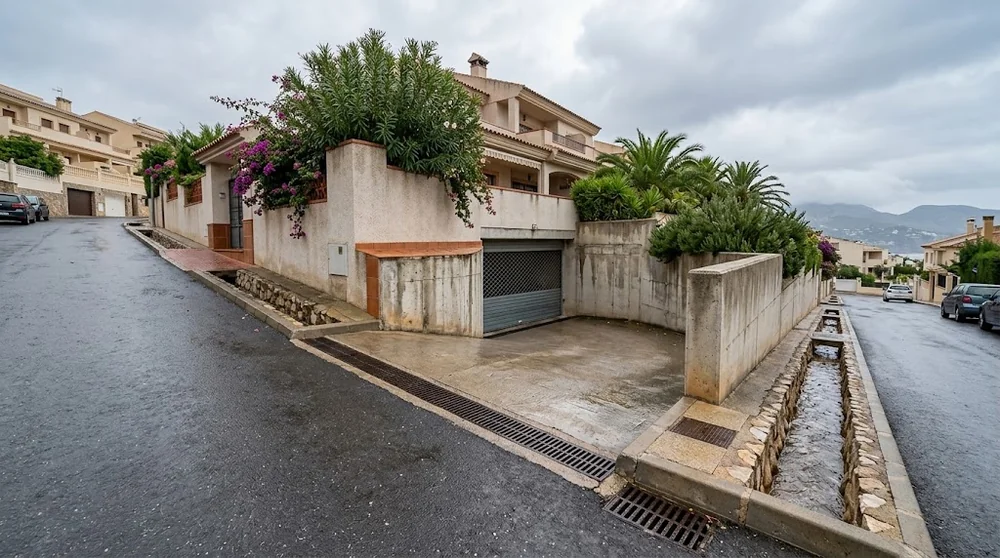
    The same reconciliation matters if the deal fails. If the arras are penitential and the seller withdraws, is the double calculated on €30,000 or on €27,000? It should be €30,000 if the reservation was credited as part of the arras, but you want that written down, not argued about later. My advice to every British buyer is to keep a simple table of every payment, date, recipient and reference, and to check it against each new document before signing.

    Buyers reviewing property payment paperwork and a calculator

    Can You Get Your Reservation Deposit Back?

    A reservation deposit in Spain is not automatically refundable or automatically lost; whether you get it back depends on the signed agreement, the reason the purchase is not proceeding and the applicable law. The useful question is not “is it refundable?” but “refundable in which circumstances, and who decides whether those circumstances have occurred?”

    Reservation and deposit refund scenarios in Spain: likely issues to check (outcomes depend on the contract and law)
    ScenarioWhat usually decides the outcomePractical risk for the buyer
    Buyer simply changes their mindWhether the agreement allows withdrawal and at what costOften high: the deposit may be lost, and a binding agreement could support other claims
    Seller changes their mindRefund, penalty or double-return wording, and whether the reservation was binding on the sellerBuyer may have a claim, but recovery may need negotiation or legal action
    Survey finds a serious defectWhether a survey condition with a deadline was agreedLow if a clear condition exists; uncertain if not
    Title review reveals an undisclosed mortgage or legal issueWhether refund is linked to adverse legal checks, and how “adverse” is definedUsually better protected with a specific clause; otherwise contested
    Agreed condition not satisfiedWording of the condition, evidence required and deadlineDepends on proving the condition failed in time
    Mortgage refusedMortgage contingency clause, or Catalan Article 621-49 where applicableHigh if no financing protection applies
    Reservation period expiresWhat the agreement says happens at expiryUnclear wording can trap the deposit
    Seller fails an essential commitmentSeller obligations in the agreement and general breach rulesBuyer may terminate and claim, subject to evidence and notice

    If you change your mind

    A buyer who simply changes their mind, without relying on a written condition or a seller breach, should assume the deposit is at risk. Discretionary withdrawal by the buyer is different from termination based on a documented contractual condition or the seller’s breach. If the agreement is binding and gives no withdrawal right, the seller might in theory argue for more than keeping the deposit, although in practice most disputes over small reservations end with the payment being retained.

    If the seller pulls out

    If the seller pulls out of a reservation, your position depends on what the seller promised. A reservation that obliges the seller to sell at an agreed price, and that sets out a refund or penalty for seller withdrawal, gives you something concrete to rely on. A reservation that only obliges you leaves you arguing from general principles, which is slower and less certain.

    If legal checks reveal a problem

    Adverse legal findings are where a carefully drafted refund clause earns its keep. A clause that refunds the reservation “if the buyer’s lawyer identifies charges, planning irregularities or registry discrepancies not disclosed before signing, notified in writing before the expiry date” is far stronger than a vague “subject to checks”.

    Whatever the scenario, the practical steps are the same:

    1. Read the refund and termination wording carefully, ideally with your solicitor.
    2. Record the factual trigger: the lender’s written refusal, the registry extract, the surveyor’s report.
    3. Send written notice by the method and within the deadline the agreement specifies, such as burofax or email to a named address.
    4. Preserve evidence of payment: bank confirmation, transfer reference and receipt.
    5. Seek independent legal review before accepting any settlement or making counterclaims.

    What Happens If the Seller Withdraws After Arras?

    Under expressly agreed arras penitenciales, a seller who withdraws within the agreed terms generally has to repay twice the deposit received. If the arras are confirmatory or penal, the seller’s refusal to complete is usually treated as a breach, and the buyer’s remedies are different.

    Let us return to the hypothetical €300,000 purchase with a total deposit of €30,000, assuming the €3,000 reservation was credited as part of the arras:

    Hypothetical €30,000 deposit: outcomes depend on the type of arras agreed
    SituationArras penitencialesArras confirmatorias or penales
    Buyer withdrawsBuyer generally forfeits the €30,000 depositTreated as buyer breach: seller may claim performance, termination, damages or an agreed penalty
    Seller withdrawsSeller generally repays €60,000 in totalTreated as seller breach: buyer may claim performance, termination, damages or an agreed penalty
    Both complete€30,000 credited to the price; €270,000 due at completionSame: deposit credited to the price

    A buyer is not automatically entitled to double repayment unless the agreement supports that remedy. Under confirmatory arras, for example, the buyer might prefer to force the sale through the courts rather than accept money, which may be the better option if you have sold your UK home and are emotionally committed to the property. Under penal arras, the penalty clause wording controls a great deal.

    Contractually permitted withdrawal and breach should not be confused. A seller who exercises an agreed penitential withdrawal is using a right; a seller who simply fails to turn up at the notary under confirmatory arras is breaking a promise. The difference shapes what you can claim and how.

    Real-world recovery also depends on procedure. If the agreement requires the seller to notify withdrawal in writing before a certain date, or the buyer to give notice to complete, those steps matter. A seller who refuses to repay double does not hand over the money just because Article 1454 exists; you may need to negotiate, send formal demands or bring proceedings, with cost and time attached. That is why an independent lawyer should check the notice and deadline clauses before you pay, not after the seller goes quiet.

    What If Your Spanish Mortgage Is Refused?

    Mortgage refusal does not automatically excuse a buyer under every Spanish property contract. Outside the specific Catalan regime described below, a buyer usually needs a negotiated financing condition, often called a mortgage contingency clause, to recover a deposit if the loan falls through.

    A useful mortgage contingency clause should specify the essentials:

    • The loan sought: the approximate amount or loan-to-value requested, and ideally the lender or type of lender.
    • The lender decision: what counts as refusal, including an offer on materially worse terms than those specified.
    • Evidence: a written refusal from the lender, or from a specified number of lenders.
    • Deadline: the date by which the buyer must prove refusal.
    • Consequence: full refund of the deposit within a stated number of days.
    • Buyer conduct: an obligation to apply promptly and supply documents, which sellers will reasonably expect.

    Lenders typically ask for identification, proof of income, tax returns, bank statements, details of existing debts, credit reports and the valuation of the property. Delays commonly come from translations, missing documents and valuation queues. A two-week financing deadline in a summer reservation can be unrealistic for an overseas buyer, so negotiate a period that reflects how long your chosen lender actually takes.

    Catalonia: Articles 621-8 and 621-49 of the Catalan Civil Code

    Catalonia is different, and the difference matters. As of October 2026, Catalan Civil Code Article 621-49 provides that where a purchase contract contemplates financing of all or part of the price by a credit institution, the buyer may, unless otherwise agreed, withdraw from the contract if they prove in writing, within the agreed period, that the designated institution refused the financing or refused subrogation of an existing mortgage, unless the refusal resulted from the buyer’s negligence.

    The Catalan mortgage-refusal protection in Article 621-49 applies only when its conditions are met. In summary:

    • the contract must contemplate third-party financing of the price;
    • the parties must not have excluded the protection by contrary agreement;
    • the buyer must provide documentary proof of the refusal within the agreed period;
    • the refusal must not stem from the buyer’s own negligence.

    Catalan Civil Code Article 621-8 connects to this rule: a buyer who withdraws under penitential arras generally loses them, unless the withdrawal is justified under Article 621-49. Catalan courts and commentators have debated how these requirements apply in practice, including what counts as negligence and what happens if no deadline was fixed, so a buyer in Barcelona should still negotiate clear financing wording rather than relying on the statute alone.

    The Catalan Article 621-49 rule should not be assumed to apply to purchases in Malaga, Madrid, Valencia, Alicante, Mallorca or Tenerife. Purchases governed by the general Spanish Civil Code depend on the contract’s own financing terms.

    Concerns for British non-resident buyers

    Since Brexit, British buyers who are not resident in Spain are generally assessed as non-EU non-residents by Spanish lenders. In my experience, that often means more documentation, more conservative loan-to-value limits and longer underwriting, but criteria vary by lender and change over time, so there is no fixed legal percentage you can rely on. Income in sterling raises currency questions: a lender may stress-test your income against exchange-rate movements, and the euro amount you need at completion can shift if the pound moves between reservation and notary. Brexit does not change Spanish deposit law, but it can change how long finance takes, which is precisely why your financing deadline needs breathing room.

    What to Check Before Paying Any Deposit

    Before paying any deposit in Spain, a buyer should verify ownership, charges, planning status, documentation and the exact payment and refund terms, preferably through an independent Spanish property lawyer. Always ask for the nota simple before you commit. It is quick to obtain and tells you a lot, but it is only the starting point.

    Property and seller checks

    1. Obtain a current nota simple. A nota simple is an informational extract from the Registro de la Propiedad showing the registered description, owner and recorded charges of a property. It has informational value only, while a formal registry certificate (certificación registral) is the document with full evidential value. You can request a nota simple online through the Spanish Land Registry’s official electronic service, or simply ask your lawyer to obtain it for you, usually within a day or two.
    2. Confirm the registered owner and authority to sell. The seller named in your agreement should match the registered owner. If there are several owners, a company owner, an inheritance in progress or a representative acting under power of attorney, check that the person signing has authority for all of them.
    3. Verify identification and legal capacity of signatories. Check passports or Spanish identity documents, NIE numbers and, for companies, the appointment of the director or attorney.
    4. Review charges and mortgages. Existing mortgages, embargoes and other encumbrances should be identified, with a clear plan for cancellation at or before completion.
    5. Compare the registry, the Catastro and the physical property. Built area, plot size and boundaries should broadly correspond between the registry description, the cadastral record and what is actually on site.
    6. Check planning status and any legalisation. Your lawyer may need to check municipal records for planning infractions, especially where there are extensions, enclosed terraces, pools or outbuildings that do not appear in the registry.
    7. Request first occupation or equivalent documentation where applicable. Depending on the property and region, this may be a licencia de primera ocupación or a newer declaration-based equivalent, which can affect utility connections and future resale.
    8. Check community charges and local taxes. Ask for a certificate of being up to date with community fees and recent IBI (local property tax) receipts, and ask whether any special levies have been approved.

    Contract and payment checks

    1. Confirm the price and inclusions. The agreement should state the exact price, how existing payments are credited and what is included, such as furniture, parking and storage.
    2. Read the payment, refund and expiry wording. Identify who receives the money, on whose authority, by when the next step must occur and exactly when you get the money back.

    Not every risk appears in the property register. A nota simple does not prove that every building element is legal, that planning permission was obtained for every extension, that there are no unpaid community fees or that the property has no hidden defects. On the Costa del Sol, I regularly see properties where a pool, a converted garage or an extra bedroom on the terrace never made it into the registry description. That does not automatically mean a problem, but it does mean your lawyer needs to look at municipal records and, sometimes, an architect’s report.

    Legal adviser checking property documents with a homebuyer

    Who Should Hold Your Property Deposit?

    The party legally entitled to receive your deposit and the actual holder of the bank account are not always the same, and both should be identified in writing before you pay. No recipient or account is automatically protected just because it belongs to an agency or a lawyer, so the safeguards need to come from the contract and from your own checks.

    1. Seller. Paying the seller directly is common at arras stage. Confirm that the account belongs to the registered owner, or to someone with documented authority to receive funds on their behalf.
    2. Estate agency. Agencies often take reservation deposits. Ask whether the agent holds the money for the seller, under what written authority and who is responsible for any refund. If the agency is not a party to the sale contract, ask what happens to your money if the seller and agency disagree.
    3. Developer. For new-build purchases, ask whether payments go into a designated special account and what guarantee documentation will be issued (see the next section).
    4. Nominated stakeholder. Some deals use a lawyer’s client account or a notarial deposit to hold funds pending conditions. This can help, but the holding terms, release conditions and responsibilities must be written down.

    Whoever receives your money, insist on a signed receipt that names the payer, the recipient, the property, the amount, the date and the purpose of the payment. The remittance reference on your transfer should match the agreement, for example “Reservation – [property address] – [buyer name]”.

    Fraud precautions are not optional. Payment diversion scams, where criminals send fake “updated bank details” by email, target property buyers in Spain just as they do in the UK. Confirm bank details by phone using a number you already know, treat any last-minute change of account with suspicion and send a small test payment before the main transfer if time allows. If you use a currency specialist for a transfer from a British account, make sure the beneficiary name matches the agreement exactly.

    If you are weighing up a specific reservation form or an agent’s request for money and want a second pair of eyes on the practical steps before you transfer anything, a short conversation can help you decide what to ask your solicitor.

    Being asked for a deposit and not sure who should hold it or what the receipt should say? Send me your question and I will explain the practical steps for your situation.

    Ask David a question on WhatsApp

    Whatever route you choose, the principle stays the same: know who has your money, why they have it and who must give it back if the purchase does not go ahead.

    Reservation Deposits on New-Build Spanish Property

    A new-build reservation payment to a developer is not automatically the same as a qualifying advance payment protected under the Ley de Ordenación de la Edificación. Off-plan purchases often involve a marketing reservation, then a private purchase contract, then staged payments during construction, and each payment can sit under different rules.

    As of October 2026, the first additional provision of Ley 38/1999, the Ley de Ordenación de la Edificación, as amended by Ley 20/2015, requires developers of housing who receive amounts on account of the price, from the point at which the building licence is obtained, to guarantee the return of those amounts plus legal interest through insurance or a bank guarantee, and to receive them through a special account at a credit institution. The guarantee is designed to protect buyers if construction does not start or is not completed within the agreed time, or if the required occupation documentation is not obtained.

    The statutory advance-payment protection depends on its conditions being met; it does not mean every reservation fee taken by a developer is automatically covered by a bank guarantee. Payments taken before the building licence, payments labelled purely as reservation fees and payments made to an account that is not the special account can raise questions that need a lawyer’s assessment rather than assumptions in either direction.

    Documents to request before paying a developer include:

    • the building licence, or confirmation of its status;
    • details of the special account into which payments must be made;
    • the individual bank guarantee or insurance certificate covering your payments, issued in your name;
    • the contract clauses on delivery dates, delay, cancellation and refunds;
    • the building specifications and plans forming part of the contract.

    Here is a hypothetical example. A couple from Leeds reserve an off-plan two-bedroom apartment near Malaga with a €6,000 reservation, then sign a private contract requiring 30% of a €280,000 price in stages during construction. Their lawyer checks that the building licence has been granted, confirms that each stage payment goes into the developer’s special account and requests an individual guarantee for each payment. The reservation itself is refundable only on the terms of the reservation form, so the lawyer also negotiates wording that refunds it if the guarantee is not issued. The protection they end up with comes from combining statutory rules with careful contract drafting, not from either alone.

    Delivery failure, long delays and changes to specifications are the classic off-plan risks. Make sure the contract states a delivery date, any permitted extension and what you can do if the date is missed.

    A Safe Deposit Timeline for British Buyers

    A safe Spanish property deposit timeline puts legal review and payment verification before money moves, and every payment after it is tied to written conditions and deadlines. The sequence below is illustrative, not mandatory; some steps run in parallel and some transactions combine stages.

    1. Agree the offer terms in writing. Price, inclusions, target completion date and any conditions, such as finance or survey.
    2. Appoint an independent Spanish property lawyer. Independent means not recommended by, or paid through, the seller’s side. Your lawyer can obtain your NIE, the foreigner’s identification number required to buy property, if you do not already have one.
    3. Obtain and review the nota simple. Check owner, description and charges before committing.
    4. Assess planning, charges and ownership. Municipal checks, community certificates and IBI receipts.
    5. Seek a mortgage pre-assessment if you need finance. Ask the lender how long a full approval realistically takes for a non-resident.
    6. Negotiate the reservation agreement and written contingencies. Hold period, marketing suspension, refund triggers and crediting of the payment.
    7. Verify the recipient account. Confirm ownership and authority, by phone, using a known number.
    8. Pay a traceable amount. Bank transfer with a clear reference; never cash.
    9. Track due diligence and financing deadlines. Put every date in a calendar with a reminder a week before.
    10. Negotiate and sign the appropriate arras or private purchase agreement. Decide expressly whether the arras are penitential, confirmatory or penal.
    11. Credit previous payments. Confirm the reservation is deducted from the arras amount and the balance.
    12. Complete by escritura pública before a Spanish notary. Pay the balance, receive the keys and register the deed at the Registro de la Propiedad.

    British buyers often expect the English pattern where nothing is binding until exchange of contracts. Spain does not work that way. In Spain, a private agreement signed early in the process can already create binding obligations, long before the notary appointment. When I moved from Manchester to Andalusia, that was one of the first cultural shifts I had to get my head around: the signature on a short private document can matter as much as the grand moment at the notary.

    Identity checks will come up repeatedly. Under Spanish anti-money-laundering law, Ley 10/2010, notaries, estate agents and banks must identify their clients and may ask about the source of funds. Have your passport, NIE, proof of address and evidence of where the purchase money came from ready, including a UK house sale completion statement or savings records.

    If you cannot be in Spain to sign, a power of attorney can allow your lawyer or another trusted person to sign for you. It can be granted before a Spanish notary, at a Spanish consulate or before a UK notary with an apostille, and it should be limited to what is needed for the purchase. Ask for translations of anything you sign, and never sign a Spanish document you do not understand because the translation “will follow”.

    Overseas transfers take time: allow for bank compliance checks on large payments and for currency conversion. Brexit does not dictate your refund rights; those come from Spanish law and your contract. But being a non-resident non-EU buyer can slow the paperwork, so build that into every deadline.

    Homebuyers and a legal professional meeting to complete a property purchase

    Deposit Contract Clauses Buyers Should Negotiate

    The most protective deposit agreements in Spain specify the parties, the property, the conditions, the deadlines and exactly when the deposit is refunded, rather than relying on general labels. What follows is a set of discussion points to raise with your solicitor, not ready-to-sign legal clauses. Your lawyer should draft the actual wording for your property and the applicable law.

    • Parties and authority: Are all registered owners named, and does anyone signing for them have documented authority? Is the agency a party, and if so, in what capacity?
    • Property identification: Does the agreement cite the registry details, cadastral reference, parking space and storage room, and any furniture included?
    • Reservation period and marketing: Is there a fixed end date, and does the seller expressly agree to suspend marketing and refuse other offers during that period?
    • Treatment of existing payments: Does each document state how earlier payments are credited towards the deposit and the price?
    • Refund triggers for legal checks: Is there a conditional refund following an adverse legal review, for example where undisclosed charges, planning irregularities or registry discrepancies are found and notified before a stated date?
    • Financing conditions: If you need a mortgage, does the mortgage contingency clause name the loan sought, the evidence required, the deadline and the refund? In Catalonia, has Article 621-49 been preserved or excluded?
    • Type of arras and withdrawal consequences: Does the agreement say expressly whether the arras are penitenciales, confirmatorias or penales, and what each party can do if the other does not complete?
    • Notices, extensions, governing law and disputes: How must notices be sent, can deadlines be extended in writing, which law applies and which courts or procedure will resolve disputes?

    Be wary of two common drafting traps. The first is the vaguely worded non-refundable deposit: “the reservation is non-refundable” with no exceptions, even where the seller cannot deliver clean title. The second is the one-sided penalty: the buyer loses everything if they withdraw, but the seller’s withdrawal triggers nothing more than a simple refund. Balanced agreements treat both sides consistently, or at least explain why they do not.

    Questions worth sending to your solicitor before you sign include: “If the nota simple shows a mortgage not mentioned by the agent, do I get the reservation back?”, “What happens if my lender’s valuation comes in low?” and “If the seller refuses to complete, can I insist on the sale, or am I limited to a refund?”

    Common Deposit Mistakes in Marbella and Beyond

    Local deposit customs never replace the legal regime that applies to your contract. The examples below are hypothetical, built from patterns I see often, and are not descriptions of real clients.

    1. Hypothetical: the Marbella villa with the unregistered pool house. A British buyer pays a €10,000 reservation to an agent on a “standard” form with no refund conditions. The lawyer then finds that the pool house and an enclosed terrace are not in the registry or the Catastro. Possible outcome: the seller refuses to refund, arguing the buyer withdrew voluntarily. Better approach: make the reservation refundable if legal checks reveal unregistered or unlicensed construction, notified before a fixed date.
    2. Hypothetical: the Alicante retirees and the community debt. A retired couple sign arras on a townhouse without asking for a community fees certificate. Shortly before completion, they learn of unpaid fees and an approved special levy for roof works. Possible outcome: a dispute over who pays, delaying completion. Better approach: require a community certificate before arras and a clause allocating approved levies.
    3. Hypothetical: the Barcelona buyer and the lapsed finance deadline. A buyer in Barcelona signs penitential arras with a 30-day financing period, but the lender’s valuation takes longer and no written refusal is obtained in time. Possible outcome: the buyer may struggle to rely on Article 621-49 because the documentary proof was not produced within the agreed period. Better approach: a realistic deadline, a named lender and a right to extend in writing.
    4. Hypothetical: the overseas buyer in Valencia and the changed bank details. An overseas buyer receives an email, apparently from the agency, with “new” bank details for the arras payment. Possible outcome: funds sent to a fraudster’s account and difficult to recover. Better approach: verify bank details by phone and treat any change as a red flag.
    5. Hypothetical: the Malaga new-build without a guarantee. A buyer pays stage payments to a developer without obtaining individual guarantees or checking the special account. Possible outcome: weaker practical protection if the project stalls. Better approach: request the guarantee documentation before each payment.

    Warning signs that merit immediate independent advice include pressure to pay before you have seen any documents, a reluctance to provide the nota simple, a seller who is not the registered owner, a request for cash, a non-refundable clause with no exceptions and any last-minute change of bank account.

    Which Deposit Agreement Should You Sign?

    Neither a reservation agreement nor an arras agreement is categorically safer in every case; the right choice depends on how ready you are, how certain your finance is and what checks are still outstanding. A narrowly drafted, conditional reservation may be sensible when preliminary checks are still underway, while a fuller arras or private purchase agreement makes more sense once you know what you are buying.

    Choosing between a reservation, an arras agreement or waiting: a practical decision guide
    Your situationConditional reservationArras or private purchase agreementWait before signing or paying
    Buyer readinessCommitted, checks just startingChecks largely completeStill comparing properties
    Financing certaintyPre-assessment in hand, approval pendingApproval obtained or cash buyer, or clear finance condition agreedNo lender contact yet and no finance condition offered
    Seller commitmentSeller agrees to suspend marketingSeller ready to commit to price and dateSeller unwilling to commit in writing
    Outstanding documentationNota simple obtained; other checks underwayPlanning, charges and community checks reviewedNo nota simple or ownership unclear
    Deposit at riskSmall, with clear refund triggersLarger, with agreed type of arras and conditionsNon-refundable with no exceptions

    If you are still deciding which property, budget and area actually suit you, it can be wiser to settle those questions first than to rush into a deposit on the first place that looks right. Clarity about what you want makes every later contract negotiation simpler.

    Still weighing up regions, budgets and property types before committing to any deposit? A short questionnaire can narrow the options to properties that genuinely fit your plans.

    Get a personalised shortlist of properties in Spain

    Once you have the right property in your sights, the deciding factor is the written review. My advice to every British buyer is simple: get an independent lawyer to read the deposit agreement and confirm the refund triggers before you transfer a single euro.

    Reservation and Arras Deposits: Frequently Asked Questions

    What is the difference between a reservation contract and an arras contract in Spain?

    A reservation contract generally holds a Spanish property for an agreed period while the buyer completes preliminary checks. An arras agreement usually records a fuller purchase commitment and specifies deposit consequences. The critical distinction is the actual contractual wording. Only qualifying penitential arras give the agreed withdrawal mechanism associated with Spanish Civil Code Article 1454; other agreements can create different obligations.

    Can I get my reservation deposit back if I change my mind?

    A reservation deposit in Spain is not automatically refundable. The outcome depends on the signed agreement, applicable law and why the purchase is not proceeding. A buyer who simply changes their mind may lose the payment or face another contractual claim. Before paying, request explicit written refund conditions for adverse legal checks, financing issues and seller non-performance.

    How much deposit do you pay when buying property in Spain?

    Spanish property reservation deposits are often quoted at around 1–5% of the agreed price, while an arras deposit is commonly around 10%, although amounts vary. These are commercial conventions rather than compulsory national percentages. On a €300,000 purchase, a €3,000 reservation might be credited towards a later €30,000 deposit, leaving €27,000 to pay at that stage.

    What happens if the seller pulls out after signing an arras contract?

    Under expressly agreed arras penitenciales, a seller who exercises the contractual withdrawal right generally returns twice the deposit received. A €20,000 deposit would therefore result in €40,000 total repayment. However, confirmatory or penal arras may involve different contractual remedies, including performance or damages. The exact agreement and applicable law must be reviewed before assuming double repayment.

    Do I lose my deposit if my Spanish mortgage is refused?

    Mortgage refusal does not produce one universal result throughout Spain. Buyers should negotiate clear financing conditions and evidence requirements before signing. Catalonia has specific rules under Civil Code Article 621-49 where the agreement contemplates third-party finance, subject to stated conditions and possible contrary agreement. Elsewhere, a buyer may risk losing their deposit if the contract provides no applicable protection.

    Should I pay a reservation deposit before my solicitor checks the property?

    Ideally, an independent Spanish property solicitor should review the reservation terms and basic ownership information before you transfer money. At minimum, establish the payment recipient’s authority, the reservation deadline, the refund conditions and the precise property being reserved. Obtain a current nota simple and avoid signing an unconditional non-refundable commitment before essential legal checks have been arranged.

    Final Thoughts

    The real difference between a reservation deposit and an arras deposit in Spain lies in the clauses, not the labels. A reservation usually holds a property while checks proceed, and an arras agreement usually records a fuller commitment, but either can be binding, and only expressly agreed arras penitenciales carry the familiar rule of losing the deposit or repaying double. Catalonia has its own rules on arras and mortgage refusal, new-build advance payments have statutory protections with conditions attached, and the percentages you hear from agents are conventions rather than law.

    Ten years on the Costa del Sol have taught me that the buyers who sleep well are rarely the ones who found the cheapest property; they are the ones who knew exactly what they had signed. Get the nota simple, put refund triggers and deadlines in writing, verify who is holding your money and keep a running record of every payment so nothing is counted twice.

    Above all, let an independent Spanish property lawyer review the agreement before you pay, and bring in a mortgage adviser or tax specialist where your situation needs it. A few days of checks costs far less than a deposit you cannot recover.

    Legal information disclaimer: this article provides general information on Spanish property deposits as of October 2026. It does not constitute legal, financial or tax advice and does not replace advice from a qualified professional based on your individual contract, property and circumstances.

  • Virtual Property Viewings in Spain: Buying Safely

    Virtual Property Viewings in Spain: Buying Safely

    You have spotted a flat in Estepona online, the agent has offered a video call, and you are sitting in Leeds or Boston wondering whether that is enough to start sending money. A screen can tell you whether a property deserves your attention, but it cannot tell you whether it deserves your deposit. This guide separates what video can show from what only documents, independent professionals and, occasionally, your own two feet can confirm.

    Virtual property viewings in Spain can help you shortlist homes and buy remotely, but video alone cannot establish ownership, planning legality or structural condition. Before committing money, arrange independent legal checks and an on-site technical inspection. A properly drafted power of attorney can let your representative complete the purchase while you remain abroad.

    What Virtual Property Viewings in Spain Can Establish

    I swapped Manchester drizzle for Marbella sunshine more than a decade ago, and ten years on the Costa del Sol have taught me that even a perfectly honest video has limits. The agent can film every room in good faith and still show you nothing about the title, the planning history or what is going on behind the plaster. Trouble starts when a buyer asks a video to prove things it never could. A remote purchase has three decision stages: shortlist (is this worth investigating?), investigate (is it legally and physically sound?) and commit (am I prepared to pay and sign?). Each stage needs a different kind of evidence.

    MethodPurposeWhat it can showWhat it cannot establish
    Prerecorded tourEarly shortlistingLayout, finish, light and general styleCurrent condition, editing choices, rooms left out, the surroundings off camera
    Buyer-directed live video viewingTesting the shortlistA continuous route, visible defects you request, real-time answersOwnership, legality, hidden damp, structural movement or true noise levels
    Independent technical inspectionPhysical investigationProfessional assessment of structure, installations and visible or detectable defectsTitle, debts or planning status, unless specifically instructed and documented
    Legal due diligenceLegal investigationRegistered owner, charges, planning and tax position, community debtsThe physical condition of the building

    Let me put it plainly: a video cannot prove ownership, lawful construction or structural soundness. A live video viewing is an excellent filter, but the second and third stages belong to a Spanish lawyer acting for you and an independent arquitecto técnico (a qualified building surveyor) who physically visits the property.

    Property agent conducting a live video viewing inside a Marbella apartment

    Your Live Video Viewing Checklist

    A good live viewing is directed by you, not choreographed by whoever holds the phone. Send your requests in writing before the call, so nothing gets “forgotten” and you have a record of what you asked to see.

    Preparation before the call

    • Ask for a continuous route from the street or building entrance to the front door, then through every room without cuts. Gaps in footage are where inconvenient things live.
    • Confirm the property’s identity privately: the agent can show the door number, the floor and the building entrance so you can match them against the listing and, later, the registry description. Ask them not to film the seller’s letters, ID or other personal documents.
    • Agree before the call whether it may be recorded. Ask for consent from the agent and any occupant, and keep the recording for your own reference.
    • Request a tape measure or laser measure, and list the spaces you need measured: bedrooms, the kitchen run, the terrace, the parking space and the storage room.
    • Schedule the call in good daylight and ask for a stable connection; a frozen screen in the bathroom tells you nothing. If damp, the roof or drainage are a concern, ask for extra photos or a short video during or just after rain as well, because a sunny afternoon is when leaks hide best.

    Room-by-room checks

    • Slow, close views of ceilings, corners, skirting boards and window frames, looking for staining, bubbling paint, fresh patches of paint or cracks.
    • With the owner’s permission, run taps, flush the toilet, operate shutters (persianas), open windows and switch on air conditioning so you can see whether things actually work.
    • Look inside wardrobes and under sinks, where damp and leaks tend to show first.
    • Check the electrical panel and boiler or water heater visually, without asking anyone to open covers or handle installations.
    • Note accessibility: steps to the entrance, lift size, stair width and whether furniture will realistically get in.

    Exterior, neighbourhood and the second visit

    Ask the agent to show the parking space and storage room actually included in the sale, the stairs, the lift, the pool and gardens, and any communal areas run by the community of owners. Then ask them to step outside and pan slowly around the street: neighbouring bars, building sites, main roads, steep hills. Here’s where people usually come unstuck: they view a Fuengirola flat at eleven on a Tuesday morning and buy above a terrace bar that only wakes up at midnight. Arrange a second viewing at a relevant time, such as a weekend evening, the school run or, for summer lets, high season.

    Be honest about technology’s limits. Phone microphones suppress background noise, wide-angle lenses make rooms look bigger, and screens flatten colour, so damp stains and fresh paint can look identical. Rain can reveal leaks that sunshine hides, and vice versa. If the footage contradicts the floor plan or the photos, or a room is suddenly “not available to show”, treat it as a question for your lawyer and surveyor rather than a detail to wave away.

    Smartphone camera showing water staining beside an apartment window

    Verify the Nota Simple and the Physical Property

    The nota simple is an extract from the Registro de la Propiedad (the Land Registry) showing the registered owner, the registered description and the charges recorded against the property. A nota simple has informative value only: it is not a survey, not a certified registry certificate and not complete planning clearance. The Catastro is a separate cadastral register used mainly for tax purposes, recording location, surface area and use; it does not prove ownership. Problems often sit in the gaps between the registry, the Catastro and what is physically on the plot. Always ask for the nota simple before you commit.

    The table below links each risk to the evidence you need, who issues that evidence, who checks it for you and what happens if it fails. Documents should come from the issuing body through your lawyer, not as a forwarded PDF from the seller’s side.

    RiskEvidenceIssuer / authoritative channelVerifierEscalation
    Seller lacks authoritySeller ID, nota simple, any power of attorney, probate or company documentsRegistro de la Propiedad; authorising notary; Registro Mercantil for companiesBuyer’s lawyer; notary at signingHold payments until every owner or heir signs or is validly represented
    Mortgages, embargoes or other chargesRecent nota simple; lender payoff statementRegistro de la Propiedad; the lending bankBuyer’s lawyerWritten cancellation arrangement at completion, with funds retained if needed
    Registry, Catastro and reality disagreeNota simple, cadastral certificate, survey measurementsRegistro de la Propiedad; Catastro; commissioned technical reportLawyer and arquitecto técnicoWritten legal and technical assessment, then regularisation before completion. A discount does not cure unlawful construction, missing title or an unregistrable alteration, so accept any unresolved discrepancy only after that written assessment
    Illegal extensions or alterationsLicences and planning recordsAyuntamiento urbanismo departmentLawyer; technical professionalFormal urbanismo enquiry; specialist planning advice
    Missing occupancy documentationFirst occupation licence, declaración responsable or cédula, depending on regionAyuntamiento or regional housing authorityLawyerClarify utility and resale consequences before signing
    Unpaid IBI (municipal property tax)Latest receipts plus a municipal debt enquiry or certificateMunicipal tax office or provincial collection agencyLawyerDocument settlement before completion or a retention from the price
    Community debts and future leviesDebt certificate, recent minutes, approved worksCommunity secretary-administrator, with the president’s approvalLawyerAgree who pays approved levies in the contract
    Tenants or occupantsLeases, possession confirmationSeller; landlord’s records; lease registration where applicableLawyerMake vacant possession a condition of completion
    Hidden physical defectsCommissioned technical report with photos, scope and exclusionsYour independent arquitecto técnicoSurveyor; lawyer for contractual consequencesFurther specialist investigation, renegotiation or withdrawal within agreed conditions
    Coastal boundary or easementDeslinde records, registry entry, plan of the plotState coastal authority (Demarcación de Costas); Registro de la PropiedadLawyer; technical professional for plot positionWritten assessment of restrictions before signing; withdraw if the use you need is not permitted
    Military authorisation in restricted zonesAuthorisation or documented exemption for the exact propertyMinistry of DefenceLawyer; notary and registry at completionObtain authorisation or a confirmed exemption before completion; make it a contractual condition
    Off-plan stage paymentsBuilding licence, bank guarantee or insurance policy per payment, special account detailsAyuntamiento; issuing bank or insurerLawyer, checking directly with the bank or insurerNo stage payment until each guarantee is confirmed by its issuer
    Rental or tourist-letting permissionRegional register entry, municipal confirmation, community statutes and minutesRegional tourism authority; Ayuntamiento; community of ownersLawyerTreat rental income as unproven until permission for your own future use is confirmed in writing

    Community debts deserve special attention. Under the national Horizontal Property Act (Ley de Propiedad Horizontal), where applicable, article 9.1.e makes the purchased home itself answerable for unpaid general community charges attributable to the elapsed part of the year of purchase and the three preceding calendar years (as of October 2026). The same provision requires the seller to provide a community debt certificate before the deed is authorised, unless the buyer expressly waives it. Some regions have their own civil-law rules on communities, so ask your lawyer to check which regime applies, particularly in Catalonia, where the Catalan Civil Code governs. My advice to every British buyer is never to waive the certificate, and to read the minutes too: an approved but not-yet-billed levy for a new roof will not necessarily appear as a debt.

    Three different professionals answer three different questions. Your lawyer acts for you and investigates title, debts, planning and the contract. The notary is impartial: they authorise the escritura pública (the public deed of sale), check identities and legal formalities and advise both parties, but they do not act for you or inspect the building. The independent technical professional reports on physical condition within an agreed scope.

    In my view, the most expensive words in a remote purchase are “the agent said it’s all legal”. An agent can gather documents and arrange access; independent clearance has to come from your own lawyer and surveyor.

    Building professional examining a ceiling crack in a Spanish apartment

    Buying Remotely from the UK or US

    Buying property in Spain remotely usually means appointing someone, often your lawyer, to sign on your behalf under a poder notarial (a notarial power of attorney). Start early with the NIE, the foreigner identification number you will need for the purchase, taxes and utilities; your lawyer can advise whether it can be obtained through a Spanish consulate or a representative in Spain. The power of attorney itself should be transaction-specific, drafted in Spanish or bilingual form, and approved by the completing Spanish notary before you sign it.

    RouteHow it worksExtra stepsWatch for
    Spanish consulateSigned before the consul acting as notaryNormally no apostille, as it is a Spanish instrumentAppointment availability
    Local notary plus Hague ApostilleSigned before a UK notary public or a US notaryTranslation of the instrument, notarial certification and apostille as required by the receiving Spanish notary; bilingual wording alone does not settle acceptanceSpanish notary’s prior approval of wording and format
    Video before a Spanish notaryPower for specific acts authorised by videoconferenceElectronic identification and signatureNot available for general powers; the notary decides suitability

    As of October 2026, article 17 ter of Spain’s Notaries Act (Ley del Notariado), added by Law 11/2023, allows certain instruments, including powers of attorney for specific acts, to be authorised by videoconference, while general and preventive powers are excluded. That is not the same as personally signing your property deed over video: remote representation is the established route for completion, and whether any particular act can be done online is for the notary to confirm.

    Buying from the UK

    Post-Brexit, British buyers are non-EU nationals in Spanish law. A power signed before a UK notary public normally needs an apostille from the FCDO Legalisation Office, plus translation where required. Brexit also brings two practical consequences: possible military authorisation in restricted zones (covered below) and the fact that time in Spain counts against short-stay limits. Owning a Spanish home does not, by itself, give you the right to live in Spain. As of October 2026, the property investment residence route ended on 3 April 2025 under Organic Law 1/2025, so residence needs a separate visa route.

    Buying from the US

    American buyers usually sign before a local notary, but apostille authentication depends on the issuing jurisdiction, typically the competent authority of the state where the document was notarised; federal documents follow a different route through the US Department of State. The US State Department’s apostille guidance explains which office handles which document. Do not assume one office covers the whole country. Ask your Spanish lawyer to confirm in writing the exact chain the receiving Spanish notary will accept, and get that notary’s approval of the wording before you sign or pay for anything.

    Whichever route you choose, limit the authority: identify the property, set a maximum price, list the permitted acts (signing, paying taxes, registering, connecting utilities), decide whether sub-delegation is allowed, consider an expiry date where appropriate, and remember that a power can be revoked through a notary.

    Before Paying a Reservation Fee or Arras

    The pressure to “secure it today” peaks exactly when you know least. Use these gates before any money leaves your account:

    1. Verify the professionals. Confirm your lawyer is a practising member of a Spanish bar association and that your surveyor is suitably qualified, using sources you found yourself.
    2. Obtain essential evidence. At minimum a recent nota simple, seller identity, and confirmation of charges and community debts.
    3. Have the exact contract reviewed. Your lawyer should read the reservation document or contrato de arras that you will actually sign, not a template.
    4. Define outstanding conditions. List the checks still pending, the survey access you need, deadlines, and any negotiated refund conditions.
    5. Confirm the payee independently. Check who receives the money, their authority to receive it, and the bank details through a trusted channel.
    6. Document your approval. Give written payment instructions only after your lawyer confirms the gates are met.

    Reservation fees and arras are contract-specific, and no reservation payment is automatically refundable. As of October 2026, article 1454 of the Spanish Civil Code recognises penitential arras, under which the buyer may withdraw by forfeiting the deposit and the seller by returning double. That mechanism applies only where the contract clearly agrees it; confirmatory or penalty arras work differently, and courts look at the actual wording. A reservation fee paid to an agent may follow different terms again.

    Bank-detail fraud is the quiet threat to remote buyers. Criminals intercept email chains and send convincing “updated” account details at the last minute. Treat any change of payment instructions as suspect until confirmed by phone, using a number you already held. Prepare source-of-funds evidence early, because banks and notaries apply anti-money-laundering checks, and ask for written fee quotations from every professional.

    If you are facing a reservation contract or a power of attorney and want help organising the evidence and preparing the right questions, a short one-to-one conversation can get you ready for your lawyer. Interpreting the contract and approving the power of attorney remain the job of your independent Spanish lawyer and the receiving notary.

    Ask David a question on WhatsApp

    Currency exposure matters too: a few weeks of sterling or dollar movement between reservation and completion can change your real cost, so discuss timing and transfer options with a regulated provider before you commit to dates.

    When Location or Property Type Requires More Checks

    Spain has national laws, regional laws and municipal planning, so the same checklist is a starting point rather than a finish line. Each local legal question should go to your lawyer and, where needed, the Ayuntamiento urbanismo department (the town hall planning office).

    Regional documents

    Occupancy documentation varies by region. A resale flat in Barcelona will usually involve a cédula de habitabilidad under Catalan rules, while a home in Marbella or Malaga sits within the Andalusian system, and properties in Alicante or Valencia follow the Valencian regime. Madrid has its own arrangements again. Your lawyer should confirm which document applies and whether it is current.

    Rural, coastal and island homes

    Rural villas inland from Marbella or in the Alicante countryside call for planning history, legal road access, water supply and drainage checks; a lovely video of a pool says nothing about whether the pool was licensed. Seafront property may be affected by coastal law restrictions: ask your lawyer to establish where the official boundary of the maritime-terrestrial public domain (the deslinde) runs and whether the plot falls within a protection or access easement, checking the registry entry and the coastal authority’s records rather than relying on the listing.

    On the islands, Mallorca and Tenerife buyers should ask early about restricted zones: as of October 2026, Law 8/1975 on zones of interest for national defence can require military authorisation from the Ministry of Defence for non-EU buyers, now including British nationals, in designated areas. Whether the land is legally documented as urbanised can affect whether authorisation is needed at all, a point addressed in the registry resolution of 27 November 2025, published in the BOE on 9 March 2026 (BOE-A-2026-5490). Exemptions and practical treatment depend on the specific property and location, so your lawyer should establish which exemption, if any, applies to the exact property and what supporting evidence the notary and registry will require.

    Occupied homes, off-plan and rental claims

    An occupied home needs lease review and a clear vacant-possession condition. Off-plan purchases need confirmation of the building licence from the Ayuntamiento, plus the bank guarantee or insurance policy covering each stage payment and the details of the special account those payments go into; your lawyer should check these documents with the issuing bank or insurer before you pay a penny. A rendering or show-home video is not evidence about the exact unit you are buying.

    Rental income claims deserve scepticism. Ask to see the actual tourist-letting registration for the property in the regional register, confirm with the Ayuntamiento whether local restrictions or moratoriums apply, and have your lawyer read the community statutes and minutes. As of October 2026, where the national Horizontal Property Act applies, articles 7.3 and 17.12 require a new tourist-letting activity to have the community’s prior express approval, by three-fifths of the owners representing three-fifths of the participation quotas. Lets already operating before that rule took effect may fall under a transitional exception, but that needs separate legal analysis for the specific flat. And do not assume an existing registration automatically passes its operating rights to you as the buyer: that depends on regional and municipal rules. Barcelona is notably restrictive, and buying, residence and letting permission are three separate questions.

    Before you even reach these checks, it helps to narrow your search to areas and property types that suit your budget, intended use and tolerance for paperwork.

    If you are still deciding between the Costa del Sol, the Costa Blanca or the islands, a short questionnaire on budget, region and buying goals can turn a vague wish list into a focused shortlist.

    Get a tailored selection of Spanish properties

    A tighter shortlist also means fewer live viewings, fewer surveys and less money spent investigating homes that were never right for you in the first place.

    From Remote Shortlist to Completion and Handover

    Here is the workflow I recommend, with the caveat that timings are case-dependent estimates and can stretch with mortgages, inheritance issues or regularisation.

    1. Shortlist using prerecorded tours, then hold buyer-directed live viewings at two relevant times.
    2. Instruct an independent lawyer and obtain the nota simple and core documents.
    3. Commission an on-site technical inspection with an agreed written scope.
    4. Pass the pre-payment gates, then sign the reviewed reservation or arras contract.
    5. Arrange the NIE, the approved power of attorney, funds and source-of-funds evidence.
    6. Arrange a final on-site condition check shortly before completion, by your surveyor, lawyer or a trusted representative, with photos and an agreed inventory if furniture is included.
    7. Complete before the notary, with charges cancelled and debts settled as agreed.
    8. Take possession: collect all keys, fobs and remotes, record meter readings and transfer utilities.
    9. Follow up registration in the Registro de la Propiedad and the delivery of your deed and tax receipts.

    Stop and reassess if survey access is refused, documents and reality do not match without explanation, refund terms are unclear, someone pressures you to pay before checks, or bank details change without verification. A personal visit is worth arranging for rural plots, major renovations, high-value homes, contradictory footage or a neighbourhood you genuinely do not know.

    As a general observation, the buyers who sleep best are not the ones who saw the most video. They are the ones who said “not yet” when the evidence was incomplete.

    Two people checking a utility cupboard during an apartment handover

    Frequently Asked Questions

    Can I buy a property in Spain without travelling there?

    You can arrange a Spanish property purchase through a representative holding an accepted notarial power of attorney. That does not remove the need for independent legal checks, identification requirements or a physical inspection of the home. Not every bank or administrative task is guaranteed to be available remotely, so your lawyer and the completing notary should confirm the documents needed for your transaction.

    Is a virtual viewing enough to buy a property safely?

    A virtual viewing helps you assess layout, visible condition and surroundings, but it cannot establish legal title, planning compliance or hidden defects. Combine a buyer-directed live visit with documentary checks and an independent on-site technical inspection. If significant questions remain unresolved, postpone commitment or arrange a personal visit before accepting the risk.

    What should I ask the agent to show during a live viewing?

    Ask for a continuous walk from the entrance through every room, followed by terraces, parking, storage and communal areas included in the sale. Request close views of visible cracks, staining and repairs, plus measurements of important spaces. Check surrounding streets at another time, remembering that video and microphones can distort space, light and noise.

    How do I arrange a Spanish power of attorney from the UK or US?

    Start with wording approved by your Spanish lawyer and the notary handling completion. Depending on the available route, you may execute it at a Spanish consulate or before an appropriate local notary, with apostille and translation where required. US apostille procedures depend on the issuing jurisdiction. Confirm acceptance before signing or paying for the foreign document.

    Should I pay a reservation deposit before the legal checks?

    Have your independent lawyer review the proposed agreement and essential property evidence before you pay. A reservation payment is not automatically refundable, and arras agreements can have different consequences. Clarify outstanding checks, deadlines and any negotiated refund conditions in writing. Verify the recipient and bank details independently, especially after any request to change payment instructions.

    Do I need an independent survey if the video looks fine?

    A clear video does not rule out concealed damp, roof problems, unsafe installations or structural movement. Commission a suitably qualified independent professional to inspect on site and agree the report’s scope and exclusions. Older homes, alterations and visible defects may require specialist investigation. The survey and your lawyer’s documentary checks answer different questions.

    Conclusion

    Virtual property viewings in Spain are a genuinely useful tool: they save flights, sharpen shortlists and let you test a property before spending serious money. Video supports selection; independent legal and technical evidence supports commitment. Keep those two jobs separate and buying from the UK or US becomes a manageable process rather than a leap of faith. My own rule of thumb comes down to three signals. Go when your lawyer has a clean nota simple, confirmed charges and community debts, and the reviewed contract; your surveyor has inspected on site with no unexplained defects; and the payee and bank details are verified through a channel you trust. Pause when a document is still on its way, the survey scope is unclear, refund terms are vague, or footage and paperwork disagree in a way that might have an innocent explanation. Stop when survey access is refused, the seller cannot show authority to sell, an unlawful extension or missing permission surfaces, or bank details change without independent confirmation.

    If you would like a buyer-directed live viewing and a written evidence checklist for a specific property, send a note with your intended use, preferred location, travel constraints and financing needs. I can arrange access and help you organise the paperwork, but independent legal clearance must come from your own Spanish lawyer and the physical assessment from your own surveyor.

    This article provides general information as of October 2026 and is not legal, tax, financial or technical advice. Rules vary by region, municipality and individual circumstances. Before committing to any purchase, consult a suitably qualified Spanish property lawyer and an independent qualified technical professional.

  • 10 Property Viewing Red Flags in Spain | Buyer Checks

    10 Property Viewing Red Flags in Spain | Buyer Checks

    A viewing is your best chance to look properly before money and paperwork take over, yet most buyers spend it admiring the terrace and the light. I’m David, and I work with English-speaking buyers, many of them British families and retirees, who are purchasing property in Spain. Many of the problems that cause real trouble later were visible, or at least hinted at, on the first visit. This guide sets out ten warning signs, the question to ask about each one, the evidence that answers it, the independent specialist who should check it and the point at which you should proceed, renegotiate or stop.

    Property viewing red flags in Spain include damp, suspicious cracks, unverified alterations, failing utilities, missing documents, unclear ownership, community debts, unresolved occupation, environmental risks and pressure to pay immediately. Record what you see, request supporting evidence and arrange independent legal or technical checks before signing or paying a deposit.

    Property viewing red flags in Spain: the checklist

    Most viewing checklists stop at “look for damp” or “check the paperwork”. That advice is fine as far as it goes, but it leaves you with an uneasy feeling and no plan. A warning sign during a viewing is a reason to investigate, not proof of a defect. The table below links each of the ten red flags to a specific question, the evidence that should answer it, the professional who should verify it, the next step to take and the threshold that should be met before you commit.

    Warning signEvidence or questionWho verifies itImmediate next stepProceed only when
    1. Damp, staining or patchy repaintingRepair history, invoices, previous reportsIndependent technical professionalPhotograph with permission; request a moisture assessmentCause, remedy and cost are documented; renegotiate if repairs are needed, stop if the cause cannot be identified
    2. Cracks, distortion, tired shared structuresWhen did cracks appear? Any monitoring or reports?Arquitecto técnico or structural engineerCommission a condition survey with an agreed scopeA written survey explains the movement and the repair cost is known; stop if active structural movement is unresolved
    3. Extensions not matching recordsMunicipal permissions, nota simple, Catastro dataProperty lawyer plus technical professionalCompare physical layout with every recordLegality is confirmed or regularisation is a written contract condition; stop if enforcement risk remains open
    4. Utilities failing or untestableRecent bills, supply contracts, maintenance recordsSurveyor, licensed installer, lawyer for rural supplyAsk for supplies to be connected for a second visitServices have been demonstrated or inspected and any lawful rural supply is confirmed in writing
    5. Missing occupancy or energy papersWhich occupation document applies locally?Lawyer, town hall or regional authorityObtain written confirmation of local requirementsThe applicable document exists or obtaining it is a written condition of the contract
    6. Unclear ownership or chargesCurrent nota simple, seller identity and authorityIndependent property lawyerRequest registry extract before any paymentEvery owner signs or is validly represented and charges have an agreed cancellation plan
    7. Community debts or derramasDebt certificate, minutes, budget, approved worksLawyer, community administratorAgree written allocation of special assessmentsA formal debt certificate is received and every approved instalment has an agreed payer
    8. Restricted access or unclear occupationWho lives there, on what legal basis?Independent property lawyerMake vacant possession a written contract conditionYou have seen every room and lawful occupation and handover are confirmed; pause until then
    9. Hidden location risksFlood mapping, insurer questions, local enquiriesLawyer, insurer, technical professionalCheck official maps and revisit at different timesInsurance is available on acceptable terms and the site-specific risk is understood
    10. Pressure to pay immediatelyWritten terms, payment recipient, refund conditionsIndependent property lawyerPause until the agreement has been reviewedYour lawyer has reviewed the written terms and the recipient of the money; walk away if checks are refused

    An estate agent and buyers inspect a window during a property viewing in Spain

    1. Damp smells, staining or suspicious repainting

    Your nose is a surprisingly good surveyor. A musty smell in a bedroom, a wardrobe or a ground-floor storeroom suggests that moisture is present somewhere. Look at window reveals, skirting boards, ceiling corners and the backs of built-in cupboards for staining, black mould spots or white powdery salt deposits on plaster. Furniture pushed hard against a wall, or a single patch of fresh paint in an otherwise tired room, is worth a polite question.

    Let me put it plainly: fresh paint does not prove concealment, and a stain does not tell you its cause. Condensation from poor ventilation, a leaking roof or terrace above, a plumbing fault and moisture rising from the ground all look broadly similar on a wall, yet each needs a different remedy. Coastal apartments that sit closed up for months often show condensation marks, but ventilation and dehumidification are the right response only once an assessment has confirmed condensation and ruled out water ingress or other causes. A terrace membrane failure, for instance, is a different matter entirely.

    Ask the seller or agent when the marks appeared, what caused them, what repairs were carried out and whether invoices or reports exist. Ask permission before photographing affected areas. If the answers are vague or the problem looks active, refer it to an independent technical professional for a moisture assessment before you go any further. My threshold is simple: proceed only when the cause, the remedy and the likely cost are documented in writing.

    Damp staining and peeling paint beside an apartment window

    2. Cracks, distortion and neglected shared structures

    Cracks are common in buildings of many ages, and fine hairline cracks in plaster or render can simply reflect finishes expanding and contracting in the summer heat. That is an observation, not a diagnosis. The ones that deserve attention are cracks that run diagonally from the corners of doors and windows, cracks that have been filled and have reopened, and gaps where walls meet ceilings or floors. Doors that stick or swing open on their own, floors that visibly slope and tiles that have lifted or cracked in a line are further clues.

    Look up and around as well as inside. Balconies with rusting exposed steel, spalling concrete or loose railings, bulging garden retaining walls on hillside plots and shared roofs with obvious missing tiles or ponding water all affect what you would be buying, even when the defect sits in a communal area. I would not give you a crack-width rule, because no visual threshold can replace an engineering assessment of a specific building.

    Keep your own checks visual and safe: look from the ground, from windows and from accessible terraces only. Never climb onto roofs or into unsafe spaces. Ask when cracks appeared and whether they have been monitored, then commission an arquitecto técnico, a building technical specialist who commonly carries out condition surveys in Spain, or another appropriately qualified professional. A mortgage valuation will not answer this question for you. If the survey cannot explain the movement, or finds it is still active, that is a reason to stop rather than to hope.

    3. Extensions that do not match the records

    Here’s where people usually come unstuck: the property looks wonderful because of features that may never have been authorised. Glazed-in terraces, swimming pools added years after construction, garages converted into bedrooms and roof rooms or solariums built on top of villas are all common on the Costa del Sol and beyond. Some have the necessary permissions. Others do not, and the difference matters for future works, resale, insurance and potentially enforcement.

    Three sets of records answer different questions. The Registro de la Propiedad records ownership and registered rights; the Catastro records the property for tax and mapping purposes; the town hall holds planning permissions. Your lawyer should compare the physical property with the registry description in the nota simple, the cadastral description and municipal licences, while a technical professional compares layouts and areas.

    Be fair about differences. Built area, which includes walls and sometimes a share of communal parts, and usable area, which measures the floor you can actually walk on, legitimately produce different figures. A discrepancy is a question, not automatically an illegality. Equally, a feature appearing in a cadastral entry or registry description does not by itself establish that it complied with planning law. Age is not a magic eraser either: whether an older unauthorised structure can still face action or be regularised depends on the type of land, the applicable regional and municipal rules and the facts. Only an independent lawyer, working with a technical professional, should reach that conclusion.

    Enclosed and open terraces on a Spanish apartment building

    4. Utilities that fail or cannot be tested

    Services are dull until they fail in August. With the owner’s or agent’s permission, you can carry out a few ordinary user checks during a viewing without touching anything technical:

    • Water: run the kitchen and bathroom taps and note whether the flow is reasonable and the water runs clear after a moment.
    • Drainage: watch whether basins, showers and sinks drain freely, and notice any sewage smell indoors or near outside manholes.
    • Leaks: look under sinks and around the water heater for staining, drips or corrosion.
    • Hot water: ask for the hot tap to be run and see how long warm water takes to arrive.
    • Heating and cooling: ask for air-conditioning units or heating to be switched on briefly using their normal controls.

    Do not open electrical panels, remove covers or attempt to diagnose wiring; leave that to a qualified installer. Disconnected supplies are common in empty homes, but a property where nothing can be demonstrated needs a second visit with services connected, plus recent bills and maintenance records. For rural homes, ask how water is lawfully supplied, whether a well or borehole has the relevant authorisation and how wastewater is handled, whether by mains connection or a septic system. Your lawyer should check the legal side and a technical professional the condition.

    5. Missing occupancy or energy documentation

    Spain does not have one nationwide occupancy certificate issued under a single procedure, which confuses many buyers. Occupancy and habitability requirements vary by region, by municipality and by property. A licencia de primera ocupación is a municipal document confirming that a newly built or substantially altered property matches its building licence and can be occupied. A cédula de habitabilidad is a certificate of habitability used in regions such as Catalonia and the Balearic Islands. Some regions, Andalusia among them, now accept a responsible declaration for certain occupation procedures, and terminology and accepted documents differ from place to place.

    Three separate questions are often blurred together. Residential occupation evidence is one thing. Authorisation to let the property to tourists is a different regional and often municipal matter, and a buyer should never assume that an existing tourist registration can simply be taken over. Energy performance is a third matter: as of October 2026, Real Decreto 390/2021 governs the certificado de eficiencia energética, the energy performance certificate. The decree applies to the sale of buildings and homes within its scope, subject to listed exemptions, such as certain buildings bought for demolition or major renovation. For an ordinary covered sale of an existing home, the seller must provide the registered certificate, and the certificate and energy label accompany the sale contract.

    An energy certificate rates expected energy consumption and emissions. A certificado de eficiencia energética does not certify structural safety, legality or general condition. If occupation or habitability evidence is missing, ask your lawyer to obtain written confirmation from the town hall or regional authority of what actually applies to that property, and treat the answer as a condition of proceeding.

    6. Unclear ownership or unexplained registered charges

    Always ask for the nota simple before you commit. A nota simple is an information extract from the Registro de la Propiedad showing the registered owner, the property description and recorded charges such as mortgages, seizures or rights of way. It should be current, which means obtained recently by your own lawyer rather than a copy that has been sitting in an agent’s folder.

    Your independent lawyer should check that the person selling is the registered owner or has proven authority to sell, for example through a valid power of attorney. Co-ownership matters: if a property is registered to a couple, to several siblings or to an estate, every owner with rights must take part or be properly represented. Probate situations need particular care.

    A registered mortgage is common and is not automatically a reason to walk away. An existing mortgage can normally be dealt with through a properly arranged cancellation at or before completion, with the outstanding amount settled from the purchase price under terms your lawyer controls. What matters is that the arrangement is agreed in writing and verified.

    Equally, a clean nota simple is incomplete reassurance. The extract does not tell you about damp, unauthorised extensions, unpaid community fees, local tax status or who is living in the property. It is one important piece of evidence among several.

    7. Community debts and unexplained derramas

    Most apartments and many villas on urbanisations belong to a comunidad de propietarios, the owners’ community responsible for shared areas such as gardens, pools, lifts and roofs. Ordinary community fees fund routine running costs. A derrama is a special assessment, an extra payment approved by the community for specific works or costs, such as a new lift or façade repairs. Peeling communal paint, a scaffolded neighbour’s block or a noticeboard announcing a general meeting are all reasons to ask questions.

    Request four things: a certificate confirming the seller’s payment status, minutes from recent general meetings, the current budget and details of any approved or proposed works. Under the national regime, as of October 2026, the debt certificate is issued by the person acting as secretary of the community, with the president’s approval (visto bueno). The law allows a buyer to expressly waive the certificate, but I would not do so casually; without it, you are relying on the seller’s word. In Catalonia, the certificate should also identify approved ordinary and extraordinary expenses not yet due and contributions to the reserve fund. Community arrears, approved special assessments and likely future works are three separate issues, and each needs its own answer.

    For arrears, the legal exposure is tied to the property rather than being an unlimited transfer of every seller debt. The applicable regime depends on where the property is:

    Regime (as of October 2026)Legal provisionArrears the property answers forPractical check
    National rule, most of SpainLey 49/1960 de Propiedad Horizontal, Article 9.1(e)Qualifying community debts for the elapsed part of the year of acquisition and the three preceding calendar yearsDebt certificate signed by the secretary with the president’s approval before signing
    CataloniaCódigo Civil de Cataluña, Book Five, Article 553-5Qualifying common-expense debts for the elapsed part of the current year and the four preceding yearsLawyer confirms latest consolidated wording and obtains a certificate that also covers pending approved expenses and reserve-fund contributions

    A derrama approved before completion but payable afterwards is a separate question from arrears. Under the national regime, as of October 2026, Article 17.11 of the Ley de Propiedad Horizontal places assessments for improvements on whoever owns the property when the amounts become payable. In practice, the community may look to you for an instalment that falls due after completion, even if the works were approved while the seller owned the flat. A clause in which the seller agrees to cover those instalments does not change whom the community can pursue; it gives you a right to reimbursement from the seller. Works that are not classed as improvements, and regional rules such as Catalonia’s, can be treated differently, so your lawyer should check the applicable regime and the exact wording of the meeting resolution.

    My advice to every British buyer is to have your lawyer agree that allocation in writing, with a retention from the price where appropriate, before any deposit changes hands.

    Ask the lawyer to verify the status of IBI, the annual municipal property tax, separately; IBI debts can also affect a property, and the lawyer should check receipts and the position with the local tax office rather than rely on a rule of thumb.

    8. Restricted access or unclear occupation

    Every so often a viewing comes with a locked door. “The owner keeps personal things in there” may be completely innocent, but you are being asked to buy a room you have not seen. Ask for full access, at a second visit if necessary, before you make an offer that relies on its condition.

    Pay attention to signs that someone else lives in the property: clothes, food, toiletries or belongings that do not fit the seller’s description, or a viewing arranged around an occupant’s schedule. None of this is sinister in itself. A lawful tenant has rights under a tenancy agreement that may continue after a sale, depending on the contract and the applicable law. Unauthorised occupation is a different and more difficult situation. Treat neither as a reason for alarm, but treat both as reasons for clarity.

    Ask directly who occupies the property, on what legal basis and until when. Request any tenancy agreement, notices given and the seller’s written plan for handover. Pause until lawful occupation and the handover date are confirmed in writing.

    A verbal promise that the property will be empty on completion is not a substitute for a contractual vacant-possession condition. Your independent lawyer must examine occupation rights and draft delivery conditions so that you are not paying the full price for a home you cannot move into.

    9. Location risks hidden by viewing conditions

    A viewing on a sunny Tuesday morning in May shows you a property at its best. Look for clues the weather cannot hide: drainage channels running towards the house, tide marks or staining in basement garages, sandbags or flood barriers stored in a utility room, dry riverbeds nearby and steep access roads with visible erosion. The October 2024 floods in Valencia province were a painful reminder that water follows the landscape, not estate agents’ descriptions.

    Check the Sistema Nacional de Cartografía de Zonas Inundables, the national flood-zone mapping system published by MITECO, the Ministry for the Ecological Transition, together with any regional or municipal risk maps. Ask the town hall and neighbours about past flooding. A location without mapped flood coverage is not proof that the location is safe, because maps model particular scenarios and do not cover every small watercourse or drainage problem. Ask insurers whether cover is available, at what terms and with which exclusions.

    I am not suggesting that whole towns are unsafe. Parts of Alicante province, Marbella hillsides with seasonal streams and areas of Mallorca crossed by torrents simply call for site-specific questions rather than generalisations. Revisit at different times: a weekday evening for traffic and bar noise, a Saturday night in August for holiday-let activity, and a winter afternoon, if you can, to see how much sun reaches the living room once the sun drops behind the block opposite. Ten years on the Costa del Sol have taught me that a suspiciously quiet viewing slot sometimes tells you more than the brochure.

    Drainage channels beside a sloping street and basement garage entrance

    10. Pressure to pay before independent checks

    “Another couple is viewing this afternoon, so if you transfer a reservation fee now we can take it off the market.” Sometimes that is true. Sometimes it is a sales technique. Either way, urgency is never a reason to skip independent checks.

    A reservation agreement and a contrato de arras, the private deposit contract commonly signed before completion in Spain, create obligations whose precise effect depends on their written terms. Under one common form of arras, associated with Article 1454 of the Código Civil, a buyer who withdraws may lose the deposit and a seller who withdraws may have to return it doubled, but the wording of the specific contract decides the position. No automatic refund or universal cooling-off period applies to Spanish resale purchases, and there is no fixed deposit percentage you should simply accept. Before paying anything, have your lawyer review who receives the money, whether it is held by a third party, which checks remain outstanding and the exact refund conditions.

    Be wary of sellers or agents who resist written answers or refuse an independent inspection. Roles differ: an agent markets the property and is usually paid on completion; your lawyer represents you; a lender’s valuer assesses value for the bank; a notary formalises the deed and checks certain legal requirements. Neither a mortgage valuation nor a notarial signing replaces your own legal investigation and condition survey. If you are unsure what a particular reservation document commits you to, get a one-to-one answer before transferring a single euro. A short delay costs far less than an unrecoverable deposit.
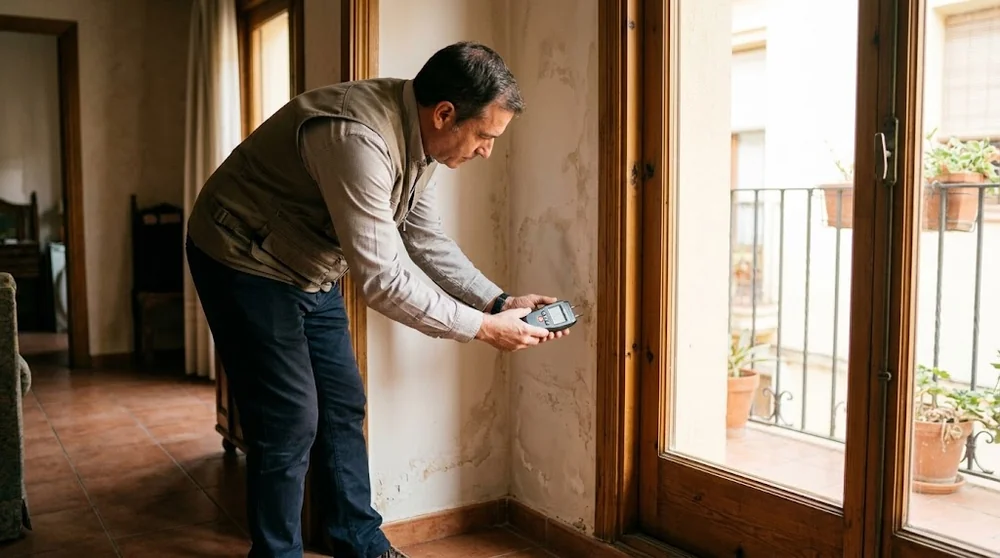
    What to do before making a commitment

    Spotting a red flag is the start of a process, not the end of a purchase. The workflow I suggest is deliberately simple:

    1. Record the sign. Note what you saw, where and when, and take photographs only with permission.
    2. Ask a specific question. “When did this stain appear and what was done about it?” is better than “Is there damp?”
    3. Request the evidence. Invoices, reports, licences, certificates, minutes or contracts, in writing.
    4. Refer it to the correct professional. Technical issues go to a surveyor or arquitecto técnico; legal and documentary issues go to your independent lawyer.
    5. Obtain findings and cost implications. Ask for written conclusions and, where relevant, repair quotations from contractors.
    6. Decide. Proceed, renegotiate the price or terms, or stop.

    The following situations are illustrative examples of decision-making, not real client cases or legal conclusions.

    Illustrative situation: moisture. A buyer notices a musty bedroom and a freshly painted wall. The surveyor finds condensation linked to poor ventilation rather than a leak. The buyer obtains a quotation for ventilation improvements and decides whether to proceed at the agreed price or renegotiate.

    Illustrative situation: record mismatch. A villa’s pool and enclosed terrace do not appear in the registry description. The lawyer requests municipal records and a technical report. Depending on the findings, the buyer might proceed with regularisation as a contract condition, renegotiate, or withdraw.

    Illustrative situation: community works. Minutes show an approved façade repair payable over two years. The buyer’s lawyer negotiates a written clause stating which instalments the seller pays, and the buyer reflects the remainder in the overall budget.

    Once the technical and legal picture is clear, the remaining question is whether this particular home still fits your budget, preferred area and reasons for moving. If the evidence makes you doubt the property, it is far easier to compare it calmly with alternatives than to argue yourself into a purchase.

    Spain property viewing FAQs

    Should I get a building survey before buying in Spain?

    An independent condition survey can help you understand defects, likely repairs and issues requiring specialist investigation before you commit. A mortgage valuation serves a different purpose and should not be treated as a building survey. Agree the inspection scope with a suitably qualified professional, such as an arquitecto técnico, particularly for older homes, altered buildings or properties showing damp or cracking.

    How can I check whether an extension is legal?

    Ask an independent lawyer and an appropriate technical professional to compare the extension with municipal planning permissions, relevant completion or occupancy evidence, the Land Registry description and cadastral information. A registered or cadastral entry alone does not establish planning legality. Differences need investigation, and the possibility of regularisation depends on the property and applicable local rules.

    Can I inherit unpaid community fees when I buy?

    As of October 2026, Article 9.1(e) of the national Horizontal Property Law attaches qualifying community arrears to the property for the elapsed acquisition year and three preceding calendar years. Catalonia’s Article 553-5 covers the elapsed year and four preceding years. Ask your lawyer to confirm the applicable regime, review the debt certificate and check special assessments separately.

    Does a clean nota simple mean the property is safe to buy?

    A nota simple provides information about registered ownership, the property description and recorded rights or charges. It does not replace a condition survey, municipal planning checks, occupation checks or verification of community and tax matters. A reassuring extract is one part of the evidence your independent lawyer and technical adviser need to assess before you commit.

    Should I pay a reservation deposit during the viewing?

    Have an independent lawyer review the proposed agreement, payment recipient, checks still outstanding and written refund conditions before paying. A verbal assurance that a deposit is refundable may not reflect the contract. Pressure to transfer money immediately, missing documents or resistance to independent checks are reasons to pause and investigate before any money leaves your account.

    Conclusion

    A red flag at a viewing is a reason to gather evidence, not a verdict on the property. Damp, cracks, a glazed-in terrace or a locked spare room may turn out to be minor, or they may change the price, the contract terms or your decision altogether. The difference only becomes clear once a specific question has been answered with documents and an independent professional has looked at the evidence.

    Unresolved material risks should be checked before you sign anything or pay a deposit. Instruct an independent Spanish property lawyer for ownership, debts, planning, occupation and contracts, and a suitable technical professional for condition. Use the thresholds in the checklist: proceed when the cause, remedy and cost are known, renegotiate when they change the value, and stop when a key question cannot be answered.
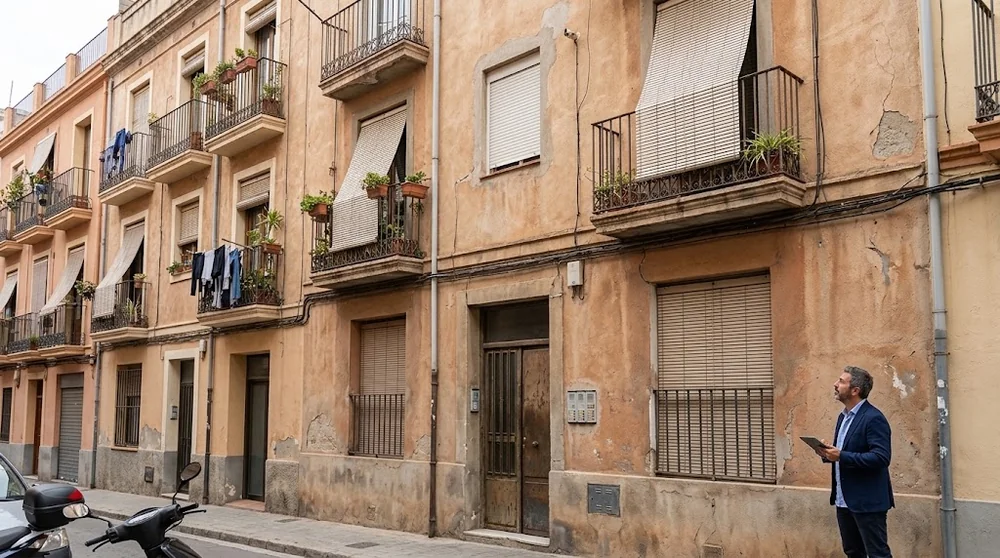
    Then decide on facts rather than hope. A home that survives a proper investigation is one you can buy with confidence, and one that does not has probably saved you a great deal of money and stress.

    Disclaimer: this article is general information, reflects legal research up to October 2026 and is not legal, tax, financial or technical advice. Rules vary by region and municipality and can change. Obtain advice on your specific property from qualified independent professionals.

  • Property Inspection in Spain: Checks Before Signing

    Property Inspection in Spain: Checks Before Signing

    Most of the expensive surprises I see in Spanish property purchases were visible, or at least discoverable, before anyone signed anything. The trouble is that the building and the paperwork are usually checked by different people, at different times, and sometimes not at all. The real decision is not whether to inspect, but what to inspect, whom to hire and how to time those checks so you still have choices when the findings arrive.

    A property inspection in Spain should combine an independent assessment of the building’s condition with legal checks on ownership, debts, planning permissions and permitted use. Arrange these checks before signing a binding agreement or paying an unprotected deposit. A mortgage valuation, energy certificate or notarial appointment does not replace a buyer’s inspection.

    Property adviser and building inspector examining a villa with buyers in Spain

    Your Property Inspection Checklist Before Signing

    A sensible property inspection in Spain follows a sequence, because each check depends on the one before it. This is the order I recommend, with who normally does what and the evidence you should be holding at the end of each step.

    1. Appoint independent advisers. You instruct an independent lawyer and, where the property justifies it, a technical inspector who is not paid by the seller, the agent or the developer. Evidence: signed engagement letters stating each adviser’s scope and fees.
    2. Identify the property and the seller. Your lawyer confirms the exact registered property, its cadastral reference and that the person selling has authority to sell, including every co-owner, heir or company signatory. Evidence: current registry information, identity documents and any powers of attorney.
    3. Collect the documents. The seller or agent supplies the deed, plans, permits, energy certificate, IBI receipts and, for apartments, community records. Evidence: a dated list showing what has arrived and what is still missing.
    4. Inspect the home and the shared building. Your technical professional examines the accessible parts of the property and, for apartments, the common elements the community lets them see. Evidence: a written report with photographs and a severity rating for each finding.
    5. Reconcile records with reality. Your lawyer and inspector compare what was actually built with what the registry, the Catastro and the town hall describe. Evidence: a written note of every discrepancy and the enquiry it needs.
    6. Assess costs and intended use. You and your lawyer check running costs, repair exposure and whether your plans, such as letting or extending, are permitted. Evidence: actual bills, community figures, repair quotations and written planning or licensing answers.
    7. Resolve findings and contract conditions. Your lawyer negotiates repairs, price changes or conditions before you sign the binding contract. Evidence: agreed clauses, deadlines and written repair commitments.
    8. Recheck before completion. Your inspector revisits agreed repairs and your lawyer refreshes registry, debt and tax checks shortly before the notary appointment. Evidence: a reinspection note and updated searches dated close to completion.

    Timing matters as much as content. An offer is usually a proposal, but a reservation agreement can create genuine obligations in Spain, depending on its wording, so never assume it is a harmless formality. The contrato de arras is the private deposit contract most buyers sign next; it normally fixes the price, the completion date and the consequences if either side pulls out. Completion happens when the escritura, the public deed of sale, is signed before a notary and the price is paid. Let me put it plainly: by the time you reach the notary, the inspection should be ancient history, not a job for the morning of the signing.

    Survey, Valuation and Legal Checks: The Differences

    Buyers often assume that because somebody has looked at the property, it has been inspected. Here’s where people usually come unstuck: each of the checks below answers a different question, and none of them answers all of them.

    What each pre-purchase check does and does not cover
    CheckPurposeProfessionalEvidence producedLimitations
    ViewingJudge layout, light, location and obvious problemsYou, often accompanied by the agentYour own notes and photographsNot a technical assessment; in most sales the agent acts for the seller
    Technical inspection (survey)Assess the visible condition of the building and its installationsArquitecto técnico (aparejador) or architectWritten report with photographs and prioritiesUsually non-invasive; hidden areas and concealed services are excluded unless agreed
    Specialist structural assessmentInvestigate suspected movement, cracking or structural alterationsStructural engineer or suitably experienced architectSpecialist report, sometimes with monitoring or testsCommissioned separately; opening-up needs the owner’s consent
    Tasación hipotecaria (mortgage valuation)Estimate value as security for the lenderValuer from a valuation company approved by the Bank of SpainValuation certificate for the bankPrepared for the lender’s purposes; not a defect survey
    ITE / IEEPeriodic statutory assessment of a building, where local rules require itCompetent technician appointed by the owner or communityInspection report, sometimes with required worksAddresses the building’s regulatory condition, not your purchase questions; may be out of date
    Certificado de Eficiencia EnergéticaRate energy performance for sale or lettingQualified certifying technicianRegistered certificate and energy labelNot a condition survey; validity limits apply
    Legal reviewCheck title, charges, debts, planning, licences and contract termsIndependent lawyer (abogado)Due diligence report and contract adviceDoes not assess physical condition

    An independent pre-purchase survey is generally optional in Spain: no national rule obliges a buyer to commission one before buying a home. Separate statutory duties can still apply to the building itself, such as a regional or municipal requirement for an Inspección Técnica de Edificios (ITE) or an Informe de Evaluación del Edificio (IEE), or the seller’s obligation to provide an energy certificate. The notary checks identities, the legality of the deed and the registry and tax formalities, but the notary does not inspect the building. The bank’s tasación protects the lender’s loan, and a house can value perfectly comfortably while needing a new roof. A lender-ordered valuation cannot replace the buyer’s own technical assessment, because it was never designed to find defects for you.

    Choosing an Independent Inspection Professional

    The usual first choice for a pre-purchase inspection is an arquitecto técnico, also called an aparejador: a building professional trained in construction, materials and building pathology. An architect (arquitecto) may suit questions about design, extensions or planning drawings, while a structural engineer is the right person when movement or load-bearing alterations are suspected. These qualifications overlap, but they are not interchangeable for every task, so match the professional to the property’s likely problems. Before you instruct anyone, check the following points.

    • Membership of the relevant professional association (colegio profesional), which you can confirm with the colegio directly.
    • Current professional indemnity insurance that covers pre-purchase reports.
    • Independence: no commission, family or business link with the seller, the agent or the developer.
    • Relevant experience with your property type, whether a 1970s block in Benidorm, a rural finca in Mallorca or a hillside villa above Estepona.
    • A written scope listing rooms, roof, terraces, plot, pool, outbuildings, equipment and any shared areas to be inspected.
    • Stated exclusions, including areas that cannot be safely or lawfully reached on the day.
    • The equipment to be used, such as moisture meters or thermal imaging, and what those readings can and cannot show.
    • A report in English, or with an agreed translation, containing dated photographs, defect severity, likely further tests and recommended specialist follow-up.
    • A section in the final report recording what actually happened on the day: rooms or roof areas that were locked or unsafe to reach, utilities that were switched off, equipment such as the boiler, pool pump or air conditioning that could not be tested, how those gaps reduce confidence in the findings and whether a return visit is needed.

    That last point matters more than buyers expect. A report that simply says “no defects observed” is far less reassuring once you discover the water was disconnected and the loft was padlocked. Most pre-purchase inspections are non-invasive: the inspector looks, measures and uses portable equipment but does not lift floors, drill walls or dismantle installations, because the property still belongs to the seller. An inspector can flag that wiring looks dated or that a boiler seems poorly vented, but a general inspection is not a certification of electrical, gas or pool installations, and it does not automatically include structural calculations. If those matters concern you, ask for the specialist checks to be quoted separately and in writing.

    What to Check During a Spanish Property Viewing

    A viewing is your chance to collect questions for the professionals, not to reach conclusions. Go more than once, photograph anything that bothers you and, if you can, return at a different time of day and after rain. A sunny August viewing in Marbella tells you remarkably little about how a north-facing bedroom feels in February, and as a Mancunian I can confirm that Spain has damp too; it is simply better at hiding it under fresh paint.

    Structure and envelope

    • Cracks in walls and ceilings, around door and window openings and where an older section meets a newer one; note their location and pattern rather than trying to judge them.
    • Freshly painted patches on a single wall or ceiling, which may be cosmetic or may cover damp or cracking.
    • The roof as seen from the ground or a safe window: slipped tiles, sagging lines and stained eaves.
    • Terraces and flat roofs showing standing water, lifted tiles, blocked outlets or staining on the ceiling below.
    • Doors and windows that stick, which can follow movement, poor fitting or simple swelling.

    Water and drainage

    Use your nose as well as your eyes. Musty smells, tide marks, white salt deposits and mould behind wardrobes all deserve a note, whether the cause turns out to be condensation, a leak or water rising from the ground; telling those apart is the inspector’s job. Run two taps at once to get a feel for water pressure, ask how long hot water takes to arrive and find out the age and type of the water heater. On rural plots, ask whether the house is connected to mains drainage or relies on a septic tank, and look at whether the garden slopes towards the walls.

    Electrical installations and climate control

    Ask how old the electrical installation is and whether an installation certificate exists. Check that air-conditioning and heat-pump units actually run, and for apartments ask whether external units on the façade were authorised by the community. Note any flickering lights or tripping you notice, but do not open the distribution board, remove socket covers or test the installation yourself; that work belongs to a qualified installer.

    Daily comfort and included fixtures

    • Noise from roads, bars, pool pumps, lifts and neighbours at different times of day and week.
    • Ventilation in bathrooms and the kitchen, and signs of condensation on windows.
    • Persianas (roller shutters) and mosquito screens that open, close and lock.
    • Which furniture, appliances and air-conditioning units are included, recorded in writing in the contract.
    • Orientation, sun and shade in summer and winter.

    A word on safety. Do not climb onto pitched or fragile roofs, step onto unguarded terraces, open electrical equipment or tap walls to decide whether they are load-bearing. Tapping tells you nothing reliable about structural safety, and an ill-judged ladder can turn a pleasant viewing into an afternoon in urgencias. Your role is to observe and record; the qualified professional diagnoses.

    Inspector checking moisture beside a terrace door in a Spanish apartment

    Nota Simple, Catastro and Planning Documents

    The physical property and the paperwork have to tell the same story. In Spain that story is spread across offices that do not always talk to each other. The Registro de la Propiedad (Land Registry) records ownership and charges. The Catastro is a tax database describing location, physical features and cadastral value, identified by a referencia catastral. The Ayuntamiento (town hall), through its urbanismo (planning) department, holds licences and planning status.

    Key purchase documents, who issues them and what they cannot prove
    DocumentIssuerQuestion answeredLimitationReviewer
    Nota simple (current registry information)Registro de la PropiedadWho is the registered owner, and are there mortgages, embargoes or other charges?Informative only; a registry certification is the evidential version, and neither is a technical or planning clearanceYour lawyer
    Title deed (escritura)Notary, then registeredHow did the seller acquire the property, and how was it described?The description may be old or incompleteYour lawyer
    Seller authorityNotarial records, registry, Mercantile Registry for companiesCan this person or company lawfully sign the sale?Powers can be limited or revoked; every co-owner must consentYour lawyer
    Catastro record and referencia catastralDirección General del CatastroWhat does the tax record show for location, built area and use?Cadastral inclusion does not prove lawful authorisationLawyer and inspector
    Plans and building permitsAyuntamiento (urbanismo)Were the house, extensions, pool and outbuildings authorised?Archives can be incomplete; works may exceed what was permittedLawyer, with an architect where needed
    Occupation or habitation evidenceAyuntamiento or regional authorityHas the building been authorised for occupation as a dwelling?Names, requirements and formats vary by region and periodYour lawyer
    Certificado de Eficiencia EnergéticaCertifying technician, registered with the regional bodyWhat is the energy rating?Says nothing about defectsYou and your inspector
    IBI receiptsAyuntamiento or its tax collection agencyIs the municipal property tax paid, and what does it cost each year?An IBI bill does not establish planning legalityYour lawyer

    Occupation evidence deserves particular care. Depending on the region and the age of the building, it may be a licencia de primera ocupación (first occupation licence), a declaración responsable submitted to the town hall, or a cédula de habitabilidad (habitation certificate), so ask your lawyer which document applies locally rather than hunting for one specific piece of paper. On energy certification, as of October 2026, the current consolidated national rules in Royal Decree 390/2021 on the BOE, including an amendment effective in July 2026, set a maximum validity of ten years, reduced to five years for properties rated G.

    Then reconcile everything with what you saw: plot size, built and usable areas, boundaries, the number of bedrooms and bathrooms, parking spaces, trasteros (storage rooms), terraces, pools and extensions. A discrepancy between the property and its records requires investigation, not an automatic verdict of illegality. Cadastral areas are often measured differently, and old deeds can be vague. But a terrace enclosed as a living room, or a casita that appears on no record at all, needs checking with planning. Equally, registration, cadastral inclusion or an IBI bill does not prove planning legality. Always ask for the nota simple before you commit, make sure it is current rather than the faded copy in the agent’s folder, and have your lawyer refresh the relevant searches shortly before completion.

    Apartments: Community Debts, ITE and Derramas

    When you buy an apartment, you buy a share of a building as well as the flat itself. Every owner belongs to the Comunidad de Propietarios (owners’ community), which maintains roofs, façades, lifts, garages, pools and gardens and divides the costs among owners. Ask your inspector to look at whatever common elements are accessible, because a pristine kitchen does not help much if the building’s roof membrane has given up.

    From the community’s administrator or secretary, request a certificate of debts for the flat, the most recent approved accounts and budget, the reserve-fund position, the building insurance policy and the minutes (actas) of recent general meetings. Ask too for any ITE or IEE report and any remedial orders from the town hall. Minutes are where the truth tends to live: arguments about leaks, quotes for façade repairs and plans to install a lift all leave a paper trail.

    Separate three things clearly. Existing arrears are sums the seller already owes. An approved derrama is an extraordinary levy the community has agreed, often payable in instalments over months or years. Proposed works are discussed but not yet approved. Your contract should state who pays each instalment of an approved derrama, including those falling due after completion, because without that clause you and the seller have nothing agreed between yourselves.

    Here’s where people usually come unstuck, though: that clause binds you and the seller, not necessarily the community. As of October 2026, Article 17.11 of the national Horizontal Property Law says that levies for improvement works are payable by whoever owns the flat when each amount becomes due. So if an instalment falls due after completion, the community can normally ask you, the new owner, for it, even if the seller agreed to pay. Your lawyer should therefore turn the private clause into something enforceable: a reimbursement obligation, a sum retained from the price at the notary, or simply a price reduction. Regional civil law can change the picture, so that check needs to be done for the specific building.

    As of October 2026, Article 9.1(e) of the national Horizontal Property Law (Ley 49/1960) on the BOE makes the flat answerable for community arrears attributable to the year of acquisition and the three previous calendar years, and requires the debt certificate to be issued within seven calendar days of the request. That national rule does not apply everywhere: Catalonia regulates horizontal property in its own Civil Code, so purchases in Barcelona and elsewhere in Catalonia need the Catalan regime verified separately. Inspection rules for buildings also vary, and there is no single nationwide age or interval at which every Spanish building must pass an ITE; your lawyer or inspector should confirm what the region and municipality actually require.

    My view: on resale apartments, I would rather read three years of meeting minutes than look at thirty photographs of the living room. The photographs show you the flat; the minutes show you the building’s future bills.

    Inspector observing the façade and communal entrance of an apartment building

    Regional Rules, Coastal Risks and Intended Use

    Spain has national laws, seventeen autonomous communities and thousands of municipalities, and property rules sit across all three levels. A checklist that works perfectly in one town can miss the point entirely in another, so treat the examples below as prompts for local enquiry rather than as the law of each place.

    Regional documents and planning status

    In Barcelona, the cédula de habitabilidad and the Catalan civil-law framework need checking alongside the city’s own building inspection requirements. In Madrid, municipal rules on building evaluation and the city’s licensing records are the starting point. In Valencia and Alicante, Valencian regional law governs occupation documents and land classification, which matters on inland rural plots. On the Costa del Sol, Andalusian rules apply in Malaga and Marbella, and Marbella’s planning history, including the court annulment of its 2010 general plan, means local planning status deserves particular care. Mallorca brings Balearic rules on rustic land and habitation certificates, while Tenerife falls under Canary Islands planning and tourism legislation. In every case, ask your lawyer to confirm the occupation-document terminology, the planning status and the applicable ITE or IEE rules locally.

    Andalusia also uses a status called asimilado a fuera de ordenación (AFO). It applies to qualifying completed buildings that were built irregularly but for which the period the authorities had to take planning-restoration action has expired. AFO is not a legalisation certificate, and it is not blanket immunity either: it does not override other proceedings, such as criminal cases, and it does not stop the courts issuing or enforcing judgments, including demolition orders. AFO status can also restrict the works you may carry out and may affect utilities, finance, insurance and resale, so its practical consequences need explaining property by property.

    Coastal and environmental checks

    The Sistema Nacional de Cartografía de Zonas Inundables (SNCZI), Spain’s national flood-zone mapping system published by the Ministry for the Ecological Transition (MITECO), is a useful starting point. MITECO itself cautions that the mapping is incomplete, so the absence of a mapped flood zone does not establish that a property is safe from flooding. Ask your inspector about surface drainage, nearby dry riverbeds, retaining walls on sloping plots and signs of past water damage. Near the sea, the Ley de Costas (Coastal Law) can place land within the public maritime-terrestrial domain or its protection easements, which restricts works; your lawyer should check the official coastal demarcation. Rural properties also need verified legal access, not just a track everyone has always used. Before committing, ask an insurer about flood and storm cover; Spain’s Consorcio de Compensación de Seguros covers certain extraordinary events through ordinary policies, but terms and exclusions still matter.

    Foreign-buyer and rental-use checks

    If you plan to let the property, check rental permissions independently with the regional register and the town hall. A holiday-let registration or licence does not transfer automatically with the property, and some areas restrict new registrations. In buildings governed by the national Horizontal Property Law, a change that took effect on 3 April 2025 means that, as of October 2026, a new tourist let in an apartment needs the community’s express prior approval, voted by three-fifths of the owners who also represent three-fifths of the participation quotas. Lets already operating lawfully before that date may fall under transitional provisions, and Catalonia applies its own regime, so your lawyer should confirm how the rules apply to your building. Since Brexit, British buyers are non-EU nationals: owning a Spanish property does not in itself give you any right to live in Spain, and residence needs separate specialist advice. Finally, as of October 2026, Law 8/1975 restricts acquisitions by foreign nationals in designated defence-interest areas, so affected British and other non-EU buyers need a plot-level check for any required military authorisation.

    Retaining wall and drainage channel beside a hillside villa in Spain

    Inspection Costs, Timelines and Repair Exposure

    Inspection fees depend on scope, so ask for a written quotation rather than a figure over the phone. The main price drivers are the property’s size and type, the plot, any pool or outbuildings, shared areas to be inspected, travel time, report depth and specialist tests such as thermal imaging or drainage surveys. There is no official national tariff, and any range you see quoted online describes one firm’s scope, not a market standard. Get two or three written quotations for the same scope and compare like with like. As of October 2026, VAT on professional services is generally charged at 21% on the mainland and in the Balearics, while the Canary Islands apply IGIC instead, so check how tax is shown on any quote.

    Keep separate budget lines for each type of cost: the inspection, the bank’s valuation if you take a mortgage, legal fees, purchase taxes, repairs and running costs. Purchase taxes depend on the region and on whether the property is new or resale, so get a written estimate from your lawyer or tax adviser rather than relying on a headline percentage. For running costs, ask for actual records instead of the agent’s estimate: recent IBI receipts, the community fee and any approved derrama, and twelve months of electricity and water bills where available. A villa with a large garden and pool can surprise you in July.

    Once inspection, legal fees, taxes and realistic running costs are on the table, it often becomes clearer which areas and property types genuinely fit your budget and buying goals.

    Get a property shortlist matched to your budget and region

    Bear the completion-day mechanics in mind as well. As of October 2026, Spanish Tax Agency (AEAT) guidance requires the purchaser to withhold 3% of the price when the seller is not tax resident in Spain and to pay it using Modelo 211 within one month of the transfer. That withholding is part of the price, not an extra tax for the buyer, and it turns on tax residence rather than nationality, so a British seller living in Spain may not be affected. There is no nationwide deadline for receiving a survey report: agree the access date, report delivery date and a window for follow-up questions in writing, and make sure they fit inside any contract deadline.

    Inspection Findings and Your Arras Contract

    A report is only useful if it changes what you do next. The table below maps common findings to the evidence, specialist and contractual action they usually call for.

    Turning inspection findings into contract decisions
    FindingAdditional evidenceResponsible specialistProposed action
    Damp of unknown originMoisture mapping, drainage or plumbing checks, repair historyArquitecto técnico, plumber or waterproofing specialistDiagnose the cause, obtain repair quotations, then negotiate repairs or price
    Suspected structural movementStructural assessment, monitoring, any previous reportsStructural engineerPostpone binding commitment until the specialist reports
    Undocumented extension or poolTown hall licence search, planning status, historic imageryLawyer, with an architectSeek explanation, regularisation evidence or a price and risk decision
    Approved or proposed community worksMeeting minutes, quotes, derrama schedule, ITE/IEE ordersLawyer and community administratorAllocate payments in the contract, secure reimbursement or retention, or adjust the price
    Uncertain permitted useLicence status, regional register, community statutesLawyerObtain written confirmation or decide whether to proceed on that basis

    The contract is where findings become protection. If you must sign something before the inspection, ask your lawyer to negotiate access for the inspector, a reporting deadline, objective criteria for what counts as an adverse finding, and clear refund consequences if those criteria are met. Add a finance condition if you need a mortgage, written repair commitments with a specification, and a reinspection before completion. No buyer has an automatic right to withdraw and recover a deposit simply because an inspection found problems; refunds and withdrawal depend on what the agreement says and the applicable law. Article 1454 of the Spanish Civil Code on the BOE, for example, lets a buyer withdraw by forfeiting the deposit, and a seller by returning double, only where the parties have agreed that penitential framework.

    Hypothetical scenario: a coastal villa. Imagine buyers viewing a resale villa near Mijas. The survey records high moisture readings in a lower-ground bedroom, and the glazed porch and a garden casita appear in neither the Catastro record nor the licence file. The sensible response would be a drainage and waterproofing investigation, a planning search by the lawyer and a written decision on price, repairs or withdrawal under agreed terms before any unconditional deposit changes hands.

    Hypothetical scenario: an apartment facing building works. Now imagine an older apartment in Alicante where the minutes show the community discussing façade repairs required by an inspection report. Before signing arras, the buyer’s lawyer would request the report, quotations and any derrama schedule, then draft a clause allocating approved and future instalments, backed by a retention or price adjustment in case the community bills the new owner.

    If you have a reservation or arras draft in front of you and want to talk through how inspection deadlines and conditions might work for your particular purchase, a short one-to-one conversation can help you prepare the right questions for your lawyer.

    Ask a question on WhatsApp

    Whatever is agreed, put it in writing with dates, and do not accept an informal promise that the seller will sort out a problem after completion. Spoken assurances have a habit of evaporating once the keys change hands.

    New Builds, Snagging and Hidden Defects

    New-build inspection is different from inspecting an older home. Snagging means checking a newly completed property for defects and unfinished work, such as cracked tiles, poorly sealed windows, faulty drainage falls or air conditioning that never quite cools. Ask for the completion documents, including the occupation evidence applicable in that region, the final works certificate, the building’s user and maintenance documentation and details of guarantees and insurance. Test systems where safe, inspect shared areas such as garages and pools, and record follow-up evidence with dated photographs and written acknowledgements from the developer.

    As of October 2026, Articles 17 and 18 of the Ley de Ordenación de la Edificación (LOE) on the BOE, Spain’s Building Act, distinguish liability periods of one year for finishing defects, three years for habitability defects and ten years for structural defects. Those periods run from acceptance of the works without reservations or, where reservations were recorded, from the date those reservations were corrected. Under Article 6, acceptance can also happen tacitly if the developer does not formally accept or object within the legal period. So ask the developer for the acceptance record (acta de recepción) and any record showing when reservations were corrected; without them, nobody can tell you when your clock started. A separate two-year period applies for bringing the relevant claims after the damage appears. The LOE clock does not restart when a later buyer purchases the property. Insurance cover also varies with the type of project and its exceptions, so verify what actually exists rather than assuming a policy covers everything.

    Where the national Civil Code regime applies, the hidden-defect actions in Article 1490 must be brought within six months of delivery, although that deadline applies to those specific actions rather than every possible claim. Regional civil law can provide different rules and periods; Catalonia, for example, has its own conformity remedies for sales. Ask your lawyer to identify which regime governs your purchase before anyone calculates a deadline. Post-purchase remedies are slow, uncertain and dependent on evidence, which is exactly why they are no substitute for inspection. If you discover a defect, take prompt legal and technical advice.

    My view: a new build’s guarantees are a safety net, not a reason to skip snagging. It is far easier to get a developer to fix something before completion than to argue about it a year later.

    Property Inspection in Spain: Frequently Asked Questions

    Do I need a survey to buy property in Spain?

    An independent pre-purchase building survey is generally optional in Spain, but it can be valuable for any buyer and particularly for older, altered, rural or complex properties. Mandatory building inspections may apply separately. A mortgage valuation, energy certificate or recent refurbishment does not establish that the home is free from defects.

    Who can carry out a property inspection in Spain?

    Buyers commonly commission a suitably qualified arquitecto técnico, also known as an aparejador, or an architect with relevant inspection experience. Suspected structural problems may require a specialist engineer. Confirm professional credentials, insurance, independence and the written scope. Your lawyer handles title, contractual and planning-law questions alongside the technical professional.

    What documents should I check before buying property in Spain?

    Request current registry information, the seller’s deed and authority to sell, cadastral details, relevant plans and permits, applicable occupation or habitation evidence, the energy certificate and IBI records. For apartments, add community debt evidence, accounts, meeting minutes and building inspection reports. Have specialists compare those records with the actual property and intended use, as requirements vary locally.

    How much does a property survey in Spain cost?

    There is no single nationwide survey tariff. The quotation depends on the property’s size, location, age, complexity and the agreed inspection depth, including pools, land or specialist testing. Ask for a written price stating VAT, travel, report contents and exclusions. Compare equivalent scopes rather than choosing solely by the lowest headline fee.

    Should I get a survey before signing an arras contract?

    Arrange the survey and legal review before making an unconditional contractual commitment whenever possible. If the seller requires an earlier reservation or deposit, ask your lawyer to negotiate inspection access, deadlines and clear consequences for adverse findings. A survey condition or refund right is not automatic merely because you intend to inspect later.

    What happens if an inspection finds defects?

    Ask the inspector to explain the defect’s seriousness, investigation needs and repair implications. Your lawyer should assess any related planning or contractual issue. Depending on the evidence and agreed terms, you may seek repairs, renegotiate, postpone or withdraw. Obtain written remedies and verify completion; do not rely on an informal promise or assume a deposit is refundable.

    Conclusion

    Before you sign anything binding, you should be able to say yes to six points: the property and seller are clearly identified; the technical inspection has been completed within an agreed written scope; legal and planning findings have been answered in writing; inspection, legal, tax, repair and running costs are understood; your intended use, including any letting, has been checked; and the contract protects you with clear deadlines and conditions.

    Any unresolved material issue justifies pausing for specialist advice, however keen the agent is to fix a date. Ten years on the Costa del Sol have taught me that the buyers who wait a fortnight for a proper answer rarely regret it, while the ones who sign first and ask later often do. My advice to every British buyer is simple: send the property’s documents and your inspector’s report to your independent lawyer and ask for a written list of outstanding points before you sign.

    This article is general information as of October 2026 and does not replace property-specific legal, tax or technical advice from qualified professionals.

  • Barcelona vs Valencia vs Malaga: Which City to Shortlist?

    Barcelona vs Valencia vs Malaga: Which City to Shortlist?

    Choosing between Barcelona, Valencia and Malaga is rarely about which city is “best”. It is about which city fits your total budget, your household and the way you will actually use the home in February as well as in August. I’m David, a Mancunian who moved to Marbella over 10 years ago, and this guide compares the three municipalities on asking prices, purchase taxes, neighbourhoods, rental rules, residency and building risks. The aim is simple: to help you pick one or two cities worth booking viewings in, and to spot the deal-breakers before they cost you a deposit.

    Barcelona suits buyers prioritising metropolitan careers and culture; Valencia merits a shortlist for urban amenities and a lower citywide asking-price benchmark; Malaga appeals to buyers seeking milder winters and Costa del Sol access. Compare neighbourhoods, total buying costs, year-round services and rental permissions before choosing a city or paying a deposit.

    Property adviser and buyers looking across residential rooftops from a terrace in Malaga

    Barcelona vs Valencia vs Malaga at a Glance

    This guide compares three municipalities: the city of Barcelona in Catalonia, the city of Valencia in the Comunitat Valenciana and the city of Malaga in Andalucía. A city, its province, its metropolitan area and a nearby resort coast are four different property markets. Malaga province includes Marbella, but Marbella is a separate municipality with its own prices, planning decisions and buyer mix, so Marbella figures tell you nothing reliable about a flat in Malaga city. The same caution applies to beach towns elsewhere in Valencia province and to coastal towns outside Barcelona.

    Initial comparison of Barcelona, Valencia and Malaga municipalities (price benchmark: Idealista, September 2026, asking prices in €/m²)
    MeasureBarcelonaValenciaMalaga
    Conditional buyer fitMetropolitan careers, culture, international businessUrban amenities, parks and cycling on a lower budgetMilder winters, coastal routines, Costa del Sol access
    Asking-price benchmark (€/m²)5,4623,4733,969
    Everyday transportExtensive metro, bus and commuter railMetro, tram, bus and a strong cycling cultureBus, metro and commuter rail; hillier districts may need a car
    Climate compromise (assessment)Humid summers, cooler winters than MalagaHot, humid summersGentler winters, hot summer spells
    Principal checkTourist-licence wind-down and higher ITPAddress-level flood screening and building conditionTourist-home suspension, gradients and parking

    Let me put it plainly: none of these cities wins for every buyer. A city earns its place on your shortlist only when at least two of its neighbourhoods pass your budget, legal and daily-life tests.

    Property Prices: Compare the Same Market

    The cleanest way to compare the three cities is to use one provider, one month and one geography. Idealista’s municipality indicators for September 2026 put average asking prices at €5,462/m² in Barcelona, €3,473/m² in Valencia and €3,969/m² in Malaga. These figures measure prices advertised on the portal, not completed sales, valuations or notarial transaction values. Sellers ask; buyers negotiate; and some listings never sell at all.

    Comparable asking-price benchmarks and an illustrative 90 m² calculation (Idealista, September 2026)
    City (municipality)Asking price (€/m²)Illustrative 90 m² asking price (€)
    Barcelona5,462491,580
    Valencia3,473312,570
    Malaga3,969357,210

    The 90 m² figures are arithmetic illustrations only: benchmark price multiplied by 90, before any purchase costs. They are not available homes or valuations. A city average blends renovated penthouses with tired fourth-floor walk-ups, so the price of a specific flat depends on its street, condition, floor, lift, outdoor space and legal status.

    Area definitions matter too. Spanish listings may quote constructed area, which includes walls and sometimes a share of communal space, or usable area, which is the floor you can actually walk on. Two flats advertised at “90 m²” can feel very different. Check which measure a listing uses, and confirm the area against the Catastro record and the property registry before comparing individual homes.

    Different datasets produce different benchmarks. Fotocasa’s July 2026 series reports €5,304/m² for Barcelona, €3,631/m² for Valencia and €4,331/m² for Malaga. Fotocasa and Idealista figures should never be averaged together, and the gap between them is not a price change. The providers use different listing samples, periods and methods. Idealista also reports a methodology improvement from July 2026, so treat historical trend comparisons across that date with care. Both are commercial portal indices rather than government transaction statistics.

    ITP and the Full Buying Budget

    ITP (Impuesto sobre Transmisiones Patrimoniales) is the regional transfer tax on most resale homes in Spain, and it is the biggest single cost difference between the three cities. As of October 2026, the general resale rates are as follows. Catalonia applies 10% up to €600,000, then marginal bands of 11% from €600,000 to €900,000, 12% from €900,000 to €1.5 million and 13% above €1.5 million. The Comunitat Valenciana applies a general 9% from 1 June 2026, rising to 11% when the relevant property or right exceeds €1 million, subject to exceptions. Andalucía applies a general 7%. Catalonia also has reduced and special categories, including some special 20% cases, which do not apply to every buyer. Confirm the consolidated text with the Agència Tributària de Catalunya, the Agència Tributària Valenciana or the Agencia Tributaria de Andalucía, and your individual eligibility with a tax adviser.

    Illustrative €300,000 resale purchase: general ITP rates as of October 2026 (tax base assumed equal to price; no reduced or special rate)
    City (region)General ITP rateITP (€)Price plus ITP (€)
    Barcelona (Catalonia)10%30,000330,000
    Valencia (Comunitat Valenciana)9%27,000327,000
    Malaga (Andalucía)7%21,000321,000

    This is a labelled calculation, not a quote. The real tax base may differ from your agreed price. In resale purchases, Spanish rules generally link the ITP base to the Catastro’s reference value (valor de referencia) where that value is higher than the declared price, so ask your lawyer to check the reference value before you sign anything. The national legislation behind these rules is published in the Boletín Oficial del Estado (BOE), and the Agencia Tributaria sets out the state tax obligations that sit alongside the regional ones.

    New-build homes follow a different regime. A first supply of a new residence generally carries 10% IVA (Spanish VAT) plus regional AJD (stamp duty on documented legal acts), subject to the actual transaction and exceptions. IVA and AJD replace ITP on a qualifying new-build purchase; you do not pay all three. Confirm the regional AJD rate before budgeting a number.

    For everything else, use quotations for your own purchase rather than city averages:

    • Independent legal advice and due diligence.
    • Notary and land registry fees.
    • Technical inspection or survey.
    • Mortgage valuation, arrangement and related costs, if financing.
    • Currency conversion margins and transfer fees.
    • Renovation, furniture and a contingency reserve.

    Then budget ownership: annual IBI (municipal property tax), community charges paid to the comunidad de propietarios (the owners’ association of the building), insurance, maintenance and, for non-residents, possible annual Spanish tax obligations. Ask the seller for recent IBI receipts and community statements rather than trusting a listing’s estimate.

    Barcelona: Metropolitan Life and Its Trade-offs

    Who Barcelona suits

    Barcelona makes sense for households whose daily lives depend on a big-city labour market, international business, universities and a dense cultural calendar. Public transport is extensive, and many residents manage without a car. The trade-off is price: Barcelona has the highest benchmark of the three and, at 10% general ITP, the highest transfer tax in our example. Language matters for families too. Catalan is the main teaching language in Catalonia’s public school system, so parents should check how a child would cope, and what international or private alternatives cost and admit.

    Screening Barcelona neighbourhoods

    Treat these as starting points, not endorsements. Eixample offers central grid streets and classic apartment buildings, but older buildings may lack lifts, and street noise varies block by block. Poblenou combines former industrial streets, newer developments and beach proximity, with some districts still changing around you. Sarrià-Sant Gervasi is quieter and greener, with many schools nearby, though gradients and longer journeys to the beach are common.

    In Barcelona, a smaller central flat with a lift and good sound insulation can suit a household better than a larger flat with a long commute. Test the walk to the metro, the school run at 8.30 and the bedroom noise on a Friday night. Reject properties where the lift, insulation or commute fails your household’s basic routine, however good the floor plan looks.

    Residential apartment buildings and tree-lined pavement in Barcelona's Eixample

    Valencia: Urban Amenities and Budget Flexibility

    Who Valencia suits

    Valencia appeals to buyers who want a real city with parks, cycling and beaches within reach, at a lower citywide asking-price benchmark than Barcelona or Malaga. The Turia gardens, a long park in the old riverbed, give many districts a green corridor for walking, running and cycling. A lower average is not proof of a bargain, though. Value comes from the actual flat, its condition and your total budget, including 9% general ITP as of October 2026. Families should ask each school how Spanish and Valencian are used in teaching.

    Screening Valencia neighbourhoods

    El Pla del Real is established and central, with easy access to the Turia gardens. Campanar includes newer residential blocks with more modern buildings, though checks on community charges and amenities still apply. El Cabanyal sits by the sea, with traditional architecture and very varied building condition, so a beautiful facade can hide damp or structural work. Compare each district on beach journeys, centre journeys and school routes.

    Remember that Valencia municipality is not the surrounding towns of Valencia province. Flood exposure in Valencia must be checked address by address, not assumed for the whole city or province. Use MITECO’s SNCZI flood maps and applicable regional mapping, then ask about prior water damage, insurance terms and any technical findings. A clean map result is not a guarantee of safety, and an exposed result is a reason to investigate before committing.

    Cycling path and trees in Valencia's Turia gardens with apartment buildings beyond

    Malaga: Winter Living and Coastal Connections

    Who Malaga suits

    Malaga appeals to buyers who want milder winters, an outdoor coastal routine and good links to the rest of the Costa del Sol. The airport and commuter rail make travel connections a genuine strength, though you should time door-to-door journeys yourself rather than trusting a listing. Ten years on the Costa del Sol have taught me that winter comfort matters more than summer brochures: a flat that faces north, has no heating and gets no sun can feel surprisingly chilly in January. That is my assessment, not a climate statistic; check AEMET station data for numbers.

    Screening Malaga neighbourhoods

    Málaga city is neither Marbella nor the entire Costa del Sol. Teatinos is a newer district close to the university and major services, often popular with families, but further from the beach. La Malagueta places you near the centre, port and beach, with higher demand and more visitor activity. Pedregalejo and El Palo offer a seafront, village-like feel to the east, though parking, traffic and gradients on side streets deserve a test visit.

    Check healthcare access from the address, not from the city map: how far is your nearest health centre and hospital? Families looking at international schools should know that many are located elsewhere on the coast, so a Malaga city home could mean substantial daily travel. Verify routes and school places before choosing a district. Reject homes where steep streets, missing parking or a long school run would break your weekday routine.

    Match Your Household to a Neighbourhood

    City rankings are useful only when they become neighbourhood decisions. The matrix below translates common buyer profiles into priorities and features to test.

    Household fit matrix: decision priorities and conditional city fit (general assessment, October 2026)
    ProfileDecision priorityConditional city fitProperty feature to test
    FamiliesSchool language, admissions and daily journeysAny city where actual school places existBedrooms, school walk, outdoor space
    RetireesHealthcare eligibility, accessibility, winter comfortMalaga or Valencia, if services are nearbyLift, step-free entrance, heating
    Locally employed professionalsJob market and commuteBarcelona, oftenMetro access, sound insulation
    Remote workersBroadband and legal right to workAny, subject to immigration statusFibre availability, quiet workspace
    Second-home ownersAirport frequency, security, running costsMalaga or Valencia, oftenCommunity charges, car dependence

    The following are hypothetical households, not client cases. Household A, a couple in their late sixties, needs a lift, a nearby health centre and gentle winters; they shortlist Malaga and Valencia, then reject any building without step-free access. Household B, a family with a parent working locally in tech, prioritises jobs and schools; Barcelona survives the test, but they accept a smaller flat to keep the commute short. Household C, a remote-working couple on a tighter budget, wants parks and cycling; Valencia comes first, provided fibre is confirmed and the address passes flood screening.

    Practical rejection criteria matter as much as wish lists. Walk away when there is no lift for someone who will need one, no verified school place, no fibre for remote work, or an unavoidable car dependence you do not want. Eligibility for Spanish public healthcare depends on individual status, so check the official guidance in GOV.UK’s Living in Spain guide and with Spanish authorities rather than assuming access.

    My personal view: the households who end up happiest rarely chose the “best” city. They chose the street that matched their Tuesday morning.

    Rental Permissions Can Change Your Shortlist

    Rental income can reshape the arithmetic, but only if the permission is real. Spanish law treats different uses differently. Ordinary residential letting to a tenant’s main home, genuine seasonal lets for temporary reasons such as work or study, and tourist accommodation are separate categories, and the correct classification for your plan must be checked legally. Tourist-letting restrictions are not a ban on ordinary residential letting, yet each category has its own rules and tenant protections.

    As of October 2026, the city-specific position calls for careful verification:

    • Barcelona: municipal material describes ending existing tourist-home licences from 2028. Do not budget tourist income beyond that horizon without confirmed legal advice.
    • Malaga: the city announced a suspension of new tourist homes effective 23 August 2025, for a maximum of three years. Check whether the suspension, any amendment or any exception affects your address.
    • Valencia: the city approved new tourist-accommodation planning restrictions on 31 March 2026, and its planning record reports publication on 4 May 2026. Older moratorium summaries are out of date.
    • Check regional tourism registration, municipal planning compatibility, community of owners’ rules and national registration where applicable. These are separate checks.
    • Do not assume an existing licence transfers automatically with the sale, and do not treat an online listing as proof of permission.

    Here’s where people usually come unstuck: a seller mentions strong holiday bookings, and the buyer quietly writes that income into the budget. Obtain independent written confirmation of the proposed use, including continuity after purchase, before counting a single euro. I do not give yield forecasts, and no city here is a simple investment winner.

    If a rental plan is part of your reasoning, ask your lawyer to state in writing which use is permitted at the specific address, under which rules, and on what date the review was carried out. That one letter can save a very expensive misunderstanding.

    British Buyers: Ownership Is Not Residency

    Buying a Spanish home is open to British citizens, but owning property in Spain does not itself grant the right to live or work there. Since Brexit, British visitors without another status are treated as third-country nationals. As of October 2026, ordinary visa-free visits remain subject to the Schengen 90/180-day rule: no more than 90 days in any 180-day period across the whole Schengen area, not just Spain. Days spent in France or Portugal count towards the same allowance, unless a different individual status applies. The current entry rules are set out in the GOV.UK Spain entry requirements.

    Spain ended new applications for the investor visa route from 3 April 2025. That change does not mean every existing permission was automatically cancelled, but buying a property no longer opens that route for new applicants.

    Three terms are often confused. An NIE is a foreigner identification number used for transactions such as buying property and paying taxes; it is not a residence permit. Immigration residence is permission to live in Spain under a specific route. Tax residence is a separate question, generally depending on factors such as time spent in Spain and where your economic interests lie. You could have an NIE without residence, or become tax resident with consequences you did not plan for.

    My advice to every British buyer is to take individual immigration and tax advice before choosing a city, particularly retirees and remote workers. GOV.UK and Spanish consular authorities publish the official starting points.

    Check the Building Before Paying a Deposit

    Spanish reservation and deposit agreements can carry real financial consequences, so complete these checks first. Always ask for the nota simple before you commit: it is the land registry extract showing the registered owner, description and any recorded charges.

    1. Appoint an independent lawyer who acts only for you, not for the seller or agent.
    2. Obtain a current nota simple and confirm the seller’s ownership.
    3. Check registered charges, mortgages, embargoes (attachments) and other encumbrances.
    4. Reconcile the cadastral area, registered area and physical area.
    5. Confirm lawful use and planning status, including any unauthorised alterations, closed-in terraces or extensions.
    6. Check for existing occupiers or tenancies, and how vacant possession will be delivered.
    7. Request a certificate from the comunidad de propietarios confirming no outstanding community debts.
    8. Read recent meeting minutes for approved or proposed major works and special levies.
    9. Review building inspection records where the municipality requires them.
    10. Check the energy performance certificate and likely heating or cooling costs.
    11. Test lift access and step-free entry for every person who will live there.
    12. Commission a technical inspection for damp, structure, installations and noise.
    13. Screen the address with SNCZI flood maps and applicable regional maps.

    Your lawyer handles title, charges, planning and contracts; a surveyor or architect handles physical condition; and your insurer can confirm cover terms. Pause before paying anything if there are unresolved charges, unpaid community debts, unlawful alterations, uncertain occupiers, unfunded major works or an unexplained flood exposure. Legal deadlines differ between contracts, so have them confirmed in writing for your transaction.

    Lift and entrance steps inside an older apartment building

    Turn Three Cities into a Viewing Shortlist

    A good shortlist is repeatable. Use the same five steps for every city so you compare like with like:

    1. Set a total acquisition budget: price, ITP or IVA and AJD, professional fees, renovation and reserves.
    2. List non-negotiable requirements, such as a lift, school places, fibre or legal rental use.
    3. Select two neighbourhoods in each city that survives steps one and two.
    4. Test daily journeys and each property at different times of day and week.
    5. Document unresolved legal and technical questions for your lawyer and surveyor.

    An illustrative scoring method: rate each neighbourhood out of 100 using housing and total cost (30), daily logistics (25), year-round comfort (20), household services (15) and travel connections (10). Legal feasibility and affordability are pass/fail gates, not scores. A gorgeous sea view cannot cancel out an unlawful extension or a budget you cannot sustain. Visit at least once off-season, when you will see which services, shops and neighbours are really there all year.

    The conclusion is conditional, as any honest answer must be. Barcelona fits households built around metropolitan work and culture; Valencia fits buyers who want urban amenities with more budget flexibility; Malaga fits those who value milder winters and coastal connections. If you would like help turning this into a viewing plan, share your total budget, household, intended use, residency position, accessibility requirements and timing, and we can discuss a shortlist consultation at your own pace.

    Barcelona, Valencia and Malaga Property FAQ

    Is Malaga or Valencia cheaper for property?

    Valencia had the lower citywide advertised-price benchmark in Idealista’s September 2026 data: €3,473 per square metre, compared with €3,969 in Malaga. That comparison does not establish the price of a particular home. Compare similar neighbourhoods, usable space, condition and total acquisition costs, including the different regional transfer taxes in the Comunitat Valenciana and Andalucía.

    Which city is better for families: Barcelona, Valencia or Malaga?

    The strongest family shortlist depends on school access, language preferences, daily journeys and housing requirements. Barcelona may suit households needing metropolitan employment; Valencia may suit those prioritising parks and everyday cycling; Malaga may suit those seeking coastal routines. Verify school places, door-to-door travel and the actual property before treating any city as the better choice.

    Is Malaga better than Valencia or Barcelona for retirement?

    Malaga merits consideration for retirees who prioritise milder winters and a coastal daily routine. Valencia may appeal through parks, cycling and a lower citywide asking-price benchmark, while Barcelona offers metropolitan amenities. The deciding checks are healthcare access, an accessible home, year-round services, residence permission and a sustainable ownership budget.

    Are city asking prices a reliable way to compare properties?

    City asking-price indices provide an initial market benchmark, rather than a valuation or completed-sale price. A useful comparison uses the same provider, month, geographical boundary and area definition. Before making an offer, compare similar nearby properties and assess condition, lift access, outdoor space, legal status and acquisition costs with suitable independent professionals.

    Can I rent out a property in Barcelona, Valencia or Malaga?

    Rental permission depends on the address, intended use, regional and municipal rules, and applicable building restrictions. Tourist accommodation, seasonal use and ordinary residential tenancies require different checks. As of October 2026, all three cities require careful regulatory review. Obtain independent written confirmation of the proposed use before including rental income in your purchase budget.

    Does buying a property in Spain let British citizens live there?

    Buying a Spanish property does not itself grant residence or work permission. As of October 2026, ordinary visa-free visits remain subject to the Schengen limit of 90 days in any 180-day period, unless a different status applies. Spain ended new investor-visa applications from 3 April 2025. Check suitable immigration routes separately from the purchase.

    Which City Belongs on Your Shortlist?

    Let me put it plainly one last time: the right city is the one where your budget, your household and the legal paperwork all line up at a specific address. Barcelona earns its place for metropolitan work and culture, Valencia for urban amenities at a lower asking-price benchmark (€3,473/m² per Idealista, September 2026), and Malaga for milder winters and coastal connections. Shortlist two neighbourhoods per city, run the same checks on each, and always ask for the nota simple before you commit.

    This guide provides general information as of October 2026 and is not legal, tax, immigration, financial or technical advice. Tax rates, rental rules and market data change, and individual circumstances vary. Before committing to any purchase, take advice from an independent Spanish lawyer, a qualified tax adviser, an immigration specialist and a building surveyor as relevant to your decision.